

.png)
Marangu Gate - Mandara - Horombo - Kibo - Uhuru Peak
6 Days Kilimanjaro Marangu Route
Why the Marangu Route?
The Marangu Route, famously known as the "Coca-Cola Route," is the most established and popular path up Mount Kilimanjaro. It is the only route with hut accommodation — no tents, no camping gear needed. With sleeping huts at every overnight stop, this route offers comfort, shelter, and a more social climbing experience. The 6-day itinerary provides excellent acclimatization and a high success rate.
Why the Marangu Route?
Only Hut Route
The only Kilimanjaro route with A-frame sleeping huts — comfortable bunks with mattresses, no tent setup or breakdown required at each camp.
Scenic Rainforest
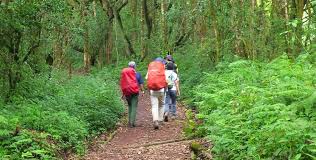
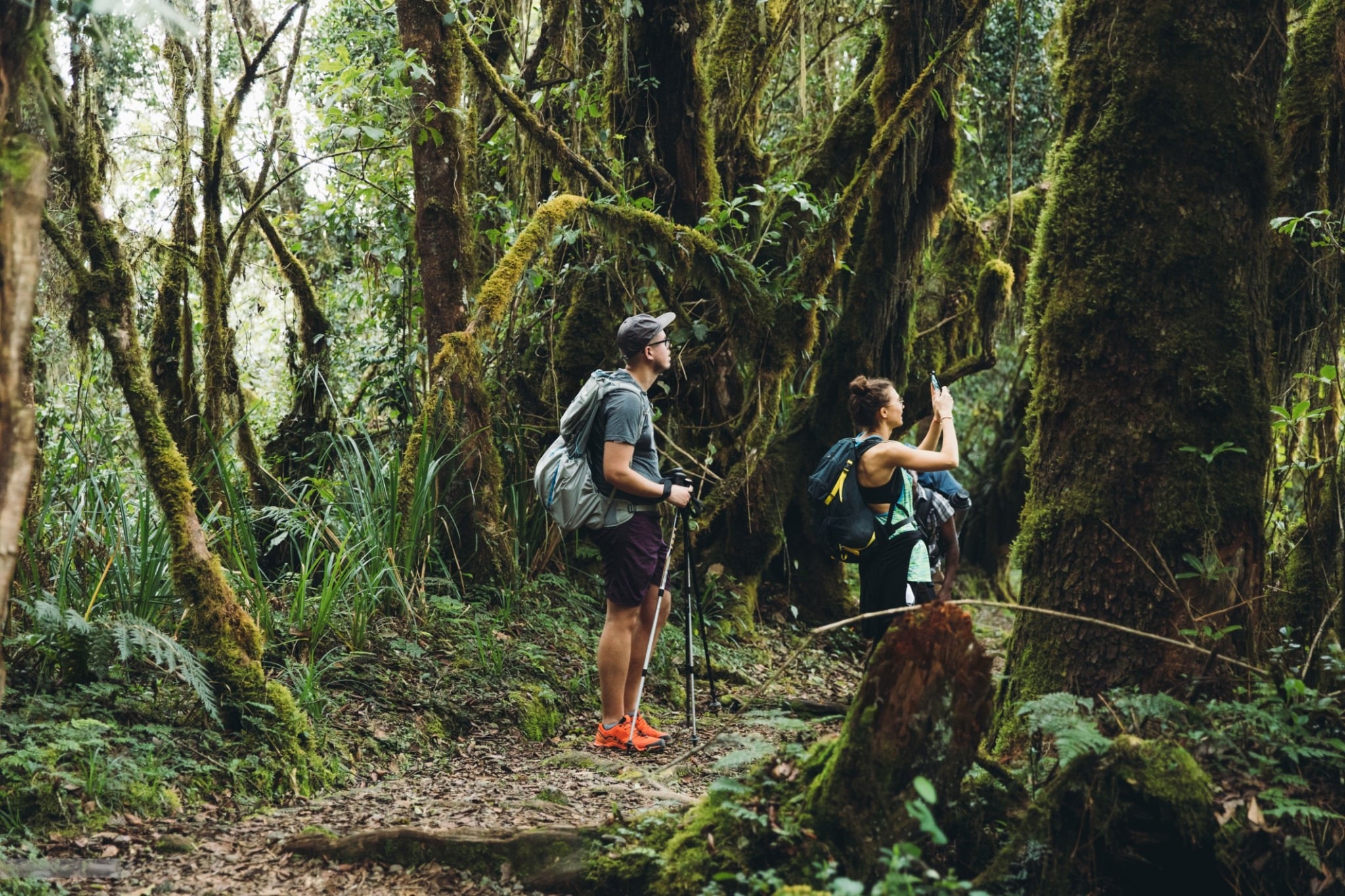
Begin your trek through lush, misty montane rainforest filled with towering trees, colobus monkeys, and colourful birds on the lower slopes.
Coca-Cola Route
The most popular and established route on Kilimanjaro, known for its reliable trail conditions, well-marked paths, and excellent support infrastructure.
High Success Rate
The 6-day itinerary includes a full acclimatization day at Horombo Hut, significantly increasing your chances of reaching the summit successfully.
No Tents Needed
Sleep in heated dormitory huts with solar lighting at every overnight stop. You only need your sleeping bag — all bedding and shelter is provided.
Expert Guides
Our experienced, certified mountain guides lead every climb. They are trained in altitude sickness recognition, first aid, and Kilimanjaro summit techniques.
Highlights
- Marangu Gate — Enter Kilimanjaro National Park
- Mandara Hut — Rainforest camp with giant heather trees
- Horombo Hut — Stunning views of Mawenzi Peak
- Mawenzi Walk — Acclimatization hike to 4,500m
- Kibo Hut — Base camp at 4,700m beneath the summit cone
- Gilman's Point — Reach the crater rim at 5,681m
- Uhuru Peak — Stand at Africa's highest point, 5,895m
- Hut Comfort — Warm, dry accommodation every night
Detailed Itinerary
Each day of the Marangu Route is designed for gradual altitude gain with comfortable hut accommodation every night. Below is your complete day-by-day breakdown.
Rainforest Trek to Mandara Hut (2,700m)
After breakfast in Moshi, drive to the Marangu Gate (1,870m). Complete park registration and meet your mountain crew. Begin the trek through beautiful montane rainforest on a well-maintained trail. The path winds through dense vegetation, giant ferns, and towering trees draped in moss. Look out for black-and-white colobus monkeys, blue monkeys, and abundant birdlife including the majestic turaco. Arrive at Mandara Hut (2,700m) in the afternoon, nestled in a clearing surrounded by forest.
Moorland Crossing to Horombo Hut (3,720m)
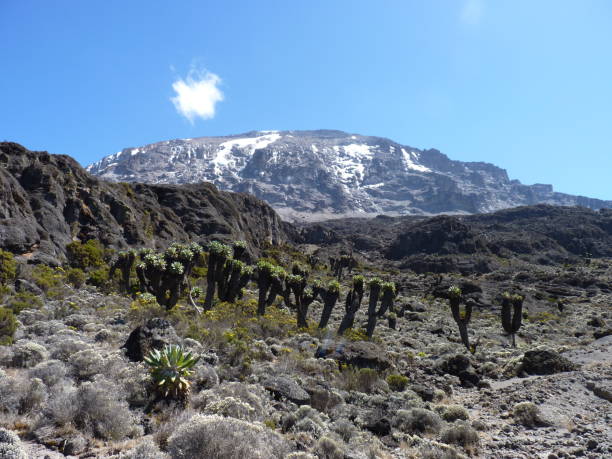
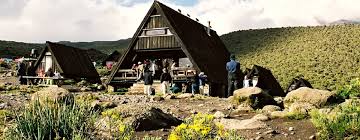
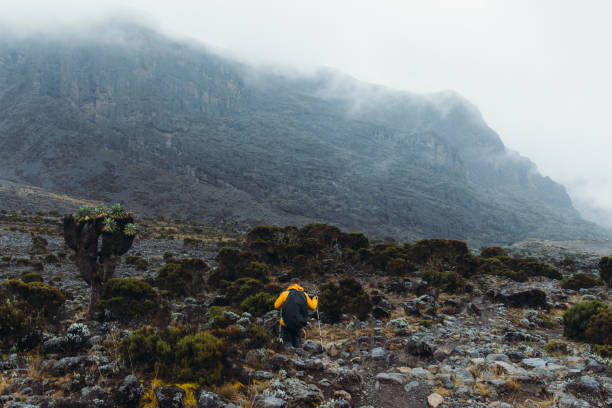
Today the vegetation transitions from rainforest to alpine moorland. The trail opens up to rolling hills, giant heather, and distinctive groundsels (Senecio) and lobelias. As you gain altitude, the views become increasingly dramatic with Kilimanjaro's summit occasionally visible ahead. Pass the "Second Caves" and "Third Caves" along the way. Arrive at Horombo Hut (3,720m), a large complex of huts set in a wide valley with panoramic views of Mawenzi Peak and the summit cone.
Mawenzi Walk & Altitude Adjustment (4,500m max)
A crucial acclimatization day at Horombo Hut. After breakfast, embark on a guided walk towards Mawenzi Peak, reaching up to 4,500m before descending back to Horombo. This "climb high, sleep low" strategy is proven to enhance acclimatization. The trail traverses the saddle between Kilimanjaro's main summit and Mawenzi, offering spectacular views of both peaks. The terrain becomes increasingly alpine and barren at this elevation.
Alpine Desert Crossing to Kibo Hut (4,700m)
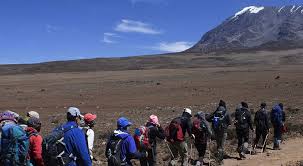
Today you cross the vast, barren alpine desert of the Saddle — the high-altitude plateau between Kilimanjaro's summit cone and Mawenzi Peak. The landscape is stark, rocky, and otherworldly, with only hardy lichens surviving at this elevation. The trail climbs steadily across the Saddle, passing the "Last Water Point" — the final source of running water on the route. Kibo Hut (4,700m) sits at the base of the summit cone, a simple stone structure that serves as the launch point for summit night.
Summit Night — Uhuru Peak (5,895m) & Descent to Horombo
The ultimate challenge and the most rewarding day of the entire trek. Wake at midnight for a light snack and hot drink before beginning the ascent. The trail climbs steeply through scree and rock, zig-zagging up the slopes of Kibo. Reach Gilman's Point (5,681m) on the crater rim at sunrise — a breathtaking moment. Continue along the crater rim to Stella Point (5,756m) and finally to Uhuru Peak (5,895m) — the highest point in Africa. After soaking in the views, descend all the way to Horombo Hut for a well-earned rest.
Final Descent to Marangu Gate & Transfer to Arusha
After breakfast, begin the final descent through the moorland and rainforest back to the Marangu Gate. The trail retraces the route from Day 2 and Day 1, passing through Horombo's heath, the moorland, and back into the lush rainforest. The descent goes quickly as you lose altitude. Upon arrival at Marangu Gate, sign out of the national park and receive your summit certificate if you haven't already. Transfer back to your hotel in Moshi or Arusha for a hot shower and celebration dinner.
Included / Excluded
| Included |
|
|---|---|
| Excluded |
|
| Transport |
|
Destinations
Kilimanjaro National Park
A UNESCO World Heritage Site spanning 1,688 sq km, Kilimanjaro National Park protects Africa's highest mountain and its surrounding montane forest, moorland, alpine desert, and glacial zones.
Marangu Route
The only route with hut accommodation, known as the Coca-Cola Route. This classic trail passes through rainforest, moorland, and alpine desert on its way to the summit of Kilimanjaro.
Mountain Huts — Mandara, Horombo & Kibo
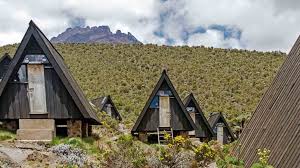
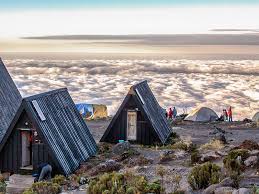
Three hut complexes provide A-frame dormitory accommodation with bunk beds, mattresses, solar lighting, and dining facilities. Horombo Hut also features flush toilets.
Photo Gallery
Rainforest Trail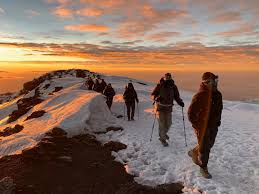 Mandara Hut
 Horombo Hut & Mawenzi
 Summit Crater
 Uhuru Peak 5,895m
 Marangu Route Hiking
Location
What Our Climbers Say
Join thousands of satisfied climbers who have summited Kilimanjaro with us.
Frequently Asked Questions
What is the hut accommodation like on the Marangu Route?
Marangu Route huts are A-frame wooden dormitories with bunk beds, mattresses, pillows, and solar lighting. Mandara Hut sleeps 60, Horombo Hut sleeps 120, and Kibo Hut sleeps 60. Toilet facilities are available at each hut. You will need a sleeping bag.
What is the difference between Marangu and Machame Route?
Marangu is the only route with hut accommodation (no tents) and is considered the easiest route. Machame requires camping, is slightly more difficult but offers more scenic variety. Marangu has a shorter minimum duration (5-6 days) while Machame typically takes 6-7 days.
How difficult is the Marangu Route?
The Marangu Route is rated moderate. Days 1-2 are relatively easy through rainforest and moorland. Day 4 to Kibo Hut becomes more challenging due to altitude. Summit night (Day 5) is extremely demanding — a steep ascent of over 1,000m in cold, dark conditions. A good fitness level is recommended.
What is the best time to climb Kilimanjaro via Marangu?
The best climbing seasons are January-March and June-October. These are the dry months with clearer skies and a higher success rate. April-May and November are rainy seasons when the trail can be muddy and slippery.
How fit do I need to be for the Marangu Route?
You need good cardiovascular fitness and endurance. The multi-day hiking at altitude requires preparation. Regular aerobic exercise, stair climbing, and long hill walks 2-3 months before your climb will greatly improve your experience.
What is altitude sickness and how is it managed?
Altitude sickness occurs when your body struggles to adapt to reduced oxygen at high elevation. The Marangu Route's acclimatization day at Horombo helps. Our guides are trained to recognize symptoms. We carry oxygen and follow a strict 'pole pole' (slowly slowly) pace. Descending immediately is the only cure for severe AMS.
What should I pack for the Marangu Route?
Essentials include: a warm sleeping bag (comfort rated to -10°C), thermal base layers, fleece jacket, waterproof jacket and trousers, hiking boots, trekking poles, headlamp, sunscreen, sunglasses, water bottles/bladder, snacks, toilet paper, and personal medication. A full packing list is provided upon booking.
Is there an age limit for climbing Kilimanjaro?
The minimum age is 10 years old for the Marangu Route. There is no upper age limit, but climbers over 60 should have a medical check and excellent fitness. We recommend a private climb for younger or older groups to allow a flexible pace.
What is the group size for the Marangu Route?
Our standard groups range from 2 to 12 climbers. Private climbs are available for solo travellers or groups who prefer a personalized experience. Smaller groups often have a higher success rate due to flexible pacing.
What meals are provided on the Marangu Route?
Full board meals are provided — breakfast, lunch, and dinner. Meals include porridge, eggs, fruit, soups, pasta, rice, vegetables, meat, tea, coffee, and hot chocolate. We can accommodate dietary requirements with advance notice. Our cooks prepare fresh, nutritious meals daily.
Are there toilet facilities on the Marangu Route?
Yes, each hut has flush toilets and pit latrines. Mandara and Horombo have flush toilets. Kibo Hut has pit latrines. Toilet paper is not always provided, so bring your own. There are no toilets on the trail between huts.
How does tipping work on Kilimanjaro climbs?
Tipping is customary and greatly appreciated. Recommended amounts: guide $20-25 per day per group, cook $15-20 per day, porters $10-15 per day per porter. Tips are usually pooled and distributed on the last day. We provide tipping guidelines in your pre-climb briefing.
What park fees are included?
Your climb includes Kilimanjaro National Park entry fees, camping/hut fees, rescue fees, and all government taxes. Park fees are non-refundable and must be paid in advance. They constitute a significant portion of the total cost.
What is the weight limit for porters on Kilimanjaro?
Porters carry a maximum of 20 kg (44 lbs) as per Kilimanjaro National Park regulations. Your main duffel bag should not exceed 15 kg. Porters are provided with proper gear, meals, and insurance. We are committed to ethical porter treatment.
Do I receive a certificate for climbing Kilimanjaro?
Yes! If you reach Uhuru Peak (5,895m), you receive a Summit Certificate signed by the Kilimanjaro National Park authorities. If you reach Gilman's Point (5,681m) on the crater rim, you receive a certificate for reaching the highest point of your route.
Ready to Conquer Kilimanjaro?
Book your 6-day Marangu Route climb and experience the only hut-based route to Africa's highest peak.