.png)
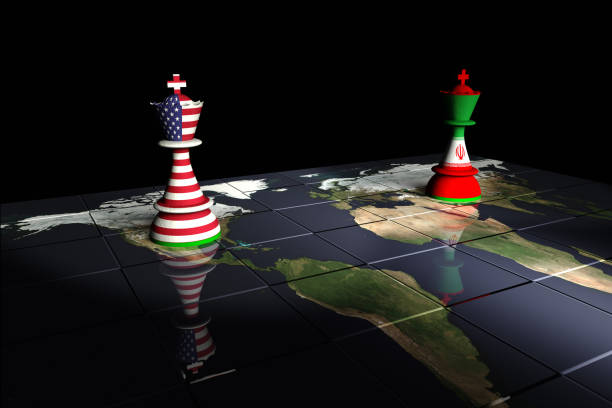
Iran vs USA
A decades-long geopolitical chess game - and what it means for global travellers, especially those heading to East Africa.
The rivalry between the Islamic Republic of Iran and the United States of America is one of the defining geopolitical dramas of our era. It is a story of revolution, hostages, sanctions, proxy wars, nuclear brinkmanship, and a mutual mistrust so deep that a single spark - like the 2020 drone strike that killed General Qasem Soleimani - can bring the world to the edge of a broader conflict. But beyond the headlines and the warships in the Persian Gulf, there is a quieter, less-discussed question: how does this tension affect ordinary travellers? How does it ripple through the global tourism industry, and what does it mean for someone planning a safari in Tanzania? In this article, we unpack the historical roots, the current state of play, the travel implications, and why East Africa may be one of the safest and most rewarding destinations amidst the geopolitical storm.
I. Historical Roots: From the Shah to the Islamic Republic
To understand the Iran-US conflict, one must go back to 1953, when the CIA and British intelligence orchestrated a coup to overthrow Iran's democratically elected Prime Minister, Mohammad Mossadegh, after he nationalised the oil industry. The coup reinstated Shah Mohammad Reza Pahlavi, a staunch US ally who ruled with an iron fist for the next 26 years. American companies gained privileged access to Iranian oil, and the Shah's regime became a cornerstone of US strategy in the Middle East. However, widespread discontent with the Shah's authoritarian rule, corruption, and Westernisation culminated in the 1979 Islamic Revolution, which brought Ayatollah Ruhollah Khomeini to power and transformed Iran into a theocracy deeply hostile to the United States.
The hostage crisis that followed - in which 52 American diplomats and citizens were held captive for 444 days - severed diplomatic relations permanently. The US has imposed various sanctions on Iran ever since, accusing it of sponsoring terrorism, pursuing nuclear weapons, and destabilising the region through groups like Hezbollah and the Houthis. Iran, in turn, views the US as a meddling imperial power intent on regime change. This fundamental incompatibility has made every interaction between the two nations a high-stakes standoff.
II. The Nuclear Deal and the Sanctions Regime
A brief thaw came in 2015 with the Joint Comprehensive Plan of Action (JCPOA), known as the Iran nuclear deal, in which Iran agreed to limit its nuclear programme in exchange for sanctions relief. For a short period, tourism to Iran boomed; the country's magnificent Persian architecture, ancient cities of Isfahan and Shiraz, and warm hospitality attracted thousands of Western visitors. But the US withdrawal from the deal in 2018 under President Donald Trump and the reimposition of crippling sanctions reversed that progress. Today, Iran's economy is deeply isolated, its currency has collapsed, and foreign tourists are rare.
III. The Travel Advisories: Can You Even Go?
The US Department of State currently warns against all travel to Iran, citing "the risk of kidnapping, arbitrary arrest, and detention of US citizens." Iran, for its part, requires US citizens to have a government-approved guide at all times. Few international airlines fly to Tehran, and banking restrictions make even simple transactions difficult. In contrast, the United States remains open to Iranian citizens, but obtaining a visa is an arduous process, and Iranian-Americans often face additional scrutiny. For the ordinary global traveller, the message is clear: Iran, despite its ancient splendour, is effectively off the tourism map for most Westerners.
IV. The Strait of Hormuz and Global Travel Costs
One of the most concrete ways the Iran-US conflict affects all travellers - even those going nowhere near the Middle East - is through the Strait of Hormuz. This narrow waterway between Iran and Oman is the world's most important oil chokepoint; about 21% of global petroleum liquids pass through it. Any military confrontation in the Gulf, whether an Iranian seizure of a tanker or a US naval deployment, sends oil prices spiking. Higher oil means higher jet fuel costs, which inevitably translate into more expensive flight tickets. For safari-goers booking long-haul flights from Europe or North America to Kilimanjaro International Airport, a prolonged crisis in the Gulf can add hundreds of dollars to their trip.
V. Shifting Tourist Flows: Why East Africa Benefits
Geopolitical instability tends to redirect travellers away from conflict zones towards perceived safe havens. The Middle East - once a growing tourism market with destinations like Dubai, Oman, and Jordan - becomes less attractive when tensions rise. Many travellers then look south to sub-Saharan Africa. Tanzania, with its stable democracy, peaceful international relations, and world-class natural attractions, is a direct beneficiary. The country has no involvement in the Iran-US dispute and maintains friendly ties with both nations. Its tourism industry, focused on the Serengeti, Kilimanjaro, and Zanzibar, is insulated from the direct fallout of Middle Eastern tensions, and it often sees a surge of visitors seeking an alternative to the volatile north.
VI. The Indirect Threat: Terrorism and Regional Spillover
However, no nation is entirely immune. Iran's network of proxy militias across the Middle East and East Africa raises security concerns. In the past, Iran has been linked to militant activity in Kenya (the 1998 US embassy bombings, though primarily al-Qaeda) and has cultivated relationships with groups in the Horn of Africa. Tanzania has largely been spared, but the US occasionally issues security alerts for the region. A full-scale war between Iran and the US/Israel could trigger retaliatory attacks on Western interests, including tourist sites, across the continent. While the risk to Tanzania remains low, travel insurers watch these developments closely, and premiums can adjust rapidly.
VII. What This Means for Your Safari in Tanzania
For a traveller planning an African Majestic Adventure, the immediate practical impact of the Iran-US conflict is likely to be:
- Higher airfares: Fuel surcharges may rise during Gulf tensions.
- Stable destination: Tanzania remains a safe, low-risk destination with no direct links to the conflict.
- No visa issues: Tanzania's visa-on-arrival policy for most nationalities remains unchanged.
- Shift in tourist mix: Fewer Middle Eastern tourists, more Westerners seeking a peaceful alternative.
What Travellers Often Ask
Can US citizens still visit Iran?
Yes, but with great difficulty. A visa and a government-approved guide are mandatory, and the US strongly advises against all travel to Iran.
Does the conflict affect my flight price?
Absolutely. Any instability in the Gulf raises oil prices, which directly increases jet fuel costs and therefore flight tickets worldwide.
Is Tanzania safe during US-Iran tensions?
Tanzania is extremely stable and far removed from the conflict zone. There is no reason to cancel or postpone a safari due to these geopolitical tensions.
How does the media cover the Iran-US story?
Often with alarming headlines. Stay informed through reliable sources like the BBC, Al Jazeera, or your government's travel advisory, but don't over-react to sensationalised reports.
VIII. Final Thoughts: Travel with Awareness
The Iran-US relationship is not likely to normalise soon. For the traveller, the key is awareness: monitor airfare trends, check travel advisories, and understand that geopolitics is now an inescapable part of the journey. Yet, while the two superpowers play their dangerous game, the vast savannahs of Tanzania remain wild, beautiful, and serenely detached from the world's power struggles. Booking a safari with African Majestic Adventure means choosing a destination that, so far, has proven resilient to the tremors of distant conflict. We encourage you to travel with knowledge, not fear.