.png)
Your Complete Londorosi Route Planner
What is the Londorosi Route?
The Londorosi Route is one of Kilimanjaro's most remote and least-traveled paths to the summit, approaching from the western side of the mountain via the Londorosi Gate. Sharing the same starting point as the Lemosho Route, Londorosi offers a truly wild and pristine wilderness experience with exceptionally low foot traffic. At approximately 68 km in length, this 7-8 day route traverses dense montane forest, crosses the spectacular Shira Plateau, and joins the popular Machame Route near the Barranco Valley before making the final summit push via the Barafu Route. The route is renowned for its excellent acclimatization profile — the long traverse across the Shira Plateau at around 3,500m provides ample time for the body to adjust to altitude, contributing to the route's impressive 83% success rate. Since its establishment in 2005, the Londorosi Route has become a favourite among experienced trekkers seeking solitude, pristine landscapes, and the highest possible chance of reaching the Roof of Africa.
Why Choose the Londorosi Route?
The Londorosi Route stands apart from Kilimanjaro's more crowded paths for several compelling reasons. Very low traffic — because most climbers opt for the Machame, Marangu, or even Lemosho routes, Londorosi sees a fraction of the footfall, meaning you will experience long stretches of trail entirely free of other groups. Pristine wilderness — the western approach takes you through some of the most untouched forest and alpine terrain on the mountain, with abundant wildlife including colobus monkeys, duiker, and colourful sunbirds. Shira Plateau views — the route spends two full days crossing the vast Shira Plateau, the ancient caldera of Kilimanjaro, with sweeping vistas of the mountain's western glaciers and the Great Rift Valley far below. Outstanding acclimatization — the "climb high, sleep low" philosophy is naturally built into the Londorosi profile, with a long, gentle ascent across the plateau that dramatically reduces the risk of acute mountain sickness. High summit success — the combination of a longer itinerary and superior acclimatization gives Londorosi one of the highest summit success rates of any Kilimanjaro route at 83%. For trekkers who prioritise wilderness, solitude, and a genuine off-the-beaten-path experience, Londorosi is the ideal choice.
Route Overview & Map
The Londorosi Route begins at Londorosi Gate (2,100m) on the western side of Kilimanjaro. From the gate, you drive a short distance to the trailhead and begin hiking through lush montane rainforest. The route then ascends through heath and moorland zones before emerging onto the Shira Plateau (3,500m), where you spend a full day acclimatizing and exploring this ancient volcanic caldera. The trail continues eastward, descending into the Barranco Valley before joining the southern circuit routes. The summit attempt comes via the Barafu Route, ascending through the night to reach Uhuru Peak (5,895m) at sunrise. Descent is via the Mweka Route on the southeastern side. The total distance is approximately 68 km, typically completed in 7-8 days.
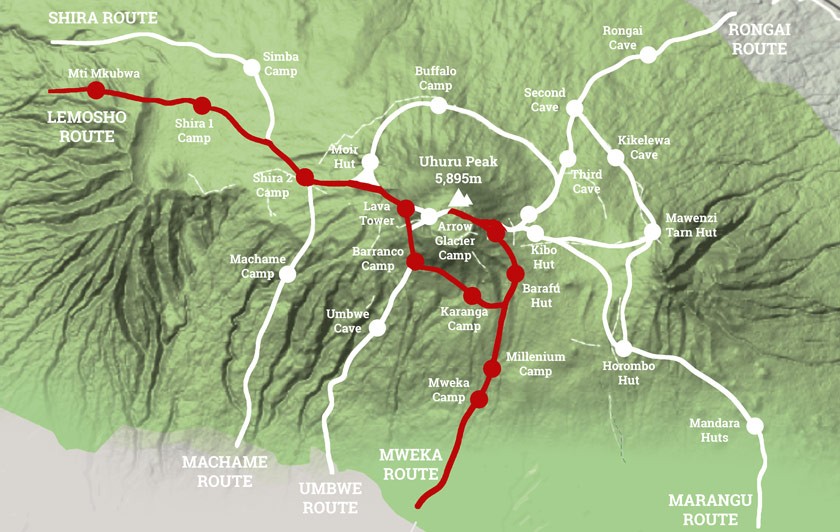
Londorosi Route Itinerary Overview
The standard Londorosi Route itinerary spans 8 days (7 nights on the mountain), with a 7-day option available for experienced trekkers. Below is the recommended 8-day schedule that maximizes acclimatization and summit success.
| Day | Segment | Altitude | Duration | Highlights |
|---|---|---|---|---|
| 1 | Londorosi Gate → Big Tree Camp | 2,100m → 2,800m | 3-4 hrs | Montane forest walk, colobus monkeys, giant lobelias |
| 2 | Big Tree Camp → Shira Camp 1 | 2,800m → 3,500m | 5-6 hrs | Emerging onto the Shira Plateau, panoramic views, heathland |
| 3 | Shira Camp 1 → Shira Camp 2 | 3,500m → 3,850m | 3-4 hrs | Acclimatization day, explore plateau, views of Kibo and Western Glaciers |
| 4 | Shira Camp 2 → Barranco Camp | 3,850m → 3,950m | 6-7 hrs | Traverse heath to moorland, Lava Tower (4,600m) acclimatization, descend to Barranco |
| 5 | Barranco Camp → Karanga Camp | 3,950m → 4,035m | 4-5 hrs | Barranco Wall climb, alpine desert, Karanga Valley views |
| 6 | Karanga Camp → Barafu Camp | 4,035m → 4,673m | 4-5 hrs | Final ascent camp, rest, summit preparation, early dinner |
| 7 | Barafu Camp → Uhuru Peak → Mweka Camp | 4,673m → 5,895m → 3,100m | 12-15 hrs | Summit night! Stella Point, Uhuru Peak sunrise, descend to forest |
| 8 | Mweka Camp → Mweka Gate | 3,100m → 1,640m | 3-4 hrs | Final descent through rainforest, certificate ceremony, transfer to hotel |
Note: Itineraries may vary based on group fitness, weather conditions, and your guide's assessment. A 7-day option is available by combining Days 2 and 3 into a longer trekking day.
Wildlife on the Londorosi Route
While the primary goal of climbing Kilimanjaro is reaching the summit, the Londorosi Route's western approach passes through rich montane forest and heathland habitats that support a surprising diversity of wildlife. The lower elevations are particularly rewarding for wildlife enthusiasts. Species you may encounter include:
- Colobus Monkey
- Duiker
- Bushbuck
- Hyrax
- Sunbird
- Eagle
- Olive Baboon
- Blue Monkey
- Sykes Monkey
- African Civet
- Genet
- Dwarf Mongoose
- Leopard (rare)
- Elephant Shrew
- Crowned Eagle
- Augur Buzzard
- Moorland Chat
- White-necked Raven
- Malachite Sunbird
- Scarlet-tufted Sunbird
- Starlings
- Mountain Buzzard
Best spots: The montane forest between Londorosi Gate and Big Tree Camp is prime habitat for colobus monkeys and duiker. The Shira Plateau heathland offers excellent birdwatching opportunities, particularly for sunbirds, raptors, and the endemic Kilimanjaro mouse.
Londorosi Route Gallery
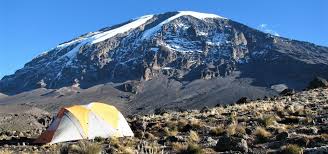
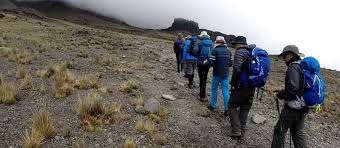
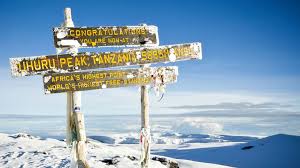
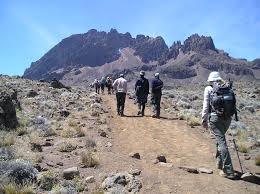
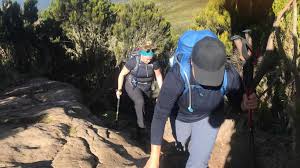
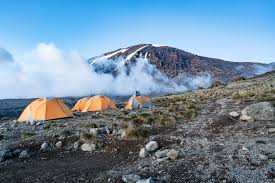
Best Time to Climb the Londorosi Route
| Month | Season | Climbing Conditions | Rating |
|---|---|---|---|
| Jan | Warm & Dry | Excellent conditions. Clear skies and warm temperatures on the lower slopes. | ★★★★★ |
| Feb | Warm & Dry | Peak season. Best weather window. High summit success rates. | ★★★★★ |
| Mar | Short Rains | Increasing showers. Lush green forests. Lower crowds. | ★★★☆☆ |
| Apr | Long Rains | Heavy rainfall. Trails muddy and slippery. Fewest climbers. | ★★☆☆☆ |
| May | Long Rains | Wettest month. Limited visibility. Recommend avoiding. | ★☄☆☆☆ |
| Jun | Dry | Trails drying. Excellent wildlife spotting. Good conditions returning. | ★★★★☆ |
| Jul | Dry / Cool | Peak season. Clear skies. Cold nights. High summit success. | ★★★★★ |
| Aug | Dry / Cool | Peak season. Best visibility. Stable weather. Very busy on shared trail sections. | ★★★★★ |
| Sep | Dry | Outstanding climbing conditions. Warm days, cold clear nights. | ★★★★★ |
| Oct | End of dry | Last dry month. Good conditions before short rains arrive. | ★★★★☆ |
| Nov | Short Rains | Unpredictable showers. Greener landscapes. Fewer crowds. | ★★★☆☆ |
| Dec | Short Rains / Green | Warm and green. Good climbing conditions. Festive season climbs popular. | ★★★★☆ |
★ = Rating based on trail conditions, visibility, temperature, summit success probability, and crowd levels. The best windows for climbing Londorosi are December-February and June-October.
Difficulty & Preparation for the Londorosi Route
Difficulty level: Moderate. The Londorosi Route is considered moderately challenging — less difficult than the direct Western Breach or Umbwe routes, but more demanding than the Marangu or Rongai routes due to its length and the high altitude traverse across the Shira Plateau. The terrain is varied: muddy rainforest trails, rocky heathland paths, steep scree slopes on summit night, and the famous Barranco Wall (a steep but non-technical scramble). Key preparation tips include:
- Cardiovascular training — start hiking and stair-climbing at least 3 months before your climb. Aim for 45-60 minute sessions, 4-5 times per week.
- Altitude awareness — the "climb high, sleep low" strategy is built into the itinerary. Follow your guide's pacing and hydration instructions religiously.
- Packing essentials — four-season sleeping bag (rated to -15°C / 5°F), trekking poles (essential for the descent), waterproof boots, thermal layers, headlamp with spare batteries.
- Acclimatization focus — the Londorosi Route's 8-day schedule is designed for optimal acclimatization. Do not rush. "Pole pole" (slowly, slowly) is the mantra.
- Hydration and nutrition — drink 4-5 litres of water daily, eat high-carbohydrate meals, and carry energy snacks for summit night.
Londorosi Route Cost & Inclusions
| Category | Price Per Person | Includes |
|---|---|---|
| Budget | $1,800 – $2,400 | Camping equipment, park fees, guide, porters, cooks, meals on mountain, transfers |
| Mid-Range | $2,400 – $3,200 | Quality tent, sleeping mat, all park fees, experienced guide, porters, meals, hotel night before/after |
| Luxury | $3,200 – $4,500 | Premium camping gear, private toilet, VIP park fees, senior guide, porter-to-climber ratio 3:1, all meals, airport transfers, 2 hotel nights |
| Ultra-Luxury | $4,500 – $6,000 | Private group, hot showers, chef, extra porters, oxygen monitoring, professional summit photos, full-service safari add-on |
Park Entry Fee: $70/person/day (non-resident adult). Camping Fee: $50/person/night. Rescue Fee: $20/person (mandatory). Guide Fee: Included in package prices. Porter & Cook Fees: Included in package prices. Note that the Londorosi Route is slightly more expensive than the Machame or Marangu routes due to the longer duration and the remote western access requiring additional logistics. All prices are subject to TANAPA fee changes. Contact us for current rates and custom package options.
Frequently Asked Questions about the Londorosi Route
Related Kilimanjaro Tours
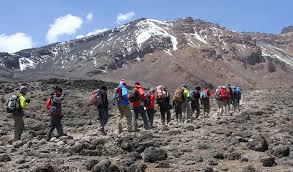
8 Days Londorosi Route Climb
Our signature Londorosi Route itinerary with premium camping, experienced guides, and the best acclimatization profile. Includes transfers, park fees, meals, and summit certificate.
View Tour7 Days Lemosho Route Climb
Kilimanjaro's most popular western route offering a similar wilderness experience. Slightly busier than Londorosi but equally scenic with the same excellent acclimatization benefits.
View Tour10 Days Northern Circuit
Kilimanjaro's longest and most remote route. Circumnavigates the entire mountain via the northern slopes, offering unparalleled wilderness, diverse landscapes, and the highest success rate.
View TourHow to Book Your Londorosi Route Climb
Booking your Londorosi Route Kilimanjaro climb with African Majestic Adventure is straightforward. Here's how it works:
- Step 1: Choose your preferred itinerary or contact us for a custom plan tailored to your schedule and fitness level.
- Step 2: Receive a detailed quote including all park fees, camping equipment, meals, guide services, and transfers — no hidden costs.
- Step 3: Confirm your booking with a 30% deposit. We handle all TANAPA park reservations, camping permits, and crew arrangements.
- Step 4: Receive your pre-climb briefing, comprehensive packing list, and guide assignment 2 weeks before departure.
- Step 5: Arrive in Tanzania — we meet you at Kilimanjaro International Airport or your Moshi/Arusha hotel and begin your adventure.
All our climbs include airport transfers, park entry fees, camping fees, rescue fees, professional English-speaking guides, porters, cooks, meals on the mountain, and complimentary hotel nights before and after the climb. International flights, visas, travel insurance, and personal trekking gear are not included. Custom climb dates are always welcome — contact us for a personalized quote.