.png)
Your Complete Umbwe Route Planner
Umbwe Route Overview
The Umbwe Route is widely regarded as the steepest, most direct, and most challenging path to the summit of Mount Kilimanjaro (5,895 m). Located on the southeastern side of the mountain, this route is renowned for its relentless ascent, spectacular ridge-line walking, and the raw, wild character of its terrain. Unlike the more gradual approaches of the Marangu or Machame routes, Umbwe wastes no time — from the very first day you climb steeply through dense montane forest, emerging onto exposed ridges with breathtaking views across the Great Rift Valley. The route is not for beginners. It demands excellent physical fitness, strong mental determination, and ideally some prior high-altitude trekking experience. However, for those who are prepared, the Umbwe Route offers one of the most intense and rewarding mountaineering experiences in Africa. Its lower traffic compared to other routes means you traverse pristine wilderness in genuine solitude, sharing the mountain with only the hardiest of trekkers and the surrounding wildlife.
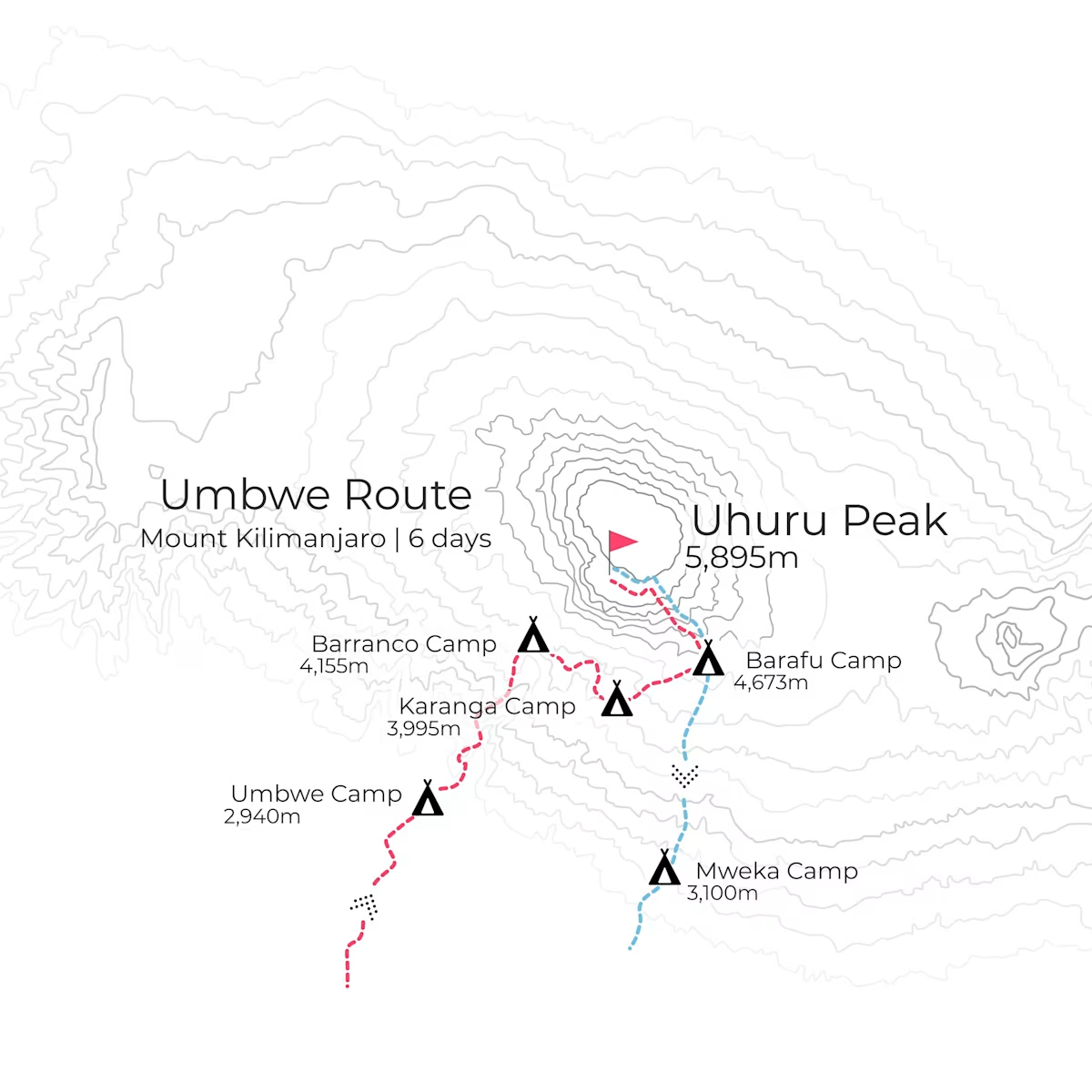
The route approaches the summit from the south, joining the Southern Circuit at Barafu Camp before the final summit push via Stella Point or the easier Barafu route. With a success rate of 65-70%, Umbwe sits on the lower end of the spectrum compared to longer, more gradual routes like Lemosho or Rongai. However, for experienced trekkers who want the ultimate challenge and the fastest possible ascent, Umbwe is unmatched. The route typically takes 5-7 days, with many operators recommending the 7-day itinerary to include an extra acclimatisation day that significantly improves summit success chances.
Why Choose the Umbwe Route
The Umbwe Route is Kilimanjaro's ultimate test of endurance. Trekkers choose this route for three primary reasons: the challenge, the directness, and the solitude. Umbwe is the shortest route to the summit in terms of distance — approximately 55 km round trip — and its steep gradient means you gain elevation rapidly. This makes it the fastest approach for those who are already well-acclimatised or have previous high-altitude experience. The route's narrow, exposed ridges offer some of the most dramatic scenery on Kilimanjaro: sheer drops plunge away on either side as you traverse the spine of the mountain, with panoramic views extending across the Kenyan plains to the north and the vast Tanzanian savannah to the south.
Another significant advantage is the lack of crowds. Umbwe receives far fewer climbers than Machame, Marangu, or Lemosho, meaning you experience the mountain in its natural state. The campsites are quieter, the trails are less disturbed, and the sense of wilderness is palpable. The route is famous for its spectacular ridges and the feeling of being truly alone on a vast, ancient volcano. It is the route of choice for mountaineers who relish difficulty, seek personal limits, and want to earn their summit in the most direct way possible. However, it is not recommended for first-time trekkers or those who struggle with steep, sustained ascents.
Umbwe Route Itinerary (7-Day Recommended)
Day 1: Umbwe Gate to Umbwe Camp
Elevation: 1,640 m to 2,940 m | Distance: 8 km | Hiking Time: 5-6 hours
Your adventure begins at the Umbwe Gate on the southeastern side of Kilimanjaro. After registration, you enter the montane rainforest, immediately climbing steeply through dense vegetation. The trail follows the Umbwe River valley, ascending relentlessly through towering trees draped in moss and lichen. Colobus monkeys may be spotted in the canopy. You reach Umbwe Camp, a basic but well-placed site perched in the forest clearing, where you spend the first night under the dense canopy.
Day 2: Umbwe Camp to Barranco Camp
Elevation: 2,940 m to 3,960 m | Distance: 6 km | Hiking Time: 4-5 hours
Today you emerge from the forest onto the exposed ridges that make Umbwe famous. The trail narrows dramatically as you walk along the crest of the ridge with spectacular drops on both sides. The vegetation transitions from forest to heath and moorland, with giant groundsels and lobelias dotting the landscape. You arrive at Barranco Camp, set in a dramatic valley beneath the towering Great Barranco Wall. The afternoon is free for acclimatisation and resting.
Day 3: Acclimatisation Day at Barranco (for 7-day itinerary)
Elevation: 3,960 m
A crucial acclimatisation day. You take a short hike up to the base of the Karanga Valley and return to Barranco Camp, following the principle of "climb high, sleep low." This day significantly improves your chances of summit success. You can explore the surrounding valley, observe the unique alpine vegetation, and rest your legs for the days ahead.
Day 4: Barranco Camp to Karanga Camp
Elevation: 3,960 m to 3,995 m | Distance: 5 km | Hiking Time: 4-5 hours
Today begins with the famous Barranco Wall climb — a steep, non-technical scramble up the face of the Great Barranco. It's exhilarating and requires hands-on-rock sections, but is perfectly safe with a steady footing. Once atop the wall, the trail undulates through valleys and across streams before reaching Karanga Camp, a small camp perched on a rocky ridge overlooking the Karanga Valley.
Day 5: Karanga Camp to Barafu Camp
Elevation: 3,995 m to 4,673 m | Distance: 4 km | Hiking Time: 4-5 hours
A shorter but steep day as you climb to Barafu Camp, the final base camp before the summit. The landscape becomes increasingly alpine and barren — rocky, dusty, and exposed. Barafu Camp sits on a rocky slope with sweeping views of the plains far below. You rest early, eat a hearty dinner, and prepare for the midnight summit attempt.
Day 6: Barafu Camp to Summit to Mweka Camp
Elevation: 4,673 m to 5,895 m to 3,100 m | Distance: 7 km ascent + 12 km descent | Hiking Time: 12-15 hours
The big day begins at midnight under a canopy of stars. You climb slowly but steadily for 6-7 hours through scree and rock to reach Stella Point (5,756 m) on the crater rim, then continue for another hour along the rim to Uhuru Peak (5,895 m), the highest point in Africa. After a brief celebration, you descend all the way back to Mweka Camp in the forest zone, a long and tiring day that tests every ounce of your endurance.
Day 7: Mweka Camp to Mweka Gate
Elevation: 3,100 m to 1,640 m | Distance: 10 km | Hiking Time: 3-4 hours
A gentle final descent through the lush rainforest. You emerge at Mweka Gate, sign out of the park, and receive your summit certificates. A transfer takes you back to your hotel in Moshi or Arusha for a well-earned celebration.
Wildlife on the Umbwe Route
The Umbwe Route traverses Kilimanjaro's lush montane forest on its lower slopes, providing habitat for a surprising diversity of wildlife. While wildlife sightings become rare above the treeline, the first day's hike through the forest offers excellent opportunities. Key species include:
- Colobus Monkey
- Blue Monkey
- Duiker
- Bushbuck
- Hyrax
- White-necked Raven
- Augur Buzzard
- African Goshawk
- Mackinder's Eagle Owl
- Sunbird
- Hartlaub's Turaco
- Mountain Chat
- Abyssinian Ground Thrush
- Chameleon
- Tree Hyrax
- Bush Pig
- Giant Forest Hog
- Serval (rare)
- Leopard (extremely rare)
- Butterflies (numerous species)
Best spots: The lower forest section between Umbwe Gate and Umbwe Camp is the richest area for wildlife. Colobus and blue monkeys are frequently seen in the canopy. Bushbuck and duiker may appear on the trail at dawn or dusk. Birdlife is abundant throughout the forest zone.
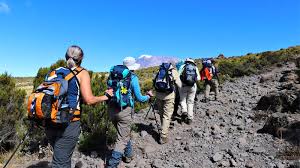
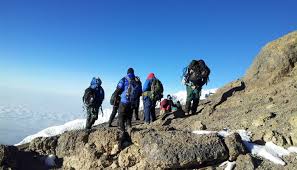
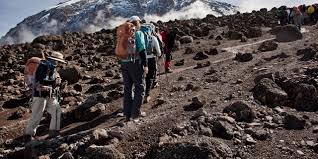
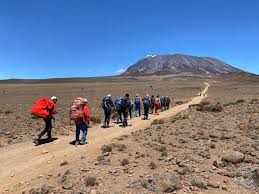
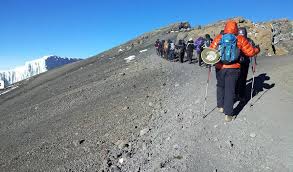
Umbwe Route Gallery
Difficulty & Preparation for the Umbwe Route
The Umbwe Route is Kilimanjaro's hardest route. With a difficulty rating of "Challenging," it demands a level of fitness and mental fortitude beyond what is required for the Marangu, Machame, or Lemosho routes. The primary factors contributing to its difficulty are the steep gradient, the rapid altitude gain, and the exposed ridge traverses. On Day 1, you gain over 1,300 m in elevation — more than any other route's first day. This aggressive ascent profile means the risk of Acute Mountain Sickness (AMS) is significantly higher on Umbwe. The route's ridges are narrow and at times only a few metres wide, with steep drops on both sides, requiring a steady head and sure footing.
Preparation: You should begin training at least 3-4 months before your climb. Focus on cardiovascular endurance (running, cycling, swimming), leg strength (squats, lunges, step-ups), and core stability. Long weekend hikes carrying a loaded daypack are invaluable preparation. Previous high-altitude trekking experience (above 4,000 m) is strongly recommended. You should also practice walking on steep, uneven terrain. Mental preparation is equally important — the summit night on Umbwe is extremely demanding, with 12-15 hours of continuous walking at high altitude. A positive mindset, realistic expectations, and trust in your guides are essential for success.
Best Time to Climb the Umbwe Route
| Month | Season | Conditions | Rating |
|---|---|---|---|
| Jan | Dry / Short Rains | Good conditions. Clear skies. Cold nights. Fewer crowds. | ★★★★☆ |
| Feb | Dry | Excellent climbing conditions. Warm days, clear mornings. | ★★★★★ |
| Mar | Short Rains | Afternoon showers possible. Trails less crowded. | ★★★☆☆ |
| Apr | Long Rains | Wettest month. Slippery trails. Low visibility. Few climbers. | ★★☆☆☆ |
| May | Long Rains | Heavy rainfall. Cloud cover. Trail conditions poor. | ★★☆☆☆ |
| Jun | Dry / Start of Peak | Conditions improving. Snow on summit possible. Good trekking. | ★★★★☆ |
| Jul | Dry / Peak | Peak season. Best weather. Clear skies. Cold but manageable. | ★★★★★ |
| Aug | Dry / Peak | Peak climbing conditions. Warm days. Summit success high. | ★★★★★ |
| Sep | Dry / Peak | Excellent conditions. Stable weather. Best month for views. | ★★★★★ |
| Oct | End of Dry | Still good. Afternoon clouds. Fewer peak-season crowds. | ★★★★☆ |
| Nov | Short Rains | Rainfall returns. Green season. Quieter on the trails. | ★★★☆☆ |
| Dec | Short Rains | Mixed conditions. Festive season. Some clear summit days. | ★★★☆☆ |
★ = Rating based on trail conditions, visibility, temperature comfort, and summit success rates. July-October and January-February offer the best conditions. The Umbwe Route's steep trails become hazardous during the rainy season.
Success Rate & Tips for the Umbwe Route
The Umbwe Route success rate ranges from 65% to 70%, which is lower than longer routes such as Lemosho (85-90%) or Northern Circuit (90%+). This is primarily due to the rapid altitude gain and steep ascent profile, which increases the risk of altitude sickness. However, with proper preparation and the right itinerary, your chances of standing on Uhuru Peak are excellent. The single most important factor is choosing a 7-day itinerary over a 5- or 6-day option. The extra acclimatisation day at Barranco Camp makes a dramatic difference to your body's ability to adapt to altitude.
Key tips for success: (1) Hydrate aggressively — aim for 4-5 litres of water per day. (2) Walk slowly — use the "pole pole" (slowly slowly) mantra. Your guide will set a pace; trust it. (3) Eat well even if you lose your appetite — high-energy foods fuel your body at altitude. (4) Sleep as much as you can — rest is critical for acclimatisation. (5) Listen to your body — inform your guide immediately if you experience headache, nausea, dizziness, or any symptoms of AMS. (6) Prepare mentally for the summit night — it will be the hardest physical challenge of your life, but the reward is indescribable. (7) Choose a reputable operator — our guides at African Majestic Adventure are among the most experienced on the mountain, with extensive Umbwe Route knowledge.
Accommodation on the Umbwe Route
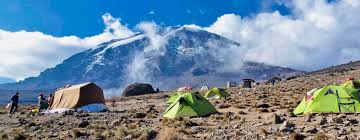
Accommodation on the Umbwe Route consists entirely of camping. Unlike the Marangu Route, there are no huts on Umbwe. You will sleep in dome tents provided by your operator, set up at designated campsites each night. The standard of camping varies by operator. At African Majestic Adventure, we provide high-quality four-season mountain tents, comfortable sleeping mats, and spacious dining tents where meals are served. Our camping gear is regularly inspected and maintained to ensure warmth and comfort in the cold alpine conditions.
Camps on the route: Umbwe Camp (2,940 m) — forest clearing, humid, basic but functional. Barranco Camp (3,960 m) — spectacular valley setting beneath the Great Barranco Wall, can be windy. Karanga Camp (3,995 m) — small, rocky, exposed. Barafu Camp (4,673 m) — the summit base camp, cold, rocky, and windswept. Mweka Camp (3,100 m) — on the descent, forested, warmer. Each camp provides basic toilet facilities (pit latrines). Our crew carries all camping equipment, food, and water, setting up camp ahead of your arrival so you can rest immediately after hiking. Pre- and post-climb accommodation in Moshi or Arusha is included in all our packages, with options ranging from budget guesthouses to luxury lodges.
Umbwe Route Climbing Cost & Fees
| Category | Price Per Person | Includes |
|---|---|---|
| Budget (5-Day) | $1,800 – $2,200 | Camping equipment, meals, park fees, guide, porters, transfers |
| Standard (6-Day) | $2,200 – $2,800 | Quality camping gear, full-board meals, experienced guide, porters, transfers, all park fees |
| Premium (7-Day) | $2,800 – $3,500 | Premium tent/gear, private guide, chef, extra porters, acclimatisation day, all fees, Moshi hotel |
| Luxury (7-Day) | $3,500 – $5,000 | Luxury camp set-up, private toilet tent, VIP service, premium meals, personal guide, all inclusive |
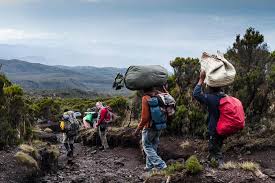
Park Entry Fee: $70/person/day (high season, non-resident). Camping Fee: $50/person/night. Rescue Fee: $20/person (mandatory). VAT (18%) is included in package prices. Crew Tips: $250-350 recommended per group (shared among guide, cook, porters). Prices vary between operators — we recommend booking with a reputable company that provides proper wages, equipment, and insurance for its crew. Contact us for a detailed, no-obligation quote tailored to your group size and preferred dates.
Frequently Asked Questions about the Umbwe Route
Umbwe Route Comparison with Other Kilimanjaro Routes
The Umbwe Route is the ultimate challenge on Kilimanjaro. Here's how it compares to the mountain's other major routes:
- Umbwe vs. Marangu: Marangu is the easiest route, with hut accommodation and a gradual slope. Umbwe is the hardest — camping only, steep, and direct. Success rates: Marangu 50-60%, Umbwe 65-70% (but only for well-prepared climbers).
- Umbwe vs. Machame: Machame ("Whiskey Route") is steep and scenic but significantly less aggressive than Umbwe. Machame takes 6-7 days with better acclimatisation. Umbwe is 30% steeper on Day 1 and much more exposed.
- Umbwe vs. Lemosho: Lemosho is the most recommended route for first-timers — longer (7-8 days), more gradual, higher success rate (85-90%). Umbwe is shorter, harder, and only for experienced trekkers.
- Umbwe vs. Rongai: Rongai is the only route approaching from the north, with a gentler gradient and drier conditions. It is also less crowded than Umbwe but far less dramatic in terms of ridge walking.
- Umbwe vs. Northern Circuit: The Northern Circuit is the longest route (9 days), circling the northern slopes. It has the highest success rate (90%+). Umbwe is the shortest, most direct, and most intense.
The choice of route depends entirely on your experience, fitness, and goals. If you want the ultimate challenge and the fastest, most direct ascent, choose Umbwe. If it's your first time or you prioritise summit success above all else, choose Lemosho or Northern Circuit. See our Kilimanjaro Packages page for full details on all routes.
Related Kilimanjaro Climbing Packages
7 Days Umbwe Route Climb
The ultimate Kilimanjaro challenge. Steep ridges, direct ascent, and the most dramatic approach to Uhuru Peak. Includes extra acclimatisation day at Barranco Camp for optimal summit success.
View Tour6 Days Umbwe Route Express
For highly experienced trekkers seeking the fastest possible summit. Direct ascent with no acclimatisation day. Requires excellent fitness and previous high-altitude experience.
View Tour12 Days Kilimanjaro + Safari
Climb Kilimanjaro via Umbwe Route then explore Tanzania's top safari parks — Serengeti, Ngorongoro, and Tarangire. The ultimate adventure combination for thrill-seekers.
View TourHow to Book Your Umbwe Route Climb
Booking your Umbwe Route climb with African Majestic Adventure is simple. Here's how it works:
- Step 1: Choose your preferred itinerary (5, 6, or 7 days) or contact us for a custom plan tailored to your schedule.
- Step 2: Get a detailed quote including park fees, camping equipment, meals, guide services, and transfers — no hidden costs.
- Step 3: Confirm your booking with a 30% deposit. We handle all park reservations, camping permits, and crew arrangements.
- Step 4: Receive your pre-travel briefing, detailed packing list, and guide assignment 2 weeks before departure.
- Step 5: Arrive in Moshi or Arusha — we meet you at the airport, brief you on the final details, and begin your Kilimanjaro adventure.
All our climbs include airport transfers, park entry fees, camping fees, rescue fees, all meals on the mountain, professional English-speaking guide, cook, porters, and camping equipment. International flights, visas, travel insurance, and crew tips are not included. Custom itineraries are welcome — contact us for a personalized quote.
Umbwe Route Map & Location
The Umbwe Route begins at Umbwe Gate (1,800m) on the southern side of Mount Kilimanjaro and follows a steep, direct ridge line up through the forest zone before joining the southern circuit near Lava Tower (4,600m). The route covers approximately 60km from gate to gate, with the summit at Uhuru Peak (5,895m). The trailhead is about a 1-hour drive from Moshi town.