

.png)
Senegal Galago
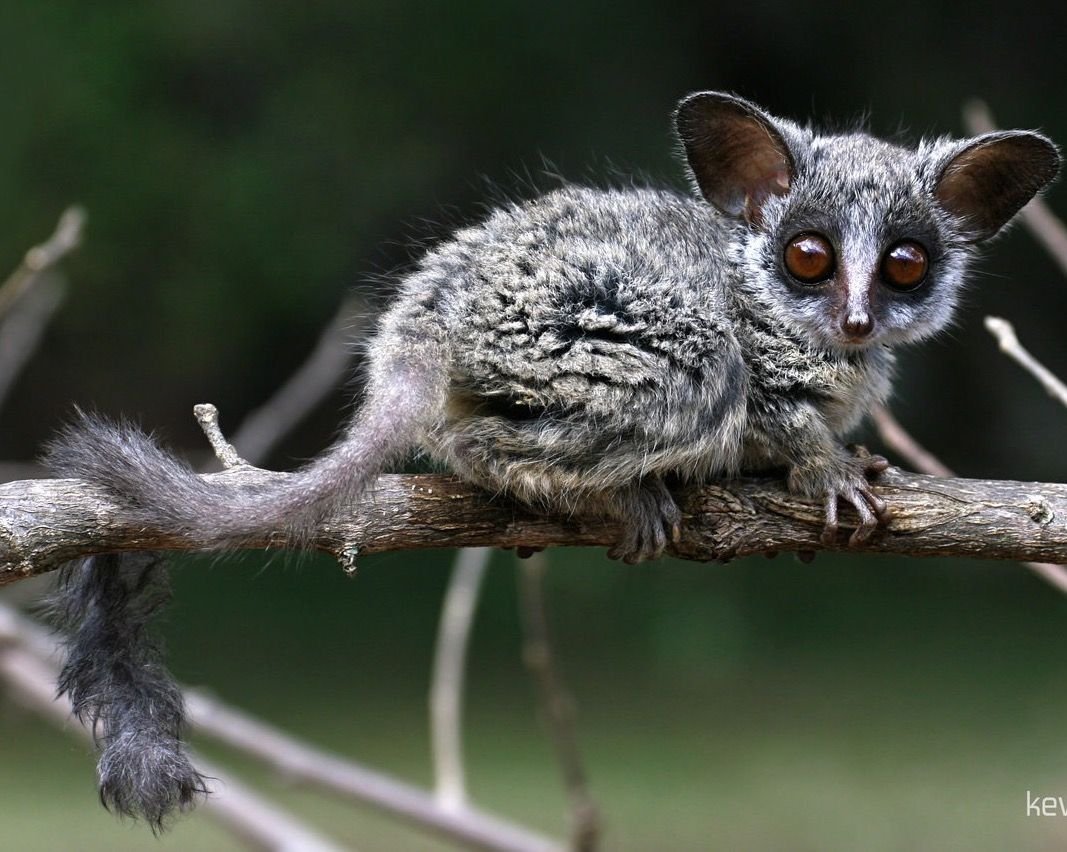
Galago senegalensis — the Senegal galago, commonly called the bushbaby: a tiny, wide-eyed nocturnal primate of African woodland.Introduction to the Senegal Galago
The Senegal galago (Galago senegalensis) is one of Africa's smallest primates - a tiny, nocturnal bundle of huge eyes and enormous ears, famous for its spring-loaded leaps between branches. In everyday language it is called a bushbaby (or galago).
It is important to be precise: 'bushbaby' is not a single species. Galago taxonomy is complicated, and several distinct galago species have historically been grouped together under the name 'bushbaby'. This page is specifically about the Senegal galago (Galago senegalensis), the widespread form of East and sub-Saharan Africa. Other galagos (e.g. the larger thick-tailed galago) are different animals.
Why the Senegal Galago is Ecologically Vital
As a heavy insect-eater that also feeds on tree gum, it helps control insects and acts as a minor seed disperser, while itself being prey for nocturnal predators - a small but real link in the woodland food web.
A Species Worth Understanding
Its giant eyes, swivelling ears and elongated hind limbs are a masterclass in nocturnal adaptation. Understanding the real Senegal galago - not a generic 'bushbaby' - replaces vague template description with the genuine animal.
Scientific Classification
Galagos belong to the family Galagidae (the bushbabies and galagos), within the primate suborder that also includes lorises. Because the group's taxonomy is actively revised, we use the widely accepted Galago senegalensis and clearly state this is the Senegal galago, not 'bushbabies' as a whole.
Physical Characteristics
The Senegal galago is built for silent nocturnal life in the trees. Speed on the ground is not its specialty - leaping is:
- Size: Head-body about 13 cm; the long tail adds roughly 13–20 cm.
- Weight: Adults weigh 95–300 g - small enough to sit in your palm.
- Very large eyes: Enormous, forward-facing eyes gather scarce night light for excellent nocturnal vision; they cannot move in the sockets, so the head turns instead.
- Large, independently movable ears: Each ear swivels separately to pinpoint insect sounds in the dark - a bat-like listening system.
- Elongated tarsus: The ankle (tarsal) bones are stretched and strengthened, storing energy like a spring for powerful leaps.
- Powerful hind limbs: Long, muscular back legs drive vertical clinging and leaping - the galago's signature locomotion.
- Grasping digits: Hands and feet grip branches tightly; a specialised grooming tongue (sublingua) and toothcomb keep the fur clean.
- Locomotion: A vertical clinger and leaper - it clings upright to a trunk, then launches metres to the next branch.
Lifespan: In the wild a Senegal galago typically lives only about 3–4 years; in captivity it may reach roughly 10 years. We do not publish '10–15 years' as a wild lifespan.
Male vs Female & Social Groups
The Senegal galago has complex nocturnal social behaviour - and it is not a 'bachelor-group' animal:
- Sleeping groups: By day, several animals may share a nest (tree fork, hollow, old bird nest) - often a female with her young, sometimes with a male.
- Foraging is often solitary: At night, individuals usually forage alone or in loose, fluid associations rather than in tight troops.
- Male ranges: Males tend to have larger home ranges that overlap the ranges of several females.
- No bachelor herds: Describing galagos as living in 'bachelor groups' is not supported; their social world centres on maternal care and flexible nocturnal ranging.
Senegal Galago Young
Young develop in nests, with strong maternal care:
- Litter size: Usually 1–3 offspring (not simply 'a single young').
- Gestation: Roughly 110–120 days.
- Breeding: Under favourable conditions females may breed twice a year.
- Transport: The mother carries young in her mouth when moving nests, or the young cling to her fur.
- Nest phase: While the mother forages at night, the young are left in a safe nest (tree hollow, fork or old nest).
Habitat: Where They Thrive
The Senegal galago favours dry savanna woodland, bushland and forest-edge across sub-Saharan Africa - not rainforest, and not open grassland plains:
Key Habitat Types:
- Dry woodland & savanna woodland: Acacia and mixed woodland with good tree cover.
- Bushland & thicket: Scrubs and tangled vegetation that provide nests and insect prey.
- Forest-edge & riverine woodland: The margins where trees meet open country.
- Human-modified trees: Sometimes in wooded gardens, plantations and parks where cover remains.
Climate & Cover:
It needs trees for sleeping, nesting and leaping. It avoids treeless desert and dense closed rainforest alike; the wooded mosaic of sub-Saharan Africa is its home.
Distribution Map
The Senegal galago has a broad sub-Saharan distribution, including much of East, Central and Southern Africa - not a Tanzania-only species:
In East Africa it occurs in Tanzania, Kenya and Uganda; Tanzania's woodlands hold reliable populations.
Because it is nocturnal and small, a sighting means a night drive with a spotlight - but even then it is not guaranteed, so patience rewards you.
Where to See the Senegal Galago in East Africa
The Senegal galago is a nocturnal woodland primate best seen on night drives. Confirmed East African destinations include:
Tarangire
Best: Year-round | Region: Woodland, Tanzania
Visible (night)
Tip: Night drives through woodland; listen for calls and watch for eye-shine.
Lake Manyara
Best: Year-round | Region: Ground-water forest, Tanzania
Visible (night)
Tip: Forest-edge and woodland margins after dark.
Arusha & Serengeti
Best: Year-round | Region: Woodland, Tanzania
Visible (night)
Tip: Wooded savanna on night drives.
Wider range
Best: Year-round | Region: Kenya, Uganda, Southern Africa
Visible (night)
Tip: Any dry woodland in its range may hold them.
Senegal Galago in Pictures
A closer look at the Senegal galago - huge eyes, enormous ears and the spring-loaded hind limbs that make it a champion leaper of the African night.
Where to Spot the Senegal Galago on Safari
Plan a night-focused trip to Tanzania's woodlands to see the Senegal galago. Explore the destinations below.
Diet: What They Eat
The Senegal galago is an omnivore with a strongly animal- and exudate-based diet - a major part of its ecology:
- Primary Diet: Insects and other arthropods (beetles, grasshoppers, moths, caterpillars) form the bulk of feeding.
- Tree gum & sap: It gnaws tree bark to feed on gum and sap, and this becomes especially important in the dry season when insects are scarcer.
- Plant foods: Fruit, flowers, seeds and nectar add variety.
- Animal foods: It also takes eggs and small vertebrates (e.g. small birds, geckos) when available.
- Feeding style: Forages at night, leaping to catch insects and visiting gum sites; the toothcomb and grooming tongue help clean fur and food.
- Ecosystem Role: A significant insect predator and minor seed disperser, linking trees to the nocturnal web.
Daily Behaviour & Social Life
Daily Rhythm (nocturnal)
Day: Sleeps in dense vegetation, tree forks, hollow trees or old bird nests, often in a small sleeping group.
Night: Becomes active after dark, foraging alone or in loose social contexts, using powerful leaps and careful climbing.
There is no rigid hourly 'timetable' - activity follows nightfall, moonlight, weather and food.
Social Structure
- Sleeping groups: Females with young (and sometimes a male) share a nest by day.
- Foraging: Mostly solitary or loosely associated at night; ranges overlap flexibly.
- Communication: Loud calls (the 'bushbaby' name comes from the infant's cry), scent-marking with urine, and ear/body signals.
- Defence: Huge eyes and swivelling ears detect predators; it freezes, then bursts away in a series of leaps.
Predators & Threats
Owls, genets, mongooses, snakes and small cats prey on galagos. Its best defences are nocturnal alertness, agility and concealment.
Watching tip: On a night drive, scan with a red or dim spotlight for eye-shine and listen for calls; a frozen, staring galago is a classic sight.
Reproduction & Lifespan
- Mating: Within overlapping ranges; males may mate with several females.
- Gestation: About 110–120 days.
- Litter: 1–3 young; females may breed twice yearly in good conditions.
- Care: Mother carries or shelters the young in a nest; young are left in the nest while she forages.
- Lifespan: Wild 3–4 years; captive individuals may reach roughly 10 years.
Conservation Status
IUCN Red List Status: Least Concern for the species overall, though local populations face pressure from habitat loss.
Major Threats
- Habitat loss: Clearing of woodland and bushland for agriculture and firewood shrinks suitable habitat.
- Hunting & trade: Taken for bushmeat and, at times, the pet trade.
- Fragmentation: Isolated woodland patches cannot support viable populations.
Conservation Programs
Protected national parks and reserves are the backbone of conservation. In Tanzania, TANAPA and TAWA manage wooded parks such as Tarangire, Lake Manyara and Arusha; similar agencies protect habitat across Kenya, Uganda and Southern Africa. Organisations including the IUCN SSC Primate Specialist Group, WWF and African Parks support habitat protection and research.
32 Interesting Facts
Senegal Galago vs Other Primates
Senegal Galago vs Black-and-white Colobus
| Feature | Senegal Galago | Black-and-white Colobus |
|---|---|---|
| Activity | Nocturnal | Diurnal |
| Diet | Insects + gum | Mostly leaves |
| Size | 95-300 g | 5-14 kg |
| Locomotion | Leaping | Arboreal quadruped |
Senegal Galago vs Blue Monkey
| Feature | Senegal Galago | Blue Monkey |
|---|---|---|
| Activity | Nocturnal | Diurnal |
| Diet | Insects + gum | Fruit-led omnivore |
| Eyes | Huge, night-adapted | Diurnal vision |
| Social | Solitary/nocturnal | Troops |
Senegal Galago vs Chimpanzee
| Feature | Senegal Galago | Chimpanzee |
|---|---|---|
| Size | 95-300 g | 30-70 kg |
| Activity | Nocturnal | Diurnal |
| Diet | Insects + gum | Fruit + insects |
| Social | Solitary/nocturnal | Complex troops |
Senegal Galago in African Culture
The bushbaby's eerie night calls feature in the stories of many African peoples, often as a trickster or night spirit. Today it is a favourite of night-drive visitors - a tiny symbol of the African night's hidden life.
Wildlife Photography Guide
- Best Camera Lens: A 100–400mm or 200–600mm lens; a flash or spotlight-friendly high-ISO body helps at night.
- Best Time: Night drives, especially calm, moonlit or spotlight conditions.
- Best Habitat: Woodland margins in Tanzania (Tarangire, Lake Manyara, Arusha) and across its range.
- Best Behaviour: Capture the huge eyes and ears, and a mid-leap freeze; use a red light to avoid disturbing it.
- Safety Distance: Observe without handling; never shine a bright white light continuously into its eyes.
Frequently Asked Questions
The Senegal galago (Galago senegalensis) is a tiny nocturnal primate of African woodland, known for huge eyes, enormous ears and powerful leaps. It is commonly called a bushbaby.
Yes - bushbaby and galago are the same group. Galago taxonomy is complicated and several species have been grouped under 'bushbaby'; this page is specifically the Senegal galago.
Across sub-Saharan Africa, including Tanzania, Kenya and Uganda. In Tanzania look to wooded parks such as Tarangire, Lake Manyara and Arusha on night drives.
Heavily insects and other arthropods, plus tree gum and sap (especially in the dry season), with fruit, flowers, seeds, eggs and small animals.
Head-body about 13 cm, with a tail of roughly 13-20 cm.
Adults weigh 95-300 g.
It is not a speed animal - it is a leaper. Using elongated hind limbs and tarsus it launches several metres between branches, not sprinting on the ground.
In the wild it typically lives about 3-4 years; in captivity it may reach roughly 10 years. We do not state 10-15 years as a wild lifespan.
The species is Least Concern on the IUCN Red List, though local populations are pressured by habitat loss.
Dry savanna woodland, bushland and forest-edge across sub-Saharan Africa - it needs trees for sleeping, nesting and leaping.
Habitat loss and fragmentation, hunting for bushmeat and the pet trade, and isolation of woodland patches.
Strictly nocturnal: it sleeps by day in tree forks, hollows or old nests, and forages after dark using leaps and climbing.
It has complex nocturnal social behaviour but is not a bachelor-group animal; it often forages alone at night and sleeps in small groups (females with young, sometimes a male).
Owls, genets, mongooses, snakes and small cats; huge eyes and movable ears help it detect and escape them.
Year-round on night drives and spotlight walks; it is visible at night but never guaranteed, so patience is key.
In many traditions a trickster or night spirit; today it is a highlight of African night drives.
Litters are 1-3 after a 110-120 day gestation; females may breed twice a year. The mother carries or shelters the young, which wait in a nest while she forages.
With loud calls (the name 'bushbaby' comes from the infant's cry) and urine scent-marking; ears and posture signal mood.
As a major insect-eater and minor seed disperser it helps control pests and regenerate woodland, and it is prey for nocturnal predators.
Yes - on night drives with a red or dim spotlight, a steady tripod and a long lens; a frozen, eye-shine-lit portrait is the prize.
Night drives and guided spotlight walks in wooded reserves - not daytime game drives, since the galago hides and sleeps through the day.
Support protected woodland and responsible operators, and back community-based conservation that keeps wooded habitat standing.
Yes - protected parks and anti-poaching work (TANAPA/TAWA in Tanzania) plus the IUCN SSC Primate Specialist Group, WWF and African Parks.
Huge eyes, independently movable ears, an elongated tarsus, powerful hind limbs, grasping digits, a grooming tongue and vertical clinging-leaping locomotion.
For the Senegal galago, a night-focused trip to Tanzania's woodlands works best - Tarangire, Lake Manyara and Arusha - reached via the Tanzania safari circuit or a tailored night-drive itinerary.
Related Safari Packages & Tours
Plan a night-focused safari to see the Senegal galago and the rest of Africa's incredible wildlife with our expert guides.
References & Further Reading
- IUCN Red List: Galago senegalensis - Least Concern.
- Animal Diversity Web (University of Michigan): Galago senegalensis account.
- About these facts: Weight, size and lifespan are approximate adult ranges. Wild lifespan is short (about 3-4 years); captive animals may live longer (roughly 10 years). Conservation status should be checked against the current IUCN assessment.