

.png)
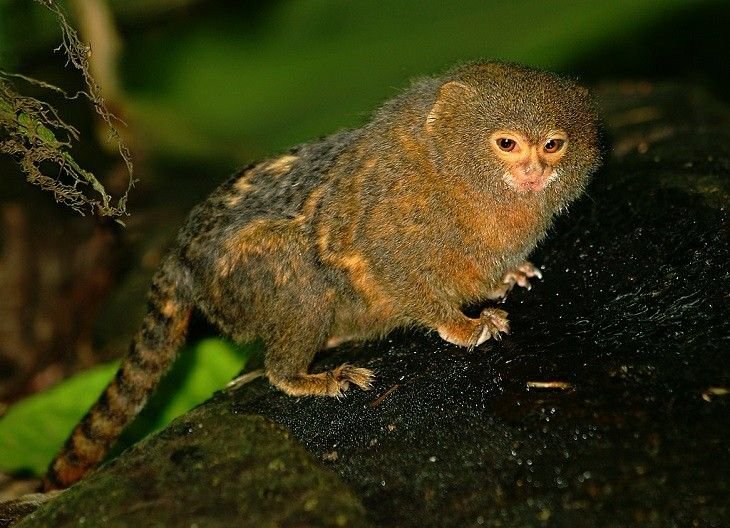
The Potto
Perodicticus potto — a slow, secretive lorisid of the forest canopy: large eyes, a powerful grip, a dense coat and an extraordinary ability to hang motionless and avoid detection.Introduction to the Potto
The potto (Perodicticus potto) is a slow-moving nocturnal lorisid primate adapted to life in the forest canopy. Far from a generic "safari highlight", it is a specialist of stillness: a powerful grip, a cryptic brown-grey coat and a remarkable ability to remain motionless help it avoid predators. By night it creeps along branches in search of fruit, gums and insects; by day it hangs quiet in dense cover. Seeing one is a reward for a patient night walk rather than a game drive.
Scientific Classification
The potto is a lorisid - the African relative of the slow lorises of Asia - built for a quiet, nocturnal, branch-hanging life rather than leaping or speed.
Physical Characteristics
Adults are small - about 1–1.5 kg, with a head-body length of roughly 30–40 cm and only a short tail. The potto's real interest is its anatomy, which is unusually well documented:
- Large eyes: Big, forward-facing eyes built for night vision.
- Small rounded ears: Reduced, rounded ears partly hidden in the fur.
- Dense coat: A thick brown-to-grey coat that breaks up its outline in the canopy.
- Vestigial index finger: The second finger is greatly reduced - a hallmark lorisid trait.
- Toilet claw: A specialised claw on the second toe used for grooming.
- Powerful grip: Strong hands and feet let it hang and creep along branches with great control.
- Flexible wrists & ankles: Rotating joints allow slow, deliberate, silent movement.
- Scapular shield: A patch of thickened skin and fatty tissue over the neck/shoulders, thought to protect it when it freezes against attackers.
Social Organization
Pottos are largely solitary and territorial - not cooperative family groups or bachelor bands:
- Sexes similar: Males and females look much alike in size and coat.
- Male ranges: Males defend larger home ranges than females.
- Overlap: A male's range may overlap the ranges of several females.
- Territoriality: Both sexes defend their ranges, especially against same-sex neighbours.
- Solitary life: Adults typically travel and forage alone, meeting mainly to mate.
Potto Young & Reproduction
Potto reproduction centres on mother and infant - not cooperative family groups:
- Offspring: Usually a single infant per birth (twins are uncommon).
- Care: The mother provides the care; the tiny infant clings to her belly or is left parked in cover while she forages.
- Development: Young are weaned after a few months and later become independent, dispersing to establish their own solitary ranges.
- Maturity: Individuals are long-lived for their size - captives have been recorded at over two decades, though wild longevity is less firmly documented.
Habitat: Where They Thrive
The potto is a forest primate of equatorial Africa, using a range of wooded habitats:
Key Habitat Types:
- Rainforest: Lowland and coastal rainforest is core habitat.
- Montane & mid-altitude forest: Including primary and secondary forest, from sea level up to about 2,089 m.
- Gallery & moist woodland: Riverine and other moist woody cover within its range.
Geographic Range:
Pottos occur across equatorial Africa, from Senegal and Gambia in the west eastwards to western Kenya, taking in the Congo Basin and many Central and East African forests. Uganda is one important East African range country where travellers can search for them - not the species' only or entire global range.
Distribution Map
The potto's range stretches across the wet forests of equatorial Africa. Within East Africa, Uganda's protected forests are among the most accessible places to look for them on night walks:
In Uganda, pottos occur in forests such as Bwindi and Kibale, best sought on guided night walks.
Because they are nocturnal and secretive, finding a potto depends on a careful night walk with a guide who knows the trails.
Where to See the Potto in Uganda
Uganda's forests are a reliable East African base for potto searches - but sightings are never guaranteed for such a nocturnal, secretive primate. A sighting is a reward for a patient night walk:
Bwindi Impenetrable NP
Best: Year-round | Region: South-west Uganda
Visible (night walk)
Dense montane forest where night walks can reveal pottos and other nocturnal life.
Kibale NP
Best: Year-round | Region: Western Uganda
Visible (night walk)
Famous for primates; guided night walks search the canopy and understory for pottos.
Elsewhere in its range (Congo Basin, west and central Africa), pottos occur in suitable forest, but Uganda offers the most traveller-accessible night-walk experience.
Potto in Pictures
A closer look at the potto - the slow, nocturnal lorisid of Africa's forests, with large eyes, a powerful grip and a neck shield, best seen on a quiet night walk.
Where to Spot the Potto on Safari
Plan a Uganda forest safari focused on Bwindi and Kibale - the country's best bases for nocturnal primate walks. Explore the destinations below.
Diet: What They Eat
The potto is an omnivore with a varied, largely plant-and-animal diet that shifts through the seasons:
- Fruit: Ripe fruit is an important staple where available.
- Insects & arthropods: Beetles, caterpillars and other invertebrates are regularly taken.
- Plant gums: Tree gums and exudates are a notable food, especially in drier periods.
- Eggs: Birds' eggs are taken when found.
- Fungi: Fungi form part of the diet in some seasons.
- Small vertebrates: The occasional small animal may be eaten.
- Seasonal shifts: The balance between fruit, gum and insects changes through the year as resources vary.
Daily Behaviour & Nocturnal Life
Day & Night
Day: Pottos rest, often motionless, in dense leafy cover or against a branch, relying on stillness and their cryptic coat to avoid detection.
Night: They become active after dark, foraging and moving through the canopy with slow, deliberate, silent steps - a slow climber rather than a leaper.
Defence by stillness
Pottos are famously slow and famously still. When threatened they may freeze, sometimes raising the head to present the thickened neck shield, or deliver a sharp bite. Their defence is patience and concealment, not flight.
Predators & Threats
Natural predators include owls, snakes and small carnivores. The greater threat is habitat loss: deforestation and the conversion of forest to farmland shrink the continuous canopy they depend on.
Watching tip: Look for pottos on a guided night walk with a spotlight - scan branches slowly and watch for two reflective eyes and a motionless form.
Reproduction & Lifespan
- Mating: Solitary adults meet mainly to mate; both sexes hold territories.
- Birth: Usually a single infant.
- Care: The mother cares for and carries the infant; it clings to her and is later parked while she feeds.
- Lifespan: Long-lived for their size - captives have been recorded at over two decades, while wild longevity is less firmly documented (often cited around 15+ years).
Conservation Status
IUCN Red List Status: The potto (Perodicticus potto) is listed as Least Concern. It remains relatively widespread across equatorial African forests.
Major Threats
- Habitat loss: Deforestation and conversion of forest to agriculture are the main pressure, removing the continuous canopy pottos need.
- Hunting & trade: In some areas pottos are taken for bushmeat or local use.
- Forest fragmentation: Broken forests isolate populations and reduce safe movement.
Conservation Context
Protected forests - such as Uganda's Bwindi and Kibale - help safeguard potto habitat. Broader protection of equatorial African forest is the key to keeping this quiet, nocturnal primate common.
Interesting Facts
Potto vs Other Nocturnal Primates
Potto vs Bushbaby (Galago)
| Feature | Potto | Bushbaby |
|---|---|---|
| Movement | Slow, deliberate | Fast, leaping |
| Activity | Nocturnal | Nocturnal |
| Tail | Short | Long, bushy |
| Defence | Freezes/stillness | Fleeing leaps |
Potto vs Monkey
| Feature | Potto | Typical Monkey |
|---|---|---|
| Social | Solitary/territorial | Groups |
| Active | Night | Day |
| Build | Slow climber | Agile leaper |
Potto in Culture
The potto is one of Africa's quieter wonders - a primate that survives not by speed or noise but by patience, grip and stillness. For forest visitors, a glimpse of its two reflecting eyes on a night walk is a small, memorable reward of the African darkness.
Wildlife Photography Guide
- Best Camera Lens: A fast prime (e.g., 35mm f/1.4 or 50mm f/1.4) or a stabilised zoom for low-light canopy shots.
- Best Time: Night walks in Bwindi and Kibale, year-round.
- Best Habitat: Dense forest interior and edge trails.
- Best Behaviour: Capture the reflective eyes, the grip on a branch and the motionless pose.
- Safety & Ethics: Use a dim red light where possible, keep distance, and never disturb a resting potto.
Frequently Asked Questions
The potto (Perodicticus potto) is a slow-moving nocturnal lorisid primate of African forests, adapted to a quiet canopy life with a powerful grip and the ability to stay motionless.
Adults are small - about 1-1.5 kg, with a head-body length of roughly 30-40 cm and only a short tail.
Yes. Pottos rest motionless by day in dense cover and move, forage and feed in the canopy at night.
It is omnivorous: fruit is important, along with insects and other arthropods, plant gums, eggs, fungi and the occasional small vertebrate, shifting through the seasons.
Across equatorial Africa, from Senegal and Gambia east to western Kenya. Uganda's Bwindi and Kibale forests are a reliable East African place to search on night walks.
Largely solitary and territorial. Males and females look alike; males hold larger ranges that can overlap several females, and both sexes defend their ranges.
A guided night forest walk - not a game drive. Pottos are nocturnal and secretive, so patient tracking with a guide is essential and sightings are never guaranteed.
Rainforest, montane and secondary forest, from sea level to about 2,089 m across equatorial Africa.
No - it is Least Concern on the IUCN Red List, though local populations are threatened by deforestation and forest loss.
Chiefly by stillness - it freezes motionless against a branch, using its cryptic coat and thick neck shield, rather than fleeing.
Usually a single infant, cared for by the mother; the young cling to her and are later parked while she forages.
Few primates are as committed to slowness and stillness - a canopy specialist that survives by patience, grip and concealment, best met on a quiet night walk.
Related Safari Packages & Tours
Plan a Uganda forest safari to Bwindi and Kibale - the country's best bases for nocturnal primate night walks, including the potto.
References & Further Reading
- IUCN Red List: Perodicticus potto - Least Concern.
- Animal Diversity Web (ADW): University of Michigan, Perodicticus potto account - documents nocturnal behaviour, slow locomotion, powerful grip, immobility, anatomy (vestigial index finger, toilet claw, neck shield), solitary territorial ecology, diet and broad equatorial range.
- About these facts: Weight, length, diet and lifespan are approximate and vary by sex, age, location and source; wild potto lifespan is less firmly established than captive records (which exceed two decades). Conservation status should be checked against the current IUCN assessment.