

.png)
Livingstone's Turaco
Tauraco livingstoniiA spectacular, crested bird of brilliant green and crimson – a living jewel of Africa's ancient forests.
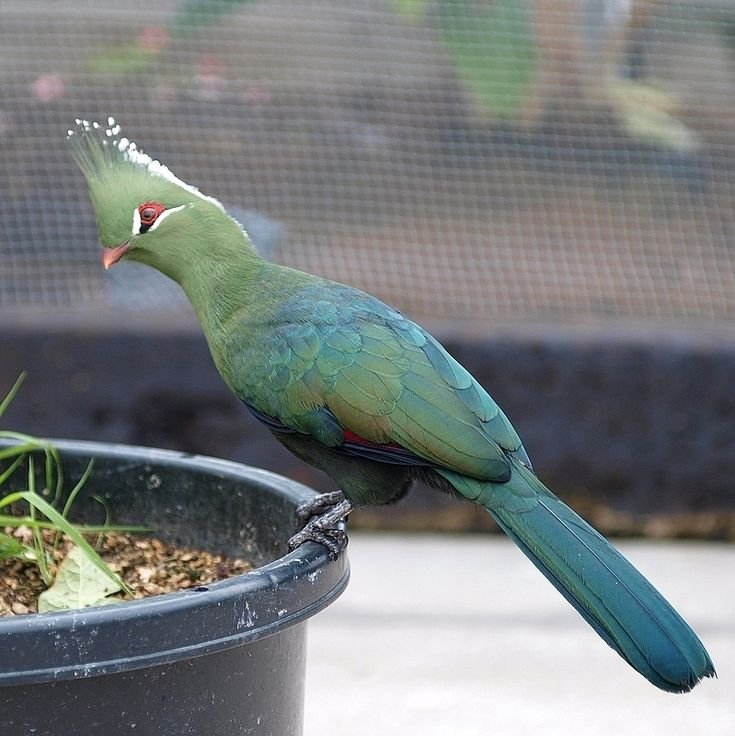
Livingstone's Turaco (Tauraco livingstonii) is a spectacular bird in the family Musophagidae, named for Charles Livingstone, brother of the famous explorer David Livingstone. With its brilliant emerald-green plumage, white-tipped crest, and large crimson wing patches, this crested bird is one of the most stunning inhabitants of the coastal and montane evergreen forests of southeastern Africa[reference:0][reference:1].
Livingstone's Turaco Quick Facts
What Is Livingstone's Turaco?
Livingstone's Turaco (Tauraco livingstonii) is a spectacular bird belonging to the family Musophagidae, the turacos. It was first described by the English zoologist George Robert Gray in 1864. The species is named for Charles Livingstone, the brother of the famous Scottish explorer and missionary David Livingstone[reference:2].
Turacos are a unique family of birds found only in Africa. They are known for their vivid colours, prominent crests, and fruit-based diets. Livingstone's Turaco was previously considered conspecific with Schalow's Turaco and the Knysna Turaco, but it differs in plumage, genetics, and vocalizations[reference:3]. The advertisement call of Livingstone's Turaco consists of more notes delivered at a much faster pace than that of Schalow's Turaco[reference:4].
This species is distributed through the subtropical lowlands of southeastern Africa, from southern Tanzania through Malawi, Mozambique, eastern Zimbabwe, and along the subtropical coast of South Africa, with an isolated population in Burundi[reference:5].
How to Identify Livingstone's Turaco
Livingstone's Turaco is one of Africa's most striking and easily recognisable birds. Here are its key identifying features:
- Size: A medium-sized bird, measuring 40-43 cm (16-17 in) in length and weighing approximately 318 grams[reference:6].
- Plumage: Brilliant, iridescent green overall, with a darker, more bluish-green on the wings and tail.
- Crest: A prominent crest on the head, tipped with white – a key identifying feature[reference:7].
- Wings: Large crimson patches on the inner wing (primaries), highly visible in flight[reference:8].
- Eye-ring: Dark eyes with a bright red eye-ring.
- Bill: Blackish, slightly curved.
- Tail: Long and graduated, with white tips on the outer feathers.
- Males and females: Similar in appearance, with no obvious sexual dimorphism.
Distinguishing from Similar Species
Livingstone's Turaco can be confused with Schalow's Turaco and the Knysna Turaco. Schalow's Turaco has a longer crest and a different call, while the Knysna Turaco has a shorter crest. The ranges of these species have minimal overlap, with Livingstone's Turaco found in the coastal and montane forests of southeastern Africa[reference:9].
Behavior & Social Life
Livingstone's Turaco is a gregarious and vocal bird, usually seen in pairs or small family groups, and sometimes in loose flocks at abundant fruiting trees[reference:10][reference:11].
Foraging Behavior
- Frugivorous diet: Livingstone's Turaco feeds mainly on fruits, berries, and seeds. Its specialised bill is perfectly adapted for plucking ripe fruits from tree branches[reference:12].
- Foraging technique: It moves through the forest canopy, bouncing from branch to branch, searching for fruit[reference:13].
- Occasional supplements: It also takes leaves, buds, flowers, and occasionally small insects, snails, and slugs[reference:14].
Flight
- Flight style: Livingstone's Turaco flies with short bursts of wingbeats followed by long glides, a typical turaco flight pattern[reference:15].
- Wing patches: The large crimson wing patches are highly visible in flight, making the bird unmistakable.
Vocalization
- Call: The call is a loud, harsh, barking series of 'korr, korr, korr...' notes, with up to 15 notes in a sequence[reference:16].
- eBird description: The call is a gruff, accelerating series of 'kow' notes[reference:17].
- Territorial calling: Territorial calling is common at dawn and late afternoon[reference:18].
Habitat & Distribution
Livingstone's Turaco inhabits coastal and montane evergreen forests in southeastern Africa, from sea level up to 2,500 metres elevation[reference:19][reference:20].
Key habitat types include:
- Coastal lowland forests – along the southeastern coast of Africa.
- Montane evergreen forests – in the Eastern Arc Mountains and other highland areas.
- Riverine forests – along watercourses.
- Dense woodland – with a good canopy cover[reference:21].
Distribution: Livingstone's Turaco has an extremely large range, with an Extent of Occurrence of approximately 2,250,000 km²[reference:22]. It is found from southern Tanzania through Malawi, Mozambique, and eastern Zimbabwe to the subtropical coast of South Africa (northeastern KwaZulu-Natal), with an isolated population in Burundi[reference:23].
Subspecies: Three subspecies are recognised[reference:24]:
- T. l. livingstonii – the nominate subspecies, found in Malawi, Mozambique, eastern Zimbabwe and South Africa.
- T. l. reichenowi – found in the mountains of northwestern Tanzania (Nguru and Uluguru Mountains to Dabaga and Njombe Highlands) and central Burundi[reference:25].
- T. l. cabanisi – found in coastal lowlands from Tanzania to Mozambique[reference:26].
Tanzania Distribution
In Tanzania, Livingstone's Turaco occurs in two distinct regions[reference:27]:
- Coastal lowlands: The subspecies T. l. cabanisi is found in the coastal forests of southern Tanzania[reference:28].
- Eastern Arc Mountains: The subspecies T. l. reichenowi is found in the Nguru Mountains, Uluguru Mountains, and Njombe Highlands[reference:29]. Records also exist from the Ndundulu Forest in the Iringa Region[reference:30].
Livingstone's Turaco in Tanzania
Livingstone's Turaco is a spectacular jewel of Tanzania's coastal and montane forests. Here are the best locations to see it:
Uluguru Mountains
Part of the Eastern Arc Mountains, the Ulugurus are home to the subspecies T. l. reichenowi. The montane forests here provide excellent habitat for these spectacular birds.
Uluguru safariNguru Mountains
Another Eastern Arc mountain range with pristine montane forest. The subspecies T. l. reichenowi is found here, often seen in the canopy feeding on fruit.
Nguru safariNdundulu Forest
Located in the Iringa Region, Ndundulu Forest is a known location for Livingstone's Turaco. The dense evergreen forest provides ideal habitat for this species[reference:31].
Ndundulu safariCoastal Forests (Rufiji)
The coastal lowland forests of southern Tanzania, particularly in the Rufiji region, are home to the subspecies T. l. cabanisi. These forests are rich in fruiting trees.
Coastal forest safariSafari Methods
- Forest walks – Livingstone's Turaco is best seen on foot in the forest, listening for its distinctive calls.
- Birdwatching – look for the brilliant green bird with a white-tipped crest, often seen in the canopy feeding on fruit.
- Wildlife photography – the turaco's stunning plumage makes it a spectacular photographic subject.
- Listen for calls – the loud, harsh barking 'korr' series is often the first indication of its presence.
- Look for fruiting trees – turacos are often found in trees with ripe fruit, particularly figs and wild berries.
Best Time to See Them
Livingstone's Turacos are resident year-round in suitable habitat. They are most active during the early morning and late afternoon when they are feeding and calling. The dry season (June to October) is generally best for forest birding as trails are more accessible.
Diet & Feeding
Livingstone's Turaco is primarily a frugivore, with a diet consisting mainly of fruits and berries.
Food Sources
- Fruits: A wide variety of fruits, including figs and wild berries[reference:32][reference:33].
- Berries and drupes: Small fruits and drupes from forest trees[reference:34].
- Seeds: Various seeds from fruits it consumes[reference:35].
- Leaves and buds: Occasionally takes leaves and buds[reference:36].
- Flowers: Occasionally takes flowers[reference:37].
- Insects: Occasionally takes small insects, snails, and slugs[reference:38].
Feeding Behavior
Livingstone's Turaco forages in the forest canopy, moving through the trees with a bouncing motion and using its specialised bill to pluck ripe fruits from branches[reference:39]. As a frugivore, it plays an important role as a seed disperser in its forest habitat, helping to maintain the health and diversity of the ecosystem[reference:40].
Breeding & Life Cycle
Livingstone's Turaco is monogamous, forming long-term pair bonds[reference:41].
Nesting
- Nest site: A flimsy platform nest of twigs built in dense vegetation, usually 3-10 metres above the ground[reference:42].
- Nest construction: Both parents build the nest, which is a loose platform of sticks[reference:43].
- Clutch: 2 to 3 eggs[reference:44].
- Incubation: 22 to 23 days, shared by both parents[reference:45].
- Parental care: Both parents feed the chicks pre-digested fruit[reference:46].
- Fledging: Chicks leave the nest long before they can fly, using their great climbing ability to move through the branches[reference:47].
Conservation Status
Livingstone's Turaco is assessed as Least Concern on the IUCN Red List[reference:48].
Population: The global population size has not been quantified, but the species is reported to be fairly common over much of its range[reference:49]. The population trend is decreasing[reference:50].
Justification: This species has an extremely large range (2,250,000 km²) and hence does not approach the thresholds for Vulnerable under the range size criterion. Despite the fact that the population trend appears to be decreasing, the decline is not believed to be sufficiently rapid to approach the threshold for Vulnerable[reference:51].
Threats: The species is tentatively assessed as being in decline due to habitat loss[reference:52]. Forest degradation and deforestation are ongoing threats in parts of its range. The species is listed on CITES Appendix II[reference:53].
Comparisons
Livingstone's Turaco is sometimes confused with other turacos. Here are the key differences:
| Feature | Livingstone's Turaco | Schalow's Turaco | Knysna Turaco |
|---|---|---|---|
| Size | 40-43 cm | 40-43 cm | 38-42 cm |
| Crest | White-tipped, medium length | Longer, white-tipped | Shorter, white-tipped |
| Call | Fast, gruff 'korr' series | Slower, deeper notes | Slow, mellow notes |
| Range | Coastal SE Africa & Eastern Arc | Central & East African highlands | Southern & Eastern South Africa |
| Wing Patches | Crimson | Crimson | Crimson |
Did You Know?
Named After a Livingstone
Livingstone's Turaco is named for Charles Livingstone, the brother of the famous explorer David Livingstone[reference:54].
Crimson Wing Patches
The large crimson patches on the wings are highly visible in flight and make this bird unmistakable[reference:55].
Seed Disperser
As a frugivore, Livingstone's Turaco plays a vital role in its ecosystem by dispersing seeds throughout the forest[reference:56].
Unique Turaco Pigments
Turacos are one of the few bird groups that have true green and red pigments (turacoverdin and turacin) in their feathers.
Climbing Before Flying
Young Livingstone's Turacos leave the nest long before they can fly, using their strong feet and claws to climb through the trees[reference:57].
Eastern Arc Endemic
The subspecies T. l. reichenowi is found only in the Eastern Arc Mountains of Tanzania and Burundi, making it a special sight for birders visiting these ancient forests[reference:58].
There is a moment in the depths of an Eastern Arc forest when the light filters through the canopy and catches the plumage of a Livingstone's Turaco. It is a moment of pure magic – a flash of brilliant green and crimson that seems to belong to another world. The bird sits quietly in the canopy, its white-tipped crest held high, its red eye-ring gleaming. And then it calls – a loud, harsh series of 'korr' notes that echoes through the ancient trees, a sound that has been part of these forests for millennia. Livingstone's Turaco is not just a bird; it is a living link to the ancient forests of Africa, a reminder that even in a changing world, there are still places of wild beauty waiting to be discovered.
Gallery
Frequently Asked Questions
Livingstone's Turaco (Tauraco livingstonii) is a spectacular, crested bird in the family Musophagidae. Named for Charles Livingstone, brother of the famous explorer David Livingstone, it is found in the coastal and montane evergreen forests of southeastern Africa. It is known for its brilliant green plumage, white-tipped crest, and large crimson wing patches.
Livingstone's Turaco occurs in the coastal lowlands of southern Tanzania and in the Eastern Arc Mountains. Key locations include the Uluguru Mountains, Nguru Mountains, Udzungwa Mountains, Ndundulu Forest, and the coastal forests of the Rufiji region. The subspecies T. l. reichenowi is found in northwestern Tanzania near Burundi.
Livingstone's Turaco is primarily frugivorous, feeding mainly on fruits, berries, and seeds. Its specialised bill is adapted for plucking ripe fruits from tree branches, making it an important seed disperser in its forest habitat. It occasionally takes leaves, buds, flowers, and small insects.
No. Livingstone's Turaco is listed as Least Concern on the IUCN Red List. It has an extremely large range of 2,250,000 km² and, despite a decreasing population trend, the decline is not believed to be sufficiently rapid to approach the threshold for Vulnerable.
Livingstone's Turaco is a bright green, crested bird with a white-tipped crest and large crimson wing patches visible in flight. It has a blackish bill, dark eyes with a red eye-ring, and a long tail. Males and females are similar in appearance.
Livingstone's Turaco is a medium-sized bird, measuring 40-43 cm (16-17 in) in length and weighing approximately 318 grams (11.2 oz).
Livingstone's Turaco is monogamous and builds a flimsy platform nest of twigs in dense vegetation, 3-10 metres above the ground. The female lays 2-3 eggs, which are incubated by both parents for about 22-23 days. Both parents feed the chicks pre-digested fruit.
In Swahili, Livingstone's Turaco is known as Kurako or Kurako-misitu.
References & Further Reading
- BirdLife International – Livingstone's Turaco: IUCN Red List assessment, Least Concern status, range 2,250,000 km², population trend[reference:59].
- Wikipedia – Livingstone's turaco: Description, distribution, taxonomy, naming[reference:60].
- eBird – Livingstone's Turaco: Identification, field marks, vocalization, habitat[reference:61].
- Birds of the World – Livingstone's Turaco: Introduction, subspecies, distribution, vocal differences[reference:62].
- Avibase – Livingstone's Turaco: Taxonomy, subspecies, distribution in Tanzania[reference:63].
- Oiseaux.net – Livingstone's Turaco: Habitat, elevation, trophic level[reference:64].
- NDTV – Meet Livingstone's Turaco: Diet, feeding behaviour, seed dispersal[reference:65].