

.png)
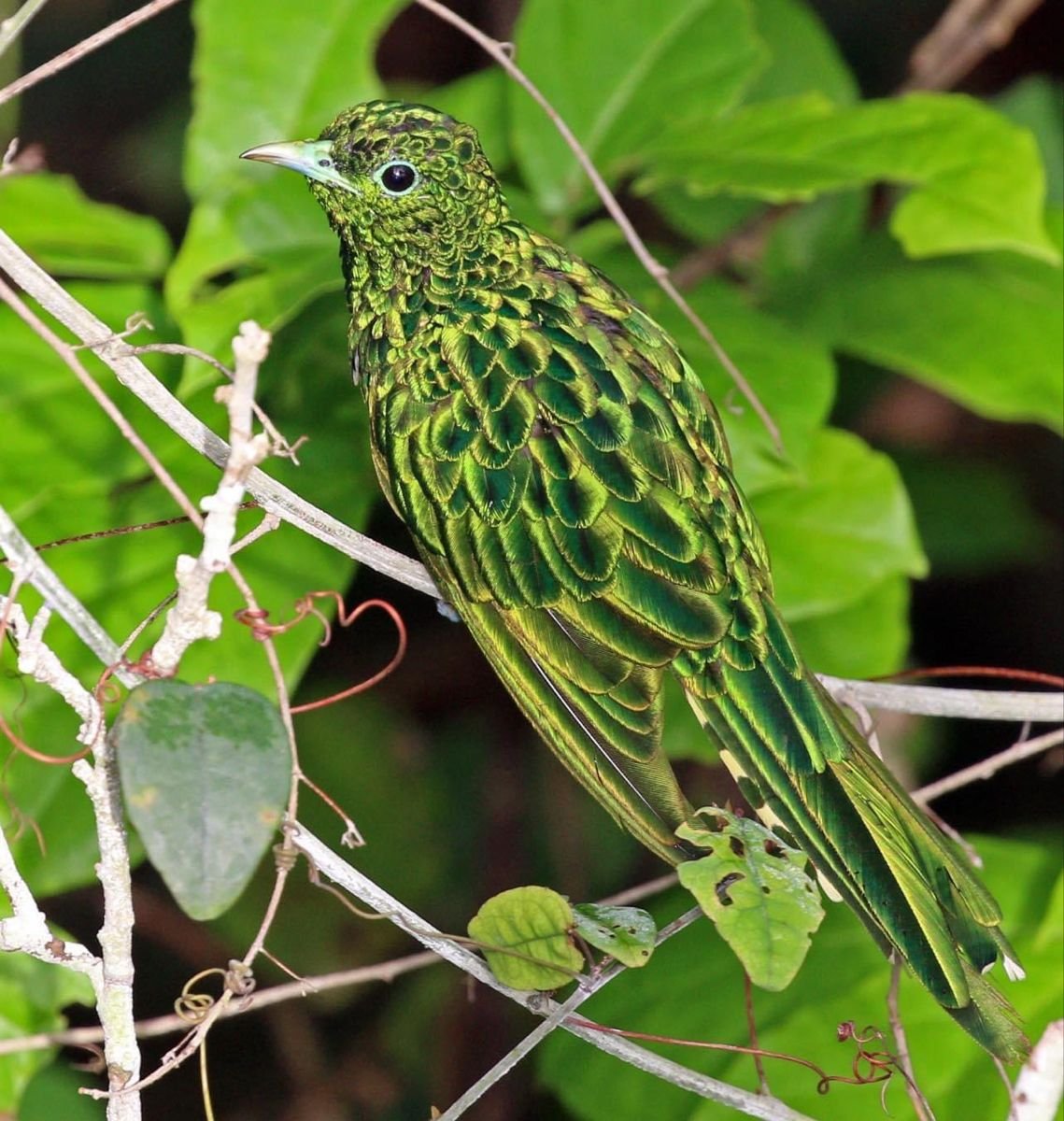
African Emerald Cuckoo
Chrysococcyx cupreusOne of Africa's most stunning birds – a brilliant emerald-green gem with a voice that echoes through the forest.
The African Emerald Cuckoo (Chrysococcyx cupreus) is one of the most breathtaking birds in Africa, with the male's brilliant iridescent emerald-green plumage making it a true jewel of the continent. This slender, long-tailed cuckoo is a brood parasite, known for its distinctive, far-carrying call that echoes through the woodlands and forests it inhabits.
African Emerald Cuckoo Quick Facts
What Is the African Emerald Cuckoo?
The African Emerald Cuckoo (Chrysococcyx cupreus) is a stunning, medium-sized bird belonging to the cuckoo family Cuculidae. It was first described by the English naturalist George Shaw in 1792. The species name cupreus is from the Latin cupreus meaning "coppery", though the male's plumage is more accurately described as brilliant emerald-green.
This species is also known simply as the Emerald Cuckoo. It is one of the most visually striking birds in Africa, with the male's iridescent emerald-green plumage and bright red eye-ring making it a true jewel of the continent. It is a brood parasite, like many cuckoos, laying its eggs in the nests of other birds and leaving the host to raise its young.
The African Emerald Cuckoo is found across much of sub-Saharan Africa, inhabiting woodland, forest, and forest edge habitats. It is a partial migrant, with some populations moving within Africa in response to rainfall and food availability.
How to Identify an African Emerald Cuckoo
The African Emerald Cuckoo is one of Africa's most distinctive and beautiful birds, easily recognised by its brilliant green plumage and red eye-ring. Here are its key identifying features:
- Size: A medium-sized, slender cuckoo measuring 20-22 cm (8-9 in) in length and weighing 30-40 g (1.1-1.4 oz).
- Male: Brilliant iridescent emerald-green head, back, and upper breast. The throat and belly are bright yellow, and the undertail coverts are white. The eye-ring is bright red.
- Female: The female has a rufous-capped head, a greenish-bronze back with barring, and green and white barring on the underparts. The eye-ring is less prominent.
- Tail: Long and graduated, with white spots on the outer tail feathers.
- Bill: Dark, slender, and slightly curved.
- Juvenile: Similar to the female but duller, with less distinct barring.
Distinguishing from Similar Species
The African Emerald Cuckoo can be confused with the Dideric Cuckoo and the Klaas's Cuckoo. The male African Emerald Cuckoo has a red eye-ring and lacks the green barring on the underparts found in the Dideric Cuckoo. The Klaas's Cuckoo is smaller, has a white (not red) eye-ring, and lacks the yellow underparts. The female can be confused with the female Dideric Cuckoo but is larger and has a rufous crown.
Behavior & Social Life
The African Emerald Cuckoo is a solitary bird, usually seen alone or in pairs. It is a vocal species, particularly during the breeding season.
Foraging Behavior
- Insectivorous diet: The African Emerald Cuckoo feeds mainly on insects, with a particular preference for caterpillars. It also eats beetles, grasshoppers, termites, and other arthropods.
- Foraging technique: It hunts by gleaning from foliage, searching for caterpillars and other insects among the leaves and branches of trees. It also makes short sallies to catch insects in flight.
Brood Parasitism
- Host species: The African Emerald Cuckoo parasitises the nests of weavers, bishops, and other small passerines.
- Egg mimicry: The female lays a single egg in the host's nest, mimicking the host's eggs in colour and pattern to avoid detection.
- Chick behaviour: The cuckoo chick often ejects the host's eggs or chicks from the nest shortly after hatching.
Vocalization
- Call: The call is a distinctive, far-carrying, descending whistle, often described as "deee-deee-deee-deee" or "tsee-tsee-tsee-tsee".
- Song: The song is a series of clear, whistled notes, often repeated many times, and is one of the most characteristic sounds of African woodlands.
Habitat & Distribution
The African Emerald Cuckoo is found in a variety of woodland and forest habitats across sub-Saharan Africa.
Key habitat types include:
- Woodland – particularly miombo and acacia woodlands.
- Forest – and forest edges.
- Savanna – with scattered trees.
- Riverine forest – and scrubland.
Distribution: The African Emerald Cuckoo has an extremely large range, with an Extent of Occurrence of approximately 15,300,000 km². It is found across much of sub-Saharan Africa, from Senegambia in the west to Ethiopia and Kenya in the east, and southwards to South Africa.
Migration: The species is a partial migrant, with some populations moving within Africa in response to rainfall and food availability.
Tanzania Distribution
In Tanzania, the African Emerald Cuckoo is found in woodland, forest, and forest edge habitats across the country. It has been recorded in Serengeti National Park, Ngorongoro Conservation Area, Tarangire National Park, and Ruaha National Park.
African Emerald Cuckoo in Tanzania
The African Emerald Cuckoo is a stunning jewel of Tanzania's woodlands and forests. Here are the best locations to see it:
Serengeti National Park
Found in the Serengeti's woodland and riverine forest areas, particularly in the northern and western parts of the park. Often heard before it is seen.
Serengeti safariNgorongoro Crater
Recorded in the Ngorongoro Conservation Area, especially in the Lerai Forest and other woodland areas. Often seen perched in the canopy.
Ngorongoro safariTarangire National Park
Found in the acacia woodlands and riverine forest areas of Tarangire. Often seen foraging in the canopy for caterpillars.
Tarangire safariRuaha National Park
A resident species in Ruaha's miombo woodland and riverine forest habitats. Often found in areas with abundant insect life.
Ruaha safariSafari Methods
- Game drives in woodland, forest, and forest edge areas.
- Birdwatching – look for the brilliant emerald-green cuckoo with a red eye-ring, often seen in the canopy.
- Wildlife photography – the African Emerald Cuckoo's stunning plumage makes it a spectacular photographic subject.
- Listen for calls – the distinctive descending whistle is often the first indication of its presence.
Best Time to See Them
African Emerald Cuckoos are resident year-round in suitable habitat, though they are most vocal and active during the breeding season (September to March). The dry season (June to October) is generally best for wildlife viewing.
Diet & Feeding
The African Emerald Cuckoo is an insectivore, with a diet consisting mainly of insects.
Food Sources
- Caterpillars: A particular favourite, often taken from the foliage of trees.
- Beetles: Various beetles and other insects.
- Grasshoppers: And other orthopterans.
- Termites: A seasonal food source, particularly during swarming.
- Other insects: Including ants, flies, and moths.
Feeding Behavior
The African Emerald Cuckoo hunts by gleaning from foliage, searching for caterpillars and other insects among the leaves and branches of trees. It also makes short sallies to catch insects in flight. It is most often seen in the canopy, where it moves with agility through the branches.
Breeding & Life Cycle
The African Emerald Cuckoo is a brood parasite, meaning it does not build its own nest but lays its eggs in the nests of other birds.
Brood Parasitism
- Host species: The African Emerald Cuckoo parasitises the nests of weavers, bishops, and other small passerines.
- Egg mimicry: The female lays a single egg in the host's nest, mimicking the host's eggs in colour and pattern to avoid detection.
- Breeding season: Typically during the rainy season, from September to March in East Africa.
- Incubation: The host incubates the egg for about 13-15 days.
- Chick behaviour: The cuckoo chick often ejects the host's eggs or chicks from the nest shortly after hatching, ensuring it receives all the food from the host parents.
- Fledging: The chick fledges after about 20-25 days.
Conservation Status
The African Emerald Cuckoo is assessed as Least Concern on the IUCN Red List.
Population: The global population has not been quantified, but it is not believed to approach the thresholds for Vulnerable. The population trend is stable.
Justification: This species has an extremely large range (15,300,000 km²) and hence does not approach the thresholds for Vulnerable under the range size criterion. The population trend appears to be stable, and hence the species does not approach the thresholds for Vulnerable under the population trend criterion.
Threats: While the species is not currently threatened globally, local threats may include habitat loss through deforestation and agricultural expansion.
Comparisons
The African Emerald Cuckoo is sometimes confused with other cuckoos. Here are the key differences:
| Feature | African Emerald Cuckoo | Dideric Cuckoo | Klaas's Cuckoo |
|---|---|---|---|
| Size | 20-22 cm | 18-20 cm | 16-18 cm |
| Male Eye-ring | Red | Red | White |
| Male Underparts | Yellow (belly) with green breast | White with green barring | White with green streaks |
| Male Crown | Brilliant green | Bronze-green | Bronze-green |
| Female Crown | Rufous | Bronze-green | Bronze-green |
| Call | Descending whistle | "dee-dee-dee-dederik" | High-pitched whistle |
Did You Know?
Emerald Jewel
The male African Emerald Cuckoo has brilliant iridescent emerald-green plumage that shimmers in the sunlight – one of the most stunning birds in Africa.
Distinctive Call
The African Emerald Cuckoo's call is a distinctive, far-carrying, descending whistle that is one of the characteristic sounds of African woodlands.
Sexual Dimorphism
Males and females of this species look very different – the male is brilliant green, while the female has a rufous crown and barred plumage.
Brood Parasite
Like many cuckoos, the African Emerald Cuckoo is a brood parasite, laying its eggs in the nests of weavers and other small birds.
Red Eye-Ring
The male's bright red eye-ring is a key identification feature, distinguishing it from similar cuckoo species.
Partial Migrant
Some populations of African Emerald Cuckoo are migratory, moving within Africa in response to rainfall and food availability.
There is a moment in the African woodland when the light filters through the canopy and catches the plumage of an African Emerald Cuckoo. It is a moment of pure, unadulterated magic – a flash of brilliant green that seems to belong to another world. The bird sits perfectly still, its red eye-ring gleaming, its long tail trailing behind it like a silken ribbon. And then it calls – a clear, descending whistle that echoes through the trees, a sound that is at once haunting and beautiful. The African Emerald Cuckoo is not just a bird; it is a living jewel, a reminder that even in the most ordinary of places, there is extraordinary beauty waiting to be discovered.
Gallery
Frequently Asked Questions
The African Emerald Cuckoo (Chrysococcyx cupreus) is one of the most stunning birds in Africa, with brilliant emerald-green plumage in the male and a distinctive, descending whistling call. It is a brood parasite, laying its eggs in the nests of other birds.
African Emerald Cuckoos are found in woodland, forest, and forest edge habitats across Tanzania. Key locations include Serengeti National Park, Ngorongoro Conservation Area, Tarangire National Park, and Ruaha National Park.
The African Emerald Cuckoo feeds mainly on insects, particularly caterpillars, beetles, and other arthropods. It hunts by gleaning from foliage or making short sallies from a perch.
No. The African Emerald Cuckoo is listed as Least Concern on the IUCN Red List. It has an extremely large range and a stable population.
The male has brilliant iridescent emerald-green plumage with yellow underparts and a red eye-ring. The female has a rufous-capped head and barred bronze-green upperparts. It is a slender, long-tailed cuckoo.
The African Emerald Cuckoo is a medium-sized cuckoo, measuring 20-22 cm (8-9 in) in length and weighing 30-40 grams (1.1-1.4 oz).
The African Emerald Cuckoo is a brood parasite. The female lays a single egg in the nest of a host species, typically weavers or other small passerines. The host incubates the egg and raises the chick. The breeding season coincides with the rainy season.
In Swahili, the African Emerald Cuckoo is known as Kekeo-zabibu or Kekeo-kijani.
References & Further Reading
- BirdLife International – African Emerald Cuckoo: IUCN Red List assessment, Least Concern status, range 15,300,000 km².
- Wikipedia – African emerald cuckoo: Description, distribution, habitat, diet, breeding, conservation.
- eBird – African Emerald Cuckoo: Identification, distribution, sightings.
- Avibase – African Emerald Cuckoo: Taxonomy, subspecies, distribution.
- Birds of the World – African Emerald Cuckoo: Introduction, identification, habitat, behavior, breeding.
- Oiseaux.net – African Emerald Cuckoo: Photo records from Tanzania.
- South African National Biodiversity Institute – African Emerald Cuckoo: Conservation status, threats, research.