

.png)
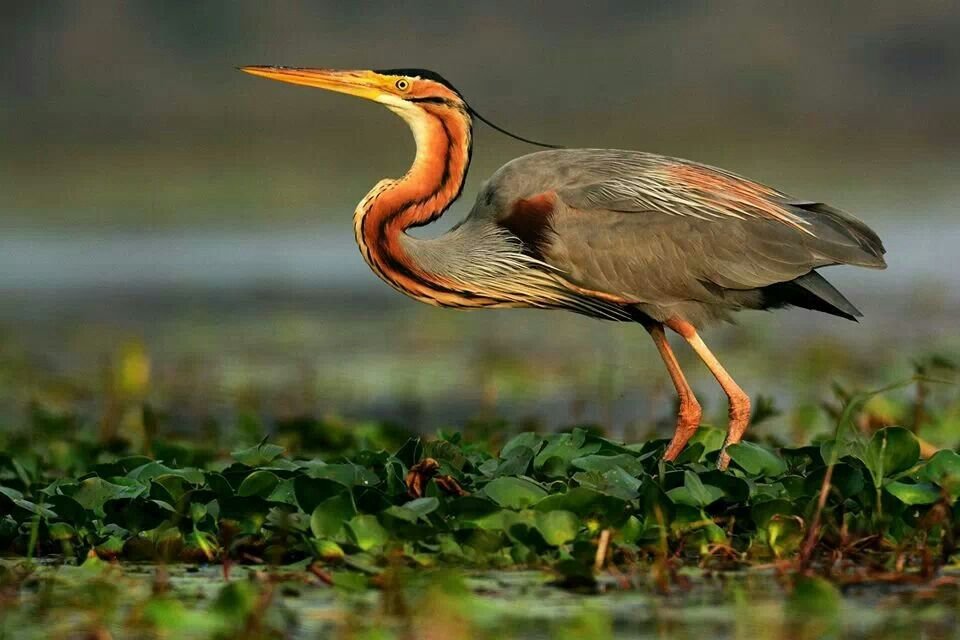
Purple Heron
Ardea purpureaA tall, elegant wetland heron whose long legs and muted plumage disappear beautifully among reeds.
The Purple Heron (Ardea purpurea) is a large, slender heron of the family Ardeidae. Compared with the familiar Grey Heron, it is generally slimmer, darker and more secretive, with rich chestnut, slate-grey and purple-brown tones. It favors wetlands with dense emergent vegetation and takes fish, frogs, insects, small mammals and other prey.
Purple Heron Quick Facts
What Is the Purple Heron?
The Purple Heron (<em>Ardea purpurea</em>) is a large but slender heron that lives primarily around wetlands. It belongs to the family Ardeidae and occurs across Africa, Europe and Asia, with several recognized geographic forms.
Its coloration is more complex than its common name suggests. The crown is black, the neck and upper breast carry rich chestnut tones with dark streaking, the back and wings are slate-grey to dark grey, and the overall plumage can show subtle purple or wine-colored tones in good light.
The species is closely associated with dense emergent vegetation, especially reed beds and thick wetland margins. In Tanzania it can be found around lakes, swamps and riverine wetlands, often standing almost motionless within vegetation before striking at prey.
How to Identify a Purple Heron
Purple Heron is a long-legged, long-necked heron with a distinctive dark-and-chestnut pattern. It is slightly smaller and noticeably slimmer than Grey Heron, with a narrower body and a more secretive posture.
- Head: black crown and long dark crown plumes, especially noticeable in breeding condition.
- Neck: chestnut to orange-buff sides with strong dark streaking and a pale chin.
- Back and wings: slate-grey upperparts with chestnut mantle tones and darker flight feathers.
- Bill: long, straight and yellowish, often showing a darker or horn-colored tip.
- Legs: long, suited to wading and moving through reed beds and shallow marshes.
- Flight: slim silhouette, long neck retracted and long legs extending behind the body.
Distinguishing from Grey Heron
The safest field combination is body shape plus plumage. Purple Heron is slimmer and darker, with a chestnut neck and strongly patterned head and neck, whereas Grey Heron looks bulkier and more uniformly grey. Purple Heron also favors dense vegetation and often remains less conspicuous while feeding.
Behavior & Social Life
Purple Herons are generally more secretive than many familiar large herons. They often move slowly through reed beds or stand still among tall plants, using vegetation as cover while waiting for prey.
Daily Activity
- Hunting: stalks slowly or waits motionless for fish, frogs and other prey to come within range.
- Cover: often uses reeds and tall vegetation to conceal its body, neck and head.
- Roosting: may rest in dense vegetation or trees near feeding wetlands.
Movement
African populations are largely resident or locally nomadic, although birds can move when water levels and food resources change. Palearctic populations are more strongly migratory. In Tanzania, local movement is often tied to seasonal wetlands and changing water availability.
Habitat & Distribution
Purple Herons have a strong affinity for freshwater and seasonally flooded habitats with dense emergent vegetation. Unlike species that favor open shorelines, they often choose places where reeds, sedges or tall aquatic plants provide cover.
- Reed beds around lakes, marshes and slow-flowing water.
- Swamps and floodplains with shallow standing water and dense vegetation.
- Vegetated lake margins where fish, frogs and aquatic invertebrates are accessible.
- Riverine wetlands with backwaters, pools and tall plant cover.
The species has a very broad distribution across Europe, Africa and Asia. In sub-Saharan Africa, populations occur widely south of the Sahara, while African and tropical populations are generally less migratory than northern Palearctic populations.
Tanzania Distribution
Tanzanian records document Purple Heron from numerous wetland landscapes, including Lake Manyara, Rubondo Island, the Kilombero River, Lake Jipe, Shambarai Swamp, Kerege Pan, Mufindi, Oldonyo Sambu and wetland areas around Moshi.
Purple Heron in Tanzania
Tanzania offers strong opportunities for Purple Heron because its lakes, swamps, floodplains and river systems provide the dense shallow-water habitat the species favors. Tanzania Birds has documented photographs from a wide range of locations, including Lake Manyara, Rubondo, Kilombero, Lake Jipe, Mufindi and wetlands around Moshi.
Safari Methods
A key northern Tanzania wetland location; documented Purple Heron records come from the lake and surrounding habitats.
Lake Manyara safariBest Time to See Them
Purple Herons can occur year-round in suitable Tanzanian wetlands. Wet-season changes may improve feeding conditions and expand shallow water habitat, but local sightings are strongly dependent on water levels and vegetation.
Rubondo safariKilombero Wetlands
The Kilombero River and associated wetlands are documented for Purple Heron and offer extensive shallow vegetated habitat.
Southern Tanzania safariMoshi & Lake Jipe Area
Tanzania records from TPC-Moshi, Lake Jipe, Shambarai Swamp and nearby wetlands show the species can occur in northern Tanzania's smaller wetland systems.
Plan Tanzania birdingSafari Methods
- Game drives: scan reed beds, lake margins and shallow pools instead of looking only over open water.
- Birdwatching: stop quietly and use binoculars to inspect vegetated edges where the bird may stand motionless.
- Photography: use patient observation; the species often reveals itself only when it steps out from cover.
Best Time to See Them
Purple Herons are present year-round in suitable habitat. They are most active during the cooler morning and evening hours .
Diet & Feeding
Purple Herons are opportunistic wetland predators. Fish are important, but the species takes a broad range of animal prey and changes its diet with what is available locally.
Food Sources
- Fish: taken in shallow water and quiet pools.
- Frogs and amphibians: important prey around marshes and wet grassland.
- Insects: large insects can be taken, especially when abundant.
- Small mammals and reptiles: rodents, lizards and similar prey may be captured opportunistically.
Hunting Behavior
The species often stalks slowly through vegetation with its body held low, or stands motionless waiting for prey. It strikes rapidly with the long bill. Dense cover is an important part of this strategy because it allows the bird to approach prey while remaining difficult to detect.
Breeding & Life Cycle
Purple Herons generally breed in or beside wetlands, often forming loose or compact colonies where dense vegetation and suitable nesting sites are available. Breeding timing varies geographically and is closely linked to wetland conditions.
Nesting
- Nest: a substantial platform of reeds, sticks and other vegetation, usually placed in dense wetland plants or low trees.
- Eggs: commonly several pale greenish-blue eggs, with clutch size varying among populations.
- Incubation: both parents participate; roughly three to four weeks is a commonly reported range.
Chicks
Young are fed by both adults and remain dependent at the nest until they can climb and later fly. Fledging typically occurs after several weeks, with exact timing varying with food, weather and local conditions.
Conservation Status
Purple Heron is currently assessed globally as <strong>Least Concern (LC)</strong>. Current BirdLife-linked information also lists the species as Least Concern in southern Africa, while noting a regional population decline there.
The species' global status reflects its broad distribution, but regional monitoring has identified reasons for attention. Wetland condition, breeding-site availability and human use of wetland vegetation can affect local populations.
Important conservation considerations include:
- Wetland degradation: drainage, conversion and major alteration of marshes can remove feeding habitat.
- Reed-bed management: intensive or unsustainable reed harvesting can affect cover and nesting habitat.
Comparisons
Purple Heron is commonly mistaken for Grey Heron because the two species share a general tall-heron silhouette. Careful attention to body shape, neck pattern and habitat usually resolves the identification.
| Feature | Purple Heron | Grey Heron | Great Egret |
|---|---|---|---|
| Body shape | Slimmer and narrower | Heavier, broader | Very tall and white |
| Plumage | Chestnut, slate-grey and dark purple-brown tones | Grey with black-and-white head pattern | Mostly pure white |
| Head | Black crown with long plumes | White/grey head with black crown streak | White head |
| Habitat clue | Dense reeds and vegetated wetlands | Broad range of wetlands, rivers and open shores | Open shallow water |
| Feeding style | Secretive stalking among vegetation | Patient stalking and wading | Slow wading/standing in open shallows |
| Best field mark | Chestnut neck + dark slimmer body | Bulkier grey appearance | Large all-white heron |
Did You Know?
Secretive by Design
Purple Herons often stand among reeds and tall vegetation, making them surprisingly difficult to detect despite their size.
Slimmer Than Grey Heron
The species is generally more slender and darker than Grey Heron, an important field clue.
Rich Neck Pattern
Chestnut and dark streaking on the neck helps create the species' distinctive silhouette.
Wetland Specialist
Dense emergent vegetation is a major part of its preferred habitat and hunting strategy.
Broad African Presence
African populations extend widely across the continent, with Tanzania supporting a network of seasonal and permanent wetland habitats.
Tanzania Records
Modern records include Lake Manyara, Rubondo, Kilombero, Mufindi, Lake Jipe, Shambarai Swamp and wetlands near Moshi.
A Purple Heron can be standing only a few metres away and still seem invisible. Its secret is not speed but patience: the long neck disappears between reeds, the patterned body merges with shadow, and then—without warning—the bill strikes. Around a Tanzanian marsh, this bird is a reminder that some of the most impressive wildlife encounters begin by learning how to look into the vegetation, not past it.
Gallery
Frequently Asked Questions
The scientific name is Ardea purpurea, a member of the family Ardeidae.
Look for a slim dark heron with a black crown, chestnut neck, slate-grey back and a long slender bill. It is generally slimmer and darker than Grey Heron.
It eats fish, frogs, insects and other small prey, including rodents and reptiles when available.
Tanzania records include Lake Manyara, Rubondo Island, the Kilombero River, Mufindi, Lake Jipe, Shambarai Swamp, Kerege Pan and wetlands around Moshi.
Movement varies by population. Northern Palearctic populations are more migratory, while African populations are generally resident or locally nomadic.
It favors swamps, reed beds, floodplains, shallow lakes, vegetated shorelines and other wetlands with dense cover.
African populations breed in suitable wetlands, but timing varies by local rainfall and water conditions. Tanzania-focused sources document widespread occurrence but should not be used to assign a single national breeding calendar.
The species is currently assessed globally as Least Concern.
References & Further Reading
- Tanzanian Birds – Purple Heron: Tanzania photographic and occurrence records from Lake Manyara, Rubondo, Kilombero, Mufindi, Lake Jipe, Shambarai Swamp, Kerege Pan, Oldonyo Sambu and Moshi-area wetlands.
- BirdLife South Africa – Purple Heron: 2025 regional assessment, identification, ecology, distribution, population context and wetland threats.
- BirdLife International / IUCN Red List: global conservation assessment for Ardea purpurea.
- Birds of the World / Cornell Lab: species biology, identification, movement and breeding literature.
- eBird: current identification and occurrence resources for Purple Heron.
- Oiseaux.net – Purple Heron: Confirmed photo records from Tanzania .
- iNaturalist – Purple Heron observation records from Tanzania .