

.png)
Lesser Kudu
Tragelaphus imberbisThe slender, striped antelope of the dry thornbush.
Sightings are never guaranteed and depend on local conditions. Follow your guide and respect park rules.
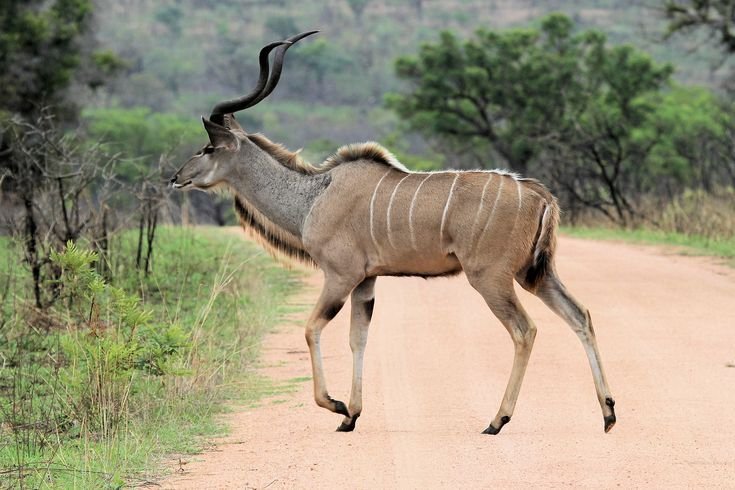
The lesser kudu is a secretive bushland antelope of the tragelaphin group - the smaller cousin of the greater kudu. It wears 11-15 narrow white stripes, carries long spiral horns (males only), and is largely nocturnal, resting in dense thickets by day. In Tanzania it haunts the dry northern bushland of Tarangire and the north-east.
Lesser Kudu Quick Facts
What Is the Lesser Kudu?
The lesser kudu (Tragelaphus imberbis) is a slender, secretive bushland antelope of the tragelaphin group - the smaller cousin of the famous greater kudu. It is a creature of dry thornbush and thickets, more often heard than seen, and one of the most elegant antelopes of northern Tanzania's arid country.
Across its wider range it spans Ethiopia, Somalia, Kenya, South Sudan and Uganda, but Tanzania holds a real, if shy, population in the northern bushland. The lesser kudu is a northeast African species, not a Tanzania-only one - its stronghold is the Horn of Africa and the dry countries northward.
Why “Kudu”?
"Kudu" comes from the Khoikhoi name for these spiral-horned antelopes. The scientific name Tragelaphus imberbis means "beardless tragelaph" - the lesser kudu lacks the obvious beard of some relatives. It was first described by the English zoologist Edward Blyth in 1869.
Signature Features
The lesser kudu's signature is its vertical white striping - usually 11 to 15 narrow bands running down a slate-grey (male) or chestnut (female) coat, set off by a small upright dorsal crest, big rounded ears and a white chevron on the nose. When flushed it loops away through the thorns in a series of high, stiff-legged bounds (easily clearing 2 m), tail raised, vanishing into cover.
Only the male carries horns: long, spiralled spikes with two to two-and-a-half twists, white-tipped and 50-70 cm long - the classic kudu corkscrew.
How Big Is a Lesser Kudu?
Lesser kudus are, as the name says, small and fine-boned compared with greater kudus. Males stand about 95-105 cm at the shoulder and weigh 92-108 kg; females are 90-100 cm and 56-70 kg, with a brighter reddish-chestnut coat that the male trades for grey as he ages. Both sexes wear the white flank stripes, throat and chest patches, and black-and-white leg markings. The build is narrow and leggy - built to slip through dense bush.
Horns & Defence
Only male lesser kudus have horns. They are slender spirals, 50-70 cm long with two to two-and-a-half turns and a white tip, rising above the large ears. Females are hornless. Males spar by interlocking horns and pushing, but the species is not territorial, so serious fights are rare.
Habitat & Range
The lesser kudu is a dry-country specialist of thornbush and dense thickets - Acacia and Commiphora woodland, arid scrub, and hilly bushed terrain. It avoids open grassland and long grass, staying close to cover where its stripes disappear. In Tanzania this means the northern bushland belt, especially around Tarangire and the north-east. It is a creature of dense, dry vegetation, rarely seen in cleared or open areas.
Lesser Kudu in Tanzania
Lesser kudu are nocturnal and secretive, so they are a prize rather than a certainty. In Tanzania, focus on dry northern bushland.
Tarangire National Park
Northern Tanzania's dry Acacia-Commiphora woodlands are classic lesser kudu country; look at dusk and dawn.
Tarangire safariNorthern bushland
The arid north-east, including Mkomazi and the wider Tarangire ecosystem, holds Tanzania's lesser kudu.
Northern safariPrivate northern reserves
Night drives on conservancies near the northern parks improve your odds of a sighting.
Plan a night driveThe wider range
From Ethiopia and Somalia through Kenya and Uganda - wherever dry thornbush and thickets exist.
Behavior & Social Life
Lesser kudus are generally solitary. Females may occur in small groups of two or three with their young or related females, while adult males are usually solitary or form occasional small male groups; the species shows no territorial behaviour. They are largely nocturnal and crepuscular, resting deep in thickets after sunrise and feeding around dawn and dusk. When alarmed they freeze, then explode into a series of high leaps, often giving a loud bark or bleat.
Diet & Feeding
A dedicated browser, the lesser kudu feeds on leaves, shoots and twigs of bushes and trees (60-80% of its diet), plus herbs and some fruit, and only a little grass in the wet season. It is well adapted to aridity and can go largely without free water, drawing moisture from the plants it eats.
Predators & Defense
Adults are taken by leopard and lion, and calves by hunting dogs, hyenas, cheetahs and pythons. Their defences are their striping and love of thick cover, plus the sudden high-leaping escape that carries them into thorns where pursuers cannot follow.
Young & Lifespan
Lesser kudus breed year-round. After a gestation of about 7.5-8 months a single calf is born and hidden in cover while the mother feeds, returning mainly in the evening to suckle. The calf stays concealed for its first weeks, then joins the small female group. Males leave their mothers around 1.5 years and only gain breeding status at four to five years old. In the wild they can live about 10-15 years.
Conservation Status
The lesser kudu is listed as Near Threatened on the IUCN Red List. The total population is around 118,000, but only about a third live in protected areas, and numbers are falling through bushmeat hunting, poaching (for the horns) and loss of thornbush to agriculture and charcoal burning. In Tanzania, protecting northern bushland reserves is the key to keeping this shy antelope common.
Safari Experience
Seeing a lesser kudu takes patience. Base yourself in Tarangire or a northern conservancy and drive the thickets at first and last light, or ask for a night drive - that is when the stripes and spirals are most likely to show. African Majestic Adventure times northern Tanzania trips for exactly these secretive species, and can pair lesser kudu with the greater kudu for a satisfying "two kudus" checklist.
Comparisons
The lesser kudu is the greater kudu's smaller, shyer relative - both spiral-horned tragelaphins, but their worlds differ:
| Feature | Lesser Kudu | Greater Kudu |
|---|---|---|
| Size | 90-105 cm; 56-108 kg | Up to 150 cm; 180-300 kg |
| Stripes | 11-15 narrow white bands | 4-12 broader bands |
| Horns | Males only; 50-70 cm spiral | Males only; 120+ cm, massive |
| Habitat | Denser, drier thornbush | Woodland, hills, montane |
| Visibility | Secretive, largely nocturnal | Often seen, more diurnal |
Did You Know?
Stripe count
Lesser kudus wear 11-15 vertical white bands - more than the greater kudu's 4-12.
High jumper
When alarmed it leaps in bounds over 2 m high, tail raised, into the thorns.
Male-only horns
Only the male carries the spiralled, white-tipped horns; females are hornless.
Nocturnal
It rests deep in thickets by day and feeds at dawn and dusk to avoid the heat.
Water-light
It rarely needs to drink, drawing most moisture from the leaves and shoots it eats.
Near Threatened
About 118,000 remain, with numbers falling from bushmeat hunting and thornbush loss.
There is a particular thrill in the lesser kudu because it rarely gives itself away. You are driving thornbush at dawn, a grey shape melts out of the scrub, the white stripes flash, and then it is gone in three high bounds. It is the antelope of patience - and a reminder that Tanzania's dry north holds quieter wonders than the famous herds. African Majestic Adventure knows the thickets where your best chance lies.
Gallery
Frequently Asked Questions
Tragelaphus imberbis. It is a tragelaphin antelope - the smaller cousin of the greater kudu - and the name means "beardless tragelaph".
Across north-east Africa: Ethiopia, Somalia, Kenya, South Sudan and Uganda, with Tanzania at the southern edge of the range. They are tied to dry thornbush and thickets - not open plains.
Yes - in northern Tanzania's dry bushland, especially the Tarangire ecosystem and the north-east (including Mkomazi). They need dense thornbush, so they are absent from open plains.
They are browsers: leaves, shoots and twigs of bushes and trees, plus herbs, fruit and a little grass, drawing most moisture from the plants so they rarely need to drink.
The lesser is much smaller and shyer, with more numerous narrow stripes (11-15) and a preference for denser dry thornbush. Both have male-only spiral horns, but the greater's are far longer and heavier.
No - only males. The horns are slender spirals, 50-70 cm with two to two-and-a-half turns and a white tip; females are hornless.
The 11-15 vertical white bands break up the body outline in dappled thornbush light, helping the antelope vanish into dense cover where predators hunt by sight.
Leopards and lions take adults; calves fall to hunting dogs, hyenas, cheetahs and pythons. Their escape is a sudden high-leaping dash into thorns that pursuers cannot enter.
Generally solitary. Females may form small groups of two or three with their young or related females, while adult males are usually solitary or in occasional small male groups. The species is not territorial.
Near Threatened on the IUCN Red List (around 118,000 animals), declining mainly from bushmeat hunting and loss of thornbush habitat to agriculture and charcoal burning.
References & Further Reading
- IUCN Red List of Threatened Species - Tragelaphus imberbis (Lesser Kudu), Near Threatened.
- Wikipedia - Lesser kudu: range including Tanzania; male-only spiral horns; dry thornbush habitat.
- Animalia.bio - Lesser Kudu: 11-15 stripes, browser, northern Tanzania bushland.
- Smithsonian's National Zoo - Lesser kudu: nocturnal, male-only spiral horns, thicket habitat.
- Animal Diversity Web (University of Michigan) - Tragelaphus imberbis: northeast African range; generally solitary.
- African Wildlife Foundation - Lesser kudu: browser of arid bushland; declining from habitat loss.