

.png)
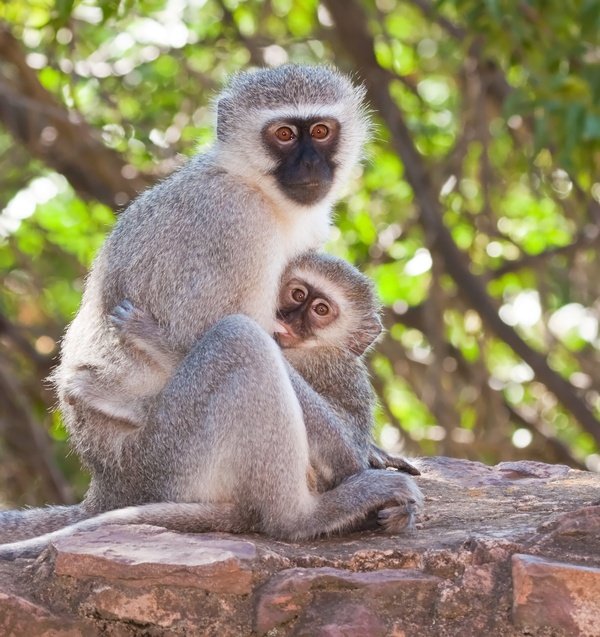
Vervet Monkey
Chlorocebus pygerythrus — Africa's adaptable savanna monkey, famous for a predator-specific alarm-call "language" and a strict matrilineal society.Introduction to the Vervet Monkey
The vervet monkey (Chlorocebus pygerythrus) is one of Africa's most widespread and adaptable primates — equally at home in acacia savanna, riverine woodland and the edges of farmland. With its grey coat, black face, pale brow band and long black-tipped tail, it is a familiar sight on Tanzanian safaris, especially in Lake Manyara, Arusha and the Serengeti. Vervets are also among the most scientifically important monkeys on Earth, thanks to their remarkable alarm-call language.
Why the Vervet Monkey is Ecologically Vital
As an omnivore it links plants and animals, and its predator-specific alarm calls are a classic example of animal communication — distinct calls warn of leopards, eagles and snakes, and the whole troop responds appropriately.
A Species Worth Understanding
Understanding the real vervet — its matrilineal society, semantic calls and flexible diet — replaces vague template copy with one of Africa's best-studied monkeys.
Scientific Classification
A member of the Old World monkey family (Cercopithecidae), the vervet is part of the widespread Chlorocebus ("green monkey") group of savanna guenons. The IUCN lists it as Chlorocebus pygerythrus, assessed as Least Concern.
Physical Characteristics
The vervet is built for life on the ground and in the trees of open woodland:
- Size & weight: Adults weigh about 3–5.5 kg (males larger than females); head-body length is 40–60 cm.
- Long tail: A 40–70 cm tail, usually black-tipped, used for balance as it moves through branches and across the ground.
- Coat: Grizzled grey to olive-grey upperparts with a pale (often white) belly; a black face with a pale brow band.
- Sexual dimorphism: Adult males have a blue scrotum and larger canines; females are smaller with a red swelling when receptive.
- Cheek pouches: Used to carry food, allowing rapid gathering and safe chewing away from competitors.
Social System & Behaviour
The vervet monkey lives in structured, female-centered troops:
- Troop size: Typically 10–50 individuals, made of related females, their offspring and one or several adult males.
- Matrilines: Females are philopatric — they stay in their birth troop for life, forming the stable core; rank is inherited through the female line.
- Male dispersal: Males leave their natal troop at maturity and move between troops; male rank is separate from the female hierarchy.
- Grooming & alliances: Grooming reinforces bonds and rank; coalitions of females (and of males) navigate daily politics.
- Alarm-call language: Vervets give distinct alarm calls for different predators — a bark for leopards (run into cover/bush), a "ack-ack" for martial eagles (look up, run for cover), and a chirp for snakes (stand bipedal and look down). Infants must learn to match each call to the right reaction (the classic Seyfarth, Cheney & Marler 1980 study).
Vervet Monkey Young & Reproduction
- Mating: Breeding is strongly seasonal in many populations, timed to the rains when food is abundant.
- Litter: Usually a single infant (twins are rare) after a gestation of about 5–6 months.
- Care: The mother carries and nurses the infant; the bright blue-pink natal coat makes the young easy to track. Allomothering (care by other troop females) is common.
- Learning: Young vervets learn their species' alarm-call meanings gradually — they initially give generic calls before refining them.
Habitat: Where They Thrive
The vervet is a habitat generalist of warm, open country:
Key Habitat Types:
- Acacia savanna: Open wooded grassland is classic vervet country.
- Riverine & lowland woodland: Tree lines along rivers and lakeshores provide food and sleeping sites.
- Farmland edges: They readily use croplands and plantations, which brings them into conflict with people.
- Not deep forest: Unlike guenons of the rainforest, vervets favour open, fragmented and human-modified habitats.
Climate & Cover:
They need trees for sleeping and refuge but tolerate dry savanna; water proximity helps, especially in the dry season.
Distribution Map
The vervet monkey occurs across sub-Saharan and eastern Africa, avoiding only dense rainforest and true desert:
In Tanzania it is widespread in the north (Lake Manyara, Arusha, Serengeti, Tarangire) and across the south (Nyerere, Ruaha, Mikumi).
Because it is diurnal and often near roads and lodges, a sighting means a game drive or a walk at the right habitat — common but never guaranteed.
Where to See the Vervet Monkey in Tanzania
The vervet monkey is seen on game drives in northern and southern Tanzania — it is one of the easier primates to find:
Lake Manyara NP
Best: Year-round | Region: Northern Tanzania
Visible – not guaranteed
Tip: Widespread here, often near the groundwater forest and lodges around the lake shore.
Arusha NP
Best: Year-round | Region: Northern Tanzania
Visible – not guaranteed
Tip: Forest edges and woodland around Mount Meru hold habituated troops.
Serengeti NP
Best: Year-round | Region: Northern Tanzania
Visible – not guaranteed
Tip: Open savanna and woodland across the Serengeti support vervet troops along game-drive tracks.
Tarangire NP
Best: Year-round | Region: Northern Tanzania
Visible – not guaranteed
Tip: Riverine woodland and baobab country hold troops, especially in the dry season.
Vervet Monkey in Pictures
A closer look at the vervet monkey (Chlorocebus pygerythrus) - the adaptable, alarm-calling savanna monkey of Africa.
Where to Spot the Vervet Monkey on Safari
Plan a game drive in northern Tanzania to look for the vervet monkey and its famous alarm calls. Explore the destinations below.
Diet: What They Eat
The vervet monkey is a true opportunistic omnivore, switching foods with the seasons:
- Fruit: A favourite and a major energy source when in season.
- Leaves & seeds: Young leaves, shoots and seeds supplement the fruit.
- Flowers & nectar: Nectar-rich blossoms add variety; they also eat acacia gum and seed pods.
- Insects: Grasshoppers, caterpillars and other arthropods are important protein, especially for young.
- Eggs & small vertebrates: Birds' eggs, and occasionally small animals such as nestling birds, lizards, rodents or frogs.
- Crops: Near farmland, troops readily raid maize, bananas and other crops — the main source of human conflict.
Ecosystem role: As an omnivore it helps control insects and disperses some seeds, but crop-raiding makes it a frequent pest.
Daily Behaviour & Social Life
Activity Pattern (diurnal, ground & tree)
Diurnal: Vervets spend the day foraging on the ground and in trees, grooming, resting and keeping watch. They sleep in trees at night.
Day: Long foraging bouts, with midday rests in shade; sentinels watch for predators.
Night: Roost in tall trees, often near water.
Social Structure
- Troops: 10–50 individuals centred on related females; one or several males.
- Matrilines & rank: Female rank is inherited maternally; grooming and alliances maintain the hierarchy.
- Alarm calls: Semantic calls for leopard, eagle and snake; infants learn the correct responses — a landmark of animal communication research.
Predators & Threats
Natural predators include martial eagles, leopards, pythons and baboons (which may kill infants). The main human-driven threats are shooting and capture as crop pests, the pet trade and habitat loss.
Watching tip: On a game drive, watch a troop for a sudden freeze and chorus of alarm calls — it often means a leopard or eagle is near.
Reproduction & Lifespan
- Mating: Often seasonal, linked to rains.
- Gestation: About 5–6 months.
- Litter: Usually one infant.
- Care: The mother raises the infant with help from troop females; weaned at several months.
- Lifespan: Around 10–12 years in the wild (to ~24 in captivity).
Conservation Status
IUCN Red List Status: Least Concern — the vervet monkey (Chlorocebus pygerythrus) is assessed as Least Concern, though locally affected by persecution.
Major Threats
- Persecution: Shot or caught as a crop pest across its range.
- Pet trade: Infants are taken, which often means the mother is killed.
- Habitat loss: Converting woodland to farmland reduces sleeping and refuge trees.
Conservation Programs
Protected areas are the main safeguard. In Tanzania the Tanzania National Parks (TANAPA) and Wildlife Division protect vervet habitat across Manyara, Arusha, Serengeti, Tarangire and the southern parks. The IUCN SSC Primate Specialist Group supports monitoring and conflict-mitigation work.
20 Interesting Facts
Vervet Monkey vs Other Monkeys
Vervet vs Yellow Baboon
| Feature | Vervet | Yellow Baboon |
|---|---|---|
| Build | Slender, long-tailed | Robust, dog-muzzled |
| Social | Matrilineal troops | Large multi-male troops |
| Habitat | Savanna & woodland | Savanna & woodland |
| Diet | Omnivore | Omnivore (more ground foraging) |
Vervet vs Red-tailed Monkey
| Feature | Vervet | Red-tailed |
|---|---|---|
| Habitat | Savanna/woodland | Rainforest canopy |
| Diet | Omnivore | Mainly fruit |
| Tail | Black-tipped | Reddish |
| Calls | Semantic alarm calls | Rich repertoire |
Vervet Monkey in African Context
The vervet monkey is part of the everyday soundscape of the African savanna — its alarm calls warn not only its own troop but often other monkeys and antelope nearby. Living alongside people, it is both cherished and persecuted; reducing crop conflict through better coexistence keeps this clever, communicative monkey a common resident of the bush.
Wildlife Photography Guide
- Best Camera Lens: A 100-400mm or super-telephoto; troops can be skittish near vehicles.
- Best Time: Early morning and late afternoon game drives, when troops are active.
- Best Habitat: Acacia woodland and lake shores in Lake Manyara, Arusha, Serengeti, Tarangire.
- Best Behaviour: Capture the pale brow band, the black-tipped tail and the alert "sentinel" posture during alarm calls.
- Safety Distance: Never feed; keep a respectful distance from the troop.
Frequently Asked Questions
The vervet monkey (Chlorocebus pygerythrus) is a widespread, adaptable African monkey of savanna, woodland and farmland edges, famous for its predator-specific alarm calls.
Yes - it lives in troops of 10–50 centred on related females; rank is inherited through the female line and males disperse.
Vervets give distinct calls for leopards (run to cover), martial eagles (look up and flee), and snakes (stand and look down) - a semantic "language" that infants must learn.
An opportunistic omnivore: fruit, leaves, seeds, flowers, nectar, gum, insects, eggs and small vertebrates; it also raids crops such as maize and bananas.
On game drives in Lake Manyara, Arusha, the Serengeti and Tarangire - it is one of the easier primates to find.
Least Concern (IUCN), though locally persecuted as a crop pest and for the pet trade.
Adults weigh about 3–5.5 kg; head-body 40–60 cm with a 40–70 cm tail.
Yes - males are larger with bigger canines and a blue scrotum; females are smaller with a red swelling when receptive.
Open woodland and savanna with trees for sleeping and refuge; it tolerates farmland edges but avoids dense rainforest.
Yes - on a game drive with a long lens in the early morning; watch for the sentinel posture during alarm calls.
Martial eagles, leopards, pythons and baboons; humans through shooting and the pet trade.
The mother carries a single infant (helped by troop females); young are weaned at several months and learn alarm-call meanings as they grow.
Related Safari Packages & Tours
Plan a game drive in northern Tanzania to look for the vervet monkey and its famous alarm calls with our expert guides.
References & Further Reading
- IUCN Red List: Chlorocebus pygerythrus - Least Concern.
- Seminal study: Seyfarth, Cheney & Marler (1980), "Vervet monkey alarm calls", Animal Behaviour - on semantic alarm calls and infant learning.
- About these facts: Weight, size and lifespan are approximate adult ranges that vary by sex, age, location and measurement method; conservation status should be checked against the current IUCN assessment.