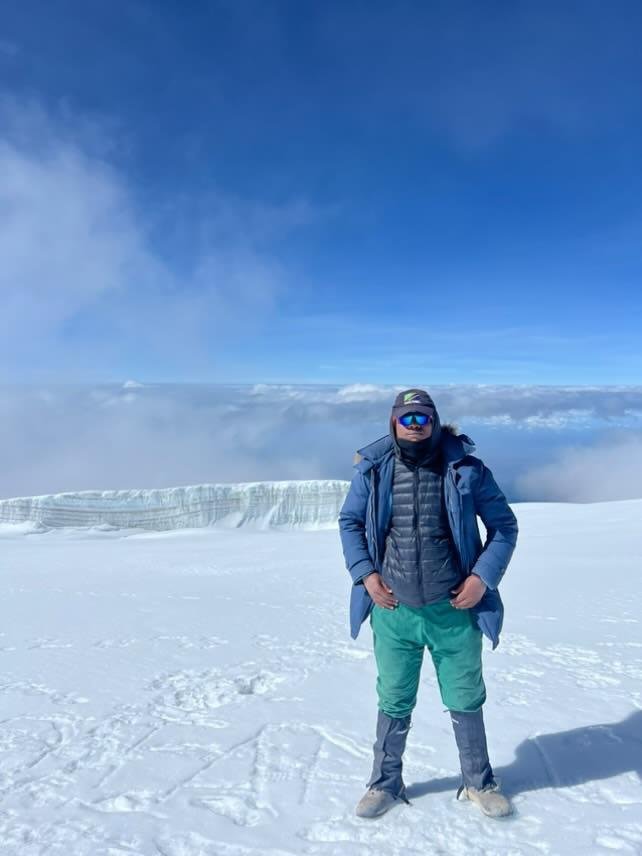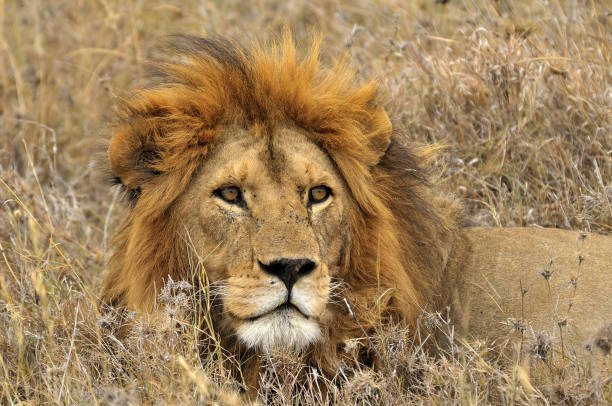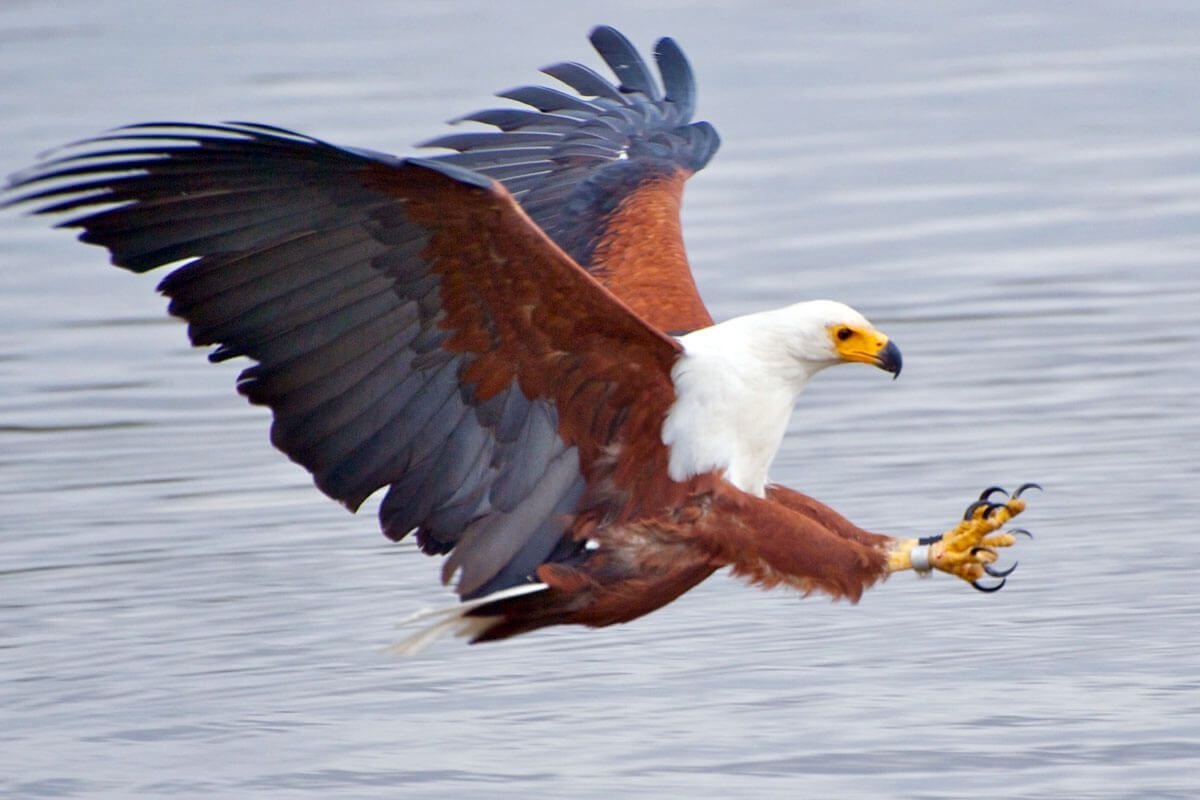
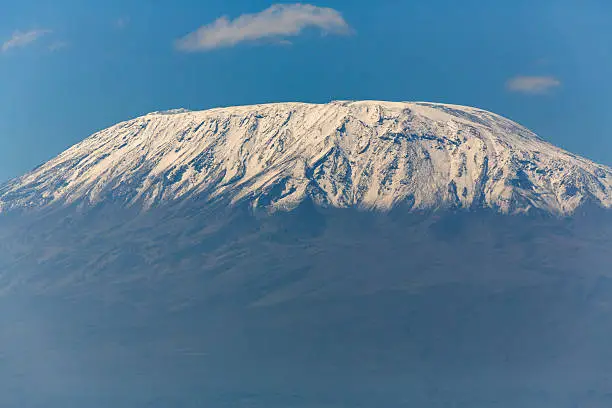
Mount Kilimanjaro Lemosho Route scenic landscape
Kilimanjaro Climbing

7-Day Kilimanjaro Climb: Lemosho Route

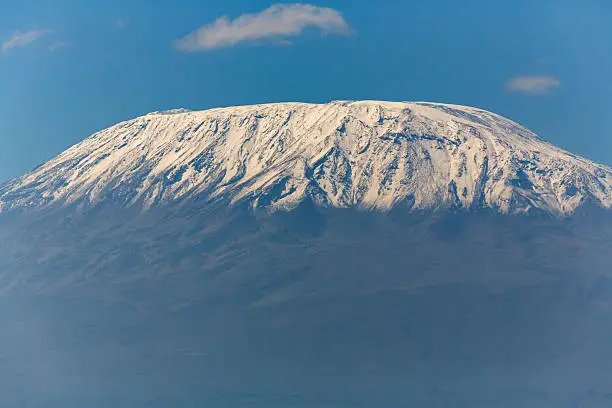
Trek Africa's Roof via the scenic Lemosho Route. Cross the vast Shira Plateau, conquer the Barranco Wall, and stand atop Uhuru Peak — the highest point in Africa at 5,895m.

5.0/5.0 Trusted by 10,000+ Travelers Google Reviews TripAdvisor SafariBookings Rating

Londorossi Gate - Shira Plateau - Barranco - Uhuru Peak

7-Day Kilimanjaro Lemosho Route

Kilimanjaro Climbing 7 Days / 6 Nights Moshi / Moshi 4-12 guests Scenic Western Approach

Introduction

The Lemosho Route is widely regarded as the most scenic and rewarding path up Mount Kilimanjaro. This 7-day itinerary is the shortest Lemosho option, designed for trekkers seeking a balance of challenge, breathtaking views, and a high summit success rate. Starting from the lush western slopes at Londorossi Gate, you will traverse the vast Shira Plateau — one of Africa's largest volcanic calderas — ascend the iconic Lava Tower for acclimatisation, tackle the dramatic Barranco Wall, and finally push through the arctic darkness to reach Uhuru Peak at sunrise. Every step on this journey is framed by Kilimanjaro's stunning glaciers, alpine deserts, and ancient volcanic landscapes.

7 Days
Duration
Tanzania
Destination
Moshi
Starting Point
Lemosho Route
Route
Demanding
Difficulty
Full Board
Meals

Why This Climb?

Shira Plateau

Trek across one of the largest volcanic calderas on Earth at 3,500m, with panoramic views of Kilimanjaro's glaciers and the Great Rift Valley stretching below.

Remote Wilderness

Experience pristine, uncrowded trails through untouched rainforest, heath, and alpine terrain. The Lemosho Route offers a true wilderness adventure far from the busier paths.

Scenic Beauty

Traverse five distinct ecological zones — from dense rainforest to arctic summit. Each day reveals a completely new and dramatic landscape that few routes can match.

High Success Rate

The 7-day Lemosho itinerary follows the 'climb high, sleep low' principle with optimum acclimatisation, giving you among the highest summit success rates on Kilimanjaro.

Western Approach

Start your adventure from the remote western side of Kilimanjaro, passing through local villages and pristine forests that few other climbers ever see.

Expert Crew

Our experienced mountain guides, assistant guides, porters, and cook provide full support throughout your climb, ensuring safety, comfort, and a memorable summit day.

Tour Highlights

Detailed Itinerary

Each day is carefully paced for optimum acclimatisation and enjoyment. Below you will find a complete breakdown of every day of your 7-day Lemosho Route Kilimanjaro climb.

Day 1

Londorossi Gate (2,100m) to Forest Camp (2,800m)

Full Day Hiking: 3-4 hrs Distance: ~8 km Accommodation: Forest Camp Meals: Breakfast, Lunch, Dinner

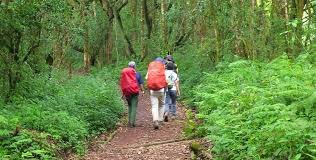
Your Kilimanjaro adventure begins with a 2-hour drive from Moshi to Londorossi Gate (2,100m), where you complete park registration and meet your full mountain crew. The trek starts through dense montane rainforest on a little-used trail, offering a true wilderness experience. The forest is alive with colobus monkeys, vibrant birdlife, and towering ancient trees draped in moss. After approximately 3-4 hours of gentle ascent, you arrive at Forest Camp (2,800m), nestled in the heart of the rainforest. Enjoy a hearty dinner prepared by your camp cook and rest to the sounds of the forest.

Morning: Depart Moshi after breakfast at 7:00 AM. Drive 2 hours to Londorossi Gate (2,100m) through lush countryside with views of Kilimanjaro's southern slopes. At the gate, your lead guide registers the group while porters prepare and weigh all equipment. This is a great opportunity to meet your full mountain crew. Photography tip: capture the iconic 'Kilimanjaro National Park' sign at the gate entrance.
Afternoon: Begin your trek from Londorossi Gate into the rainforest. The trail winds through dense vegetation on a well-defined but natural path. The canopy provides welcome shade as the forest is rich with bird calls and wildlife. Keep an eye out for black-and-white colobus monkeys leaping through the trees. The gentle incline makes for a perfect first-day warm-up. Arrive at Forest Camp (2,800m) after approximately 3-4 hours of hiking.
Evening: Set up camp and enjoy dinner prepared by your cook. Your crew will serve hot tea and popcorn as a welcome snack. Evening briefing from your lead guide about the day ahead. The rainforest air is cool and fresh — ideal for a restful first night's sleep. Gear check: ensure your sleeping bag is adequately warm, as nights at 2,800m can be chilly.
Rainforest Trek Wilderness Start Wildlife Spotting
Day 2

Forest Camp (2,800m) to Shira Camp 1 (3,500m)

Full Day Hiking: 5-6 hrs Distance: ~10 km Accommodation: Shira Camp 1 Meals: Breakfast, Lunch, Dinner

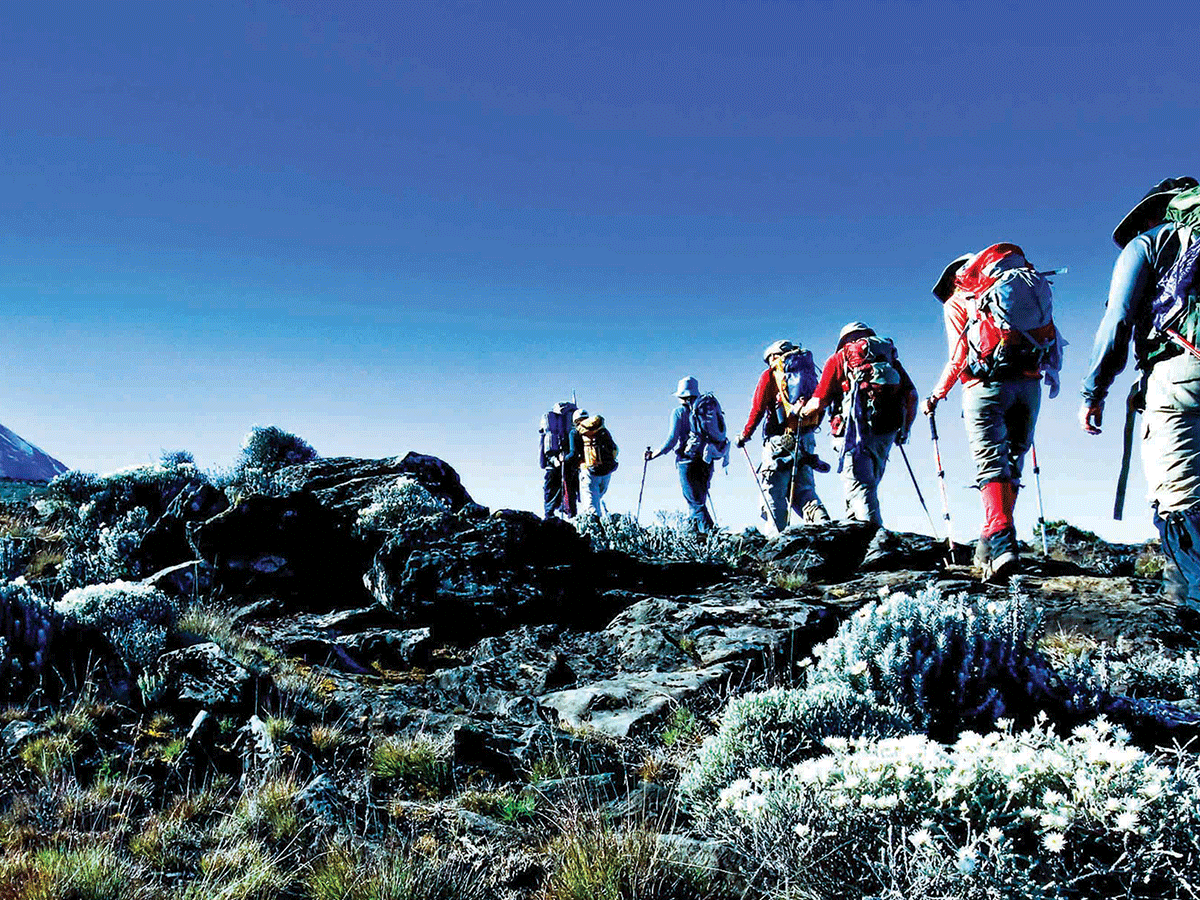
Leave the forest behind and ascend into heath and moorland zones. The trail opens up dramatically as you leave the tree line, revealing the first expansive views of Kilimanjaro's summit and the surrounding plains. You trek across rolling grasslands dotted with giant heather, lobelias, and groundsels — unique alpine plants adapted to the harsh conditions. By midday, you emerge onto the Shira Plateau, one of Africa's largest volcanic calderas, formed over 500,000 years ago. Shira Camp 1 (3,500m) offers spectacular sunset views over the plateau and the distant Mount Meru.

Morning: Wake to a hot cup of tea and breakfast at 7:00 AM. Depart Forest Camp and begin the ascent through the transition zone. The trail climbs steadily as the dense rainforest gives way to heath vegetation. Watch as the views expand behind you — on clear days you can see all the way to Mount Meru and the Rift Valley escarpment. The air becomes noticeably thinner as you gain altitude.
Afternoon: Continue ascending through moorland with giant lobelias and groundsels dotting the landscape. The terrain becomes more open and exposed. You arrive at the edge of the vast Shira Plateau, a volcanic caldera formed over 500,000 years ago. The trail levels off as you approach Shira Camp 1 (3,500m). Lunch is served on the trail or upon arrival at camp. The afternoon offers time to explore the plateau's unique landscape and photograph the stunning surroundings.
Evening: Settle in at Shira Camp 1. The sunset over the Shira Plateau is spectacular — photograph the golden light against Kilimanjaro's western face. Dinner is served in the mess tent. Altitude tip: at 3,500m, mild altitude symptoms can begin. Drink plenty of water and walk slowly. Your guide will check everyone's condition after dinner.
Shira Plateau Alpine Moorland Sunset Views
Day 3

Shira Camp 1 (3,500m) to Lava Tower (4,630m) to Barranco Camp (3,960m)

Full Day Hiking: 7-8 hrs Distance: ~12 km Accommodation: Barranco Camp Meals: Breakfast, Lunch, Dinner

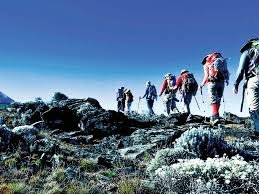
This is a key acclimatisation day following the 'climb high, sleep low' principle — the most important strategy for summit success. You ascend to Lava Tower (4,630m) for altitude exposure before descending to Barranco Camp (3,960m) to sleep. The landscape transforms into an alpine desert of ancient lava flows and volcanic rock formations. Lava Tower is a stunning 80-metre volcanic plug that dominates the landscape. After lunch at the tower, you descend into the lush Barranco Valley, where the famous Barranco Wall looms above camp. The campsite is nestled at the base of the wall in a valley filled with giant groundsels (Senecio trees).

Morning: Early breakfast at 7:00 AM and depart Shira Camp 1. The trail heads east across the Shira Plateau with Kilimanjaro's glaciers growing larger ahead. The terrain transitions from moorland to alpine desert as you gain elevation. The landscape becomes lunar-like with volcanic rocks and hardy lichens. Your guide will set a slow, steady pace — "pole pole" (slowly) — to aid acclimatisation.
Afternoon: Arrive at Lava Tower (4,630m) for lunch. This is a crucial acclimatisation stop — you reach a higher altitude than you will sleep at tonight. The Lava Tower is a striking 80-metre volcanic plug. After lunch and photos, begin the descent to Barranco Camp (3,960m). The trail descends into the Barranco Valley, a lush green valley surrounded by steep cliffs. Giant groundsels (Senecio trees) and lobelias dot the landscape, creating a surreal prehistoric atmosphere.
Evening: Arrive at Barranco Camp (3,960m) spectacularly located at the base of the Barranco Wall. The campsite is surrounded by giant Senecio plants creating a unique botanical garden atmosphere. Photography tip: the evening light on the Barranco Wall with the Senecio foreground is one of the most iconic images on Kilimanjaro. Dinner and early rest. Altitude note: descending to sleep at 3,960m after reaching 4,630m is a proven acclimatisation strategy.
Lava Tower Acclimatisation Day Barranco Valley Giant Senecio
Day 4

Barranco Camp (3,960m) to Karanga Camp (4,035m)

Full Day Hiking: 4-5 hrs Distance: ~6 km Accommodation: Karanga Camp Meals: Breakfast, Lunch, Dinner

Today features one of the most exciting sections of the entire climb: the Barranco Wall. Known as the 'Breakfast Wall,' this imposing 250-metre vertical face is the highlight of the Lemosho Route. Despite its dramatic appearance, the climb is a non-technical scramble using hands and feet on solid volcanic rock. Your guide will navigate the safest route. After conquering the wall, the trail traverses the Karanga Valley with stunning views of Kilimanjaro's southern glaciers — the Heim, Kersten, and Decken Glaciers. You reach Karanga Camp (4,035m) by early afternoon, giving you ample time to rest and acclimatise before summit night.

Morning: Rise early for breakfast at 6:30 AM. Tackle the Barranco Wall immediately after camp — it is easier in the cool morning hours. The wall is a 250-metre scramble up solid volcanic rock. Despite its imposing appearance, it is non-technical and requires no ropes. Your guide will point out handholds and the safest path. The sense of achievement at the top is immense, with panoramic views back over the Barranco Valley and across to Kilimanjaro's southern ice fields.
Afternoon: After topping the Barranco Wall, the trail undulates through the Karanga Valley. This section offers incredible views of the southern glaciers — the Heim, Kersten, and Decken Glaciers — which are among the most dramatic ice formations on Kilimanjaro. The terrain is alpine desert with scattered volcanic rocks. Arrive at Karanga Camp (4,035m) by early afternoon. Lunch is served and the afternoon is free for rest, photography, and acclimatisation walks around camp.
Evening: Relax at Karanga Camp with hot drinks and snacks. Enjoy the sunset views over the glaciers — the golden light against the ice creates a spectacular display. Your guide will provide a briefing about summit night preparations. Gear check: ensure your headlamp has fresh batteries, and your summit layers (thermal base, fleece, down jacket, waterproof shell) are easily accessible. Early dinner at 6:00 PM.
Barranco Wall Glacier Views Non-Technical Scramble Summit Prep
Day 5

Karanga Camp (4,035m) to Barafu Camp (4,673m)

Full Day Hiking: 3-4 hrs Distance: ~5 km Accommodation: Barafu Camp Meals: Breakfast, Lunch, Dinner

A shorter but challenging day as you ascend to Barafu Camp — your summit base camp. Barafu means 'ice' in Swahili, and the camp is indeed perched on a rocky ridge surrounded by scree and ice. The trail climbs steadily through alpine desert with the summit glaciers growing ever closer. Upon arrival, you have the entire afternoon to rest, hydrate, and mentally prepare for the midnight summit attempt. Your guide will provide final summit strategy, including pacing, nutrition, and what to expect at each stage of the ascent. This is the most critical rest day of the entire climb.

Morning: Breakfast at 8:00 AM (a later start to maximise rest). Depart Karanga Camp and begin the steady ascent to Barafu Camp. The trail climbs through stark alpine desert — rocky, exposed, and increasingly barren. Kilimanjaro's southern glaciers dominate the view ahead. The air is noticeably thinner now, so maintain a slow, steady pace. Your guide will check everyone's oxygen saturation at regular intervals. The trek takes approximately 3-4 hours.
Afternoon: Arrive at Barafu Camp (4,673m) — 'barafu' means 'ice' in Swahili. The camp is perched on a rocky ridge with sweeping views of the plains below and the summit glaciers above. Lunch is served immediately upon arrival. The entire afternoon is dedicated to rest and preparation. Sleep if you can, but at minimum lie down and allow your body to conserve energy. Hydration is critical — drink at least 1 litre of water during the afternoon. Final gear sorting with your guide.
Evening: Early dinner at 5:00 PM. Your guide provides the final summit briefing at 6:00 PM covering: departure time (typically midnight), route details, pacing strategy, nutrition plan (energy gels, snacks, thermos of hot tea), layers to wear, and emergency procedures. Set out your summit layers in order of putting them on. Lights out at 7:00 PM. Try to sleep — even a few hours will make a significant difference for summit night.
Base Camp Summit Prep Rest Day Altitude
Day 6

SUMMIT DAY: Barafu Camp (4,673m) to Uhuru Peak (5,895m) to Mweka Camp (3,100m)

Full Day Hiking: 10-14 hrs total Distance: ~16 km Accommodation: Mweka Camp Meals: Breakfast, Lunch, Dinner

The most challenging and rewarding day of your Kilimanjaro climb. You are awakened at midnight with hot tea and light snacks. By 12:30 AM, you begin the summit ascent in darkness, guided by your headlamp and the stars above. The trail climbs steeply up switchbacks of scree and volcanic rock for 5-7 hours. The cold is intense (-10°C to -20°C) and the air is thin at over 5,000m. Your guide will maintain a painfully slow but steady rhythm — "pole pole." Passing Stella Point (5,756m) on the crater rim brings the first glow of dawn. From here, it is a final 40-minute traverse along the crater rim to Uhuru Peak (5,895m). The sense of achievement, the sunrise over Africa, and the glaciers surrounding you create an unforgettable moment. After photos and celebration, you descend back to Barafu Camp for a brief rest, then continue down to Mweka Camp (3,100m).

Night/Summit: Wake at 11:30 PM for hot tea, biscuits, and light snacks. Dress in all your layers: thermal base, fleece, down jacket, waterproof shell, two pairs of socks, gaiters, and insulated boots. Headlamp with fresh batteries is essential. Depart Barafu Camp at midnight following your guide in single file. The trail ascends steeply up loose scree and volcanic rock. The pace is very slow — about 1 km per hour. Break at every 200 metres of elevation gain. Watch for falling temperatures — the wind chill at 5,500m can feel like -20°C. Reach Stella Point (5,756m) at the crater rim after 5-7 hours. Watch the sunrise over the African continent — an unforgettable sight.
Midday: From Stella Point, hike along the crater rim for 40 minutes to Uhuru Peak (5,895m). The glaciers of Kilimanjaro surround you, and the curvature of the Earth is visible at the horizon. Spend 15-20 minutes at the summit for photos, celebration, and quiet reflection. Your guide will present you with a congratulatory toast. Descend back to Barafu Camp (2-3 hours) for a rest and lunch. After a short break, continue the descent to Mweka Camp (3,100m) through the alpine desert and moorland zones (another 3-4 hours). The total descent on summit day is about 7-8 hours.
Evening: Arrive at Mweka Camp (3,100m) exhausted but exhilarated. Your crew will have hot water ready for washing and a hot meal waiting. Celebrate your achievement with your fellow climbers and crew. The lower altitude at 3,100m means you can breathe easier and sleep deeply tonight. This is the first night you will feel truly comfortable since leaving the rainforest. Well-earned rest after the longest and most challenging day of the climb.
Uhuru Peak Summit Night Stella Point Glacier Views Sunrise at 5,895m
Day 7

Mweka Camp (3,100m) to Mweka Gate (1,650m) to Arusha

Full Day Hiking: 3-4 hrs Descent: ~10 km Transfer: 1.5 hrs Meals: Breakfast, Lunch

Your final day on the mountain is a gentle descent through the lush Mweka rainforest. After three days of stark alpine desert, the vibrant green of the forest is a welcome change. The trail winds through dense vegetation alive with birdsong, butterflies, and flowering plants. The sounds and smells of the forest surround you as you descend. At Mweka Gate, you complete park exit formalities and receive your hard-earned summit certificate — a gold certificate for reaching Uhuru Peak or green for Stella Point. Your driver is waiting to transfer you to your hotel in Moshi or Arusha for a hot shower and a well-earned celebration dinner. Congratulations, you have climbed Kilimanjaro!

Morning: Enjoy a final breakfast at Mweka Camp at 7:00 AM. The last day's hike is a gentle 3-4 hour descent through the lush Mweka rainforest. The trail is well-shaded and alive with birds, butterflies, and flowering plants. The contrast with the high alpine desert of the past two days is striking. This is a wonderful time to reflect on your achievement and enjoy the final moments on Kilimanjaro. Photography tip: the forest light creates beautiful dappled scenes perfect for final mountain photos.
Afternoon: Arrive at Mweka Gate (1,650m) by late morning. Complete park exit formalities — your lead guide handles all paperwork while you relax. The summit certificate ceremony is a special moment: gold certificates for those who reached Uhuru Peak (5,895m), green certificates for Stella Point (5,756m). Your guide will offer a speech celebrating the team's achievement. After photos with the crew (tip distribution is customary at this time), transfer to your vehicle. Drive to Moshi or Arusha (approx 1.5 hours) for your hotel check-in.
Evening: Arrive at your hotel in Moshi or Arusha. Celebrate your incredible achievement with a hot shower, cold drink, and a proper meal. Your guides recommend a celebratory dinner at a local restaurant to share stories from the mountain. We can arrange optional post-climb activities including a safari, Zanzibar beach extension, or cultural tours. Overnight at your hotel in Moshi or Arusha. Congratulations — you have conquered Kilimanjaro!
Rainforest Descent Summit Certificate Crew Farewell Arusha Transfer

Destinations You'll Explore

Londorossi Gate rainforest trail

Londorossi Gate & Rainforest

The western entrance to Kilimanjaro National Park, where your climb begins. Dense montane rainforest with towering trees, moss-draped branches, and abundant birdlife and colobus monkeys.

2,100m Elevation Rainforest Zone Remote Western Approach
Shira Plateau volcanic caldera

Shira Plateau

One of the largest volcanic calderas on Earth, formed over 500,000 years ago. The Lemosho Route is the only route that traverses this vast, otherworldly landscape at 3,500-3,900m.

3,500m Elevation Volcanic Caldera Panoramic Views
Barranco Wall and valley

Barranco Valley & Wall

A dramatic gorge at the base of the Barranco Wall, filled with giant groundsels (Senecio trees) and lobelias. The wall is a thrilling non-technical scramble offering incredible views.

3,960m Elevation Giant Senecio Forest Scramble Section
Uhuru Peak summit glacier

Uhuru Peak Summit

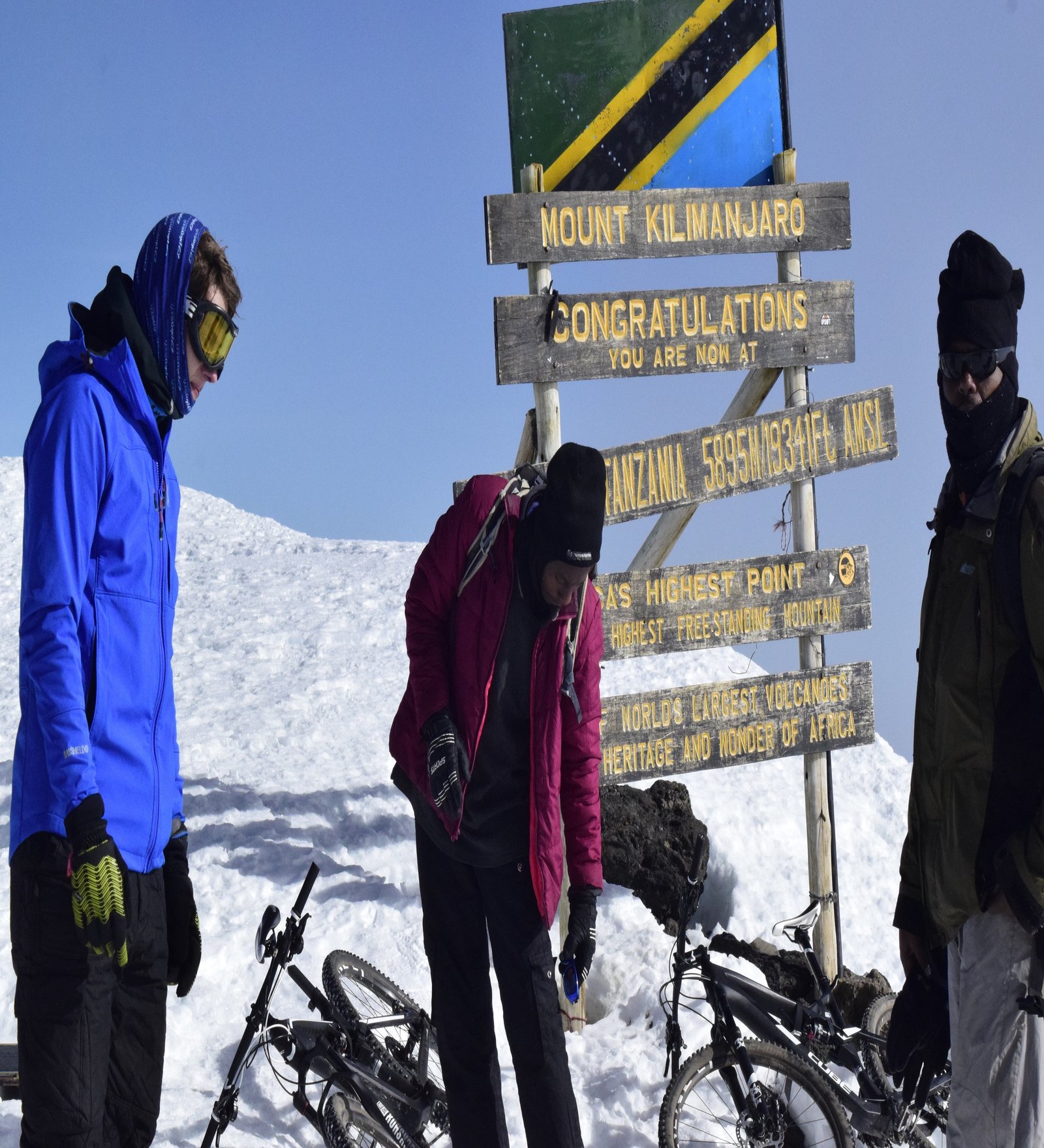
The Roof of Africa at 5,895m. Stand atop Africa's highest point surrounded by ancient glaciers with a 360-degree view of the continent stretching to the horizon.

5,895m Elevation UNESCO World Heritage Africa's Highest Point
Included
  • Professional mountain guides & assistant guides
  • Porters & cook
  • Park entrance & camping fees
  • Trekking permits & rescue fees
  • Camping equipment (tents, sleeping mats)
  • Full board meals on the mountain
  • Summit certificate
  • Emergency oxygen & first aid kit
Excluded
  • International flights
  • Travel insurance
  • Visa fees
  • Personal trekking gear & clothing
  • Tips for guides, porters & cook
  • Personal expenses & drinks
  • Accommodation before/after climb
  • Medical evacuation costs
Transport
  • Private transfer Moshi to Londorossi Gate (Day 1)
  • Private transfer Mweka Gate to Moshi/Arusha (Day 7)

Photo Gallery

Location

What Our Climbers Say

Join thousands of satisfied climbers who have summited Kilimanjaro with us.

5.0/5.0
Google Reviews
5.0/5.0
TripAdvisor
5.0/5.0
SafariBookings
Licensed Tour Operator TATO Registered Kilimanjaro Specialists Secure Payment 10+ Years Experience

Frequently Asked Questions

Which is better: Lemosho Route vs Machame Route?

The Lemosho Route offers a more remote, scenic wilderness experience with fewer crowds and a higher success rate due to better acclimatisation. Machame is shorter but busier. Lemosho is considered the premium choice for those seeking the best balance of scenery, solitude, and summit success.

How difficult is the 7-day Lemosho Route?

The Lemosho Route is rated as demanding. Trekkers should be physically fit with good cardiovascular endurance. The route involves 6-8 hours of hiking daily at high altitude. Previous hiking experience is recommended but not essential if you train adequately beforehand.

What is the best time to climb Kilimanjaro via Lemosho?

The best months are January-March and June-October. These dry season windows offer the most stable weather, clearer skies, and the highest summit success rates. The long rains (March-May) and short rains (November) bring wetter, more challenging conditions.

What makes the Shira Plateau special on the Lemosho Route?

The Shira Plateau is one of the largest volcanic calderas in the world, formed over 500,000 years ago. The Lemosho Route is the only route that traverses this vast, otherworldly landscape at 3,500-3,900m, offering breathtaking panoramic views of Kilimanjaro's glaciers and the Great Rift Valley.

Is the Lemosho Route the most scenic route on Kilimanjaro?

Many experienced climbers consider the Lemosho Route the most scenic. It traverses five distinct ecological zones: lush rainforest, heath, moorland, alpine desert, and arctic summit. The route offers exceptional views of the Shira Plateau, Lava Tower, the Breach Wall, and the southern glaciers.

What fitness level is required for the 7-day Lemosho climb?

A good to excellent fitness level is recommended. Prepare with regular cardio (running, cycling, swimming), strength training (especially legs and core), and practice hiking on steep terrain with a loaded daypack. Start training at least 8-12 weeks before your climb.

How does altitude acclimatisation work on the Lemosho Route?

The Lemosho Route follows the 'climb high, sleep low' principle. On Day 3, you ascend to Lava Tower (4,630m) for altitude exposure before descending to Barranco Camp (3,960m) to sleep. This strategy significantly improves acclimatisation and summit success rates compared to other routes.

What should I pack for the Kilimanjaro Lemosho climb?

Essential items include: waterproof hiking boots, thermal layers, fleece jacket, waterproof jacket and trousers, insulated down jacket, warm hat, sun hat, sunglasses, headlamp, sleeping bag (rated to -10°C), trekking poles, water bottles/bladder, sunscreen, and a first aid kit. A full packing list is provided upon booking.

Is there a minimum age for the Lemosho Route?

The minimum age to climb Kilimanjaro via the Lemosho Route is 10 years old. However, we recommend climbers be at least 12-14 years old due to the physical demands and altitude challenges. All minors must be accompanied by a parent or guardian.

What is the group size for this Kilimanjaro climb?

Our groups typically range from 4 to 12 climbers, with a guide-to-climber ratio of 1:3 or better. Private climbs are also available. Smaller groups ensure personalised attention, better pacing, and a more rewarding overall experience.

How does tipping work on Kilimanjaro climbs?

Tipping is customary and greatly appreciated by the crew. Recommended amounts are: $20-25 per day for the lead guide, $15-20 for assistant guides, $10-15 for the cook, and $8-10 per day for porters. Tips are typically pooled and distributed at the end of the climb.

What park fees are included in the climb cost?

Included fees cover: Kilimanjaro National Park entrance fee, camping fees, rescue fees, and all trekking permits. These fees are set by the Tanzania National Parks Authority (TANAPA) and Kilimanjaro National Park and typically account for 30-40% of the total climb cost.

What is summit night like on the Lemosho Route?

Summit night begins around midnight from Barafu Camp (4,673m). You climb in darkness by headlamp for 6-8 hours up steep, rocky, and potentially snowy terrain. Reaching Uhuru Peak (5,895m) at sunrise is an emotional and unforgettable moment. The descent to Mweka Camp takes another 4-5 hours.

What is the weather like on the Lemosho Route?

Weather varies dramatically by altitude. Rainforest zones are warm and humid (20-30°C). The alpine desert is cold and dry with intense UV. Summit temperatures range from -10°C to -20°C at night, with strong winds. Conditions change rapidly — be prepared for sun, rain, snow, and freezing temperatures all in one day.

Do I receive a summit certificate after climbing Kilimanjaro?

Yes! All climbers who reach Uhuru Peak (5,895m) receive a gold summit certificate signed by the Kilimanjaro National Park. Climbers who reach Stella Point (5,756m) receive a green certificate. Certificates are presented at Mweka Gate after the descent.

Ready to Conquer Kilimanjaro?

Book your 7-day Lemosho Route climb and experience the adventure of a lifetime on Africa's highest peak.