

.png)
The Aardvark
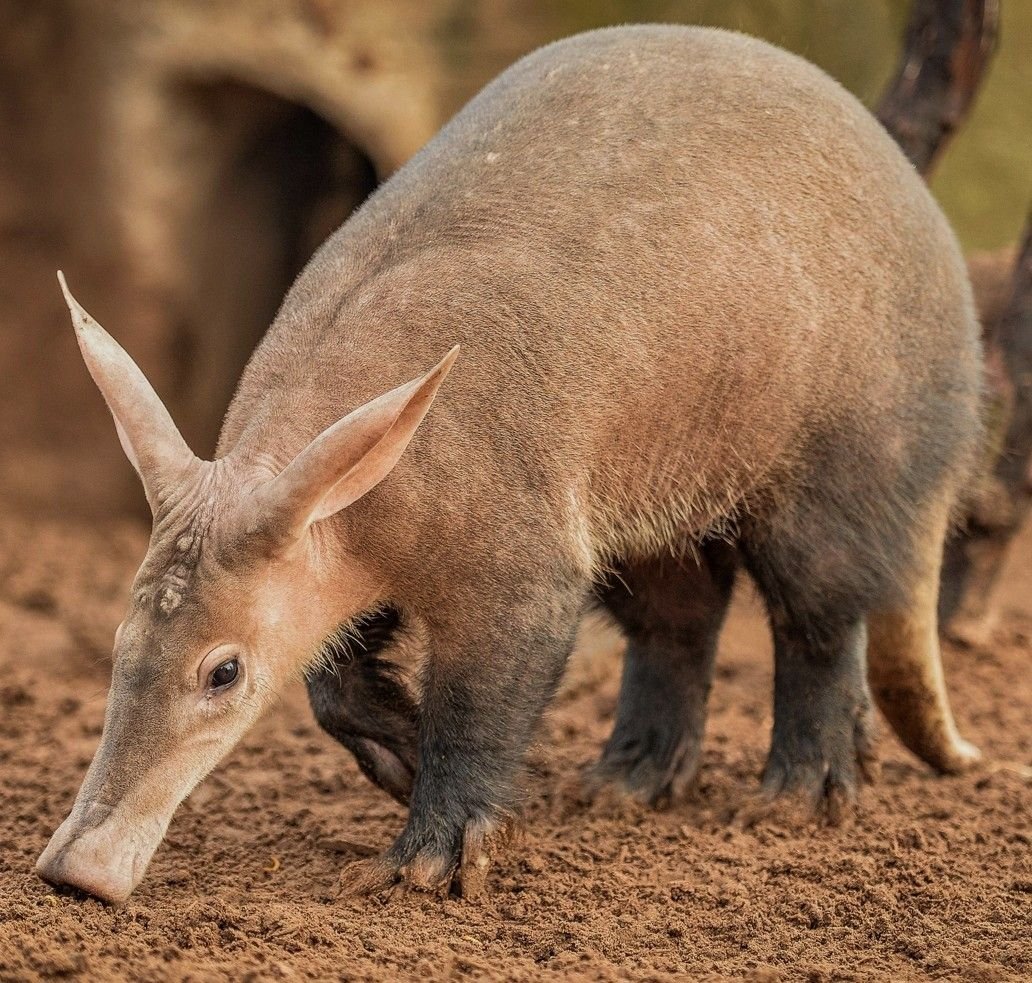
Orycteropus afer — a nocturnal, solitary mammal of the African savanna: a stocky body, long snout, huge ears and spade-like claws built for one job - digging out ants and termites under cover of darkness.Introduction to the Aardvark
The aardvark (Orycteropus afer) is one of Africa’s strangest and most specialised mammals - a nocturnal, solitary digger that lives almost entirely on ants and termites. Despite its Afrikaans name meaning "earth pig", it is not a pig at all; it is the only surviving member of the order Tubulidentata, a unique lineage of mammals. In Tanzania it ranges across the savannas and grasslands, but because it sleeps through the day in deep burrows and only emerges after dark, it is one of the hardest animals to see on safari.
Scientific Classification
Physical Characteristics
The aardvark is a powerfully built digging machine, with features tuned to a life of burrowing and termite-hunting:
- Body & weight: A stocky, arched-backed body weighing about 40–65 kg.
- Body length: Roughly 1.0–1.6 m from snout to tail tip (head-body about 1.0–1.3 m, plus a thick tail); males and females are similar in size.
- Snout & tongue: A long, pig-like snout houses a small mouth and an extremely long sticky tongue (up to about 45 cm / 18 in) used to lap up ants and termites.
- Ears & nose: Very large, mobile, rabbit-like ears pick up sound, and a keen sense of smell locates prey underground.
- Claws: Each front foot bears spade-like claws (the middle claw is the largest) that are formidable digging tools.
- Teeth: Adults lack incisors and canines; the cheek teeth are unique, with a tubular (prismatic) structure of stacked dentine - the feature that gives the order its name.
- Coat: Sparse, coarse, yellowish-grey to brownish fur, with a thick skin that protects against bites and stings.
Aardvark Young & Reproduction
Aardvark reproduction is tuned to a solitary life, with no group cooperation:
- Birth: Usually a single calf (twins are rare), born underground in a special nursery chamber of the burrow.
- Gestation: About 7 months.
- Care: The mother alone raises the calf. The young one is born with sparse hair and closed ears/eyes, and is sheltered in the burrow for its first weeks.
- Development: The calf begins to accompany its mother on nocturnal foraging trips (sometimes riding on her back), is weaned at roughly 3 months, and becomes independent by about 6 months; sexual maturity is reached around 2 years.
Habitat: Where They Thrive
The aardvark is a habitat generalist within dry, open country, but its presence is governed by one thing - food:
- Savanna & grassland: Open savanna, grassland and bushland are core habitat, matching the distribution of ants and termites.
- Abundant prey: ADW notes aardvarks occupy grassland and savanna, preferring regions with abundant ants and termites - this, not vegetation type, is the real driver of where they live.
- Avoids: Dense rainforest and rocky, hard ground where they cannot dig are generally avoided.
- Burrows: They dig extensive burrow systems for shelter and escape, and often reuse or enlarge abandoned burrows of other animals.
Distribution Map
The aardvark is widespread across sub-Saharan Africa, absent only from the Sahara, the dense Congo rainforest and the most arid deserts.
Present across Tanzania’s savannas - but nocturnal and elusive, so sightings are rare.
Where to See the Aardvark in Tanzania
Aardvarks occur across Tanzania’s protected savannas, but as a nocturnal, secretive animal, sightings are genuinely rare and depend on luck during a night drive:
Tarangire National Park
Best: Year-round (dry season) | Region: Northern Tanzania
Rare (night drive)
Open savanna and termite-rich plains; night drives from surrounding lodges occasionally reveal an aardvark.
Ruaha National Park
Best: Year-round | Region: South-central Tanzania
Rare (night drive)
Vast remote wilderness with abundant termite mounds - a good (if challenging) place to search by spotlight.
Nyerere National Park
Best: Year-round | Region: Southern Tanzania
Rare (night drive)
The Selous (now Nyerere) wilderness offers night drives where aardvarks are among the prized nocturnal sightings.
All three are in Tanzania. Aardvarks are present year-round, but they are shy and nocturnal - there is no guarantee of a sighting, even on a dedicated night drive.
Aardvark in Pictures
A closer look at the aardvark (Orycteropus afer) - the nocturnal, burrowing anteater of the African savanna.
Where to Spot the Aardvark on Safari
This nocturnal digger is a prize of Tanzanian night drives. Explore the destinations below.
Diet: Ants & Termites
The aardvark is a specialist insectivore - and its diet is one of the most remarkable of any mammal. Research on wild aardvarks shows the diet consists essentially of ants and termites, with the exact mix shifting through the seasons as different termite and ant species become available:
- Termites: The staple. Aardvarks dig into active mounds (often at night when termites are near the surface) and lap up the occupants with the long sticky tongue.
- Ants: Ant nests and columns are also eaten, and the balance between ants and termites changes seasonally.
- Volume: A single animal can consume tens of thousands of insects in a night (often estimated around 50,000), so it must keep moving between mounds.
- Seasonal switching: Studies record aardvarks exploiting different termite genera (such as grass-cutting and snouted termites) and ant species at different times of year, tracking rainfall and abundance.
- Occasional extras: Aardvarks will sometimes eat the fruit of the aardvark cucumber (Cucumis humifructus) - a plant named after them, whose seeds they help disperse.
- How they feed: Powerful claws rip open mounds; the 45 cm sticky tongue flicks in and out up to several times a second to collect prey; then the aardvark moves on.
Daily Behaviour & Nocturnal Life
The aardvark is predominantly nocturnal - the old idea of a morning-feeding, group animal is simply wrong:
- Daytime: It spends the day sheltered in a burrow, sleeping and avoiding heat and predators.
- Night: After dusk it emerges to forage, digging into termite mounds and ant nests and travelling several kilometres in a night.
- Flexible timing: Exact activity varies with temperature, season and local conditions - in cooler weather it may start earlier, and in hot dry periods it can be more active after rains when termites surface.
- Burrowing: It can dig a simple burrow in minutes and a full refuge burrow quickly; digging is also its main defence.
- Predators: Lions, leopards, spotted hyenas, African wild dogs and pythons prey on aardvarks; when threatened it either bolts for a burrow or digs rapidly to escape.
Watching tip: The only realistic way to see one is a night drive with a spotlight in a park that permits them (such as Tarangire, Ruaha or Nyerere) - and even then, consider a sighting a lucky bonus.
Conservation Status
IUCN Red List Status: The aardvark (Orycteropus afer) is listed as Least Concern across its wide range, though it is declining in parts of its distribution.
Major Threats
- Habitat loss: Conversion of savanna and farmland reduces foraging and burrowing ground.
- Hunting: Taken for bushmeat and for traditional medicine in some regions.
- Roadkill: Aardvarks are frequently killed on roads at night.
Conservation Context
It occurs in many protected areas (including Tanzania’s Tarangire, Ruaha and Nyerere parks), and its broad diet and range give it resilience - but its secretive, nocturnal nature makes population monitoring difficult.
Interesting Facts
Aardvark vs Look-alikes
Aardvark vs Pangolin
| Feature | Aardvark | Pangolin |
|---|---|---|
| Covering | Sparse hair | Keratin scales |
| Order | Tubulidentata | Pholidota |
| Diet | Ants & termites | Ants & termites |
Aardvark vs Aardwolf
| Feature | Aardvark | Aardwolf |
|---|---|---|
| Family | Orycteropodidae | Hyaenidae |
| Size | Large (40-65 kg) | Small (8-12 kg) |
| Diet | Ants & termites | Mostly termites |
Aardvark in Context
The aardvark is a true evolutionary singleton - the last survivor of an ancient mammal order, and a vital ecological player that controls termite numbers and disperses the seeds of the aardvark cucumber. Its secrecy is its survival strategy: by sleeping through the day and hunting alone at night, it avoids most predators and most people, making any night-drive glimpse a genuine safari prize.
Wildlife Photography Guide
- Best Camera Lens: A fast 100-400mm or 200-600mm lens; use a high ISO for low light.
- Best Time: Night drives, year-round (dry season often best).
- Best Habitat: Open savanna with abundant termite mounds.
- Best Behaviour: Capture the snout, ears and claws, and the animal digging at a mound under spotlight.
- Patience: Aardvarks are shy - keep distance, kill your spotlight glare and wait.
Frequently Asked Questions
The aardvark (Orycteropus afer) is a nocturnal, solitary African mammal - the only living species in the order Tubulidentata - built for digging and for eating ants and termites.
Adults weigh about 40-65 kg, with a body length of roughly 1.0-1.6 m including the tail; males and females are similar in size.
It is a specialist insectivore: its diet is made up almost entirely of ants and termites, taken in huge numbers, with seasonal shifts between species.
It occurs across sub-Saharan Africa - from Senegal and Somalia to South Africa - and is present throughout the savannas and grasslands of Tanzania, though it is secretive and nocturnal.
No - aardvarks are primarily solitary, with males and females holding overlapping or neighbouring home ranges and a mother associating only with her young.
A night drive with a spotlight in a park that allows them (Tarangire, Ruaha or Nyerere in Tanzania). Sightings are rare and never guaranteed.
Savanna, grassland and bushland with abundant ants and termites; it avoids dense forest and rocky ground where it cannot dig.
Yes - it sleeps in a burrow by day and emerges after dark to forage, with timing that shifts with temperature, season and local conditions.
Usually a single calf after about a 7-month gestation, raised by the mother in a burrow and weaned at roughly 3 months.
No - it is Least Concern on the IUCN Red List, though declining locally from habitat loss, hunting and roadkill.
Related Safari Packages & Tours
The aardvark is a Tanzania night-drive special - plan a safari with night drives, or explore our wider East Africa programmes.
References & Further Reading
- IUCN Red List: Orycteropus afer - Least Concern.
- Animal Diversity Web (ADW): University of Michigan, Orycteropus afer account - solitary habits, savanna/grassland habitat with abundant ants and termites.
- Diet research: Wild aardvark diets consist essentially of ants and termites, with seasonal changes in which termite/ant species are exploited.
- About these facts: Weights and lengths are approximate. Conservation status should be checked against the current IUCN assessment. The aardvark (O. afer) is the only living species of Tubulidentata.
Sightings are never guaranteed and depend on local conditions.

Social Organization
Aardvarks are primarily solitary animals, not group-living primates or herd mammals: