

.png)
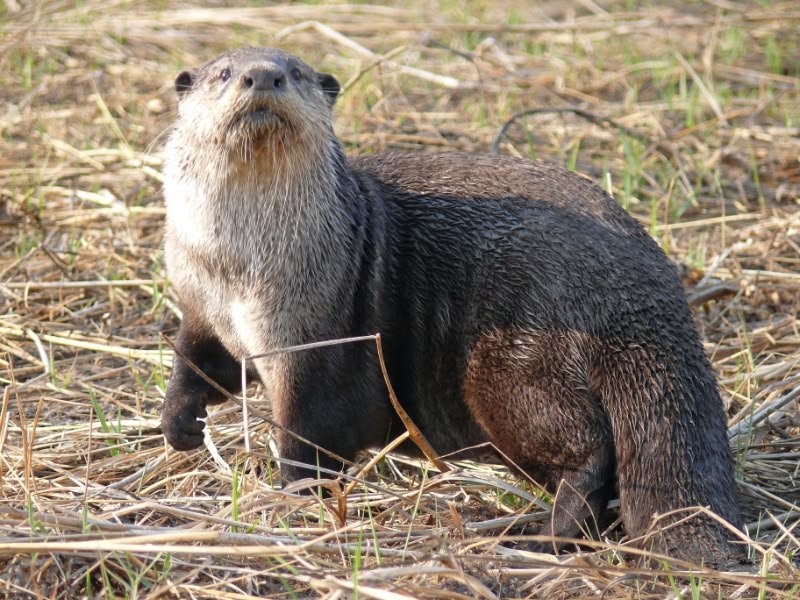
African Clawless Otter
Aonyx capensis — the streamlined, whisker-sensing otter of Africa's rivers, lakes and coasts; clawless-pawed and crab-crushing.Introduction to the African Clawless Otter
The African clawless otter (Aonyx capensis) is one of Africa's most specialised freshwater predators - a large, streamlined mustelid built for life in and around water. Despite its name, it is not clawless everywhere: its front feet lack claws, giving it remarkable dexterity for probing mud and lifting rocks in search of prey.
It is a creature of permanent water - rivers, lakes, estuaries, wetlands and, where a freshwater source is close by, even rocky coasts. In Tanzania it belongs to the country's river and lake systems rather than its dry savannas. Mostly solitary and crepuscular, it fishes and crabs at dawn and dusk, and is best seen from a quiet boat or riverbank.
Why the African Clawless Otter is Ecologically Vital
As a top predator of crabs, fish, frogs and insects, it helps regulate the health of freshwater food webs; its presence is a good sign of a functioning river or lake ecosystem.
A Species Worth Understanding
Understanding the real African clawless otter - its whisker-led hunting, clawless paws and freshwater dependence - replaces vague template copy with one of Africa's most remarkable aquatic mammals.
Scientific Classification
A member of the weasel family (Mustelidae), the African clawless otter is among the largest otters in the world and the largest of the Old World otters. The IUCN recognises it as Aonyx capensis, listed as Near Threatened.
Physical Characteristics
The African clawless otter is built for an aquatic life, with a set of specialised adaptations:
- Sensitive whiskers: Very long, white vibrissae on the face detect prey movement in murky water - its primary hunting sensor.
- Dexterous clawless forepaws: The front feet have no claws, letting the otter deftly dig in mud, flip rocks and pick up prey with hand-like skill.
- Reduced claws: The name Aonyx means 'without claws'; claws are much reduced (a small claw remains only on some rear toes).
- Partial webbing: The rear feet are webbed for swimming, while the front feet stay unwebbed and nimble.
- Large molars: Big, robust molars crush the hard shells of crabs and lobsters - its signature feeding tool.
- Streamlined body: A long, muscular body and a thick, powerful tail (about a third of its length) drive efficient swimming.
- Strong swimming: Short limbs and dense fur make it awkward on land but supremely agile in water.
- Coat: Dark brown upper fur with off-white chin, cheeks, throat and chest - a countershading that camouflages it in water. A dense underfur insulates, since it has little body fat.
Social System & Behaviour
The African clawless otter is usually solitary - not the generic 'group / bachelor' template:
- Solitary forager: Adults typically hunt alone along a stretch of shoreline or river.
- Family groups: When prey is abundant, a female with her offspring - or, more rarely, a male, female and young - may forage together.
- Not bachelor animals: Describing African clawless otters as 'bachelor groups' is not supported; their society centres on the mother-young bond.
- Crepuscular: Most active at dawn and dusk, resting and grooming through the day.
- Awkward on land: It moves with a seal-like hobble on land but is a powerful swimmer; it spends most of its time in water.
African Clawless Otter Young & Reproduction
Young develop slowly, as is typical of mustelids:
- Mating: Mating is mostly in the dry season, though it can occur at any time of year.
- Litter: Usually 1–3 pups (up to 5) after a gestation of about 63 days.
- Care: The female raises the young alone; males and females separate after mating. Pups are born altricial and open their eyes at 16–30 days.
- Dependency: Pups are weaned at about 45–60 days and become independent around one year - they must be taught to swim and hunt by their mother.
Habitat: Where They Thrive
The African clawless otter is a freshwater and riparian specialist - never a savanna animal. 'Savanna' or 'woodland' alone is wrong:
Key Habitat Types:
- Rivers & streams: The core habitat - permanent, clear-flowing or sluggish water with reed-lined banks.
- Lakes & wetlands: Shorelines of large lakes (e.g. Victoria, Tanganyika) and associated swamps and deltas.
- Estuaries: Brackish river mouths where it can still access freshwater nearby.
- Coastline: Rocky seashores are used only where freshwater is close by for drinking and washing salt from the coat.
- Always near water: It cannot persist away from permanent water; even overland travel links one water body to another.
Climate & Cover:
It needs intact aquatic habitat; wetland drainage, deforestation (causing siltation) and pollution are the main pressures on its home.
Distribution Map
The African clawless otter occurs across sub-Saharan Africa wherever permanent freshwater and shoreline cover exist - not a Tanzania-only species, but Tanzania holds strong lake and river populations:
In Tanzania, look along the shores of Lake Victoria, Lake Tanganyika, the Rufiji River (Nyerere) and the waterways of Katavi.
Because it is a shy, crepuscular forager of reedy margins, a sighting means a quiet dawn or dusk boat trip - present in the right habitat but never guaranteed.
Where to See the African Clawless Otter in Tanzania
The African clawless otter is seen from boats and riverbanks along Tanzania's freshwater systems. These are the headline spots:
Lake Victoria
Best: Year-round | Region: Tanzania, freshwater shoreline
Rare (riparian)
Tip: Boat trips from Rubondo Island and lakeshore lodges; scan reedy bays at dawn.
Katavi NP
Best: Year-round | Region: Tanzania, rivers & lakes
Rare (riparian)
Tip: The Katuma River and Lakes Katavi & Chada draw otters to their shores.
Nyerere NP
Best: Year-round | Region: Tanzania, Rufiji River
Rare (riparian)
Tip: Rufiji River boat safaris pass rocky islands and reed beds used by otters.
Lake Tanganyika
Best: Year-round | Region: Tanzania, freshwater shoreline
Rare (riparian)
Tip: Mahale and the lakeshore coves offer tranquil boat viewing at dusk.
African Clawless Otter in Pictures
A closer look at the African clawless otter (Aonyx capensis) - the whisker-sensing, clawless-pawed otter of Africa's rivers, lakes and coasts.
Where to Spot the African Clawless Otter on Safari
Plan a boat or riverbank safari into Tanzania's freshwater habitats to look for the elusive African clawless otter. Explore the destinations below.
Diet: What They Eat
The African clawless otter is a specialised aquatic carnivore - far more specific than a generic 'insectivore' or 'other animals':
- Primary Diet: Crabs are the staple, especially in freshwater; its large molars crush their shells.
- Other aquatic prey: Crayfish and Cape rock lobsters (in coastal waters), fish, frogs and insects (including dragonfly larvae and worms).
- Foraging method: It dives after prey, then returns to shore or a rock to eat, using its clawless forepaws to handle food and its whiskers to locate movement in murky water.
- Seasonal shift: Diet flexes with prey availability - more fish in some seasons, more crabs in others.
- Not a mammal hunter: Occasional mammal remains in scat are likely incidental; the species should not be casually described as routinely killing mammals or livestock.
Ecosystem Role: A top predator of invertebrates and small fish that helps balance freshwater food webs along Africa's waterways.
Daily Behaviour & Social Life
Activity Pattern
Crepuscular: Most active at dawn and dusk, when it forages along banks and reefs. There is no rigid hourly timetable - activity follows light, tide, water level and prey.
Day: Rests, grooms and rolls on grass or sandbanks; may bask in sun.
Night: Continues to forage where safe; it is comfortable in low light thanks to its whiskers.
Social Structure
- Usually solitary: Adults forage alone; the strongest bond is mother and pups.
- Family groups: When food is abundant, a female with offspring - or rarely a pair with young - may forage together.
- Communication: Grunts, whistles, squeals and 'hah' alarm calls; scent marking along waterways.
Predators & Threats
Big cats and crocodiles take otters; the greater threats are habitat loss, entanglement in fishing nets, hunting for fur and conflict with fishers. Its best defence is the water.
Watching tip: On a boat or riverbank, scan reedy margins and rocks at first light or last glow; watch for a low dark head and a trailing tail on the surface.
Reproduction & Lifespan
- Mating: Mostly in the dry season; a polygynous system with males and females separating afterwards.
- Gestation: About 63 days.
- Litter: Usually 1–3 pups (up to 5).
- Care: The female raises the young alone; they are taught to swim and hunt.
- Lifespan: Around 10–15 years in the wild (longer in captivity).
Conservation Status
IUCN Red List Status: Near Threatened - the African clawless otter (Aonyx capensis) is assessed as Near Threatened, with a decreasing population trend.
Major Threats
- Habitat loss: Wetland drainage, deforestation (causing siltation) and water extraction degrade rivers and lakes.
- Fisheries conflict: Entanglement and drowning in gill nets and fish traps; persecution where otters are blamed for taking fish or poultry.
- Hunting: Taken for its thick, soft pelt and for traditional medicine in parts of its range.
- Pollution: Contaminated waterways reduce prey and harm otter health.
Conservation Programs
Protected water bodies are the front line. In Tanzania the Tanzania National Parks (TANAPA) and Wildlife Division protect otter habitat in Nyerere, Katavi and the lakes; the IUCN SSC Otter Specialist Group and the African Otter Network support research, monitoring and community coexistence across the range.
20 Interesting Facts
African Clawless Otter vs Other Otters
African Clawless Otter vs Spotted-necked Otter
| Feature | African Clawless | Spotted-necked |
|---|---|---|
| Size | Larger (10–36 kg) | Smaller (~4–12 kg) |
| Forepaws | Clawless, very dexterous | Fully clawed |
| Coat | Plain dark brown, white chest | Spotted throat/neck patch |
| Habitat | Rivers, lakes, coast | Lakes of central/east Africa |
African Clawless Otter vs Congo Clawless Otter
| Feature | African Clawless | Congo Clawless |
|---|---|---|
| Range | Widespread sub-Saharan (incl. Tanzania) | Congo basin |
| Forepaws | Clawless | Clawless (similar) |
| Habitat | Rivers, lakes, coast | Congo basin rivers & swamps |
| Build | Large, muscular | Large, similar build |
African Clawless Otter in African Context
The African clawless otter is a quiet barometer of river and lake health across sub-Saharan Africa. Where waterways are clean and rich in crabs and fish, the otter thrives; where wetlands are drained or silted, it disappears. It occasionally crosses paths with people where rivers meet farms and fisheries, and reducing accidental net deaths is key to its future. Protecting Africa's freshwater systems protects the otter - and the people who depend on those same waters.
Wildlife Photography Guide
- Best Camera Lens: A 100-400mm or longer lens from a boat; otters are wary and keep their distance on the water.
- Best Time: Dawn and dusk boat cruises - the otter's crepuscular peaks.
- Best Habitat: Lake Victoria, Katavi, the Rufiji (Nyerere) and Lake Tanganyika shorelines.
- Best Behaviour: Capture the white whiskers, the low swimming head and the muscular tail; shoot in soft morning light.
- Safety Distance: Keep the boat slow and quiet; move gently and never chase an otter.
Frequently Asked Questions
The African clawless otter (Aonyx capensis) is a large otter of Africa's freshwater rivers, lakes and coasts. It is a member of the weasel family with clawless, dexterous front paws.
Its front feet lack claws, which gives great dexterity for digging and handling prey; claws are much reduced (a small rear claw may remain). The name 'aonyx' means 'without claws'.
Mainly crabs, plus fish, frogs, insects and - in coastal waters - crayfish and lobsters. Its large molars crush crab shells.
Rarely. Mammal remains in scat are likely incidental, and it should not be casually described as routinely killing mammals or poultry.
It is crepuscular - most active at dawn and dusk - rather than strictly nocturnal, and rests and grooms through the day.
Usually solitary; family groups (a female with pups, or rarely a pair with young) form when prey is abundant. It is not a bachelor-group animal.
Body 73–95 cm with a 40–60 cm tail; adults weigh about 10–36 kg, most averaging 12–21 kg.
Along freshwater: Lake Victoria (incl. Rubondo), Lake Tanganyika, the Rufiji River in Nyerere NP, and the rivers and lakes of Katavi. Seen from boats at dawn or dusk, rarely.
Near Threatened (IUCN), with a decreasing population trend. Main threats are habitat loss, net entanglement, hunting and conflict with fishers.
Permanent freshwater - rivers, lakes, estuaries and wetlands, or coastline where freshwater is close by. It is not a savanna or forest-floor species.
Long sensitive whiskers detect prey movement in murky water; it dives, grabs prey with clawless forepaws, then eats on a rock or bank.
Yes - on a quiet dawn or dusk boat trip with a long lens; keep your distance and move slowly so the otter stays relaxed.
Related Safari Packages & Tours
Plan a boat or riverbank safari into Tanzania's freshwater habitats to look for the African clawless otter with our expert guides.
References & Further Reading
- IUCN Red List: Aonyx capensis - Near Threatened.
- IUCN SSC Otter Specialist Group: Aonyx capensis species account.
- African Otter Network: African clawless otter identification and distribution notes.
- About these facts: Weight, size and lifespan are approximate adult ranges that vary by sex, age, location and measurement method; conservation status should be checked against the current IUCN assessment.
Sightings are never guaranteed and depend on local conditions.