

.png)
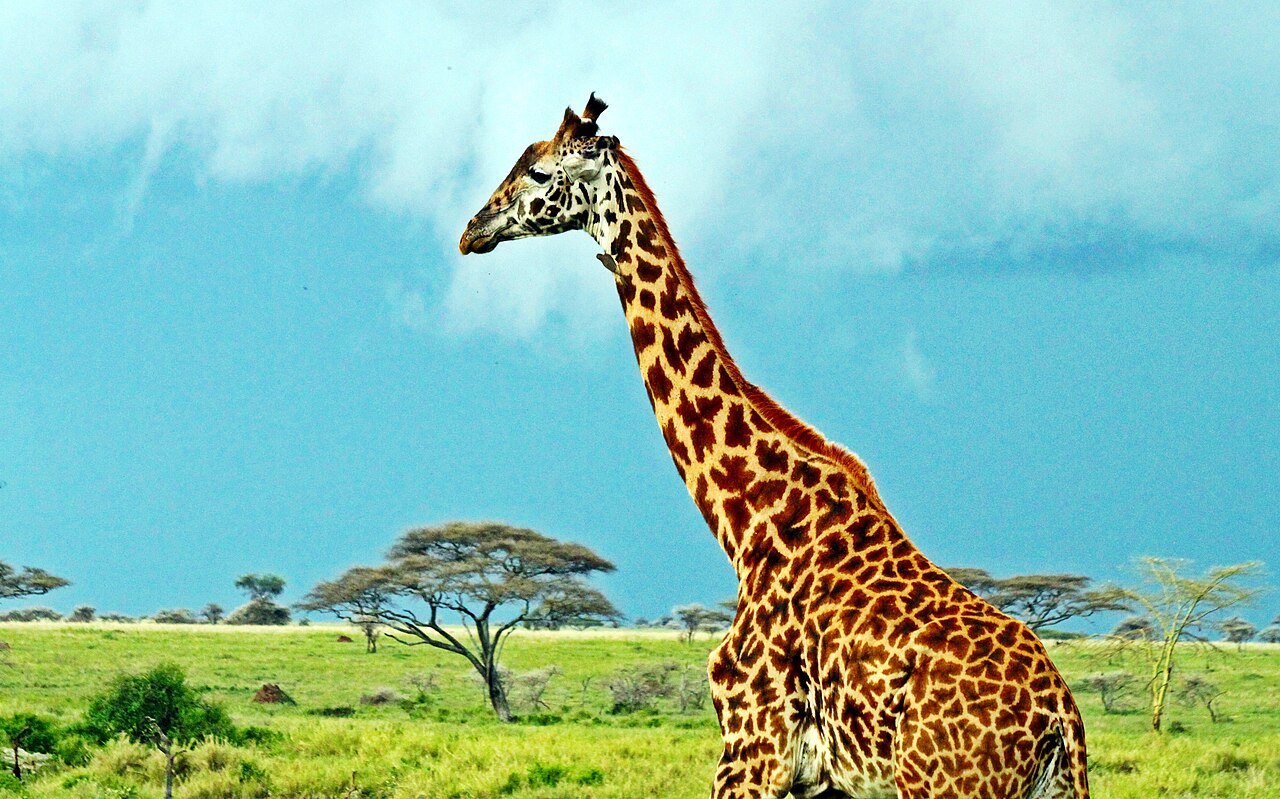
Reticulated Giraffe
Giraffa reticulataThe living masterpiece of northern Kenya.
Sightings are never guaranteed and depend on local conditions. Follow your guide and respect park rules.
Instantly recognizable by its rich chestnut coat enclosed in brilliant white geometric lines, the reticulated giraffe is one of Africa’s most spectacular wildlife species. Towering above the dry woodlands and savannas of northern Kenya, this elegant browser uses its extraordinary height and long, prehensile tongue to reach foliage beyond the reach of most herbivores. Wild. Elegant. Endangered.
Reticulated Giraffe Quick Facts
What Is the Reticulated Giraffe?
The reticulated giraffe is one of Africa’s most visually distinctive giraffes. Its rich orange-brown patches are separated by clean, bright white lines, creating the intricate network pattern that gives the species its name — “reticulated” means network-like. Under the 2025 IUCN SSC Giraffe and Okapi Specialist Group taxonomy, it is recognized as a distinct species, Giraffa reticulata, alongside Northern (G. camelopardalis), Masai (G. tippelskirchi) and Southern (G. giraffa) giraffes. Today it is predominantly associated with northern and northeastern Kenya, with small isolated populations possibly remaining in parts of southern Ethiopia and Somalia.
Signature Features
Geometric coat
Sharp chestnut patches enclosed by clean white lines — a natural network.
Towering height
Adults can reach roughly 5.5 m; among the tallest land animals.
45–50 cm tongue
Long, muscular, prehensile, dark to resist sun exposure.
Visual surveillance
Height lets it see danger over vegetation that hides smaller animals.
Powerful kick
A hind-leg kick can seriously injure or kill a lion.
Fission-fusion
Flexible social associations, not rigid herds.
Physical Characteristics
Adults can reach approximately 5.5 m, with males generally larger and heavier than females (don’t present a single universal weight for every adult). The neck is about 2 m long with 7 cervical vertebrae — the same count as humans, but enormously elongated. The tongue is roughly 45–50 cm, muscular, prehensile and dark bluish-black/purple, letting the giraffe pull leaves between thorns using tongue, lips and teeth together. Giraffes are browsers, not grazers: their diet is primarily leaves, shoots, twigs, flowers, seed pods and fruits, with Vachellia/Senegalia (formerly “Acacia”) foliage especially important. They have an extremely powerful cardiovascular system to pump blood ~2 m up to the brain, and males compete through necking — swinging necks to establish dominance, not “fighting for territory.”
Habitat & Range
The reticulated giraffe’s principal current range is northern and northeastern Kenya, especially dry savanna, semi-arid bushland, Acacia/Vachellia woodland, shrubland, dry woodland and grassland-woodland mosaics/rangelands. This is primarily a northeast African species, not one with core populations concentrated in eastern and southern Africa. Small isolated populations may remain in southern Ethiopia and southern Somalia, though they are far smaller than the northern Kenyan stronghold. Giraffes obtain substantial moisture from vegetation and tolerate dry environments, so their distribution is shaped by habitat and water availability rather than a strict daily need for surface water.
Where to See Reticulated Giraffes
This species is a northern Kenya safari icon, not a Tanzanian one; Tanzania’s characteristic giraffe is the Masai giraffe. The broader Samburu–Isiolo–Laikipia conservation landscape is one of the strongest regions for viewing reticulated giraffes, with Marsabit also within the northern Kenyan range. Giraffes can be encountered year-round; the dry season (especially June–October) brings favorable general wildlife-viewing conditions, but local conditions vary. Sightings are best described as a strong opportunity in northern Kenya rather than a guarantee.
Behavior & Social Life
Reticulated giraffes are social but flexible, best described as fission–fusion: individuals join groups, groups split, and associations reform over time. Females often form stronger, more stable relationships (mother–calf, female–female, related females), while adult males become increasingly independent, traveling alone or in temporary male groups. The emphasis is on mother–calf bonds and flexible social associations, with calves able to form nursery groups/crèches. Daily activity varies with temperature, food, disturbance and local conditions, rather than following a fixed timetable. Giraffes sleep relatively little (fragmented bouts, standing or lying); GCF gives roughly 4.5 hours as a general figure. They can reach about 50– in rapid movement and use a distinctive pacing gait.
Predators & Defense
Lions are the major predator, especially of calves; hyenas, leopards and wild dogs can take young or vulnerable giraffes. Adult defenses are individual: height (early detection), vigilance, speed and powerful kicks — not “group protection” as the main defense.
Diet & Feeding
Giraffes are herbivorous browsers, not grazers. Their diet is primarily leaves, shoots, twigs, flowers, seed pods and fruits, with Vachellia/Senegalia foliage a major component. The long tongue and upper lip selectively strip foliage, maneuvering around thorns. As a high-level browser, the reticulated giraffe exploits vegetation many smaller herbivores can’t reach, creating vertical niche partitioning and contributing to seed dispersal and vegetation structure.
Reproduction & Life Cycle
A female usually gives birth to one calf (twins rare). Gestation is approximately 15 months (~453–464 days). The mother gives birth standing, so the calf drops about 2 m to the ground; newborns are ~1.8 m tall and can stand within about an hour. Calves begin sampling leaves at around four months and nurse for roughly 9–12 months, joining nursery groups as they develop independence. Lions target young giraffes, so calves must become mobile quickly.
Comparisons & 2025 Taxonomy
The 2025 Four-Species Split
Historically giraffes were treated as one species (Giraffa camelopardalis) with subspecies. The 2025 IUCN SSC assessment recognizes four: Northern (G. camelopardalis), Reticulated (G. reticulata), Masai (G. tippelskirchi) and Southern (G. giraffa). This page explains that the reticulated giraffe is now its own species — making it more current than most generic giraffe articles.
| Feature | Reticulated Giraffe | Masai Giraffe |
|---|---|---|
| Scientific name | Giraffa reticulata | Giraffa tippelskirchi |
| Main range | Northern Kenya | Tanzania & Kenya |
| Pattern | Clean geometric network | Irregular/jagged patches |
| Habitat | Dry/semi-arid woodland & savanna | Savanna & woodland |
| Tourism region | Northern Kenya | Tanzania/Kenya |
| Status | Endangered | Species-specific assessment evolving |
| Signature | White-lined network pattern | Irregular dark patches |
Under the new taxonomy, the Northern giraffe is G. camelopardalis, distinct from the reticulated giraffe despite both occurring in the broader region.
Conservation Status
The reticulated giraffe is currently classified as Endangered. Giraffe Conservation Foundation and the IUCN Red List currently assess the reticulated giraffe as Endangered — a status carried into the 2025 Giraffe and Okapi Specialist Group reassessment, which recognizes Giraffa reticulata as a full species. GCF currently cites approximately 20,900 wild individuals, a decline of more than 40% from roughly 36,000 about 35 years ago — though other surveys produce different estimates depending on year and methodology, so don’t present one number as eternal.
The 95% Fact
GCF reports that more than 95% of reticulated giraffes live outside government-managed protected areas. That means national parks alone cannot save the species — conservation must involve local communities, private landowners, conservancies, county governments, Kenya Wildlife Service and conservation organizations. Northern Kenya’s private and community conservancies (Samburu, Isiolo, Laikipia, Marsabit) protect habitat, reduce poaching, maintain corridors and support livelihoods. Responsible tourism can help when revenue-sharing and conservation partnerships are properly structured — but avoid unsupported claims like “every safari payment directly funds anti-poaching.”
Major Threats
1. Habitat loss
Agriculture and land-use change reduce habitat.
2. Habitat degradation
Remaining habitat can decline in quality.
3. Illegal killing
Hunted for meat and other products.
4. Human-wildlife conflict
Competition over land and resources.
5. Fragmentation
Roads, fences and settlement isolate populations.
Did You Know?
45–50 cm tongue
Long, prehensile, dark to resist sun.
7 neck bones
Same count as humans, hugely elongated.
Necking
Males duel with necks to win dominance.
Powerful kick
A hind-leg kick can kill a lion.
95% outside parks
Most live outside government protected areas.
Fission-fusion
Flexible social associations, not rigid herds.
>30 years
Can live more than 30 years in the wild.
Crèches
Calves form nursery groups while adults browse.
In the low gold light of a Samburu evening, a reticulated giraffe turns and the white lattice of its coat glows like stained glass — a living geometry that exists almost nowhere else on Earth, and whose survival now depends on the people who share its dry northern home.
Gallery
Frequently Asked Questions
Giraffa reticulata.
Yes. The IUCN SSC Giraffe and Okapi Specialist Group’s 2025 taxonomy recognizes it as one of four giraffe species.
Primarily in northern and northeastern Kenya, with small isolated populations potentially remaining in southern Ethiopia and Somalia.
They are not a core Tanzanian giraffe species. Tanzania’s characteristic giraffe is the Masai giraffe, Giraffa tippelskirchi, under the 2025 taxonomy.
Northern Kenya, especially the broader Samburu, Isiolo and Laikipia conservation landscape, is one of the strongest regions for viewing them.
Yes. Samburu and surrounding northern Kenyan landscapes are important reticulated giraffe areas.
Marsabit is within the species’ northern Kenyan range and can offer opportunities depending on local conditions.
Yes. Giraffe Conservation Foundation reports the species as Endangered, a status dating to its 2018 IUCN Red List assessment.
GCF currently cites approximately 20,900 wild individuals, while other surveys produce different estimates depending on year and methodology.
Mostly leaves and shoots from trees and shrubs, along with flowers, fruits and seed pods.
They may consume some grass opportunistically, but giraffes are primarily browsers, not grazers.
Approximately 45–50 cm.
Approximately 15 months.
Usually one calf at a time.
Adults can reach approximately 5.5 metres, although height varies with sex and individual.
Yes. They have flexible social associations rather than rigid permanent herds.
There is no simple permanent “herd leader” comparable to the matriarchal structure often described for elephants.
It means individuals can repeatedly join, leave and reform social groups.
Lions are particularly important predators, especially for calves. Other predators can take young or vulnerable giraffes.
A powerful kick from an adult giraffe can seriously injure or kill a lion.
It is an important large browser that influences vegetation and contributes to seed dispersal and ecosystem processes.
Because most live outside government-managed protected areas, conservation depends heavily on communities, conservancies and private landowners.
References & Further Reading
- Giraffe Conservation Foundation (GCF): Reticulated giraffe recognized as a species; Endangered status (IUCN Red List 2018); ~20,900 wild individuals and >40% decline from ~36,000 ~35 years ago; >95% estimated outside government-managed protected areas; height to ~5.5 m; ~45–50 cm tongue; ~15-month gestation; Samburu/Isiolo/Laikipia tracking.
- IUCN SSC Giraffe and Okapi Specialist Group (2025): Four giraffe species — Northern (G. camelopardalis), Reticulated (G. reticulata), Masai (G. tippelskirchi) and Southern (G. giraffa); future Red List assessments to reflect the updated taxonomy.
- Range note: Principal current range is northern/northeastern Kenya; possible remnant populations in southern Ethiopia and Somalia. Tanzania’s giraffe is the Masai giraffe.
- About these facts: Measurements are approximate ranges; conservation status should be checked against the current IUCN assessment.