

.png)
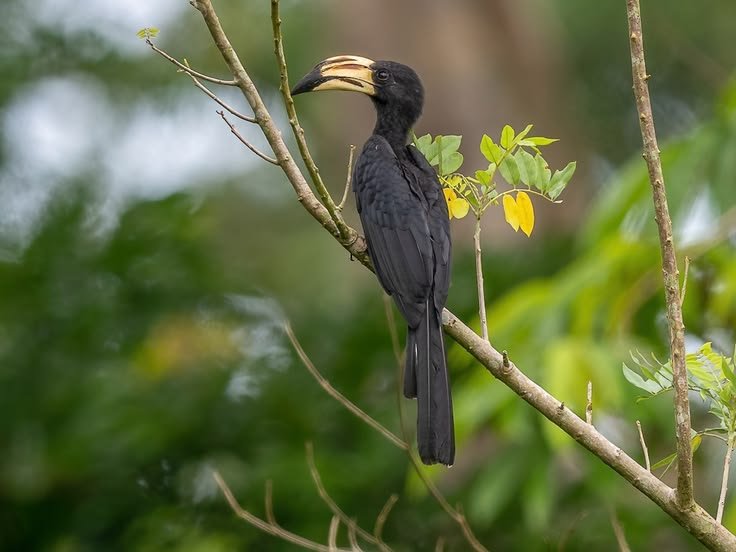
African Pied Hornbill
Lophoceros fasciatusA striking black-and-white forest hornbill with a bold bill, lively calls and an important role in tropical woodland ecosystems.
The African Pied Hornbill (Lophoceros fasciatus) is a medium-sized African hornbill of the family Bucerotidae. It is recognized by its glossy black plumage, contrasting white underparts and tail markings, and a long curved bill with a casque. It is associated mainly with humid forest, forest edge and wooded habitats in central and west-central Africa.
African Pied Hornbill Quick Facts
What Is the African Pied Hornbill?
The African Pied Hornbill (Lophoceros fasciatus) is a medium-sized hornbill in the family Bucerotidae, a group of African and Asian birds known for their large bills, casque structures and distinctive breeding system.
It is sometimes treated under the older name Tockus fasciatus. Current taxonomic sources recognize Lophoceros fasciatus as a valid species, while some checklists distinguish related pied-hornbill forms within the wider complex.
The species is associated with humid tropical forests, forest edges and wooded landscapes in central and west-central Africa, where it feeds in the canopy and along forest margins.
How to Identify a African Pied Hornbill
The African Pied Hornbill is easiest to recognize by its strong black-and-white pattern, large curved bill and prominent casque.
- Glossy black upperparts and head with strongly contrasting white underparts.
- Large yellowish bill with a long curved shape and a distinct casque.
- White in the belly and tail areas creates a bold pied appearance in flight.
- Bare facial and throat skin can show blue or other vivid tones depending on age and sex.
- The female is generally smaller and has a smaller casque than the male.
- Flight is typically undulating, with a flap–glide rhythm characteristic of hornbills.
Distinguishing from Other Hornbills
It can be confused with other pied hornbills. Focus on the combination of its black-and-white plumage, bill pattern, casque shape, habitat and geographic range; closely related taxa may be separated mainly by distribution and finer bill and casque characters.
Behavior & Social Life
African Pied Hornbills are active, conspicuous forest birds. They may forage alone, in pairs or in small groups, moving between fruiting trees and forest-edge feeding sites.
Daily Activity
- Foraging: Searches branches and foliage for fruit, insects and other small prey, often moving deliberately through the canopy.
- Calling: Gives clear, penetrating whistles and hornbill calls that help pairs and groups maintain contact.
- Movement: Flies between feeding trees with the characteristic flap-and-glide flight of a forest hornbill.
Migration
It is not regarded as a long-distance migrant. Local and seasonal movements can occur as birds track fruiting trees, rainfall and changing food availability.
Habitat & Distribution
The African Pied Hornbill is associated with wooded habitats where mature trees provide feeding opportunities and suitable nesting cavities.
- Lowland and moist tropical forest.
- Forest edges and secondary woodland with fruiting trees.
- Riverine and gallery forest, especially where tree cover remains continuous.
- Wooded landscapes and forest mosaics with large nesting trees.
Distribution: The species occurs in central and west-central Africa, with its range extending through parts of Nigeria, Cameroon, the Congo Basin and neighbouring regions.
Tanzania Distribution
Tanzania is not part of the core documented range used for the current Congo Pied/African Pied Hornbill treatment. The Tanzanian national checklist instead distinguishes other pied-hornbill taxa. The page therefore does not invent Tanzanian sightings.
African Pied Hornbill in Africa
For this forest species, the best encounters come from the core range in central and west-central Africa. The locations below represent habitat and regional birding opportunities rather than Tanzanian safari claims.
Congo Basin Forests
Extensive lowland forest provides mature trees, fruiting resources and nesting cavities used by pied hornbills.
Forest birdingCameroon Forest Belt
Humid forest and forest-edge mosaics support diverse hornbill communities and frequent canopy feeding activity.
Forest birdingGabon Rainforests
Rich evergreen forest offers fruiting trees and suitable habitat for forest hornbills.
Wildlife and birdingUganda Western Forests
The wider Great Lakes forest region supports closely related pied-hornbill taxa and rich hornbill diversity.
BirdwatchingBirding Methods
- Forest walks and guided birding in mature woodland.
- Canopy-focused observation at fruiting trees and forest edges.
- Photography from quiet viewpoints where birds can be watched without disturbance.
Best Time to See Them
Dry-season conditions can make forest tracks easier to walk, but fruiting trees and local rainfall strongly influence hornbill activity; early morning is often productive for calls and feeding.
Diet & Feeding
The African Pied Hornbill is an omnivorous forest hornbill. Fruit forms an important part of the diet, supplemented by animal prey such as insects and other small creatures.
Food Sources
- Fruit: Fleshy forest fruits and berries are important food resources.
- Insects: Beetles, caterpillars and other invertebrates are taken opportunistically.
- Small animals: Lizards, frogs or other small prey may be eaten when encountered.
- Other foods: The species can make use of a varied seasonal food supply rather than relying on a single prey type.
Foraging Behavior
It forages mainly in trees and along forest edges, using its large bill to seize fruit and animal prey. By moving seeds through the forest, fruit-eating hornbills can contribute to seed dispersal.
Breeding & Life Cycle
Like other typical hornbills, the African Pied Hornbill has a cavity-nesting breeding system in which the female is sealed into a tree cavity while the male supplies food from outside.
Nesting
- Nest: Uses a natural tree cavity, usually high enough to provide protection from predators.
- Eggs: Up to four eggs may be laid.
- Incubation: The female remains enclosed in the cavity while the male brings food through the narrow opening.
Chicks
The chicks develop in the protected cavity and are fed by the parents. As the young grow, the nesting seal is eventually reopened, allowing the family to transition to normal movement and feeding.
Conservation Status
The African Pied Hornbill is currently assessed as Least Concern at the global level.
Its wide African range and occurrence across substantial forest landscapes support the global assessment, but local populations can still be affected when mature forest and large nesting trees are lost.
Important local pressures include habitat conversion, loss of large cavity-bearing trees and declines in fruiting resources.
- Habitat loss and fragmentation can reduce feeding and nesting opportunities.
- Removal of mature trees can reduce the supply of suitable breeding cavities.
Comparisons
The African Pied Hornbill is sometimes confused with other eagles. Here are the key differences:
| Feature | African Pied Hornbill | Wahlberg's Eagle | Martial Eagle |
|---|---|---|---|
| Size | About 50 cm | About 50–55 cm | About 65 cm |
| Bill | Long, curved, yellowish with casque | Curved bill with casque | Very large bill and casque |
| Plumage | Glossy black with white belly/tail markings | Black-and-white pied pattern | Black-and-white with extensive casque |
| Habitat | Humid forest and forest edge | Forest, woodland and savanna mosaics | Forest and woodland |
| Diet | Fruit, insects, small animals | Fruit, insects, small animals | Fruit, insects, small vertebrates |
| Range | Central and west-central Africa | Varies by pied-hornbill taxon | Eastern and southern Africa |
Did You Know?
Cavity Nesting
The female remains inside a tree cavity during incubation while the male delivers food through the entrance.
Fruit Lover
Fruit can make up a major part of the diet, linking the bird to the seasonal rhythm of tropical forests.
Powerful Bill
Its long, curved bill helps it handle both fruit and animal prey.
Forest Specialist
It is closely associated with mature wooded habitats and forest edges where large trees remain.
Seed Disperser
By eating fruit and moving between trees, it can help transport seeds through forest landscapes.
Pied Plumage
The strong black-and-white pattern makes the bird conspicuous when it crosses forest clearings or flies between trees.
There is something unmistakable about a African Pied Hornbill moving through a forest canopy: the bold pied pattern, heavy bill and ringing calls reveal a bird built for life among mature trees. Watching one feed at a fruiting tree shows how hornbills connect forest plants, seeds and wildlife in a single ecological story.
Gallery
Frequently Asked Questions
The African Pied Hornbill (Lophoceros fasciatus) is a medium-sized hornbill of the family Bucerotidae, associated with forest and woodland habitats in central and west-central Africa.
It occurs mainly in central and west-central African forests, including parts of the Congo Basin and surrounding forest belts.
Its diet is omnivorous, with fruit, insects and other small animal prey making up the main food categories.
It is assessed globally as Least Concern, although local populations remain dependent on healthy forest and mature nesting trees.
Look for glossy black-and-white plumage, a large curved bill with a casque and a characteristic undulating flight.
The species uses tree cavities; the female remains enclosed during incubation while the male delivers food through a narrow opening.
The current Tanzanian checklist distinguishes Congo Pied Hornbill from other pied-hornbill taxa, and Tanzania is not treated here as part of the core range for this taxon.
It belongs to the hornbill family Bucerotidae, within the order Bucerotiformes.
References & Further Reading
- IUCN Hornbill Specialist Group – Congo Pied Hornbill account for Lophoceros fasciatus, distribution, description and conservation status.
- ITIS – Taxonomic record for Lophoceros fasciatus, including the common names African Pied Hornbill and Congo Pied Hornbill.
- Tanzanian Birds & Butterflies – Tanzania national bird checklist and hornbill taxonomy, including the pied-hornbill taxa recorded in Tanzania.
- Birds of the World – Hornbill biology, identification, diet and breeding information.
- Oiseaux.net – Species information on habitat, diet and breeding biology.
- BirdLife International – Global bird taxonomy and conservation assessment framework.
- IUCN Hornbill Specialist Group – Hornbill conservation and natural-history resources.