

.png)
African Grey Hornbill
Lophoceros nasutusA lively woodland hornbill with a dark bill, soft grey plumage and a powerful voice.
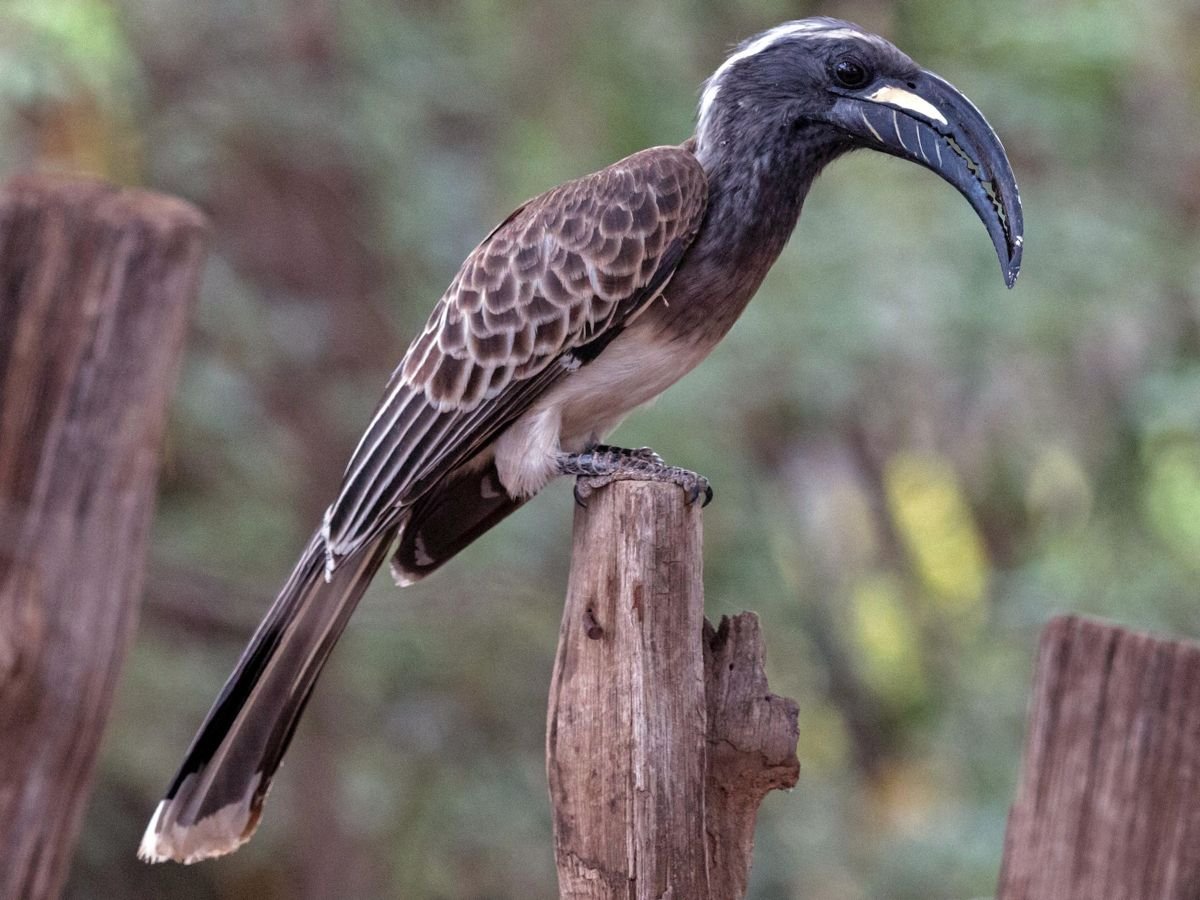
The African Grey Hornbill (Lophoceros nasutus) is a medium-sized African hornbill of savanna, woodland, thorn scrub and open forest. Its slim dark bill, pale grey head and body, black-and-white wing pattern and active, bouncing flight make it distinctive. It is an adaptable resident that forages widely for fruit, insects and other small foods, often calling from exposed branches.
African Grey Hornbill Quick Facts
What Is the African Grey Hornbill?
The African Grey Hornbill is a widespread African hornbill in the family Bucerotidae. Modern taxonomic treatments place it in the genus Lophoceros, although older field guides and checklists may use the name Tockus nasutus. It is a familiar bird of open woodland and savanna, where it combines opportunistic feeding with strong territorial and contact calls.
Unlike large forest hornbills that depend on deep primary forest, the African Grey Hornbill tolerates a broad range of semi-open habitats. This flexibility helps it persist across much of sub-Saharan Africa, including Tanzania's dry woodlands, parkland and cultivated landscapes where suitable nesting trees and food remain available.
Its nesting biology is one of the species' most fascinating features. The breeding female seals herself inside a tree cavity with a narrow opening while the male delivers food to her and later to the chicks, creating a distinctive partnership built around cavity nesting.
How to Identify a African Grey Hornbill
The African Grey Hornbill is a relatively slim hornbill with mostly grey upperparts and underparts, contrasting black-and-white wings and a long dark bill that lacks the large casque seen in some bigger hornbills. In flight its white wing panels are conspicuous against the dark flight feathers.
- Bill: Long, slim and predominantly dark, without a large casque.
- Head and body: Soft grey to smoky-grey plumage gives the bird its common name.
- Wings: Black flight feathers contrast with broad white patches visible in flight.
- Tail: Long and dark, helping create a sleek profile when perched.
- Size: Medium-sized hornbill, roughly 45–51 cm in total length.
- Voice: Repeated, ringing calls carry across open woodland and savanna.
Distinguishing from Other Hornbills
It can be confused with other small hornbills of eastern Africa, especially in bright or distant views. Bill colour and shape, overall grey body plumage, wing pattern, habitat and call together provide better identification than any single field mark.
African Grey Hornbill Behavior & Social Life
African Grey Hornbill are active, mobile birds that spend much of the day moving between feeding trees, perches and open ground. They may forage alone, in pairs or in loose family groups, and they often use prominent branches as lookout points before dropping to feed.
Daily Activity
- Foraging: Moves actively through trees and shrubs, searching for fruit and invertebrates.
- Calling: Gives repeated, far-carrying calls used in contact and territory maintenance.
- Flight: Direct, buoyant flights between feeding and roosting trees reveal the contrasting wing pattern.
Movement & Seasonality
Activity commonly rises in the cooler morning hours, with birds calling, feeding and moving between fruiting trees. They also hawk or pick insects from foliage and the ground, and may investigate exposed termite activity or other concentrated food sources.
Habitat & Distribution
The African Grey Hornbill uses a broad spectrum of semi-open African habitats. It is especially associated with savanna woodland, thornveld, dry bushland and open forest where mature trees provide cavities and seasonal fruits and insects supply food.
- Woodland and savanna – open tree cover with fruiting and insect-rich feeding areas.
- Thorn scrub – dry country providing scattered trees, perches and nesting cavities.
- Parkland and cultivated mosaics – semi-open landscapes retaining mature trees.
- Riverine and dry forest edges – productive transition zones with food and cover.
In Tanzania, the species is well represented in northern savannas and protected areas. Documented records include central Serengeti, Lake Manyara, Tarangire, Mkomazi and the Arusha area, reflecting its ability to live across both dry woodland and more open parkland landscapes.
Tanzania Distribution
Across its wider range it occupies much of sub-Saharan Africa, with local abundance influenced by rainfall, woodland structure, nesting-tree availability and seasonal food supplies.
African Grey Hornbill in Tanzania
The African Grey Hornbill is a realistic target on a northern Tanzania safari because it occurs in several well-known wildlife landscapes. It is particularly rewarding around woodland edges and open acacia country where birds perch high and call frequently.
Serengeti National Park
African Grey Hornbill is documented in the central Serengeti, where open woodland and fruiting trees provide feeding and nesting opportunities.
Serengeti birdingLake Manyara National Park
Photographic records document African Grey Hornbill at Lake Manyara, including wooded habitats and the escarpment landscape.
Lake Manyara birdingTarangire National Park
African Grey Hornbill is documented in Tarangire, a strong habitat match of dry woodland, acacias, baobabs and open savanna.
Tarangire birdingMkomazi National Park
Mkomazi records include both male and female African Grey Hornbills, making this another well-supported Tanzanian location for the species.
Mkomazi birdingSafari Methods
- Game drives through woodland and savanna habitats.
- Birdwatching – watch for perched birds and soaring during the day .
- Wildlife photography – the long crest makes it a striking subject.
Best Time to See Them
African Grey Hornbills are present year-round in suitable habitat. They are most active during the cooler morning and evening hours .
Diet & Feeding
The African Grey Hornbill is an opportunistic omnivore. Fruit is important, but the species also takes a wide range of animal foods, especially insects and other invertebrates, making it able to exploit changing seasonal resources.
Food Sources
- Fruit: Small fruits and berries, especially when seasonal crops are abundant.
- Insects: Grasshoppers, beetles, termites and other arthropods.
- Small vertebrates: Occasional lizards, eggs or very small prey.
- Other foods: Opportunistic items encountered while foraging in woodland and around human-modified areas.
Foraging Behavior
Fruit: Figs and other small fruits are important plant foods. Invertebrates: Grasshoppers, beetles and other insects are frequently taken. Small animals: Lizards, nestlings and other small vertebrate prey may be taken opportunistically.
Breeding & Life Cycle
The African Grey Hornbill has a classic hornbill nesting strategy based on a tree cavity. The pair selects a suitable hollow, after which the female enters and seals the entrance, leaving only a narrow slit through which food can be delivered.
Nesting
- Nest: Natural tree cavity sealed by the female with a narrow feeding slit.
- Clutch: Usually 2–4 eggs.
- Incubation: About 24 days is a useful general estimate for this species.
Chicks
The male gathers mud, plant material and other material that the female uses to close the cavity opening. The enclosure protects the incubating female and developing chicks while the male undertakes repeated feeding trips.
Conservation Status
The African Grey Hornbill is currently assessed as Least Concern globally. Its very broad African distribution and ability to occupy semi-open habitats contribute to its relatively secure overall status.
That status does not mean every local population is secure. The species still depends on mature trees for nesting cavities and on functioning woodland for food, so removal of large trees and broad habitat conversion can reduce local suitability.
Practical conservation measures include retaining old trees, protecting woodland mosaics, limiting unnecessary clearing of nesting trees and maintaining connected patches of natural habitat around protected areas.
- Habitat change – loss of mature woodland and nesting trees can reduce local breeding opportunities.
- Tree removal – large cavity-bearing trees are particularly valuable to breeding hornbills.
Comparisons
The African Grey Hornbill is sometimes confused with other eagles. Here are the key differences:
| Feature | African Grey Hornbill | Von der Decken's Hornbill | Crowned Hornbill |
|---|---|---|---|
| Size | 45–51 cm | about 45–50 cm | about 50 cm |
| Bill | Long, slim and dark | Long, red or dark depending on form | Dark with yellow/red basal areas |
| Plumage | Grey body with black-and-white wings | Mostly pale grey-brown with contrasting wings | Black body with white markings |
| Casque | Absent | Small or absent | Small casque may be visible |
| Habitat | Savanna, woodland, thorn scrub | Dry savanna and arid woodland | Woodland, forest edge and coastal forest |
| Tanzania | Serengeti, Manyara, Tarangire, Mkomazi | Common in dry northern savannas | Widespread eastern Tanzanian woodland |
Did You Know?
Dark-billed Hornbill
The African Grey Hornbill has a long, mainly dark bill and lacks the large casque seen in many bigger hornbills.
Cavity Nesting
The female seals herself inside a tree cavity during nesting, leaving a narrow opening for food delivery.
Fruit and Insects
This hornbill combines fruit eating with active insect hunting, making it an adaptable omnivore.
Loud Woodland Voice
Its repeated calls can carry across open woodland and often reveal the bird before it is seen.
Tanzania Resident
Unlike many migrant birds, it can remain in suitable Tanzanian habitat throughout the year.
Old Trees Matter
Mature trees are valuable because natural cavities provide scarce nesting sites for breeding hornbills.
A African Grey Hornbill can look understated at first glance, but it is one of those birds that quickly becomes memorable once you spend time with it. A grey bird drops from a high branch, flashes bold white wing panels, calls across the woodland and returns to a fruiting tree. Its everyday life is a compact lesson in how adaptable African birds use trees, insects, fruit and nesting cavities together.
Gallery
Frequently Asked Questions
The African Grey Hornbill (Lophoceros nasutus) is a medium-sized African hornbill of savanna, woodland and thorn scrub, recognized by its grey plumage, dark bill and contrasting black-and-white wings.
Documented Tanzanian localities include central Serengeti, Lake Manyara, Tarangire and Mkomazi, with the species also recorded more broadly across northern Tanzania.
It is an opportunistic omnivore that eats fruit, insects and other invertebrates, with occasional small vertebrate prey.
No. The African Grey Hornbill is currently assessed as Least Concern globally.
Look for the soft grey body, long dark bill, black-and-white wing pattern and relatively slender hornbill shape.
It occupies savanna woodland, thorn scrub, open forest, parkland and other semi-open habitats with mature trees.
The female nests in a tree cavity and seals the entrance, leaving a narrow opening through which the male delivers food.
Yes. It is primarily resident in suitable Tanzanian habitats, although individuals can make local movements in response to food and breeding conditions.
References & Further Reading
- BirdLife International – current taxonomy and conservation framework for African birds.
- Oiseaux.net – African Grey Hornbill (*Lophoceros nasutus*) identification, distribution and natural history.
- Biodiversity Explorer – habitat, behaviour and feeding information for *Lophoceros nasutus*.
- Tanzania bird records – photographic and checklist evidence from Serengeti, Lake Manyara, Tarangire and Mkomazi.
- eBird – field observations and identification resources for African Grey Hornbill.
- Birds of the World – species account for behaviour, ecology and breeding biology.
- Birding Tanzania references – regional occurrence and safari birding records.