

.png)
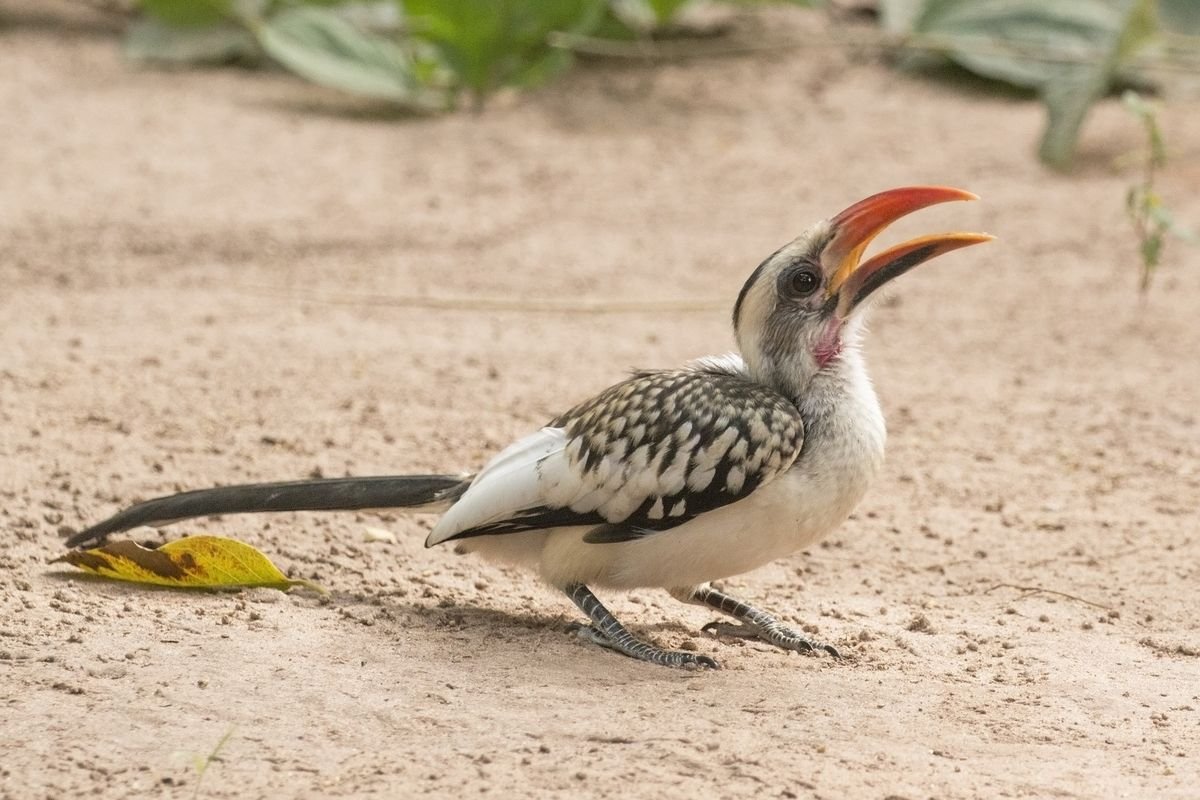
Red-billed Hornbill
Tockus erythrorhynchusA vivid red-billed hornbill of Africa's dry woodlands and savannas – a social, agile forager with a striking scarlet bill.
The Red-billed Hornbill is a small to medium-sized hornbill in the family Bucerotidae. In northern Tanzania the name generally refers to the Northern Red-billed Hornbill (Tockus erythrorhynchus), while central Tanzania also supports the closely related Tanzanian Red-billed Hornbill (Tockus ruahae), a form historically treated within the same species complex.
Red-billed Hornbill Quick Facts
What Is the Red-billed Hornbill?
The Red-billed Hornbill is a conspicuous African hornbill recognized by its long, curved red bill, pale head and underparts, dark wings marked with white spots, and long tail. In modern classifications the former Red-billed Hornbill complex has been divided into several closely related taxa, including Tockus erythrorhynchus in northern Tanzania and Tockus ruahae in central Tanzania.
The group belongs to the hornbill family Bucerotidae and is adapted to open country rather than closed forest. Its light body, patterned wings and vivid red bill make it especially easy to recognize when it crosses a safari track or perches on an exposed branch.
Across Tanzania, red-billed hornbills occur in dry savanna, bushland and open woodland, where they spend much of the day walking, hopping and foraging on the ground as well as moving between low perches.
How to Identify a Red-billed Hornbill
The Red-billed Hornbill is easiest to recognize by its vivid red bill, pied plumage and long tail. Sexes are similar overall, although bill size and facial details can differ subtly.
- Bill: Long, slender, strongly curved bill, usually bright red to orange-red and without a large casque.
- Plumage: Greyish-white head and underparts contrasting with darker wings and back.
- Wings: White spotting and bars create a strong pied pattern in flight.
- Tail: Long tail with dark outer feathers and contrasting pale inner portions.
- Eye area: Dark to reddish skin around the eye, with details varying among taxa.
- Flight: Fast, direct wingbeats alternating with short glides.
Distinguishing from Other Hornbills
The long red bill separates red-billed hornbills from many larger hornbills, while the smaller size and strongly patterned wings help distinguish them from larger woodland species. In Tanzania, careful observers should also consider the closely related Tanzanian Red-billed Hornbill when identifying birds in central regions.
Behavior & Social Life
Red-billed Hornbills are active, mobile birds that may forage alone, in pairs or in small groups. They often spend long periods on the ground searching leaf litter and open soil for prey before returning to a perch.
Daily Activity
- Foraging: Walks and hops across open ground while searching for insects and other small prey.
- Calling: Gives sharp, repetitive calls that help maintain contact between birds.
- Roosting: Uses trees and cavities for shelter, often returning to favored areas.
Movement
Many populations are resident but can make local movements in response to food and water availability. In Tanzania, observers should expect them in suitable dry-country habitat rather than at wetlands.
Habitat & Distribution
Red-billed Hornbills favor open, relatively dry environments where scattered trees, scrub and bare ground provide both feeding areas and nesting opportunities.
- Dry savanna and open woodland.
- Acacia and thornveld habitats with scattered trees.
- Scrubland, bush country and semi-arid plains.
- Cultivated landscapes and village edges where suitable trees remain.
Distribution: The Red-billed Hornbill group is widespread across sub-Saharan Africa, but the taxa within the group occupy different regions. Tockus erythrorhynchus extends through the Sahel and East Africa into northern Tanzania, while Tockus ruahae is associated with central Tanzania.
Tanzania Distribution
In Tanzania, the bird recorded as Northern Red-billed Hornbill occurs in northern landscapes including the Serengeti, Tarangire and Mkomazi areas. The Tanzanian Red-billed Hornbill occurs farther south and west, so local identification should account for both taxa.
Red-billed Hornbill in Tanzania
Northern Tanzania offers especially good opportunities to watch red-billed hornbills in dry woodland and open savanna. Because the red-billed group has been split taxonomically, the exact form varies by region.
Serengeti National Park
Open woodland and savanna provide ideal foraging habitat, and documented Tanzanian records include red-billed hornbills here.
Serengeti safariLake Manyara
Red-billed hornbills are documented around the Lake Manyara landscape, especially in dry woodland and bush country.
Lake Manyara safariTarangire National Park
Dry acacia woodland and open bushland support regular hornbill watching opportunities.
Tarangire safariMkomazi National Park
The park’s semi-arid savanna and woodland mosaics are well suited to red-billed hornbills.
Mkomazi safariSafari Methods
- Game drives through dry woodland and savanna.
- Birdwatching – scan exposed branches, tracks and open ground for active hornbills.
- Wildlife photography – the bright red bill and pied wings make a distinctive subject.
Best Time to See Them
They can be seen year-round in suitable Tanzanian habitat. Early morning and late afternoon are often productive because birds are active while temperatures are cooler.
Diet & Feeding
The Red-billed Hornbill is an opportunistic omnivore that spends substantial time feeding on the ground, taking invertebrates, fruit and other small food items.
Food Sources
- Insects: Beetles, grasshoppers, termites and other invertebrates.
- Fruit: Small fruits and berries when available.
- Small vertebrates: Lizards, nestlings and other suitable prey may be taken opportunistically.
- Seeds and other plant foods: Supplement the diet where available.
Foraging Behavior
It often walks or hops across open ground, probing leaf litter and soil, then carries larger food items to a perch. The bill is versatile enough for catching prey, manipulating food and feeding young.
Breeding & Life Cycle
Like other hornbills, red-billed hornbills use tree cavities for nesting. Pair bonds and cooperative behaviours can be conspicuous during the breeding season.
Nesting
- Nest: Uses natural or excavated cavities in trees rather than building an open nest.
- Eggs: A small clutch of white eggs is laid inside the cavity.
- Incubation: The female remains inside the cavity for much of incubation while the male supplies food.
Chicks
The female and chicks remain protected within the cavity during the enclosed-nest stage, while the male delivers food through the entrance. The young later leave the cavity and are fed outside as they become independent.
Conservation Status
The Red-billed Hornbill group is assessed as Least Concern globally.
Its broad African distribution and ability to use dry woodland, savanna and human-modified landscapes help explain its generally secure global status. The taxonomic splitting of former Red-billed Hornbill populations means regional assessments can differ among taxa.
Local pressures can still affect populations, particularly where mature nesting trees are removed or dry-country habitat is heavily transformed.
- Habitat conversion: Loss of scattered trees and dry woodland can reduce feeding and nesting opportunities.
- Nesting-tree loss: Removal of suitable tree cavities can limit breeding habitat.
Comparisons
Red-billed Hornbills can be separated from other Tanzanian hornbills by their red bill, relatively small size and strongly pied plumage. The Tanzanian Red-billed Hornbill is especially important to consider in central Tanzania.
| Feature | Red-billed Hornbill | Tanzanian Red-billed Hornbill | African Grey Hornbill |
|---|---|---|---|
| Size | About 35 cm | About 35 cm | About 45–51 cm |
| Bill | Red, slim and curved | Red, slim and curved | Red-orange to dark-tipped |
| Plumage | Pale head/body with dark, white-spotted wings | Similar red-billed pattern | Grey-brown and white |
| Habitat | Dry savanna, bushland | Central Tanzanian dry woodland and savanna | Open woodland and savanna |
| Range in Tanzania | Mainly northern Tanzania | Central Tanzania endemic taxon | Widespread |
| Diet | Rodent specialist | Reptiles, small mammals | Large gamebirds, mammals |
Did You Know?
Brilliant Bill
The vivid red bill is the easiest field mark and gives the group its common name.
Hornbill Split
The former Red-billed Hornbill complex has been divided into several closely related taxa, including a Tanzanian endemic form.
Ground Forager
Much of its feeding is done on the ground, where it searches for insects and other small prey.
Cavity Nester
Like other hornbills, it relies on tree cavities for nesting and shelter.
Fast and Agile
Despite its conspicuous bill, it is a highly mobile bird that can move rapidly between open ground and low perches.
Dry-country Specialist
It is especially associated with open, seasonally dry woodland and savanna rather than dense forest.
There is something instantly recognizable about a red-billed hornbill: a flash of scarlet, a pale body, patterned wings and a long tail moving across the dry savanna. Watch one on the ground and the bird changes character from a striking silhouette into an energetic hunter, probing, hopping and turning over the small details of the African landscape. In Tanzania, the red-billed group is also a reminder that taxonomy can hide local diversity, with closely related forms occupying different regions.
Gallery
Frequently Asked Questions
The Red-billed Hornbill is a small to medium-sized African hornbill recognized by its vivid red bill, pied plumage and long tail. In Tanzania, the name can refer to closely related taxa within the former Red-billed Hornbill complex.
Documented northern Tanzania localities include the Serengeti, Lake Manyara, Tarangire and Mkomazi areas. Central Tanzania also supports the distinct Tanzanian Red-billed Hornbill, Tockus ruahae.
It is an opportunistic omnivore, feeding on insects and other invertebrates, fruit, seeds and occasional small vertebrate prey.
The Red-billed Hornbill group is assessed globally as Least Concern, although local habitat and nesting-tree loss can affect populations.
Its common name comes from the striking red or orange-red bill that contrasts strongly with its pale head and darker wings.
It nests in tree cavities. The female remains in the cavity through much of incubation while the male supplies food, a characteristic hornbill breeding strategy.
Look for the long red bill, pale head and underparts, white-spotted dark wings and long tail. In Tanzania, compare carefully with the closely related Tanzanian Red-billed Hornbill.
The northern form is generally resident in suitable parts of northern Tanzania, although local movements can occur as birds track food and water availability.
References & Further Reading
- Tanzania Birds – Northern Red-billed Hornbill (*Tockus erythrorhynchus*) – Tanzania distribution, photographs and breeding observations.
- Tanzanian red-billed hornbill study – Kemp & Delport (2002) – taxonomic treatment of the Red-billed Hornbill complex and the Tanzanian *ruahae* taxon.
- IUCN Hornbill Specialist Group – Red-billed Hornbill account – distribution, description and global Least Concern status.
- Tanzania national bird checklist – Current checklist treatment of Northern and Tanzanian Red-billed Hornbills in Tanzania.
- Birds of the World – Red-billed hornbill group – identification, ecology, diet and breeding behaviour.
- eBird – Red-billed Hornbill complex – field identification and distribution.
- iNaturalist – Documented Red-billed Hornbill observations, including Tanzanian records.