

.png)
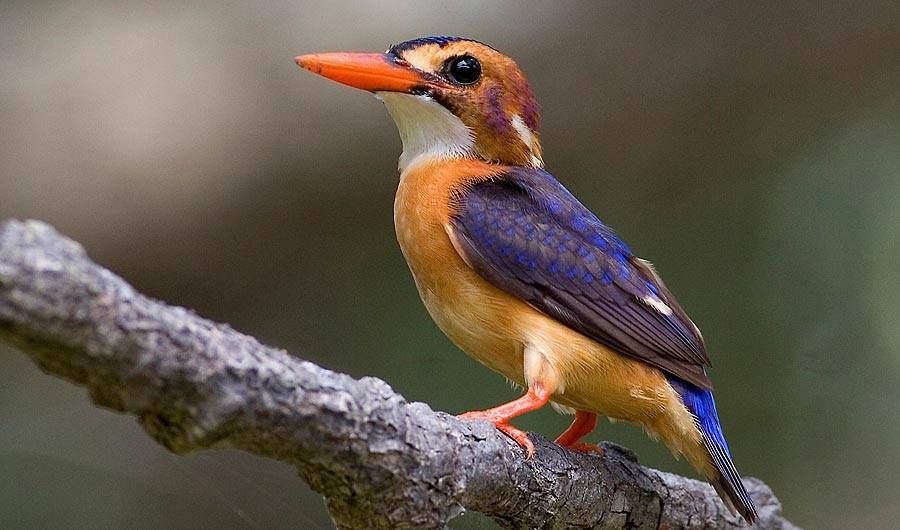
African Pygmy Kingfisher
Ispidina pictaA dazzling jewel of the woodland — tiny, brilliantly coloured, and one of Africa's smallest kingfishers.
The African Pygmy Kingfisher (Ispidina picta) is one of the smallest kingfishers in Africa, a gem-like bird of the family Alcedinidae. At just 12 centimetres in length, it is a terrestrial hunter that rarely eats fish, preferring instead to feed on insects, spiders and small vertebrates in woodland and savanna habitats.
African Pygmy Kingfisher Quick Facts
What Is the African Pygmy Kingfisher?
The African Pygmy Kingfisher (Ispidina picta) is one of the smallest kingfishers in Africa, a tiny gem-like bird of the family Alcedinidae. It is also known simply as the Pygmy Kingfisher, and some texts refer to it as Ceyx pictus. At just 12 centimetres in length and weighing around 9–19 grams, it is only slightly larger than the African Dwarf Kingfisher, which measures just 10 centimetres.
Unlike many of its fish-eating relatives, the African Pygmy Kingfisher is a terrestrial hunter. It frequents woodland, savanna and coastal forest, where it perches low in shady areas and dives onto dry land to capture insects, spiders and small vertebrates. It is an intra-African breeding migrant, with populations in southern Africa arriving in September–October to breed and migrating north again around March.
The species was first described by the French polymath Georges-Louis Leclerc, Comte de Buffon in 1780, and given its binomial name by the Dutch naturalist Pieter Boddaert in 1783. The type locality is Saint Louis, Senegal.
How to Identify an African Pygmy Kingfisher
The African Pygmy Kingfisher is a tiny, brilliantly coloured bird that is unmistakable once seen well. Its dazzling orange and bright blue plumage makes it a glorious sight.
- Size: About 12–13 cm long, about the size of a sparrow.
- Upperparts: Violet-blue back extending down to the tail.
- Underparts: Rufous (orange-brown) underbelly.
- Head: Orange face with a distinctive purple/violet cheek patch (lilac ear coverts).
- Crown: Narrow, speckled dark blue crown.
- Bill and legs: Striking orange-red bill and legs.
- Throat: White.
- Sexes: Males and females are almost identical and difficult to tell apart.
- Juveniles: Resemble adults but have a blackish bill that gradually turns red as they mature.
Distinguishing from Similar Species
The African Pygmy Kingfisher can be confused with the Malachite Kingfisher, but there are key differences. The Pygmy Kingfisher is smaller, has a slightly shorter beak, and features a pink to purple patch behind the ear (violet cheeks) which is absent in the Malachite. Unlike the Malachite Kingfisher, which is closely associated with water, the African Pygmy Kingfisher prefers drier conditions in thick bush away from water. The dark blue crown of the Pygmy Kingfisher also helps separate it from the similar African Dwarf Kingfisher, which lacks this feature.
Behavior & Social Life
The African Pygmy Kingfisher is generally solitary and unobtrusive. It prefers to perch fairly low in shady areas, frequently sitting motionless for long periods and only revealing its position when it bobs its head. It can be difficult to spot — often all an observer will see is a flash of electric blue as the bird disappears into the vegetation.
Daily Activity
- Perch hunting: The bird identifies prey on the ground from a low perch before diving onto dry land to capture it.
- Feeding: Prey is killed while still held in the beak, by applying pressure or beating it against a branch.
- Bathing: Although it is a terrestrial hunter and does not dive into open water for food, it does plunge in to bathe.
- Vocalizations: A high-pitched "cheep-cheep" flight note. They are seldom vocal when perched, sometimes giving a soft 'tick-tick' call in flight.
Migration
The African Pygmy Kingfisher is an intra-African breeding migrant. Populations in southern Africa arrive in the eastern and northern regions from about the third week of September to early October. After the breeding season, around March, the juveniles and adults migrate back to other parts of Africa. These birds migrate at night, feeding and resting during the day. They have proportionally larger eyes than most species to aid their nocturnal migrations. Returning birds appear to be site faithful, sometimes using exactly the same perches as they did the previous year.
Habitat & Distribution
The African Pygmy Kingfisher is widespread across sub-Saharan Africa, partly due to its ability to live in a wide range of woodland types. It is absent only from parts of East Africa and southern Africa.
- Woodland: Open woodland and riverine forest provide ideal hunting perches.
- Savanna: Savannah areas with scattered trees and shrubs.
- Coastal forest: Coastal bush and forest edges.
- Plantations and gardens: Also occurs in modified habitats.
- Altitude: Found up to 1,500 m in southern Africa and up to 2,000 m in East Africa.
Tanzania Distribution
Tanzania supports two subspecies of the African Pygmy Kingfisher. The northern subspecies Ispidina picta ferrugina occurs from Guinea-Bissau east to western Uganda, south to central Angola, northwestern Zambia and northern Tanzania. The southern subspecies Ispidina picta natalensis ranges from southern Angola across to central and eastern Tanzania, including Pemba (possibly) and Zanzibar, and south to eastern Botswana and northern and eastern South Africa. Some migration from southern populations extends north to eastern Democratic Republic of Congo, Uganda, Kenya and South Sudan.
African Pygmy Kingfisher in Tanzania
The best opportunities to see the African Pygmy Kingfisher in Tanzania are in woodland, savanna and coastal forest habitats where it can be found perched low in shady areas. It is a breeding summer migrant in parts of its range, so timing is key.
Serengeti National Park
Search woodland edges and riverine forest in the Serengeti ecosystem for this tiny gem.
Serengeti birding safariArusha National Park
Woodland and forest habitats in Arusha National Park provide suitable territory for the Pygmy Kingfisher.
Arusha safariSelous Game Reserve
Extensive miombo woodland and riverine forest in Selous offer excellent pygmy kingfisher habitat.
Selous safariRuaha National Park
Dry woodland and riverine forest in Ruaha provide feeding habitat for this terrestrial kingfisher.
Ruaha safariSafari Methods
- Game drives: Search slowly through woodland and forest edges, especially in shady areas where the bird perches low.
- Birdwatching: Look for the bird's characteristic head-bobbing motion, which often gives away its position.
- Wildlife photography: Patience is key — these birds sit motionless for long periods, offering excellent photo opportunities when located.
Best Time to See Them
Timing varies with the species' migratory patterns. In Tanzania, the African Pygmy Kingfisher is present in breeding areas from September–October through to around March. Early morning and late afternoon are often most productive for birding. The birds are site faithful, so once a location is found, they may return to the same perches year after year.
Diet & Feeding
Unlike many other kingfishers, the African Pygmy Kingfisher rarely eats fish. It is a terrestrial hunter that feeds mainly on insects and occasionally small vertebrates.
Food Sources
- Insects: Crickets, moths, praying mantids, dragonflies, grasshoppers, beetles, worms and cockroaches.
- Arachnids: Spiders are an important part of the diet.
- Small vertebrates: Lizards, geckos, frogs, tadpoles and small crabs.
- Seasonal abundance: Feeding opportunities increase after rains when insects become more numerous.
Hunting Behavior
The African Pygmy Kingfisher is a perch hunter. It sits on a low branch or perch, identifying prey on the ground before diving onto dry land to capture it. Prey is killed while still held in the beak, by the bird either applying pressure or beating the prey against a solid object, usually the branch or perch on which it sits. During the courting process, the male attempts to woo the female by presenting her with an assortment of prey items.
Breeding & Life Cycle
The African Pygmy Kingfisher is a monogamous species. Males must work quite hard to win over females, with food playing an important role in the courtship ritual — the male offers tasty morsels of food, such as a juicy lizard or fat caterpillar, to persuade the female to mate. Coupling takes place in the darkness of the forest, and the birds mate repeatedly for a few days.
Nesting
- Nest site: Burrows excavated by both partners in sandy soil banks, riverbanks, dongas (gullies), or ground termite mounds.
- Burrow length: 30–60 cm deep.
- Clutch: 3–6 white eggs.
- Incubation: Approximately 18 days, shared by both parents.
- Chicks: Both parents care for the young.
- Fledging: Chicks stay in the nest for 2–3 weeks, after which they rapidly develop hunting skills and become fully independent soon after fledging.
- Multiple broods: They can have several broods in a year.
Conservation Status
The African Pygmy Kingfisher is assessed globally as Least Concern by the IUCN. The species has an extremely large range (extent of occurrence over 21.8 million km²) and does not approach the thresholds for Vulnerable under any criterion.
The population size has not been quantified, but it is not believed to approach the thresholds for Vulnerable under the population size criterion. Despite the fact that the population trend appears to be decreasing, the decline is not believed to be sufficiently rapid to approach the thresholds for Vulnerable.
Key local pressures can include habitat loss from deforestation, particularly in areas like KwaZulu-Natal, as well as the use of pesticides that reduce insect prey populations. The species is also vulnerable to collisions with glass windows during its nocturnal migrations.
Comparisons
The African Pygmy Kingfisher is easiest to separate from similar African kingfishers by its tiny size, violet cheeks, dark blue crown and terrestrial hunting habits.
| Feature | African Pygmy Kingfisher | Malachite Kingfisher | African Dwarf Kingfisher |
|---|---|---|---|
| Length | 12–13 cm | 13–14 cm | 10 cm |
| Plumage | Violet-blue back, rufous underbelly, violet cheeks | Bright blue back, rufous underparts, no violet cheeks | Similar but lacks dark crown |
| Crown | Narrow, speckled dark blue | Blue crown extending to eye | Lacks dark crown |
| Bill & legs | Orange-red | Red | Orange-red |
| Habitat | Woodland, savanna, away from water | Close to water, rivers and streams | Dense forest, central and West Africa |
| Diet | Terrestrial insects, spiders, small vertebrates | Fish, aquatic insects | Insects, small invertebrates |
| Migration | Intra-African breeding migrant | Resident or partial migrant | Resident |
Did You Know?
Smallest Kingfisher
The African Pygmy Kingfisher is one of the smallest kingfishers in Africa. Only the African Dwarf Kingfisher is smaller, at just 10 centimetres.
Doesn't Eat Fish
Unlike most kingfishers, the African Pygmy Kingfisher rarely eats fish. It is a terrestrial hunter that feeds on insects, spiders and small vertebrates.
Night Migrant
These birds migrate at night, feeding and resting during the day. They have proportionally larger eyes than most species to aid their nocturnal travels.
Site Faithful
Returning birds appear to be site faithful, sometimes using exactly the same perches as they did the previous year.
Violet Cheeks
The distinctive violet cheek patch is a key identifying feature that separates this species from the similar Malachite Kingfisher.
Courtship Feeding
During courtship, the male offers tasty morsels of food to the female to persuade her to mate.
The African Pygmy Kingfisher is a tiny jewel that defies expectations. It does not fish, yet it is a kingfisher. It migrates by night, yet it is a creature of the sun-dappled woodland floor. To find one is to earn it — sitting motionless for long moments, scanning the shadows, until a flash of electric blue reveals a bird so small and so brilliantly coloured that it seems impossible to be real. In the vast landscapes of Tanzania, this tiny gem reminds us that the greatest treasures often come in the smallest packages.
Gallery
Frequently Asked Questions
The African Pygmy Kingfisher (Ispidina picta) is one of the smallest kingfishers in Africa, a tiny gem-like bird of the family Alcedinidae, also known as the Pygmy Kingfisher.
Tanzanian records include the subspecies I. p. ferrugina and I. p. natalensis, found across northern, central and eastern Tanzania including possibly Pemba and Zanzibar.
Unlike many kingfishers, it rarely eats fish. Its diet consists mainly of terrestrial insects, arachnids and small vertebrates such as lizards, geckos and frogs.
No. It is currently assessed globally as Least Concern by the IUCN, though the population trend appears to be decreasing.
It is monogamous and nests in burrows dug by both parents in sandy banks, dongas or termite mounds. The clutch is 3–6 white eggs, incubated by both parents.
Look for a tiny kingfisher about 12 cm long with a violet-blue back, rufous underbelly, striking orange beak and legs, a dark blue crown, and distinctive violet cheeks.
No. Unlike most kingfishers, the African Pygmy Kingfisher rarely eats fish. It is a terrestrial hunter that feeds mainly on insects, spiders and small vertebrates.
Yes. It is an intra-African breeding migrant. Populations in southern Africa arrive in September–October, breed, and migrate north again around March.
References & Further Reading
- Biodiversity Explorer – Ispidina picta (African pygmy-kingfisher) species account covering distribution, movements, food and breeding.
- BirdLife DataZone – African Pygmy-kingfisher species factsheet with IUCN Red List assessment.
- Birds of the World – African Pygmy Kingfisher (Ispidina picta) subspecies distribution and introduction.
- Wikipedia – African pygmy kingfisher species page with taxonomy, description and distribution.
- eBird – African Pygmy Kingfisher identification, photos and observations.
- Oiseaux.net – Martin-pêcheur pygmée species page with conservation status and altitude information.
- IUCN Red List – Ispidina picta global assessment framework and Least Concern category.
- SANParks Forums – African Pygmy-Kingfisher identification, habitat, breeding and conservation notes.