

.png)
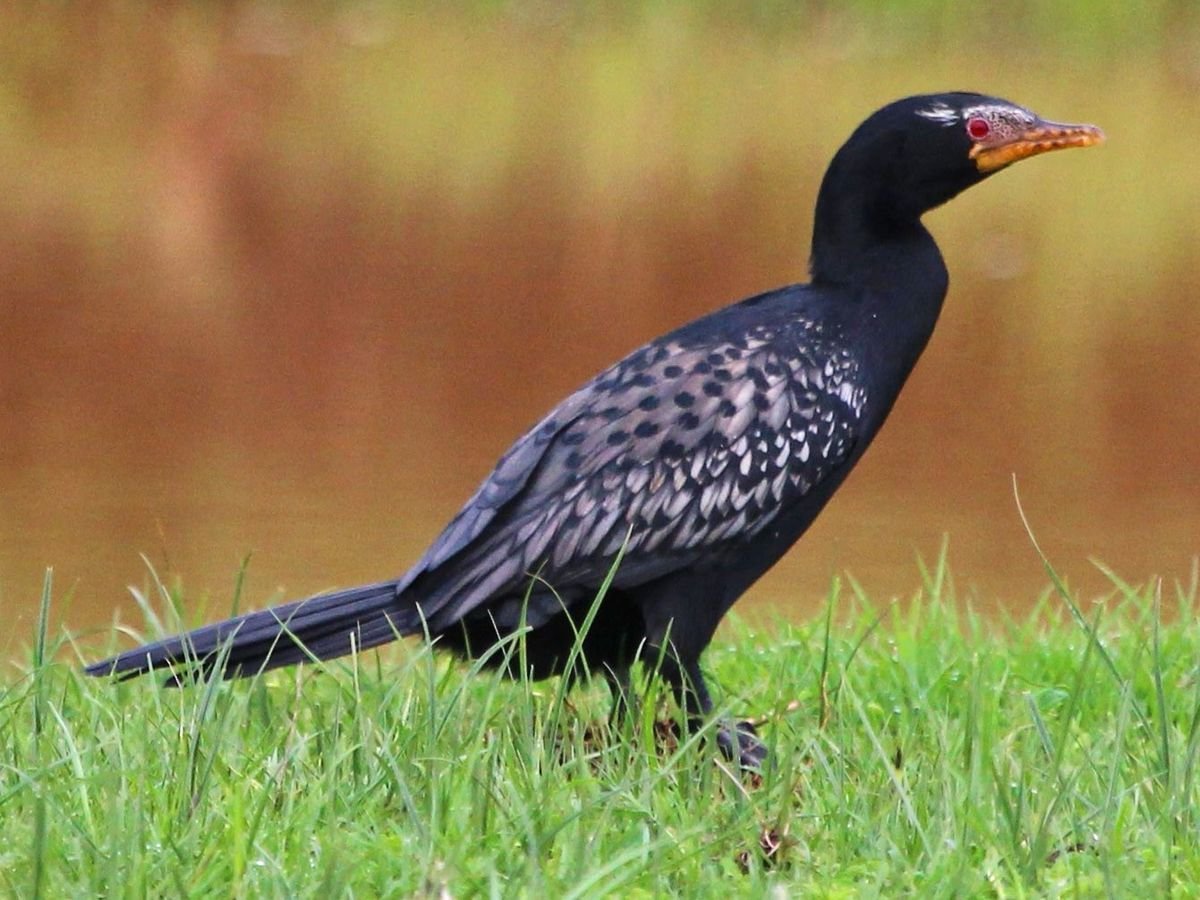
Reed Cormorant
Microcarbo africanusA small, slender waterbird with a distinctive crest – a master of underwater hunting in Africa's freshwater habitats.
The Reed Cormorant (Microcarbo africanus), also known as the Long-tailed Cormorant, is a small, slender waterbird found in sub-Saharan Africa. A member of the cormorant family Phalacrocoracidae, it is known for its distinctive crest, compact build, and remarkable fishing abilities. This agile swimmer is a common sight on lakes, rivers, and swamps across Tanzania.
Reed Cormorant Quick Facts
What Is the Reed Cormorant?
The Reed Cormorant (Microcarbo africanus), also known as the Long-tailed Cormorant, is a small, slender waterbird belonging to the family Phalacrocoracidae, which includes the world's cormorants and shags. It was first described by the German naturalist Johann Friedrich Gmelin in 1789. The species was formerly placed in the genus Phalacrocorax but has since been moved to Microcarbo.
The species name africanus reflects its distribution across sub-Saharan Africa. It is one of the smallest cormorants in the world, distinguished by its slender build, long tail, and distinctive crest on the head. It is a common and widespread resident throughout most of Africa, found in a variety of freshwater habitats.
The Reed Cormorant is closely related to the Little Cormorant of Asia and the Pygmy Cormorant of Europe and Asia. It is often observed perched on branches overhanging water, with its wings spread open to dry its feathers after diving.
How to Identify a Reed Cormorant
The Reed Cormorant is a distinctive and easily recognisable waterbird, especially in its breeding plumage. Here are its key identifying features:
- Size: A small, slender cormorant, measuring 50-65 cm (20-26 in) in length with a wingspan of 80-90 cm (31-35 in).
- Plumage: Mostly black with a greenish sheen in the breeding season. The back and wings are slightly browner.
- Head: Distinctive crest on the head, which is more prominent in breeding adults.
- Throat: White throat patch, especially noticeable in adults.
- Face: Small patch of white on the sides of the head.
- Bill: Slender and hooked, typical of cormorants.
- Tail: Long and often held at an angle when perched.
- Breeding plumage: Adults develop a more pronounced crest, brighter greenish sheen on the plumage, and a more distinct white patch on the sides of the head.
- Non-breeding and juvenile: Duller, browner plumage with less distinct white markings and a less prominent crest.
Distinguishing from Similar Species
The Reed Cormorant can be confused with the Crowned Cormorant and the Bank Cormorant. The Crowned Cormorant is smaller, has a shorter tail, and is found only in coastal areas of southern Africa. The Bank Cormorant is larger and found only in coastal areas. The Reed Cormorant is distinguished by its slender build, long tail, and the presence of a white throat patch and white patches on the sides of the head.
Behavior & Social Life
Reed Cormorants are social birds, often found in small flocks or colonies. They are excellent swimmers and divers, spending much of their time in the water hunting for fish.
Foraging Behavior
- Hunting technique: The Reed Cormorant hunts by diving from the water's surface and swimming underwater, using its powerful feet to propel itself. It catches fish and other prey with its hooked bill.
- Diving depth: It can dive to depths of several metres and stay underwater for up to 30-40 seconds.
- Feeding strategy: Often hunts alone or in loose groups, occasionally cooperating to herd fish.
- Drying behaviour: After diving, the Reed Cormorant perches with its wings spread open, drying its feathers in the sun.
Social Behaviour
- Flocking: Often found in small flocks, especially during the non-breeding season.
- Nesting: Breeds in colonies, often with other waterbirds such as herons, egrets, and other cormorants.
Vocalization
The Reed Cormorant is generally silent, but may produce a variety of sounds at the nest, including low grunts and croaks.
Habitat & Distribution
The Reed Cormorant is found in a variety of freshwater habitats across sub-Saharan Africa.
Key habitat types include:
- Freshwater lakes and rivers – with abundant fish and suitable perching sites.
- Swamps and marshes – particularly those with reedbeds and papyrus.
- Estuaries and coastal lagoons – in some parts of its range.
- Reservoirs and dams – man-made water bodies.
Distribution: The Reed Cormorant has an extremely large range, with an Extent of Occurrence of approximately 28,100,000 km². It is found across much of sub-Saharan Africa, from Senegambia in the west to Ethiopia and Kenya in the east, and southwards to South Africa. The species is absent from the most arid regions. It is largely resident, though some local movements may occur in response to rainfall and water availability.
Tanzania Distribution
In Tanzania, the Reed Cormorant is found in freshwater lakes, rivers, and swamps across the country. It has been recorded in Serengeti National Park (particularly in the lake and riverine areas), Ngorongoro Conservation Area, Tarangire National Park, and Ruaha National Park. It is also common in wetland areas along the Malagarasi and other major rivers.
Reed Cormorant in Tanzania
The Reed Cormorant is a common and widespread waterbird of Tanzania's lakes, rivers, and wetlands. Here are the best locations to see it:
Serengeti National Park
Found in the Serengeti's lake and riverine areas, particularly around Lake Ndutu, Lake Magadi, and along the Grumeti and Mara rivers. Often seen perched on branches overhanging water.
Serengeti safariNgorongoro Crater
Recorded in the Ngorongoro Conservation Area, especially in the Lake Magadi area of the crater floor. Often seen swimming or perched on the crater's wetland edges.
Ngorongoro safariTarangire National Park
Found along the Tarangire River and in the seasonal swamps. Often seen in flocks perched in trees along the riverbanks.
Tarangire safariRuaha National Park
A resident species in Ruaha's wetland areas along the Great Ruaha River. Often found in the riverine vegetation and seasonal floodplains.
Ruaha safariSafari Methods
- Game drives near lakes, rivers, and wetlands.
- Birdwatching – look for the distinctive crested head, slender build, and long tail, often perched on branches overhanging water.
- Wildlife photography – the Reed Cormorant's distinctive appearance and behaviour make it an excellent photographic subject.
- Boat safaris – where available, boat-based viewing offers excellent opportunities to observe Reed Cormorants hunting and resting.
Best Time to See Them
Reed Cormorants are resident year-round in suitable habitat. The dry season (June to October) is generally best for wildlife viewing as birds congregate around remaining water sources. The breeding season typically occurs during the rainy season (November to May).
Diet & Feeding
The Reed Cormorant is a piscivore, feeding mainly on fish, but also taking other aquatic prey.
Food Sources
- Fish: The staple diet, consisting of a variety of fish species.
- Frogs: Amphibians are an important food source.
- Crustaceans: Crabs and other crustaceans.
- Aquatic insects: Various insects and their larvae.
Feeding Behavior
The Reed Cormorant hunts by diving from the water's surface and swimming underwater, using its powerful feet to propel itself. It catches fish and other prey with its hooked bill. It can dive to depths of several metres and stay underwater for up to 30-40 seconds. After diving, it perches with its wings spread open, drying its feathers in the sun.
Breeding & Life Cycle
The Reed Cormorant is monogamous and breeds in colonies.
Nesting
- Breeding season: Typically occurs during the rainy season, from November to May in East Africa.
- Nest site: Builds nests in trees or reedbeds, often over or near water.
- Nest construction: Both sexes build the nest, which is a platform of sticks and reeds, lined with soft vegetation.
- Clutch: 2 to 4 eggs.
- Incubation: 23 to 28 days, shared by both parents.
Chicks
Chicks are altricial (born helpless with down feathers). Both parents feed the chicks by regurgitating fish. Young fledge at 35 to 40 days old and remain dependent on the parents for some time after fledging.
Conservation Status
The Reed Cormorant is assessed as Least Concern on the IUCN Red List.
Population: The global population is estimated at between 100,000 and 1,000,000 individuals. The population trend is stable.
Justification: This species has an extremely large range (28,100,000 km²) and hence does not approach the thresholds for Vulnerable. The population size is very large, and the population trend is stable, so the species does not approach the thresholds for Vulnerable.
Threats: While the species is not currently threatened globally, it faces local threats including:
- Habitat loss: Drainage and degradation of wetlands.
- Pollution: Pesticides and other chemicals in water bodies.
- Human disturbance: Disturbance at breeding colonies.
- Overfishing: Competition with humans for fish.
The Reed Cormorant is listed on CITES Appendix II and is protected by various international agreements, including the African-Eurasian Waterbird Agreement (AEWA).
Comparisons
The Reed Cormorant is sometimes confused with other cormorants. Here are the key differences:
| Feature | Reed Cormorant | Crowned Cormorant | White-breasted Cormorant |
|---|---|---|---|
| Size | 50-65 cm | 45-50 cm | 80-100 cm |
| Build | Slender | Compact | Large, bulky |
| Tail | Long | Short | Short |
| Crest | Prominent on head | Small crown | None |
| Plumage | Black with green sheen, white throat | Black with white patches | Black with white breast |
| Range | Sub-Saharan Africa | Coastal southern Africa | Sub-Saharan Africa |
Did You Know?
Long-tailed Cormorant
The Reed Cormorant is also known as the Long-tailed Cormorant, referring to its distinctive long tail that it often holds at an angle when perched.
Wings Spread Drying
Like all cormorants, the Reed Cormorant perches with its wings spread open after diving, allowing its feathers to dry in the sun.
Underwater Hunter
Reed Cormorants are excellent swimmers and divers, capable of staying underwater for up to 30-40 seconds while hunting.
Colonial Nester
These birds breed in colonies, often sharing nesting sites with herons, egrets, and other waterbirds.
Widespread Resident
With a range of over 28 million square kilometres, the Reed Cormorant is one of the most widespread cormorants in Africa.
Distinctive Crest
The distinctive crest on the head of the Reed Cormorant is most prominent during the breeding season.
There is a quiet elegance to the Reed Cormorant as it sits perched on a branch overhanging the water, its wings spread wide to dry in the African sun. It is a bird of patience and precision, diving beneath the surface with a grace that belies its compact size. In the water, it becomes a different creature – a swift and silent hunter, chasing fish through the depths with effortless agility. To watch a Reed Cormorant hunt is to witness the perfect balance of power and grace, a reminder that sometimes the most impressive hunters are the ones that move with quiet confidence through their world.
Gallery
Frequently Asked Questions
The Reed Cormorant (Microcarbo africanus), also known as the Long-tailed Cormorant, is a small, slender waterbird found in sub-Saharan Africa. It is a member of the cormorant family Phalacrocoracidae, known for its distinctive crest, compact build, and remarkable fishing abilities.
Reed Cormorants are found in freshwater lakes, rivers, swamps, and estuaries across Tanzania. Key locations include Serengeti National Park (particularly in the lake and riverine areas), Ngorongoro Conservation Area, Tarangire National Park, and Ruaha National Park.
The Reed Cormorant feeds mainly on fish, but also takes frogs, crustaceans, and aquatic insects. It hunts by diving from the water's surface and swimming underwater, using its feet to propel itself and catching prey with its hooked bill.
No. The Reed Cormorant is listed as Least Concern on the IUCN Red List. It has a large range of approximately 28,100,000 km² and a stable population, though it is affected by habitat loss and pollution in some areas.
The Reed Cormorant is a small, slender cormorant with a distinctive crest on the head. Adults are mostly black with a greenish sheen, a white throat patch, and a small patch of white on the sides of the head. The tail is long and the bill is slender and hooked.
The Reed Cormorant is a small waterbird, measuring 50-65 cm (20-26 in) in length with a wingspan of 80-90 cm (31-35 in). It weighs between 440-880 grams (1.0-1.9 lb).
Reed Cormorants are monogamous and breed in colonies. They build nests in trees or reedbeds over water, using sticks and reeds. The female lays 2-4 eggs which are incubated by both parents for about 23-28 days. Chicks fledge after 35-40 days.
In Swahili, the Reed Cormorant is known as Nzuguruge or Kwanza-maji.
References & Further Reading
- BirdLife International – Reed Cormorant: IUCN Red List assessment, Least Concern status, range 28,100,000 km², population estimate.
- Wikipedia – Reed cormorant: Description, distribution, habitat, diet, breeding, conservation.
- eBird – Reed Cormorant: Identification, distribution, sightings.
- Avibase – Reed Cormorant: Taxonomy, subspecies, distribution.
- Biodiversity Explorer – Reed Cormorant: Biology, ecology, distribution.
- Oiseaux.net – Reed Cormorant: Photo records from Tanzania.
- South African National Biodiversity Institute – Reed Cormorant: Conservation status, threats, research.