

.png)
Umbwe Route - Moshi - Kilimanjaro
7 Days Kilimanjaro Climb: Umbwe Route
Introduction
The Umbwe Route is widely regarded as Kilimanjaro's steepest and most direct path to the summit. This 7-day itinerary adds an extra acclimatization day compared to the standard 6-day version, giving you a better chance of reaching Uhuru Peak (5,895m). Known for its dramatic ridge traverses and remote wilderness, the Umbwe Route is the ultimate challenge for experienced trekkers seeking a true adventure on the Roof of Africa.
Why This Route?
Steepest Route
The most direct and steepest path up Kilimanjaro, following a dramatic narrow ridge with breathtaking drops on both sides.
Ultimate Challenge
Designed for experienced trekkers seeking the toughest climb on Kilimanjaro. Not for the faint of heart.
Remote Wilderness
Less crowded than other routes, offering a true sense of wilderness and solitude in the heart of Kilimanjaro.
Extra Acclimatization
The 7-day schedule includes an additional day for better altitude adjustment, significantly improving summit success.
Summit Success
With expert guides, careful pacing, and the extra acclimatization day, your chances of reaching Uhuru Peak are maximized.
Expert Guides
Our professional mountain guides are certified, experienced, and dedicated to your safety and success.
Tour Highlights
- Umbwe Gate - Start through lush montane forest
- Dramatic Ridge Trail - Steep ridges with spectacular views
- Barranco Wall - Iconic scramble with incredible exposure
- Karanga Valley - Scenic alpine valley and acclimatization
- Barafu Camp - High camp at 4,673m with summit views
- Uhuru Peak Summit - Stand at Africa's highest point (5,895m)
- Mweka Descent - Rainforest descent through varied ecosystems
- Summit Certificate - Official certificate from Kilimanjaro National Park
Detailed Itinerary
Each day is carefully planned to balance challenge with acclimatization. Below is a complete breakdown of your 7-day Umbwe Route climb.
Umbwe Gate (1,600m) → Umbwe Camp (2,900m)
Your Kilimanjaro adventure begins with a drive from Moshi to the Umbwe Gate entrance (1,600m). After registration and introductions with your climbing team, the trail immediately enters dense montane rainforest. The path climbs steeply along a narrow ridge, surrounded by ancient trees, mosses, and colourful wildflowers. Keep an eye out for colobus monkeys and exotic birdlife. Arrive at Umbwe Camp (2,900m) by late afternoon. Set up camp, enjoy dinner, and rest for the challenging days ahead.
Umbwe Camp (2,900m) → Barranco Camp (3,960m)
After breakfast, continue the ascent through afro-montane forest. The trail becomes steeper and more exposed as it climbs the ridge. The vegetation transitions from forest to moorland with giant heathers and lobelias. The views of the surrounding valleys and Mount Meru in the distance are spectacular. Arrive at Barranco Camp (3,960m), situated in a scenic valley beneath the imposing Barranco Wall. Rest and acclimatize for the next day's challenge.
Barranco Camp (3,960m) → Karanga Camp (4,035m) — Barranco Wall
Today features the famous Barranco Wall - a steep but non-technical scramble that is one of the most exhilarating sections of the entire climb. After conquering the wall, the trail descends into the Karanga Valley before ascending to Karanga Camp (4,035m). This shorter day is designed to aid acclimatization while still covering essential ground. The views from the top of the Barranco Wall are absolutely breathtaking.
Karanga Camp (4,035m) → Barafu Camp (4,673m)
The trek from Karanga to Barafu Camp is a steady ascent through the alpine desert zone. The landscape becomes stark and lunar, with volcanic rocks and hardy vegetation. Barafu Camp (4,673m) is the main base camp for the summit attempt. The afternoon is spent resting, hydrating, and preparing for the midnight summit push. Your guide will provide a thorough briefing on what to expect during the summit climb.
SUMMIT: Barafu Camp (4,673m) → Uhuru Peak (5,895m) → Mweka Camp (3,100m)
Summit day! Wake at midnight and begin the ascent after a light snack. The climb to Stella Point on the crater rim takes 6-8 hours through steep scree and switchbacks. From Stella Point (5,756m), follow the crater rim for another hour to Uhuru Peak (5,895m) - the highest point in Africa. After celebrating your achievement, descend back to Barafu Camp for a short rest, then continue down to Mweka Camp (3,100m) in the rainforest.
Mweka Camp (3,100m) → Mweka Gate (1,640m) → Arusha
After breakfast, make your final descent through the lush rainforest to Mweka Gate (1,640m). The trail winds through dense vegetation with towering trees, ferns, and vibrant birdlife. At Mweka Gate, complete park exit formalities and receive your summit certificate. Transfer to Arusha for a hot shower, a celebration dinner, and a well-deserved night's rest in a comfortable hotel.
Departure
After breakfast at your Arusha hotel, transfer to Kilimanjaro International Airport (JRO) for your departure flight. If you have chosen to extend your stay, continue with your planned activities such as a Tanzania safari, Zanzibar beach holiday, or a day trip to Arusha National Park. End of tour.
Destinations You'll Explore
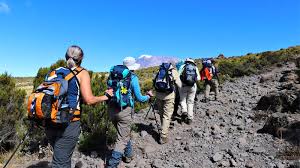
Umbwe Gate & Rainforest Zone
The starting point of your adventure, located at 1,600m. The trail passes through dense, primeval rainforest filled with ancient trees, moss-covered branches, and the calls of tropical birds.
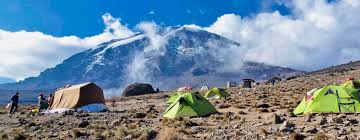
Barranco Valley & Wall
A spectacular valley dominated by the imposing Barranco Wall. The camp sits in a sheltered basin at 3,960m, and the famous wall scramble offers one of the most thrilling sections of the entire climb.
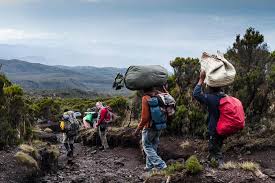
Barafu Camp & Summit
Barafu Camp (4,673m) is the high camp for summit attempts. From here, climbers ascend through the night to reach Stella Point on the crater rim and then Uhuru Peak (5,895m) - the Roof of Africa.
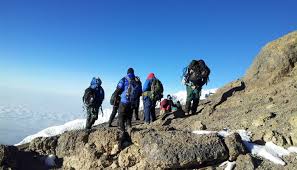
Mweka Route & Gate
The descent route through lush rainforest to Mweka Gate. The trail passes through towering trees, giant ferns, and vibrant vegetation before reaching the park exit at 1,640m.
| Included |
|
|---|---|
| Excluded |
|
| Transport |
|
Kilimanjaro Wildlife
Kilimanjaro is home to diverse wildlife across its ecological zones. Here's what you might encounter.
- Primates: Colobus monkeys, blue monkeys, vervet monkeys
- Birds: Over 180 species including the malachite sunbird and augur buzzard
- Mammals: Bushbuck, duiker, mongoose, hyrax, and the elusive leopard
- Vegetation: Giant heather, Senecio, Lobelia, and unique alpine flora
- Glaciers: The iconic Furtwängler, Rebmann, and Ratzel glaciers on the summit
- Climate Zones: Experience 5 distinct climate zones from rainforest to arctic summit
Photo Gallery
Rainforest TrekBarranco WallMountain VistaBarafu High Camp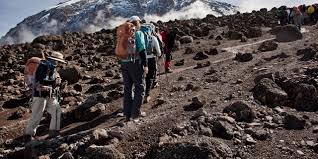 Uhuru Peak Summit
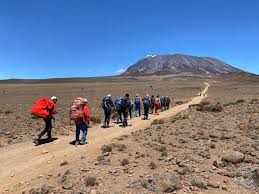 Mweka Descent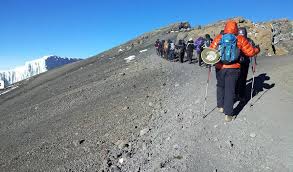
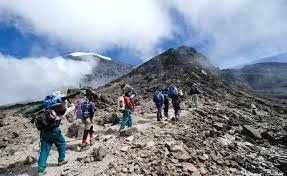
Location
What Our Climbers Say
Join thousands of satisfied climbers who have conquered Kilimanjaro with us.
Frequently Asked Questions
What is the Umbwe Route on Kilimanjaro?
The Umbwe Route is the steepest and most direct route up Mount Kilimanjaro. It follows a narrow ridge with dramatic drops on both sides, offering a challenging and adventurous climb for experienced trekkers seeking a true wilderness experience.
How difficult is the 7-day Umbwe Route climb?
The Umbwe Route is rated as very demanding. It requires excellent fitness, good endurance, and ideally some prior high-altitude trekking experience. The steep terrain and rapid altitude gain make it one of the most challenging Kilimanjaro routes.
What is the success rate for the Umbwe Route?
With the 7-day itinerary including an extra acclimatization day, the success rate improves significantly over the standard 6-day version. Our expert guides employ a slow and steady approach, with careful altitude management to maximise summit success.
What is the best time to climb via the Umbwe Route?
The best times are during the dry seasons: January to March and June to October. These months offer the most stable weather conditions for climbing, though the Umbwe Route can be climbed year-round with proper preparation.
Do I need previous climbing experience?
Previous high-altitude trekking experience is strongly recommended due to the steep terrain and rapid altitude gain. The Umbwe Route is designed for adventurers with good fitness who are seeking a technical challenge.
What fitness level is required?
A very high fitness level is required. We recommend at least 3-6 months of preparation including cardiovascular training, strength training, and regular hiking on steep terrain. Hill running and stair climbing are excellent preparation.
What should I pack for the Umbwe Route?
Pack warm layers, a waterproof jacket and trousers, trekking poles, a high-altitude sleeping bag rated to -15°C, headlamp, sunscreen, sunglasses, water bottles, and energy snacks. A full packing list is provided upon booking.
Is altitude sickness common on this route?
Altitude sickness can affect anyone regardless of fitness. The 7-day itinerary includes an extra acclimatization day to help your body adjust. Our guides are trained to recognise symptoms and follow strict safety protocols including optional emergency oxygen.
What is the accommodation like on the mountain?
Accommodation is in dome tents at designated campsites. We provide high-quality four-season mountain tents, sleeping mats, and dining tents where meals are served. All camping equipment is included in the price.
Can I charge my devices on the mountain?
Solar charging is available at some camps, but it is limited. We recommend bringing a portable power bank (20,000+ mAh) to charge your devices during the climb. Keep electronics warm in your sleeping bag to preserve battery life.
Do I need a visa for Tanzania?
Most visitors require a Tanzania visa. You can obtain it on arrival at Kilimanjaro International Airport or apply online in advance. Check with your local Tanzanian embassy for specific requirements based on your nationality.
What is the group size for this climb?
Our groups typically range from 2 to 12 climbers. Each group is accompanied by a professional lead guide, assistant guides, porters, and a cook to ensure a safe and comfortable experience on the mountain.
How much does it cost to climb via the Umbwe Route?
Please contact us for a personalised quote. Prices vary based on group size, season, and any additional services required. We offer competitive rates with no hidden fees and transparent pricing.
What is the cancellation policy?
Cancellations made 60+ days before departure receive a full refund. 30 to 60 days: 50% refund. Less than 30 days: no refund. We recommend comprehensive travel insurance to protect your investment.
What is the food like on the mountain?
Full board meals are provided, including breakfast, lunch, and dinner. Meals are nutritious, high-energy, and designed for altitude trekking. We accommodate dietary requirements with advance notice.
Ready to Conquer Kilimanjaro?
Book your 7-day Umbwe Route climb and take on Africa's highest peak via the steepest and most direct route.