

.png)
Umbwe Gate - Barranco - Barafu - Uhuru Peak
6 Days Kilimanjaro Umbwe Route
Introduction
The Umbwe Route is Kilimanjaro's most challenging, steepest, and most direct path to the summit. Known as the "Hardest Route", it offers experienced trekkers an adrenaline-fueled ascent through dense rainforest, past the iconic Barranco Wall, and up to the roof of Africa at Uhuru Peak (5,895m). This 6-day adventure is designed for those who seek the ultimate physical and mental challenge on Kilimanjaro.
Why This Route?
Most Challenging Route
The Umbwe is widely regarded as the toughest route on Kilimanjaro — steep, relentless, and not for the faint-hearted. Only the boldest trekkers attempt it.
Direct Ascent
Unlike other routes that zigzag, the Umbwe takes a direct line up the mountain. This means maximum vertical gain in minimum time — a true test of endurance.
Steep Rainforest
The climb begins with a punishing ascent through dense, humid rainforest. The trail climbs over 1,300m on day one alone, making it one of the toughest starts on the mountain.
For Experienced Hikers
This route is strictly for experienced trekkers with prior high-altitude experience. If you have climbed above 4,000m before, the Umbwe is your ultimate challenge.
Quick Summit
At just 6 days, the Umbwe is one of the fastest routes to Uhuru Peak. Perfect for fit climbers who want a short, intense expedition without compromising on the summit experience.
Adrenaline Adventure
From scaling the Barranco Wall to traversing the alpine desert under starlight, every step on the Umbwe is an adrenaline-pumping adventure you will never forget.
Tour Highlights
- Summit Uhuru Peak (5,895m) — Roof of Africa
- Steep Jungle Ascent through Kilimanjaro Rainforest
- Scale the Iconic Barranco Wall
- Lava Tower Acclimatization at 4,630m
- Breathtaking Glacier and Ice Field Views
- Challenge Yourself on the Hardest Route
- Small Groups with Expert Professional Guides
- Summit Certificate from Kilimanjaro National Park
Detailed Itinerary
Each day is carefully crafted to maximise your acclimatisation while embracing the challenge of the Umbwe's steep terrain. Below is a complete breakdown of every day, from the rainforest start to the triumphant summit and descent.
Umbwe Gate (1,600m) → Umbwe Camp (2,900m)
Your Kilimanjaro adventure begins at Umbwe Gate (1,600m), where you complete park registration and meet your trekking team. The trail immediately enters dense tropical rainforest and climbs relentlessly. Unlike other routes, the Umbwe wastes no time — you gain over 1,300m of elevation on day one. The path is steep, narrow, and often muddy. Towering trees, hanging moss, and exotic birds accompany you as you push upwards. Arrive at Umbwe Camp (2,900m) perched on a narrow ridge surrounded by forest.
Umbwe Camp (2,900m) → Barranco Camp (3,960m)
Today continues the relentless ascent as you leave the rainforest behind and enter the moorland zone. The trail climbs steeply through giant heather and lobelia plants with increasingly spectacular views of Kibo peak ahead. As you gain altitude, the vegetation thins and the landscape becomes more alpine. You arrive at Barranco Camp (3,960m), situated in a spectacular valley at the base of the famous Barranco Wall. The views of the Western Breach and the Breach Wall are breathtaking.
Barranco Camp (3,960m) → Karanga Camp (4,035m) via Barranco Wall
Today is one of the most exciting and photogenic days on the mountain. You tackle the legendary Barranco Wall — a steep, non-technical scramble up a 257m cliff face. Despite its intimidating appearance, the wall is climbed without ropes and is a thrilling challenge. After the wall, you traverse the Karanga Valley with stunning views of the Heim Glacier, then make a short climb to Karanga Camp (4,035m). This day is designed for acclimatisation — "climb high, sleep low."
Karanga Camp (4,035m) → Barafu Camp (4,673m)
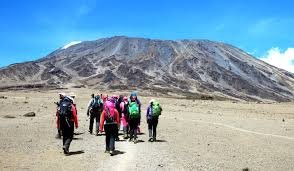
You leave Karanga Camp and ascend through the sparse alpine desert zone. The trail passes through the Karanga Valley and climbs steadily to Barafu Camp, perched on a rocky ridge at 4,673m. Barafu means "ice" in Swahili, and the windswept camp offers dramatic views of the Mawenzi peak and the summit cone of Kibo. This is your final camp before the summit attempt. Afternoon rest and early dinner are essential — summit night begins around midnight.
SUMMIT: Barafu Camp (4,673m) → Uhuru Peak (5,895m) → Mweka Camp (3,100m)
The day you have been training for. You start at midnight, ascending by headlamp through the freezing darkness. The trail climbs steeply up scree slopes to the crater rim at Stella Point (5,756m), then follows the rim to Uhuru Peak (5,895m) — the highest point in Africa. Watch the sunrise from the roof of the continent — an unforgettable moment. After photos and celebration, descend back to Barafu Camp for a short rest, then continue down to Mweka Camp (3,100m) in the rainforest.
Mweka Camp (3,100m) → Mweka Gate (1,630m) → Arusha
After a celebratory breakfast, you make the final descent through the lush rainforest to Mweka Gate. The trail is beautiful — moss-covered trees, ferns, colourful birds, and the sounds of the forest. At the gate, you complete park exit formalities and receive your official Kilimanjaro summit certificate, signed by the park authorities. Your driver will meet you and transfer you back to your hotel in Moshi or Arusha. Hot shower, cold drink, and a new title: Kilimanjaro summiteer!
Destinations You'll Explore
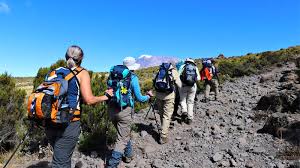
Kilimanjaro National Park
A UNESCO World Heritage Site covering the entire Kilimanjaro massif above the tree line. The park protects five distinct ecological zones, from lush rainforest to arctic summit conditions.
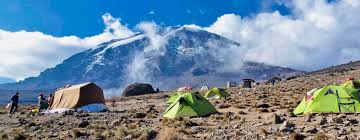
Umbwe Route
The most challenging and direct route on Kilimanjaro. Known for its steep ascent through the southern rainforest, the route offers a pure, intense climbing experience far from the crowds.
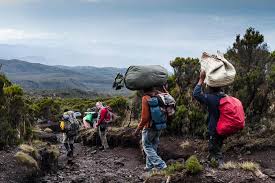
Mweka Route
The standard descent route for Umbwe climbers. This beautiful trail descends through the lush rainforest on the southern slopes with excellent wildlife viewing opportunities.
| Included |
|
|---|---|
| Excluded |
|
| Transport |
|
Kilimanjaro Photo Gallery
Umbwe Rainforest TrekBarranco Wall Ascent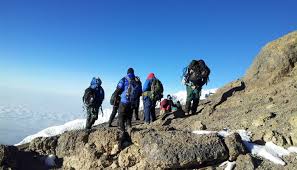 Barranco Camp
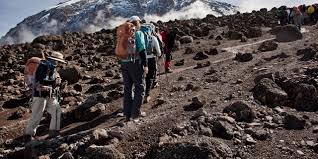 Glacier Views from Karanga
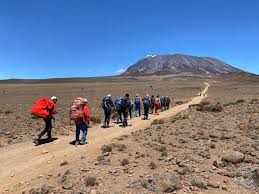 Barafu Summit Camp
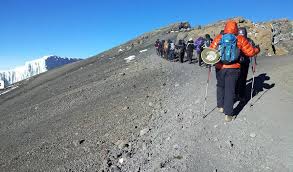 Summit at Uhuru Peak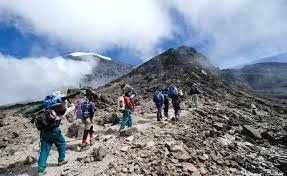
Location
What Our Climbers Say
Join the elite group of trekkers who have conquered Kilimanjaro via the Umbwe Route.
Frequently Asked Questions
How difficult is the Umbwe Route on Kilimanjaro?
The Umbwe Route is considered the most difficult and challenging route on Kilimanjaro. It features the steepest terrain of any route, with direct and relentless ascents that require excellent physical fitness and previous high-altitude trekking experience.
Who should attempt the Umbwe Route?
The Umbwe Route is designed for experienced trekkers and climbers who have previous high-altitude experience and excellent physical fitness. It is not recommended for first-time Kilimanjaro climbers or beginners.
What fitness level is required for the Umbwe Route?
A very high level of fitness is required. You should be comfortable with steep, sustained climbs, have excellent cardiovascular endurance, and ideally have experience trekking above 4,000m. Regular training with stair climbing, hiking, and cardio is essential.
What is the best time to climb Kilimanjaro via Umbwe?
The best times are the dry seasons: January-March and June-October. These months offer the best weather conditions for summit success. The short rainy season (November) and long rainy season (April-May) are less ideal.
How common is altitude sickness on the Umbwe Route?
Altitude sickness is a serious concern on all Kilimanjaro routes, including Umbwe. The fast ascent profile puts climbers at higher risk. Our guides are trained in altitude sickness recognition and carry emergency oxygen. Proper acclimatization and a slow pace are critical.
What should I pack for the Umbwe Route climb?
Essential items include: sturdy waterproof hiking boots, thermal base layers, fleece jacket, waterproof jacket and trousers, insulated down jacket, warm gloves, hat, buff, sunglasses, headlamp, trekking poles, sleeping bag (rated to -20°C), water bottles, water purification tablets, energy snacks, and sunscreen.
What is the minimum age for the Umbwe Route?
The minimum age to climb Kilimanjaro via the Umbwe Route is 18 years old, given the extreme difficulty. All climbers must be in excellent physical condition and sign a waiver acknowledging the risks.
What is the group size for Umbwe Route climbs?
Our groups range from 2 to 8 climbers for the Umbwe Route. Smaller groups ensure personalized attention from guides and a more manageable pace on the steep terrain.
What is the guide-to-climber ratio on the Umbwe Route?
We maintain a minimum ratio of 1 guide per 2 climbers. In addition, assistant guides, porters, and a cook are included in your team to ensure safety and comfort throughout the climb.
What is the recommended tipping amount for the crew?
Tipping is customary and greatly appreciated. Recommended amounts: $25-35 per day for your lead guide, $15-20 per day for assistant guides, and $8-10 per day for porters and cook. Tips are typically distributed at the end of the climb.
What park fees are included in the Umbwe Route package?
All Kilimanjaro National Park entrance fees, camping fees, rescue fees, and trekking permits are included in your package price. There are no hidden fees.
How safe is the Umbwe Route?
Safety is our top priority. Our guides are certified wilderness first responders, carry emergency oxygen and first aid kits, and maintain constant communication. The Umbwe Route is challenging but safe when climbed with a professional team following proper protocols.
What is the weather like on the Umbwe Route?
Weather varies dramatically by altitude. The rainforest zone (1,800m-3,000m) is warm and humid. The moorland (3,000m-4,000m) is cooler with possible rain. The alpine desert (4,000m-5,000m) is dry with extreme temperature swings. Summit night can be -20°C with strong winds.
Do I receive a summit certificate after climbing Kilimanjaro via Umbwe?
Yes! Upon successful descent, you will receive an official Kilimanjaro National Park summit certificate signed by the park authorities, certifying that you reached Uhuru Peak, the highest point in Africa.
How does the Umbwe Route compare to the Machame Route?
The Umbwe Route is significantly more challenging than the Machame Route. Umbwe is shorter (6 days vs 6-7 days), more direct, and has steeper gradients throughout. Machame offers better acclimatization and is more scenic. Umbwe is for experienced climbers seeking the ultimate challenge.
Ready to Conquer the Hardest Route?
Book your 6-day Kilimanjaro Umbwe Route adventure today. Challenge yourself on the most demanding path to the Roof of Africa.