

.png)
African Pygmy-Goose
Nettapus auritusA tiny jewel of Africa's wetlands, gliding among water lilies.
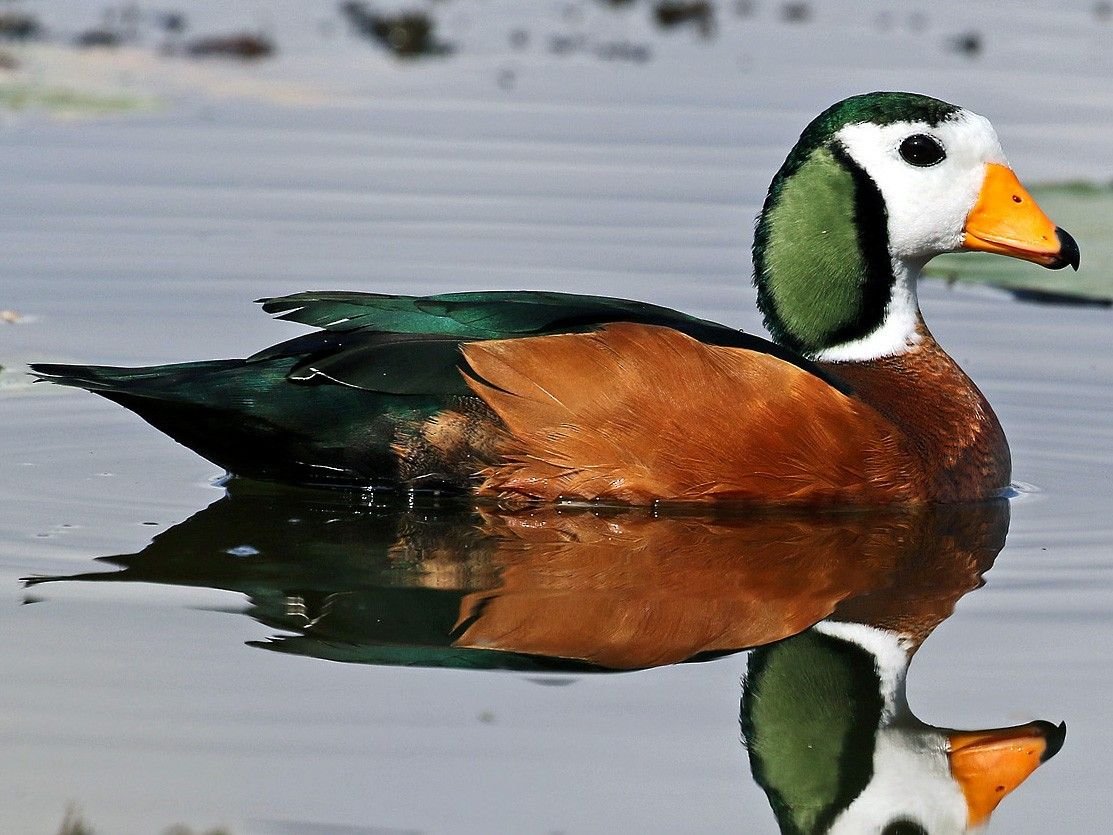
The African Pygmy-Goose (Nettapus auritus) is the smallest of Africa's waterfowl . It is a small, 33 cm long duck with a black back, dark crown, and a prominent bright white face patch that contrasts with the iridescent green and blue plumage on the head .
African Pygmy-Goose Quick Facts
What Is the African Pygmy-Goose?
The African Pygmy-Goose (Nettapus auritus) is the smallest of Africa's waterfowl . It is a small, 33 cm long duck with a black back, dark crown, and a prominent bright white face patch that contrasts with the iridescent green and blue plumage on the head .
It is found on still freshwater with floating vegetation, including lakes, ponds, swamps, and sometimes slow-flowing rivers . The species is native to Africa and Madagascar .
Despite its name, it is not a true goose but is the smallest member of the duck family in Africa .
How to Identify an African Pygmy-Goose
The African Pygmy-Goose is unmistakable if you get a good view :
- Size: Very small, 33 cm long .
- Head: Dark crown, prominent bright white face patch contrasting with iridescent green and blue plumage on the head .
- Back: Black back .
- Breast: White and golden-brown underparts .
- Bill: Short black bill with bright pink base and central orange-red tip .
- Female: Duller than the male, with reduced white on the face and a white patch above the eye .
- Habitat: Often seen perching on floating vegetation or in tree branches near water .
Distinguishing from Other Waterfowl
The African Pygmy-Goose is the smallest waterfowl in Africa, making it easy to distinguish from all other ducks and geese. Its bright white face patch and iridescent head are unique among African waterfowl .
Behavior & Social Life
The African Pygmy-Goose is a shy and secretive bird, often found in pairs or small family groups .
Daily Activity
- Aquatic: It is almost exclusively aquatic, rarely seen on land .
- Perching: It often perches on floating vegetation, particularly water lilies .
- Tree Perching: Also seen perched in tree branches near water .
- Vocalization: Usually silent, but males give a soft, high-pitched whistle during the breeding season .
Breeding Behavior
It nests in tree holes, often old nest holes of woodpeckers or barbets . The female lays 6-12 eggs, and the chicks are precocial, leaving the nest within a day of hatching .
Habitat & Distribution
The African Pygmy-Goose is found on still freshwater with floating vegetation, including lakes, ponds, swamps, and sometimes slow-flowing rivers .
Habitat Types
- Lakes and ponds with abundant floating vegetation .
- Swamps and slow-flowing rivers .
- Floodplains and seasonal wetlands .
- Rice paddies and artificial wetlands .
Distribution: The species is found across Sub-Saharan Africa and Madagascar . It is widely distributed in suitable wetland habitats throughout Tanzania .
Range: The African Pygmy-Goose occurs in most of sub-Saharan Africa, from Senegal to Ethiopia and south to South Africa .
African Pygmy-Goose in Tanzania
The African Pygmy-Goose is found on freshwater wetlands with floating vegetation throughout Tanzania. Here are the best locations to see it:
Arusha National Park
Confirmed sightings of the species in the park's freshwater lakes and wetlands .
Arusha safariSerengeti National Park
Recorded in the Serengeti, especially around the permanent water sources .
Serengeti safariLake Manyara National Park
Found in the lake and surrounding freshwater wetlands .
Lake Manyara safariMikumi National Park
Recorded in Mikumi, where it is found in seasonal and permanent wetlands .
Mikumi safariSafari Methods
- Game drives along rivers and lakeshores.
- Birdwatching – they are shy, but patience and binoculars often yield good views.
- Boat safaris where available, to view waterfowl among the lilies.
- Wildlife photography – their iridescent head and white face make them great subjects.
Best Time to See Them
African Pygmy-Goose are present year-round in suitable habitat. They are most active during the cooler morning and evening hours .
Diet & Feeding
The African Pygmy-Goose is a herbivore, feeding mainly on seeds of aquatic plants, water lilies, and small insects .
Food Sources
- Seeds of aquatic plants – especially water lilies .
- Small insects and invertebrates .
- Soft parts of floating vegetation .
Foraging Behavior
It feeds by dabbling and grazing on floating vegetation, often seen perching on lily pads while foraging .
Breeding & Life Cycle
The African Pygmy-Goose nests in tree holes, often old nest holes of woodpeckers or barbets .
Nesting
- Nest sites: Tree holes, often in trees near water .
- Eggs: 6-12 eggs .
- Incubation: About 25 days, performed by the female .
Chicks
Chicks are precocial and leave the nest within a day of hatching, dropping to the water below . They are led by both parents .
Conservation Status
The African Pygmy-Goose is assessed as Least Concern on the IUCN Red List .
It has a large range and is not considered threatened. Its population trend is stable .
Despite its secure status, it faces some local threats:
- Habitat loss due to wetland drainage and pollution .
- Hunting in some areas .
Comparisons
The African Pygmy-Goose is sometimes confused with other waterfowl. Here are the key differences:
| Feature | African Pygmy-Goose | Knob-billed Duck |
|---|---|---|
| Size | 33 cm | 56-76 cm |
| Plumage | White face patch, iridescent head, black back | White head with dark spots, glossy blue-black upperparts |
| Bill | Short black bill with bright pink base | Black, male has a large knob |
| Habitat | Floating vegetation, water lilies | Freshwater swamps, floodplains |
| Smallest Waterfowl | Yes, smallest in Africa | No, one of largest ducks |
Did You Know?
Smallest Waterfowl
It is the smallest of Africa's waterfowl, measuring just 33 cm .
Lily Pad Hunter
It is often seen perching on floating vegetation, particularly water lilies .
Tree Nester
It nests in tree holes, often old woodpecker or barbet holes .
Not a Goose
Despite its name, it is the smallest member of the duck family in Africa .
Iridescent Head
The male has a brilliantly iridescent green and blue head .
Secretive
It is a shy and secretive bird, rarely seen on land .
There is a quiet charm in watching an African Pygmy-Goose glide among the water lilies. This tiny bird, with its brilliant white face and iridescent head, is a true gem of Africa's wetlands. Its small size and secretive habits make it a special find for birdwatchers, and a reminder of the delicate beauty hidden in the reeds.
Gallery
Frequently Asked Questions
The African Pygmy-Goose (Nettapus auritus) is the smallest of Africa's waterfowl. It is a small, 33 cm long duck with a black back, dark crown, and a prominent bright white face patch that contrasts with the iridescent green and blue plumage on the head .
The African Pygmy-Goose is found on freshwater wetlands with floating vegetation in Tanzania. Key locations include Arusha National Park , Serengeti National Park , Lake Manyara National Park , and Mikumi National Park .
It feeds mainly on seeds of aquatic plants, water lilies, and small insects. It is often seen perching on floating vegetation .
No. The African Pygmy-Goose is listed as Least Concern on the IUCN Red List, with a stable population trend across its large range .
It is called a Pygmy-Goose because of its small size and short bill, resembling a tiny goose. Despite the name, it is the smallest member of the duck family in Africa .
It nests in tree holes, in old nest holes of woodpeckers or barbets. The female lays 6-12 eggs which are incubated for about 25 days .
The female is duller than the male, with reduced white on the face and a white patch above the eye .
The scientific name is Nettapus auritus .
References & Further Reading
- Wikipedia – African pygmy goose: Scientific name, description, size, range, habitat, diet, reproduction .
- BirdLife DataZone – African Pygmy-Goose species factsheet: IUCN Least Concern, range, habitat, threats .
- eBird – African Pygmy-Goose: Identification, range, habitat .
- Oiseaux.net – African Pygmy-Goose: Confirmed photo records from Tanzania .
- Rwanda Bird Checklist – African Pygmy-Goose listed as a resident species in the region .
- Outsourcing Guide – Arusha National Park Bird Checklist: African Pygmy-Goose listed .