

.png)
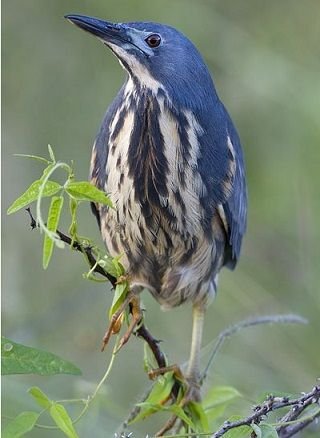
Dwarf Bittern
Ixobrychus sturmiiThe tiniest of Africa's herons – a master of concealment in the dense wetlands it calls home.
The Dwarf Bittern (Ixobrychus sturmii), also known as the African Dwarf Bittern or Rail Heron, is one of the smallest herons in the world. Measuring just 27-30 centimetres in length, this tiny, compact bird is a master of camouflage, its dark slate-grey plumage and heavily streaked underparts blending seamlessly into the dense vegetation of Africa's wetlands.[reference:0][reference:1]
Dwarf Bittern Quick Facts
What Is the Dwarf Bittern?
The Dwarf Bittern (Ixobrychus sturmii) is a very small, compact heron belonging to the family Ardeidae, which includes herons, egrets, and bitterns. It was first described by the German zoologist Johann Georg Wagler in 1827.[reference:2] The species name sturmii honours the German naturalist Johann Sturm.
This tiny heron is one of the smallest bitterns in the world and is also known by several alternative names, including the African Dwarf Bittern and the Rail Heron.[reference:3] It was once placed in a genus of its own, but is now classified within the genus Ixobrychus, which includes the small bitterns.[reference:4]
The Dwarf Bittern is a shy, secretive bird that is more often heard than seen. It is widely distributed across sub-Saharan Africa, avoiding only the most arid regions.[reference:5] It is a migratory species within Africa, with populations moving north and south in response to seasonal rains.[reference:6]
How to Identify a Dwarf Bittern
The Dwarf Bittern is the smallest heron in Africa, easily recognised by its tiny size, dark plumage, and secretive behaviour. Here are its key identifying features:
- Size: A very small, compact heron measuring just 27-30 cm (10.6-11.8 in) in length with a wingspan of 45-50 cm (18-20 in).[reference:7][reference:8]
- Male: Dark slate-grey head, neck, back, and upper wings with elongated head and neck feathers. The throat and upper breast are pale buff, darkening to tawny on the abdomen, heavily streaked black.[reference:9][reference:10]
- Female: Paler than the male, with a more rufous tinge on the belly and yellow irises.[reference:11]
- Juvenile: More buff and pale than the adult, with buff tips to the wing covert feathers and narrower streaking on the foreneck.[reference:12]
- Bill: Dark overall; upper bill black to dark green, lower bill yellow.[reference:13]
- Irises: Red-brown to dark red in males, yellow in females.[reference:14]
- Legs and feet: Green-yellow in front and yellow in back. In courtship, they turn bright orange.[reference:15]
- Flight: Slow and laboured, with the bird most often encountered flying into bushes when disturbed.[reference:16]
Distinguishing from Similar Species
The Dwarf Bittern can be distinguished from the Black Bittern by its striped belly, dark neck tufts, shorter, darker bill, and much smaller size.[reference:17] It can be distinguished from the Green-backed Heron by its smaller size, slower flight, pale and heavily streaked underparts, and uniform (not barred) upper parts.[reference:18] It is also similar to the Striated Heron, but is smaller, shorter- and thicker-necked, and darker on the back.[reference:19]
Behavior & Social Life
The Dwarf Bittern is a shy, secretive, and solitary bird that is rarely seen in the open. It is most active at night and at dusk, though it may also forage during the day if conditions are cloudy.[reference:20]
Foraging Behavior
- Hunting technique: The Dwarf Bittern hunts alone or in pairs, wading slowly through shallow water in search of prey.[reference:21]
- Perch hunting: It may also perch on a tuft of grass, stabbing prey that passes by.[reference:22]
- Feeding time: Most foraging occurs at dusk and at night, when it moves through the shallows in search of small animals.[reference:23]
Breeding Behavior
- Monogamous: The Dwarf Bittern is monogamous and usually a solitary nester, though nests may be closely spaced in prime habitat.[reference:24]
- Nest building: Both sexes build the nest, constructing a platform of sticks on a horizontal or hanging branch of a tree or bush, overhanging water at a height of 0.5-4 metres.[reference:25][reference:26]
- Pair bonding: On returning to the nest, adult birds touch beaks and engage in 'necking' before feeding the chicks, a behaviour that strengthens the pair bond.[reference:27]
- Parental care: One parent is always in attendance at the nest, either with the chicks or nearby, while the other hunts.[reference:28] Adults regurgitate food (such as frogs) for the chicks, with the chick crossing beaks with the parent to receive the meal.[reference:29]
Vocalization
The Dwarf Bittern has a short series of low "hraw" notes.[reference:30] A loud croak is uttered when the bird is disturbed.[reference:31]
Habitat & Distribution
The Dwarf Bittern is found in a variety of wetland habitats across sub-Saharan Africa, generally characterised by fluctuating water levels.[reference:32]
Key habitat types include:
- Freshwater wetlands – including marshes, swamps, and floodplains.[reference:33]
- Seasonally flooded plains – with scattered trees and bushes.[reference:34]
- Lakes, ponds, and pools – overhung with dense foliage.[reference:35]
- Rivers and streams – with densely vegetated margins.[reference:36]
- Mangroves – occasionally.[reference:37]
- Rice fields and grassy swamps – with bulrushes or papyrus.[reference:38]
Distribution: The Dwarf Bittern is widely distributed across sub-Saharan Africa, avoiding only the very arid regions.[reference:39] It is found in Angola, Benin, Botswana, Burkina Faso, Burundi, Cameroon, Central African Republic, Chad, Congo, Côte d'Ivoire, Equatorial Guinea, Ethiopia, Gabon, Gambia, Ghana, Guinea, Kenya, Liberia, Malawi, Mali, Mauritania, Mozambique, Namibia, Nigeria, Rwanda, Senegal, Sierra Leone, Somalia, South Africa, Sudan, Swaziland, Tanzania, Togo, Uganda, Zambia, and Zimbabwe.[reference:40]
Migration: The Dwarf Bittern is an intra-African breeding migrant. In southern Africa, it arrives from October to December to breed and departs northward in March or April.[reference:41] Populations in equatorial Africa are less migratory, with movements less clearly defined.[reference:42]
Tanzania Distribution
In Tanzania, the Dwarf Bittern is found in wetland areas across the country.[reference:43] It has been recorded in Serengeti National Park (particularly in wetland areas), Ngorongoro Conservation Area, Tarangire National Park, and Ruaha National Park.[reference:44]
Dwarf Bittern in Tanzania
The Dwarf Bittern is one of Africa's smallest and most secretive herons, often overlooked due to its size and camouflage. Here are the best locations to see it in Tanzania:
Serengeti National Park
Found in the Serengeti's wetland areas, particularly in the seasonal floodplains and along the Grumeti and Mara rivers. Look for them in dense vegetation at the water's edge.
Serengeti safariNgorongoro Crater
Recorded in the Ngorongoro Conservation Area, especially in the swampy areas of the crater floor. The dense vegetation around Lake Magadi provides ideal habitat.
Ngorongoro safariTarangire National Park
Found along the Tarangire River in the dense riverine vegetation. The seasonal swamps and pools provide excellent foraging habitat.[reference:45]
Tarangire safariRuaha National Park
A resident species in Ruaha's wetland areas along the Great Ruaha River. Often found in the riverine vegetation and seasonal floodplains.
Ruaha safariSafari Methods
- Game drives near wetlands, marshes, and rivers with dense vegetation.
- Birdwatching – patience is key; look for the tiny dark heron moving slowly through the shallows or perched in dense vegetation.
- Wildlife photography – the Dwarf Bittern's tiny size and beautiful plumage make it a rewarding subject for photographers.
- Listen for calls – the short series of low "hraw" notes can help locate this secretive bird.
Best Time to See Them
Dwarf Bitterns are present in Tanzania year-round, with migratory birds arriving from October to December.[reference:46] They are most active at dusk and at night. The dry season (June to October) is generally best for wildlife viewing as birds congregate around remaining water sources.
Diet & Feeding
The Dwarf Bittern is a carnivore with a varied diet that reflects its wetland habitat.
Food Sources
- Insects: Predominantly grasshoppers, water beetles, and other aquatic insects.[reference:47]
- Amphibians: Frogs are a major part of the diet.[reference:48]
- Fish: Small fish.[reference:49]
- Crustaceans: Crabs and other small crustaceans.[reference:50]
- Other invertebrates: Spiders and snails.[reference:51]
Foraging Behavior
The Dwarf Bittern is a patient and stealthy hunter. It forages at dusk and at night, wading slowly through shallow water in search of small animals.[reference:52] It may also perch on a tuft of grass, stabbing prey that passes by.[reference:53] During the breeding season, adults have been observed feeding their chicks almost exclusively on frogs, which are regurgitated for the young.[reference:54]
Breeding & Life Cycle
The Dwarf Bittern is monogamous and usually a solitary nester.[reference:55]
Nesting
- Breeding season: In East Africa, breeding coincides with the rainy season. In southern Africa, breeding occurs from October to December.[reference:56]
- Nest site: A platform of sticks built on a horizontal or hanging branch of a tree or bush, overhanging water at a height of 0.5-4 metres.[reference:57]
- Nest construction: Both sexes build the nest over 1-2 days.[reference:58]
- Clutch: 2 to 3 eggs.
- Incubation: Approximately 20 days, shared by both parents.
Chicks
The chicks are altricial (born helpless with down feathers). Both parents feed the chicks by regurgitating food, typically frogs.[reference:59] On returning to the nest, adult birds touch beaks and engage in 'necking' before feeding the chicks, a behaviour that strengthens the pair bond.[reference:60] Chicks fledge at about 30 days of age. Observations have shown that up to four chicks can be successfully raised from a single brood.[reference:61]
Conservation Status
The Dwarf Bittern is assessed as Least Concern on the IUCN Red List.[reference:62]
Population: The global population is estimated at between 25,000 and 100,000 individuals (2010 estimate).[reference:63] The population trend is not known, but the population is not believed to be decreasing sufficiently rapidly to approach the thresholds for Vulnerable.[reference:64]
Justification: This species has an extremely large range, with an Extent of Occurrence of approximately 22,400,000 km², and hence does not approach the thresholds for Vulnerable.[reference:65][reference:66] The population size may be moderately small to large, but it is not believed to approach the thresholds for Vulnerable.[reference:67]
Threats: While the species is not currently threatened globally, it faces local threats including:
- Habitat loss: Drainage and degradation of wetlands.
- Pollution: Pesticides and other chemicals used in agriculture.
- Hunting and trade: Hunting and trade for traditional medicine are the main threats.[reference:68]
The Dwarf Bittern is listed on CITES Appendix II and is protected by various international agreements, including the African-Eurasian Waterbird Agreement (AEWA).[reference:69]
Comparisons
The Dwarf Bittern is sometimes confused with other small herons. Here are the key differences:
| Feature | Dwarf Bittern | Green-backed Heron | Black Bittern |
|---|---|---|---|
| Size | 27-30 cm | 35-40 cm | 50-55 cm |
| Upperparts | Uniform dark slate-grey | Barred greenish-grey | Black |
| Underparts | Pale with thick dark streaks | Grey with white streaks | Pale with dark streaks |
| Flight | Slow and laboured | Fast and direct | Slow |
| Bill | Short and dark | Long and dark | Long and dark |
| Habitat | Dense freshwater wetlands | Varied wetland habitats | Dense freshwater wetlands |
Did You Know?
Africa's Smallest Heron
Measuring just 27-30 cm, the Dwarf Bittern is the smallest heron in Africa and one of the smallest in the world.
Master of Camouflage
Its dark slate-grey plumage and heavily streaked underparts blend perfectly with the dense vegetation of its wetland habitat, making it almost invisible.
Secretive Nocturnal Hunter
This tiny heron does most of its foraging at dusk and at night, wading silently through shallow water in search of prey.
Pair Bonding Ritual
Adults engage in 'necking' and touch beaks when they meet at the nest, a behaviour that strengthens their pair bond.
Frog Specialist
During the breeding season, adults feed their chicks almost exclusively on frogs, which are regurgitated for the young.
Intra-African Migrant
The Dwarf Bittern migrates within Africa, with populations moving north and south in response to seasonal rains.
There is a quiet magic in the Dwarf Bittern, a bird so small and so secretive that it seems to belong to another world – a world of shadow and reeds, of still water and whispered movement. To catch a glimpse of this tiny heron is a privilege, a moment of connection with one of Africa's most elusive creatures. It moves through the shallows with a hunter's patience, its dark plumage dissolving into the gloom, its bright eyes fixed on the water below. In a continent of giants, the Dwarf Bittern reminds us that sometimes the most remarkable creatures come in the smallest packages.
Gallery
Frequently Asked Questions
The Dwarf Bittern (Ixobrychus sturmii) is a very small, compact heron in the family Ardeidae. It is one of the smallest bitterns, measuring just 27-30 cm in length, and is known for its dark slate-grey upperparts, heavily streaked underparts, and secretive, shy nature.
Dwarf Bitterns are found in densely vegetated wetlands across sub-Saharan Africa, including Tanzania. Key locations include Serengeti National Park (particularly in wetland areas), Ngorongoro Conservation Area, Tarangire National Park (along the Tarangire River), and Ruaha National Park.
The Dwarf Bittern feeds predominantly on grasshoppers and frogs, but will also take water beetles, small fish, crabs, spiders, and snails. It forages at dusk and at night, wading through shallow water in search of prey.
No. The Dwarf Bittern is listed as Least Concern on the IUCN Red List. It has an extremely large range of 22,400,000 km² and a large population estimated at between 25,000 and 100,000 individuals.
The Dwarf Bittern is a tiny, compact heron with dark slate-grey upperparts and pale underparts with thick dark streaks. The male has a dark slate-grey head and neck with elongated feathers. The female is paler with a more rufous tinge on the belly and yellow irises.
The Dwarf Bittern is very small, measuring 27-30 cm (10.6-11.8 in) in length and weighing approximately 142 grams (5.0 oz). Its wingspan averages 45-50 cm (18-20 in).
The Dwarf Bittern is monogamous and usually a solitary nester, though nests may be close together in prime habitat. Both sexes build a platform nest of sticks on a horizontal or hanging branch of a tree or bush, overhanging water. The female lays 2-3 eggs which are incubated by both parents.
In Swahili, the Dwarf Bittern is known as Ngojamaliko or Vumatiti kibete.[reference:70][reference:71]
References & Further Reading
- BirdLife International – Dwarf Bittern: IUCN Red List assessment, Least Concern status, range 22,400,000 km², population estimate.
- HeronConservation – Dwarf Bittern: Comprehensive description, identification, field characters, breeding, distribution.[reference:72]
- eBird – Dwarf Bittern: Identification, vocalisation, habitat.[reference:73]
- Biodiversity Explorer – Ixobrychus sturmii: Distribution, habitat, food, breeding.[reference:74]
- Birdpedia – Dwarf Bittern: Habitat, population, threats, voice, nest.[reference:75]
- Wikipedia – Dwarf bittern: Distribution, taxonomy, description.[reference:76]
- BirdLife South Africa – Dwarf Bittern: Breeding behaviour, pair bonding, chick feeding.[reference:77]