

.png)
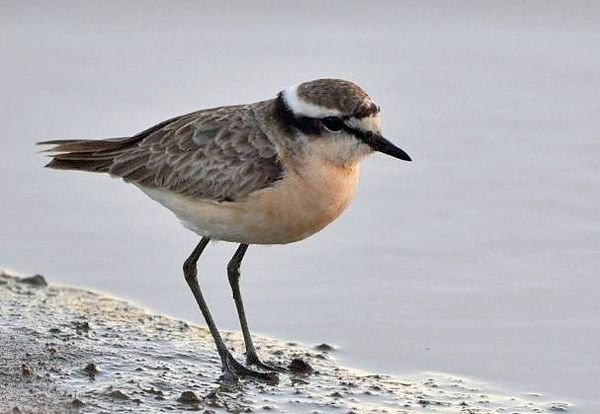
Kittlitz's Plover
Charadrius pecuariusA small, delicate wader with a sandy-brown back and a distinctive dark breast band – a quiet presence on Africa's dry plains.
Kittlitz's Plover (Charadrius pecuarius), also known as the Kittlitz's Sand Plover, is a small, delicate wader belonging to the plover family Charadriidae. Named after the German naturalist Heinrich von Kittlitz, this small bird is found in sub-Saharan Africa, where it inhabits dry, open habitats with short vegetation. It is a quiet and unassuming presence on the African plains, often overlooked but always present.
Kittlitz's Plover Quick Facts
What Is Kittlitz's Plover?
Kittlitz's Plover (Charadrius pecuarius) is a small, delicate wader belonging to the plover family Charadriidae. It was first described by the German naturalist Johann Friedrich Gmelin in 1789. The species name pecuarius is from the Latin pecuarius, meaning "of cattle", referring to its association with grazing animals.
This plover is also known as the Kittlitz's Sand Plover. It is a small, sandy-brown bird with a white forehead, a dark breast band, and a white belly. It is found across sub-Saharan Africa, inhabiting dry, open habitats such as grasslands, semi-deserts, and agricultural areas.
The species is named after the German naturalist Heinrich von Kittlitz, who collected the first specimen. It is a resident bird in most of its range, though some populations may make local movements in response to rainfall and habitat conditions.
How to Identify Kittlitz's Plover
Kittlitz's Plover is a small and delicate wader, easily recognised by its sandy-brown plumage and distinctive breast band. Here are its key identifying features:
- Size: A very small wader, measuring 14-16 cm (5.5-6.3 in) in length with a wingspan of 40-45 cm (16-18 in).
- Upperparts: Sandy-brown.
- Underparts: White.
- Breast: A distinctive dark breast band, which is broader in breeding plumage.
- Forehead: White, with a black band above it.
- Face: Dark eye-stripe.
- Bill: Dark.
- Legs: Dark grey.
- Breeding plumage: The dark breast band is broader and more contrasting.
- Non-breeding and juvenile: The breast band may be less distinct or broken.
Distinguishing from Similar Species
Kittlitz's Plover can be confused with the Three-banded Plover and the White-fronted Plover. The Three-banded Plover has two black breast bands, while the White-fronted Plover has a white forehead and a black crown, with a less distinct breast band. Kittlitz's Plover is distinguished by its single dark breast band and its sandy-brown upperparts.
Behavior & Social Life
Kittlitz's Plovers are usually seen singly or in pairs, sometimes in small flocks during the non-breeding season. They are active and agile birds, often seen running and stopping to pick insects from the ground.
Foraging Behavior
- Foraging technique: The Kittlitz's Plover runs and stops to pick insects and other small prey from the surface of the ground.
- Feeding habitat: Often found in areas with short vegetation, such as dry grasslands, agricultural fields, and semi-desert areas.
- Association with grazing animals: Often seen in association with grazing animals, such as cattle and antelopes, which flush insects from the grass.
Social Behaviour
- Pair bonding: Kittlitz's Plovers are monogamous and form long-term pair bonds.
- Territoriality: They are territorial during the breeding season, defending their nesting area from intruders.
Vocalization
The Kittlitz's Plover has a soft, piping call, often described as a "peep" or "weet" sound.
Habitat & Distribution
Kittlitz's Plover is found in a variety of open, dry habitats across sub-Saharan Africa.
Key habitat types include:
- Dry grasslands – especially areas with short vegetation.
- Semi-deserts and open savannas.
- Agricultural areas – farmland, pastures, and cultivated fields.
- Coastal areas – salt pans and sandy shores.
Distribution: Kittlitz's Plover has an extremely large range, with an Extent of Occurrence of approximately 24,800,000 km². It is found across much of sub-Saharan Africa, from Senegambia in the west to Ethiopia and Kenya in the east, and southwards to South Africa. The species is largely resident, though some populations may make local movements in response to rainfall.
Tanzania Distribution
In Tanzania, Kittlitz's Plover is found in dry grasslands, agricultural areas, and open savannas across the country. It has been recorded in Serengeti National Park (particularly in the open grasslands), Ngorongoro Conservation Area (in the crater and surrounding areas), Tarangire National Park, and Ruaha National Park.
Kittlitz's Plover in Tanzania
Kittlitz's Plover is a small and delicate wader of Tanzania's dry grasslands and open plains. Here are the best locations to see it:
Serengeti National Park
Found in the Serengeti's open grasslands, particularly in areas with short vegetation. Often seen in association with grazing animals, flushing insects from the grass.
Serengeti safariNgorongoro Crater
Recorded in the Ngorongoro Conservation Area, especially in the open grasslands of the crater floor. A common sight in the crater's vast open spaces.
Ngorongoro safariTarangire National Park
Found in the open grasslands and along the Tarangire River. Often seen in agricultural areas and open plains within the park.
Tarangire safariRuaha National Park
A resident species in Ruaha's dry grasslands and open savannas. Often found in areas with short vegetation and near water sources.
Ruaha safariSafari Methods
- Game drives in dry grasslands, agricultural areas, and open savannas.
- Birdwatching – look for the small, sandy-brown plover with a dark breast band and white forehead.
- Wildlife photography – the Kittlitz's Plover's delicate appearance and active foraging behaviour make it an interesting photographic subject.
- Look for grazing animals – the plover is often found in association with cattle, antelopes, and other grazing animals.
Best Time to See Them
Kittlitz's Plovers are resident year-round in suitable habitat. The dry season (June to October) is generally best for wildlife viewing as birds are more visible in the open grasslands. The breeding season typically occurs during the rainy season (November to May).
Diet & Feeding
Kittlitz's Plover is primarily an insectivore, feeding on a variety of small invertebrates and seeds.
Food Sources
- Insects: Beetles, ants, termites, grasshoppers, and other small insects.
- Small invertebrates: Spiders, worms, and small crustaceans.
- Seeds: Occasionally takes seeds and small plant material.
Feeding Behavior
Kittlitz's Plover forages by running and stopping, picking insects and other small prey from the surface of the ground. It often feeds in association with grazing animals, which flush insects from the grass as they move.
Breeding & Life Cycle
Kittlitz's Plover is monogamous and breeds in pairs.
Nesting
- Breeding season: Typically occurs during the rainy season, from November to May in East Africa.
- Nest site: A shallow scrape on the ground, often on bare soil, short grass, or gravel.
- Nest construction: The nest is a simple scrape, sometimes lined with a few grass stems or small stones.
- Clutch: 2 to 3 eggs.
- Incubation: 22 to 26 days, shared by both parents.
Chicks
Chicks are precocial (born covered in down and able to move around soon after hatching). Both parents care for the chicks, feeding them and protecting them. Young fledge at 25 to 30 days old.
Conservation Status
Kittlitz's Plover is assessed as Least Concern on the IUCN Red List.
Population: The global population is estimated at between 100,000 and 500,000 individuals. The population trend is stable.
Justification: This species has an extremely large range (24,800,000 km²) and hence does not approach the thresholds for Vulnerable. The population size is large, and the population trend is stable, so the species does not approach the thresholds for Vulnerable.
Threats: While the species is not currently threatened globally, it faces local threats including:
- Habitat loss: Conversion of grasslands to agriculture and urban development.
- Agricultural intensification: Use of pesticides and herbicides.
- Human disturbance: Disturbance at nesting sites.
Kittlitz's Plover is listed on CITES Appendix II and is protected by various international agreements, including the African-Eurasian Waterbird Agreement (AEWA).
Comparisons
Kittlitz's Plover is sometimes confused with other plovers. Here are the key differences:
| Feature | Kittlitz's Plover | Three-banded Plover | White-fronted Plover |
|---|---|---|---|
| Size | 14-16 cm | 17-19 cm | 15-17 cm |
| Breast Bands | One dark band | Two dark bands | One dark band (less distinct) |
| Forehead | White with black band above | White with black band | White |
| Upperparts | Sandy-brown | Grey-brown | Sandy-brown |
| Leg Colour | Dark grey | Yellow | Dark |
| Range | Sub-Saharan Africa | Sub-Saharan Africa | Sub-Saharan Africa |
Did You Know?
Named After a Naturalist
Kittlitz's Plover is named after Heinrich von Kittlitz, a German naturalist who collected the first specimen.
Cattle Association
The species name pecuarius means "of cattle", referring to its habit of feeding in association with grazing animals.
Small and Delicate
At just 14-16 cm, Kittlitz's Plover is one of the smaller plovers found in Africa.
Active Forager
This plover uses a "run and stop" foraging technique, running quickly and pausing to pick insects from the ground.
Widespread Resident
With a range of over 24 million square kilometres, Kittlitz's Plover is found across much of sub-Saharan Africa.
Dryland Specialist
Unlike many waders that are associated with wetlands, Kittlitz's Plover is a specialist of dry, open habitats.
There is a quiet beauty in Kittlitz's Plover as it runs across the dusty plains of Africa. It is a bird of subtle colours – sandy-brown and white – a palette that blends perfectly with the dry grasses and sun-baked soil. It moves with a nervous energy, running, stopping, running again, always searching for the next insect. And when it pauses, it stands still, looking around with bright, dark eyes, a tiny presence in a vast landscape. In a world of elephants and lions, this small plover reminds us that even the smallest creatures have a place in the great tapestry of the savanna.
Gallery
Frequently Asked Questions
Kittlitz's Plover (Charadrius pecuarius) is a small, delicate wader in the plover family Charadriidae. It is named after the German naturalist Heinrich von Kittlitz. It is found in sub-Saharan Africa and is known for its sandy-brown upperparts, white underparts, and distinctive dark breast band.
Kittlitz's Plovers are found in open, dry habitats with short vegetation, including dry grasslands, semi-deserts, and agricultural areas, often near water. Key locations in Tanzania include Serengeti National Park, Ngorongoro Conservation Area, Tarangire National Park, and Ruaha National Park.
Kittlitz's Plover feeds on insects, small invertebrates, and seeds. It forages on the ground, running and stopping to pick prey from the surface.
No. Kittlitz's Plover is listed as Least Concern on the IUCN Red List. It has a large range of approximately 24,800,000 km² and a stable population.
It is a small plover with sandy-brown upperparts, white underparts, a dark breast band, and a white forehead with a black band above it. It has a dark eye-stripe and a dark bill.
Kittlitz's Plover is a small wader, measuring 14-16 cm (5.5-6.3 in) in length with a wingspan of 40-45 cm (16-18 in). It weighs between 30-50 grams (1.1-1.8 oz).
Kittlitz's Plovers are monogamous and breed in pairs. They nest in a shallow scrape on the ground, often on bare soil or short grass. The female lays 2-3 eggs which are incubated by both parents for about 22-26 days. Chicks are precocial and fledge after 25-30 days.
In Swahili, Kittlitz's Plover is known as Mwamba-kiliwa or Kiluwiluwi.
References & Further Reading
- BirdLife International – Kittlitz's Plover: IUCN Red List assessment, Least Concern status, range 24,800,000 km², population estimate.
- Wikipedia – Kittlitz's plover: Description, distribution, habitat, diet, breeding, conservation.
- eBird – Kittlitz's Plover: Identification, distribution, sightings.
- Avibase – Kittlitz's Plover: Taxonomy, subspecies, distribution.
- Biodiversity Explorer – Kittlitz's Plover: Biology, ecology, distribution.
- Oiseaux.net – Kittlitz's Plover: Photo records from Tanzania.
- South African National Biodiversity Institute – Kittlitz's Plover: Conservation status, threats, research.