

.png)
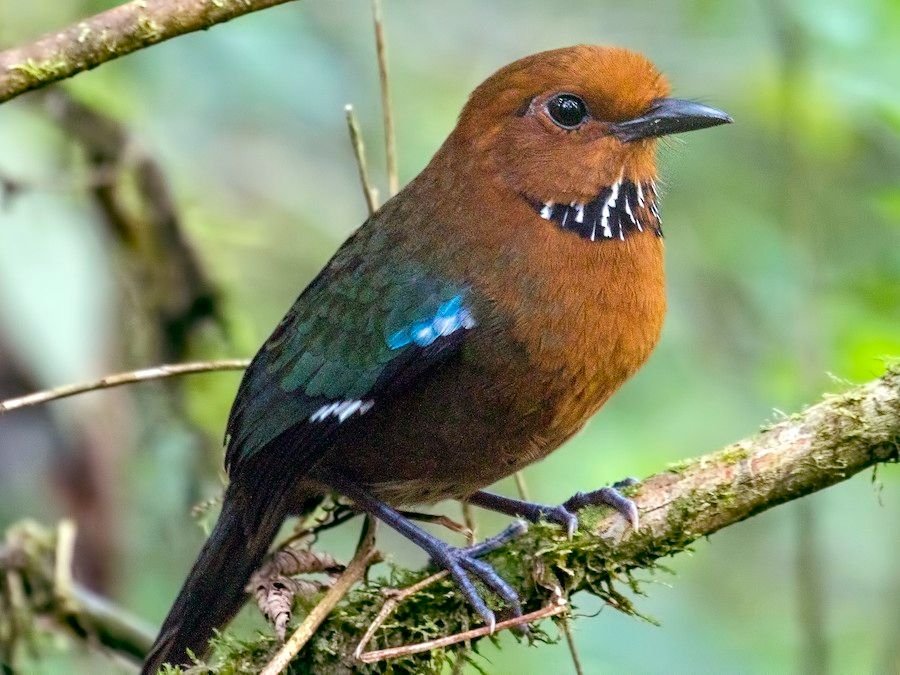
Rufous-crowned Roller
Coracias naeviusA large, boldly patterned roller of Africa's dry woodlands and savannas – a powerful perch hunter of insects and small prey.
The Rufous-crowned Roller (Coracias naevius) is a large member of the roller family Coraciidae. It is distinguished by olive-brown upperparts, richly rufous-brown head and breast tones, pale streaking on the underparts and a strong, square-ended tail. It occurs across dry and open wooded landscapes of sub-Saharan Africa.
Rufous-crowned Roller Quick Facts
What Is the Rufous-crowned Roller?
The Rufous-crowned Roller (Coracias naevius) is a large African roller in the family Coraciidae. It is one of the largest and most heavily built rollers, with olive-brown upperparts, rufous tones on the head and breast, a pale-streaked underside and a broad, square-ended tail.
The species has also been called Purple Roller in some sources and older field guides. Modern checklists and Tanzania records use the scientific name Coracias naevius; common-name usage can therefore vary between Rufous-crowned Roller and Purple Roller.
It is associated mainly with warm, dry and open country where scattered trees, thornveld and woodland provide elevated hunting perches and nest cavities.
How to Identify a Rufous-crowned Roller
It is larger and more heavily built than the familiar Lilac-breasted Roller and lacks that species' brilliant blue-and-lilac appearance. Its muted olive-brown and rufous palette, heavily streaked breast, pale eyebrow and broad tail make it distinctive when seen perched in dry woodland.
- Crown: Rufous to reddish-brown crown and head, contrasting with the darker upperparts.
- Upperparts: Olive-brown to dark earthy tones across the back and wings.
- Underparts: Rich brown or rufous breast with conspicuous pale streaking.
- Eyebrow: Distinct pale supercilium above the dark eye.
- Tail: Broad, square-ended tail without the long streamers of some other rollers.
- Bill: Strong, hooked bill suited to seizing substantial insect prey and small vertebrates.
Distinguishing from Other Rollers
It can be confused with the Crowned Eagle and Verreaux's Eagle, but it is smaller and more slender, and its long, full crest and dark plumage distinguish it from these larger species .
Behavior & Social Life
The Rufous-crowned Roller is usually seen singly or in pairs, often sitting quietly on prominent branches, dead trees or poles. It relies on elevated perches to survey open ground and vegetation for prey, then drops rapidly to capture what it detects.
Daily Activity
- Perch hunting: Watches from exposed branches before dropping onto prey.
- Foraging: Takes large insects and other small prey from the ground or low vegetation.
- Vocalization: Gives harsh, rolling or rasping calls that can carry across open woodland.
Migration
Movements vary across its broad African range. In many areas it is mainly resident or locally mobile, with movements linked to rainfall, food availability and local habitat conditions.
Habitat & Distribution
The Rufous-crowned Roller favours warm, open and relatively dry landscapes where scattered trees provide hunting perches and potential nest cavities:
- Dry woodland and open savanna with scattered mature trees.
- Thornveld and bushland in semi-arid country.
- Grassland edges where insects and small vertebrate prey are accessible.
- Riverine and mixed woodland where open spaces alternate with taller trees.
Distribution: The species has an extremely large range, with an Extent of Occurrence of approximately 14,800,000 km² . It is found throughout Sub-Saharan Africa .
Tanzania Distribution
Tanzania is part of the species’ documented range. Records and photographs include the Serengeti, Mkomazi Game Reserve, Ruaha National Park and other dry-country localities.
Rufous-crowned Roller in Tanzania
The Rufous-crowned Roller is a characteristic dry-country roller in parts of Tanzania. The strongest documented opportunities are in open woodland and savanna landscapes where broad views and mature trees create ideal hunting perches.
Safari Methods
Documented from the Serengeti, including the dry northern and central savanna zones where scattered trees provide hunting perches.
Serengeti safariBest Time to See Them
Photographic records confirm the species in Mkomazi Game Reserve in the Kilimanjaro region.
Mkomazi safariRuaha National Park
Recorded around Msembe Gate and the Ruaha landscape, including dry woodland and open country.
Ruaha safariNgorongoro & Northern Tanzania
Northern Tanzania records extend into the broader safari region; field sightings should be checked against current local birding reports.
Ngorongoro safariSafari Methods
- Game drives through dry woodland and savanna where exposed perches are easy to scan.
- Birdwatching – search dead branches, tall trees and utility poles for perched rollers.
- Wildlife photography – early light can reveal the rufous crown and streaked underparts clearly.
Best Time to See Them
The species can be encountered year-round in suitable Tanzanian habitat. Cooler morning hours usually offer comfortable birding conditions and active feeding before the strongest heat of the day.
Diet & Feeding
The Rufous-crowned Roller is an opportunistic carnivore that searches from a perch for large insects and other small animals. Its strong bill allows it to handle prey larger than many smaller roller species.
Food Sources
- Large insects: Grasshoppers, beetles and other sizable arthropods.
- Reptiles: Small lizards and similar ground prey when available.
- Small vertebrates: Opportunistically taken when detected.
- Other prey: Additional arthropods and small animals encountered in open habitat.
Hunting Behavior
It often hunts from a conspicuous perch, watching open ground before dropping or gliding down to seize prey. After capture it may return to the same perch to manipulate and swallow the food.
Breeding & Life Cycle
The Rufous-crowned Roller nests in cavities, typically using a natural hollow or an abandoned tree-hole site rather than constructing a bulky nest. Pairs are associated with territories containing suitable cavities and feeding habitat.
Nesting
- Nest site: A cavity or natural hollow in a mature tree or other suitable structure.
- Eggs: A small clutch of white eggs, with clutch size varying by site and source.
- Incubation: Incubation is carried out within the cavity and details can vary across the species’ broad range.
Chicks
Young remain in the protected cavity while parents deliver food. After fledging, juveniles continue to depend on adults while they learn effective hunting and perch-based foraging.
Conservation Status
The Rufous-crowned Roller is currently treated as Least Concern in the global references used for this page.
Its wide African distribution and use of a variety of open woodland habitats provide a relatively secure overall position, although local populations can be affected when mature trees and nesting cavities disappear.
Local pressures can still include:
- Habitat conversion where dry woodland is cleared or heavily simplified.
- Loss of nesting cavities through removal of mature trees and dead wood.
Comparisons
The Rufous-crowned Roller can be confused with other large rollers. The muted palette and strong streaking are especially useful field marks when comparing it with the more colourful Lilac-breasted Roller.
| Feature | Rufous-crowned Roller | Lilac-breasted Roller | European Roller |
|---|---|---|---|
| Size | About 35 cm | About 36–40 cm | About 29–32 cm |
| Wingspan | Broad, powerful wings | Broad rounded wings | Longer pointed wings |
| Crown | Rufous-brown crown | Blue-violet crown | Blue-green crown |
| Plumage | Olive-brown with rufous, pale streaking | Bright blue, lilac and orange | Blue, chestnut and turquoise |
| Habitat | Dry woodland, thornveld | Savanna and woodland | Open country, farmland |
| Diet | Large insects, small vertebrates | Insects and small vertebrates | Insects, small vertebrates |
Did You Know?
Largest of the Rollers
The Rufous-crowned Roller is among the largest and most heavily built members of the roller family.
Rufous Crown
The rufous-brown head and crown help separate it from many of the brightly coloured rollers seen on safari.
Powerful Perch Hunter
Instead of constantly hawking insects in the air, it frequently waits on a perch and drops onto prey.
Dry-country Specialist
It is strongly associated with open woodland, thornveld and dry savanna landscapes.
Square-ended Tail
Its broad, square-ended tail gives the bird a solid silhouette when it is perched or gliding.
Locally Mobile
Although resident in many areas, local movements can follow rainfall and changes in food availability.
The Rufous-crowned Roller has the presence of a bird built for the dry country: heavy-bodied, patient and strikingly well camouflaged until the light catches the rufous crown and patterned breast. From a high branch it can seem almost statuesque, yet in a moment it drops with precision onto an insect or small ground-dwelling prey. Finding one on a Tanzanian game drive is a reminder that some of the most rewarding safari sightings are the birds quietly watching from above.
Gallery
Frequently Asked Questions
The Rufous-crowned Roller (Coracias naevius) is a large African roller of dry woodland and savanna, recognized by its rufous crown, olive-brown upperparts and strongly streaked underparts.
Tanzania records include the Serengeti, Mkomazi and Ruaha landscapes, especially in open woodland and dry savanna habitat.
It feeds mainly on large insects and also takes small reptiles and other small vertebrate prey when available.
No. The species is currently treated as Least Concern globally, although habitat changes can affect local populations.
The common name refers to the warm rufous colouring of the crown and head, which contrasts with the darker olive-brown back.
It nests in cavities, usually using a natural hollow in a mature tree. Adults provision the young inside the protected cavity.
Look for the large body, rufous crown, pale eyebrow, brown streaked underparts and broad square-ended tail.
It is generally resident or locally mobile in suitable areas, although movement patterns vary across its broad African range.
References & Further Reading
- BirdLife International / HBW taxonomy resources – current treatment and conservation framework for Rufous-crowned Roller.
- Tanzania Birds checklist – lists Rufous-crowned Roller as Coracias naevius in Tanzania.
- Oiseaux.net – documented Coracias naevius photographs from Tanzania, including Ruaha, Msembe Gate and Mkomazi.
- Bird identification references – morphology, habitat and behaviour of the large African roller Coracias naevius.
- eBird – field identification and distribution resources for Rufous-crowned / Purple Roller.
- Wikimedia Commons – documented Coracias naevius record from Serengeti National Park, Tanzania.
- World Bird Names – Rufous-crowned Roller / Coracias naevius and current common-name treatment.