

.png)
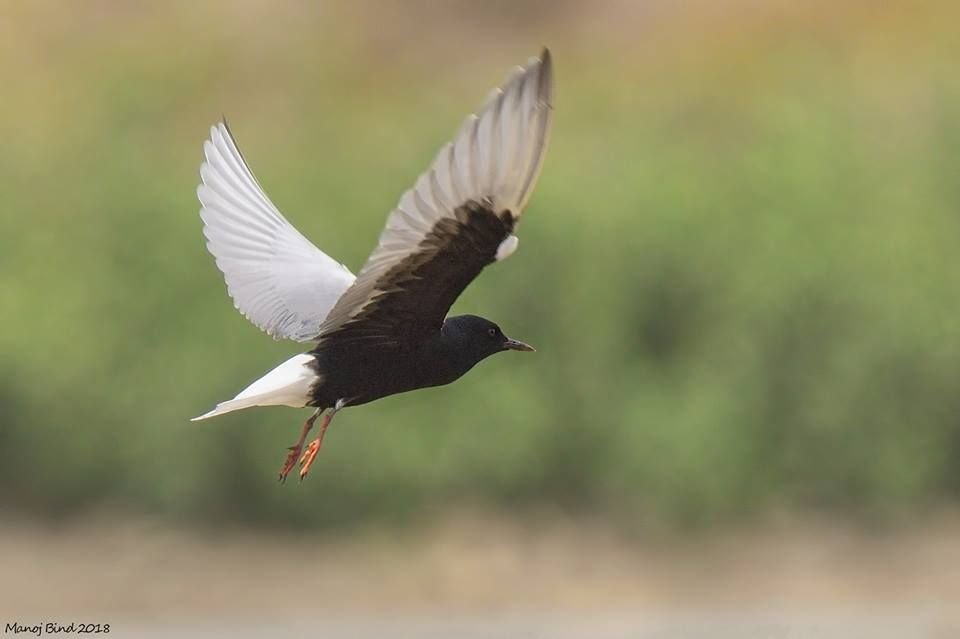
White-winged Tern
Chlidonias leucopterusA graceful marsh tern that transforms in summer, then travels south to African wetlands.
The White-winged Tern (Chlidonias leucopterus) is a small, long-distance migratory tern of the family Laridae. It breeds mainly in freshwater marshes and wetlands across Eurasia, then winters in Africa and Australasia. In Tanzania it is chiefly a seasonal wetland visitor, where flocks can be found hawking insects over open water and reed-fringed habitats.
White-winged Tern Quick Facts
What Is the White-winged Tern?
The White-winged Tern (Chlidonias leucopterus) is a small, highly mobile tern in the gull and tern family Laridae. During the breeding season it develops a distinctive black head and underparts contrasted with pale, silvery-grey wings and a striking white rear body and wing coverts.
It breeds mainly on freshwater marshes, lakes and ponds across parts of Eurasia. After breeding, large numbers migrate south, with African wetlands forming an important non-breeding destination. Tanzania lies along this wider African wintering network.
Its ecology is closely tied to shallow water, emergent vegetation and open airspace above wetlands, where it can feed in agile flight.
How to Identify a White-winged Tern
The White-winged Tern is small and slender, with pointed wings, a deeply forked tail and distinctive seasonal plumage. In flight its light wing panels and quick, buoyant wingbeats can make it stand out in mixed tern flocks.
- Plumage: Breeding adults have a black head and belly with a white rump and pale wing panels; winter plumage becomes much paler.
- Size: Small, slender tern with a delicate profile and deeply forked tail.
- Wings: Long, pointed wings with pale silvery-grey upper surfaces.
- Bill: Short, pointed bill suited to catching insects and small aquatic prey.
- Flight: Light, buoyant and highly agile, often low over wetlands while feeding.
- Tail: Forked, helping the bird maneuver during rapid aerial feeding.
Distinguishing from Similar Marsh Terns
It can be confused with Whiskered Tern and Black Tern, especially outside the breeding season. Plumage pattern, wing coloration, body shape and the extent of dark markings are useful field clues.
Behavior & Social Life
White-winged Terns are highly social outside the breeding season and may gather in loose flocks over productive wetlands. Their behavior is energetic, especially when insects are emerging over the water.
Daily Activity
- Foraging: Repeated aerial sallies for flying insects, often in flocks.
- Wetland use: Roosts and rests on exposed vegetation, mud edges or shallow water.
- Social behavior: More gregarious during migration and the African non-breeding season.
Migration
They spend much of the day flying low over marshes and shallow lakes, repeatedly turning into the wind to intercept flying insects. They may also plunge or dip for small fish and other aquatic prey.
Habitat & Distribution
The species favors freshwater wetlands and open water with abundant insect life. Typical habitats include marshes, shallow lakes, floodplains, reedbeds and other seasonally inundated areas.
- Woodland and savanna .
- Forest edges and riparian forest .
- Cultivated areas and grassland .
- Scrubland and semi-arid regions .
The global breeding range extends across Eurasia, while the non-breeding range includes much of Africa and parts of Australasia. Tanzania provides important wetland habitat during the non-breeding season.
Tanzania Distribution
In Tanzania, the White-winged Tern is found in most national parks and game reserves, including Serengeti, Ngorongoro, Tarangire, and Ruaha .
White-winged Tern in Tanzania
Tanzania offers excellent opportunities for this seasonal migrant at productive lakes and wetlands. Lake Manyara is a particularly important documented site, while the species has also been recorded elsewhere in the country.
Lake Manyara
Large wetland flocks can occur here during the African non-breeding season, making the lake one of Tanzania’s best places to look for this tern.
Lake Manyara birdingNgorongoro Conservation Area
Wetlands and open water in the crater and surrounding conservation landscape can attract migrant terns when conditions are suitable.
Ngorongoro birdingArusha Region
Recent photographic records from the Arusha area demonstrate that the species occurs in northern Tanzania beyond the main safari lakes.
Arusha birdingNorthern Tanzania Wetlands
Seasonally flooded pans, lakes and marshes can provide feeding and roosting habitat during migration and winter.
Tanzania birdingSafari Methods
- Game drives near productive wetlands and lake margins.
- Birdwatching with binoculars or a spotting scope, especially during morning feeding activity.
- Wildlife photography from stable observation points, watching for low, fast flight over the water.
Best Time to See Them
The best time to look is during the Palearctic non-breeding season, when White-winged Terns are present in Africa. Lake Manyara and other productive wetlands are especially worth checking after seasonal rains, when insect abundance increases.
Diet & Feeding
The White-winged Tern is primarily an aerial insect hunter, but it also takes small fish and other aquatic prey when available.
Food Sources
- Flying insects: Dragonflies, damselflies, beetles, flies, grasshoppers and other insects.
- Aquatic prey: Small fish and freshwater invertebrates.
- Surface prey: Small organisms picked from the water surface or disturbed by fish and other animals.
- Opportunity feeding: Birds may exploit insects concentrated around wetland vegetation or fishing activity.
Hunting Behavior
Its diet is flexible and closely linked to seasonal insect abundance and wetland productivity.
Breeding & Life Cycle
Breeding takes place mainly in Eurasian freshwater wetlands. The species nests colonially or semi-colonially where floating or emergent vegetation provides suitable cover.
Nesting
- Nest: A large stick nest placed in the fork of a tall tree .
- Eggs: 1-3 white eggs .
- Incubation: About 42 days, performed mainly by the female .
Chicks
Nests are shallow platforms of aquatic vegetation, usually positioned among marsh plants or floating vegetation. Clutch size is commonly around two to three eggs, with incubation shared by the adults.
Conservation Status
The White-winged Tern is currently assessed as Least Concern globally, although its migratory lifestyle means it depends on a chain of wetlands across continents.
The main conservation concern is therefore not simply the species at one site, but the condition of breeding wetlands, migration stopovers and African wintering habitats across its range.
In Tanzania and elsewhere, protecting healthy wetlands, maintaining natural water regimes and reducing disturbance around important bird areas benefit this and many other migratory waterbirds.
- Wetland alteration: Drainage, pollution and changes in water management can reduce suitable habitat.
- Disturbance: Intensive disturbance at feeding and roosting sites can disrupt wetland use.
Comparisons
The White-winged Tern is often confused with other marsh terns, particularly Whiskered Tern and Black Tern. The key differences include seasonal plumage, wing pattern and the amount of black retained on the body.
| Feature | White-winged Tern | Whiskered Tern | Black Tern |
|---|---|---|---|
| Size | 20-24 cm | 24-28 cm | 22-25 cm |
| Breeding plumage | Black body with white wing panels | Black head and breast, grey wings | Black body with dark grey wings |
| Non-breeding | Pale body, dark cap remnants | Pale grey-and-white | Whitish-grey body, dark cap |
| Habitat | Freshwater marshes and shallow lakes | Freshwater wetlands | Freshwater marshes and lakes |
| Feeding | Aerial insects, small fish | Insects and small fish | Insects and small fish |
| Diet | Rodent specialist | Reptiles, small mammals | Large gamebirds, mammals |
Did You Know?
Long-distance Traveller
The White-winged Tern breeds far to the north and travels thousands of kilometres to reach African non-breeding wetlands.
Seasonal Transformation
Its breeding and non-breeding plumages look dramatically different, making season important for identification.
Aerial Acrobat
It often hunts flying insects while continuously turning into and away from the wind.
Wetland Specialist
Freshwater marshes, shallow lakes and flooded grasslands are central to its life cycle.
Lake Manyara Visitor
Lake Manyara has documented winter records and is an excellent Tanzanian site for searching for this migrant.
Globally Widespread
Its broad Eurasian breeding range and extensive African wintering range give it a very large global distribution.
There is something beautifully restless about the White-winged Tern. One moment it is skimming across a Tanzanian wetland, the next it turns sharply into the wind and disappears into a loose flock. Its journey connects distant marshes across continents, reminding us that protecting one wetland can help sustain a bird whose life is built around many.
Gallery
Frequently Asked Questions
References & Further Reading
- BirdLife International / BirdLife DataZone — current taxonomy and global conservation framework for Chlidonias leucopterus.
- BirdLife South Africa — White-winged Tern account: Chlidonias leucopterus, Least Concern and migratory status.
- Kiat & Pyle (2024), Journal of Ornithology — distribution, migration and plumage phenology of White-winged Tern.
- Biodiversity Explorer — identification, migration and detailed diet information for Chlidonias leucopterus.
- Tanzania birding records and national checklist resources documenting White-winged Tern in Tanzania.
- Lake Manyara bird records documenting seasonal non-breeding occurrence of White-winged Tern.
- Current field records from northern Tanzania supporting recent occurrence in the region.