






 Ngorongoro Conservation Area
 Volcanoes National Park



Pin-tailed Whydah
Vidua macroura
Pin-tailed Whydah — Quick Facts
Important notice
Checklist inclusion confirms regional occurrence, not guaranteed sightings at every route, camp or elevation. The long breeding tail is seasonal; a short-tailed bird may still be this species.
Introduction
A spectacular breeding male and a brood parasite
The Pin-tailed Whydah (Vidua macroura) is a member of the Viduidae family. Its breeding male develops greatly elongated central tail feathers used in courtship display. The female and non-breeding male are brown and streaked, a difference that is essential for correct identification.
How to Identify the Pin-tailed Whydah
Key field marks
Breeding male. White face and underparts, black crown and upperparts, dark wings with white markings, a bright red bill and very long narrow black central tail feathers.
- Full tail needed. A male without the complete tail can be misidentified.
- Display plumage. The long tail is seasonal.
Female and non-breeding male. Brown streaked upperparts, pale underparts, patterned head and a much shorter tail.
- Juveniles. Browner and duller.
- Do not rely on tail alone. Check head pattern and bill.
Habitat and Distribution on Mount Kilimanjaro
The Pin-tailed Whydah uses open grassland, savanna, scrub, cultivated areas and grassy vegetation near settlements. It is included in the Kilimanjaro National Park checklist, and dense forest interiors are not its principal habitat.
Route note
Checklist inclusion does not confirm a sighting at any particular route, camp or altitude.
Diet and Feeding Behaviour
It feeds mainly on grass seeds and other small seeds, often picking food from the ground or short vegetation. Cultivated areas and gardens may also provide feeding opportunities.
Flight and Behaviour
The breeding male performs a striking display flight, hovering near a female while showing its long tail. Outside breeding, females and non-breeding males can be less conspicuous and may forage with other seed-eating birds.
Calls and Vocalisations
The male gives high-pitched, squeaky and twittering song, often during display flights. Short contact calls may be heard when birds move or feed. Avoid using unverified transcriptions.
Migration and Seasonal Presence
Generally resident across much of its African range, with local movements possible in response to rainfall and food availability. The seasonal growth of the male's long tail is a plumage change, not evidence of migration.
Breeding and Nesting
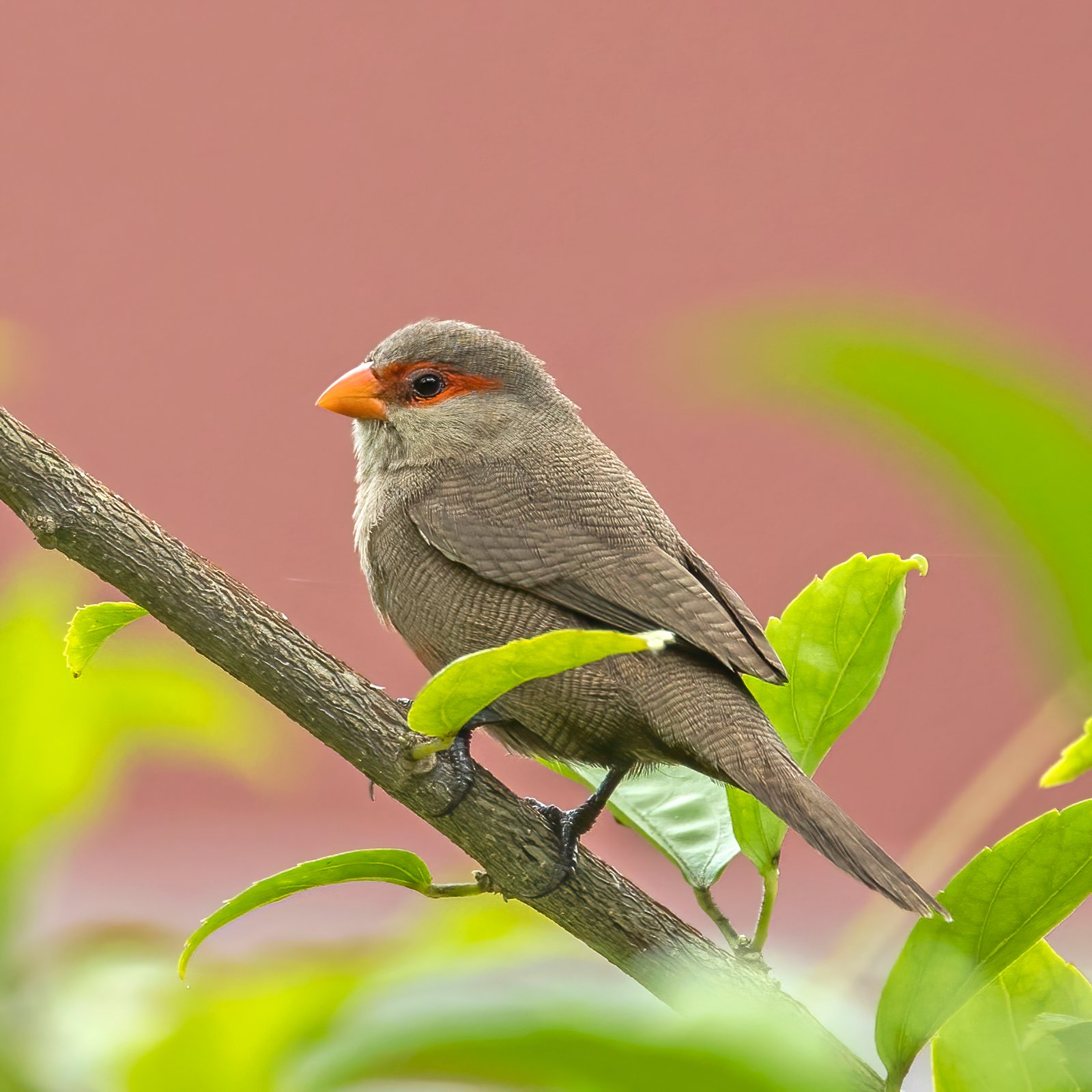
The Pin-tailed Whydah is a brood parasite. The female lays eggs in the nests of other small seed-eating birds; the Common Waxbill is a principal host. Host parents incubate the eggs and feed the young whydah. Do not claim a specific Kilimanjaro nest without documented evidence.
Ecological Importance
As a seed eater it participates in the open-habitat food web. Its brood-parasitic relationship with waxbills is an important specialised ecological relationship, notably with the Common Waxbill.
Conservation
Globally assessed as Least Concern. This is a global category and should not be interpreted as a separate assessment of the Kilimanjaro population. Grassland, scrub and open vegetation remain important.
Birdwatching on Kilimanjaro
Look in open grassland, savanna, scrub and grassy areas near cultivation or settlements. A displaying breeding male is unmistakable; females and non-breeding males need closer attention to head markings, bill and overall pattern.
Honest expectations
The species is checklist-listed, but sightings depend on habitat and local conditions. Not every male has the long tail, so learning the female and non-breeding plumages is important.
Pin-tailed Whydah – Frequently Asked Questions
Planning a birdwatching visit? These answers may help
What is the scientific name of the Pin-tailed Whydah?
Its scientific name is Vidua macroura.
Which family does it belong to?
It belongs to the Viduidae family.
How large is it?
The body is about 12–13 cm long; the breeding male’s tail adds considerably to total length.
Why does the male have such a long tail?
The elongated tail is seasonal breeding plumage used in courtship display.
Does the female have a long tail?
No. The female has a much shorter tail and brown streaked plumage.
Does the male always have its long tail?
No. The long tail is a breeding-season feature.
What colour is the male’s bill?
Usually bright red to coral-red.
What does the female look like?
Brown streaked upperparts, pale underparts and a patterned head.
Is it listed for Kilimanjaro National Park?
Yes. It appears in the Clements-based park checklist.
What habitats does it prefer?
Grassland, savanna, scrub, cultivated areas and grassy settlements.
What does it eat?
Mainly grass seeds and other small seeds.
Does it feed on the ground?
Yes. Ground feeding is an important part of its behaviour.
What is its courtship display like?
The male hovers near a female while displaying its long tail.
What does its call sound like?
High-pitched, squeaky and twittering notes.
Is it migratory?
Generally resident, with local movements possible.
Does it build its own nest?
No. It is a brood parasite.
Which bird is an important host?
The Common Waxbill is a principal host species.
Does the host raise the whydah chick?
Yes. Host parents incubate and feed the young whydah.
Is it threatened?
It is assessed globally as Least Concern.
Is a long-tailed male guaranteed on Kilimanjaro?
No. The long tail is seasonal and sightings depend on local conditions.
Related Kilimanjaro Bird Guides
Other birds in the Weavers, Waxbills, Sparrows, Finches & Viduids checklist group
Discover the Birds of Mount Kilimanjaro
Kilimanjaro's birdlife includes colourful weavers, waxbills, finches and whydahs of grassland, scrub and forest edge. Explore the mountain with African Majestic Adventure and discover more about its wildlife and natural environments.