.png)
Your Complete Lemosho Route Planner
What is the Lemosho Route?
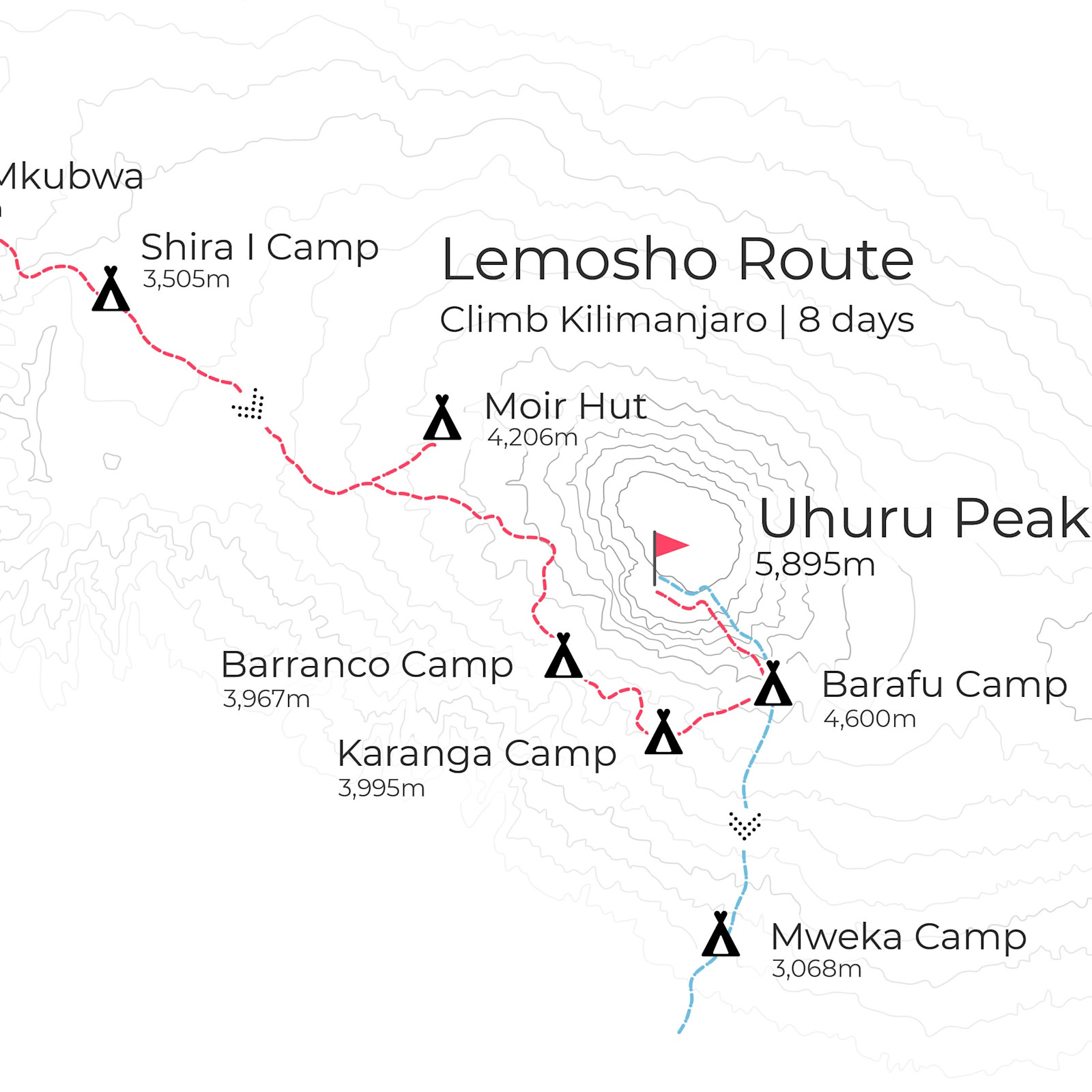
The Lemosho Route is one of the most spectacular and sought-after climbing routes on Mount Kilimanjaro, approaching the mountain from the pristine western side. Starting at Londorosi Gate (2,100m), the trail cuts through dense montane rainforest on its first day before emerging onto the vast, otherworldly expanse of the Shira Plateau — the remnants of an ancient volcanic caldera that collapsed millions of years ago. From Shira, the route swings south, joining the southern circuit at Lava Tower before proceeding through Barranco Valley, Karanga Valley, and Barafu to the summit. Unlike the busier Marangu or Machame routes, Lemosho offers a true wilderness experience with wide, uncrowded trails and exceptionally diverse landscapes. The route is widely regarded as the most scenic path to the Roof of Africa, taking in rainforests, heathlands, alpine deserts, and the arctic summit zone. Its longer duration (7-8 days) provides superior acclimatisation, which translates into an outstanding summit success rate of over 85%.
Why the Lemosho Route is Famous
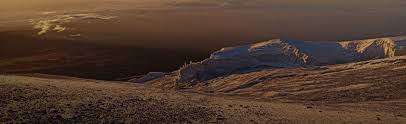
The Lemosho Route has earned an international reputation as the best all-round route on Kilimanjaro for very good reasons. It is renowned for its wide, uncrowded trails that allow climbers to walk in small, intimate groups of 6-12 people without the congestion found on Machame or Marangu. The route boasts the highest summit success rate of any Kilimanjaro route — consistently above 85% — thanks to its optimal "climb high, sleep low" acclimatisation profile, which includes a critical acclimatisation day at Lava Tower (4,600m). Lemosho is the only route that traverses the full Shira Plateau, one of the highest plateaus in Africa, sitting at an average elevation of 3,500-3,900m with views of the Great Rift Valley and Mount Meru on clear days. The route's western approach also offers spectacular sunset views of Kibo's western glaciers, a sight that few other climbers on other routes ever witness. Its combination of wild beauty, solitude, and success makes Lemosho the preferred choice for discerning trekkers seeking both challenge and wonder.
Route Profile & Daily Itinerary
The Lemosho Route typically takes 7-8 days to complete, covering approximately 70km from gate to gate. The extra day compared to some routes allows for critical acclimatisation and a more relaxed pace. Here is the day-by-day breakdown:
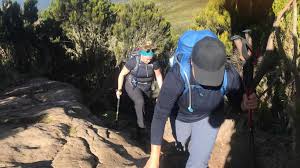
- Day 1: Londorosi Gate (2,100m) to Big Tree Camp (2,800m) — 3-4 hours hiking through dense rainforest with colobus monkeys and abundant birdlife. The short day allows for a gentle start and thorough park registration.
- Day 2: Big Tree Camp to Shira Camp 1 (3,505m) — 4-5 hours. The trail climbs steadily out of the forest into heath and moorland zone. Views of Kibo and Mount Meru begin to open up. Vegetation shifts to giant lobelias and senecios.
- Day 3: Shira Camp 1 to Shira Camp 2 (3,900m) via Cathedral Point — 4-5 hours crossing the exposed Shira Plateau. The landscape becomes alpine desert with volcanic rock formations and sweeping panoramic views.
- Day 4: Shira Camp 2 to Barranco Camp (3,960m) via Lava Tower (4,600m) — 6-7 hours. This is the critical acclimatisation day — climb high to Lava Tower, then descend to Barranco. The "climb high, sleep low" principle maximises adaptation.
- Day 5: Barranco Camp to Karanga Camp (4,035m) via Barranco Wall — 4-5 hours. A thrilling scramble up the famous Barranco Wall offers spectacular exposure and views of the Heim and Kersten Glaciers.
- Day 6: Karanga Camp to Barafu Camp (4,673m) — 4-5 hours. A steady climb into the alpine desert zone. Rest and prepare for summit night. Barafu means "ice" in Swahili — the camp sits on rocky, windswept terrain.
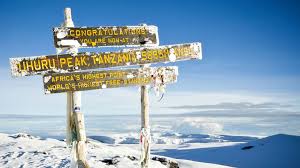
- Day 7: Barafu Camp to Uhuru Peak (5,895m) to Mweka Camp (3,100m) — 12-14 hours. Summit night starts around midnight. Climb via Stella Point (5,756m) to Uhuru Peak for sunrise. Descend all the way to Mweka Camp in the forest zone.
- Day 8: Mweka Camp to Mweka Gate (1,640m) — 3-4 hours. A gentle descent through the rainforest to the park gate where you receive your summit certificates.
Lemosho Route Gallery
Unique Features of the Lemosho Route
What sets the Lemosho Route apart from every other path up Kilimanjaro is a remarkable combination of features that together create an unparalleled climbing experience. The Lemosho is the only route that traverses the full breadth of the Shira Plateau — the ancient caldera floor that stretches 13km across at an elevation of 3,800m, offering days of walking through one of the highest plateaus on earth. The western approach is unique among Kilimanjaro routes, providing uninterrupted views of Mount Meru (the fifth-highest peak in Africa) and the Great Rift Valley escarpment stretching into the distance. Due to the remote starting point and the route's reputation as more challenging to access, traffic on Lemosho is significantly lower than on the southern approaches — you will share the mountain with just a handful of other groups, creating a genuinely peaceful wilderness experience. The route's superior acclimatisation profile, with its gradual ascent and the crucial Lava Tower high-point day, directly translates to an 85%+ summit success rate — the highest of any route. The scenery is staggeringly diverse, transitioning through five distinct climate zones from lush equatorial rainforest at the start to the arctic summit glaciers at the top. Most reputable operators on this route include private toilet tents, which adds a surprising level of comfort to the high-altitude camping experience.
Best Time to Climb the Lemosho Route
| Month | Season | Climbing Conditions | Rating |
|---|---|---|---|
| Jan | Warm & Clear | Excellent summit conditions. Warm days, cold nights. Clear skies. Good snow conditions. | ★★★★★ |
| Feb | Warm & Clear | Optimal climbing window. Low precipitation. Best visibility of the year. | ★★★★★ |
| Mar | Shoulder / Rains | Increasing cloud and afternoon showers. Trails quieter. Lush greenery. | ★★★☆☆ |
| Apr | Long Rains | Heavy rainfall. Slippery trails. Low visibility. Least recommended for climbing. | ★☆☆☆☆ |
| May | Long Rains | Wettest month. Very wet trails. Fewer climbers. Lowest rates available. | ★☆☆☆☆ |
| Jun | Dry Season | Trails drying out. Excellent climbing conditions improving. Cooler temperatures. | ★★★★☆ |
| Jul | Dry / Peak | Peak climbing season. Best weather window. Clear mornings, cold nights. High success. | ★★★★★ |
| Aug | Dry / Peak | Peak season. Warm days, clear skies. Most popular month. Book well in advance. | ★★★★★ |
| Sep | Dry / Peak | Outstanding summit conditions. Stable weather. Excellent visibility at the summit. | ★★★★★ |
| Oct | End of Dry | Good conditions continue. Slightly warmer. Fewer peak-season crowds. | ★★★★☆ |
| Nov | Short Rains | Unpredictable weather. Afternoon showers common. Trails quieter and greener. | ★★★☆☆ |
| Dec | Warm / Short Rains | Festive season. Good summit conditions. Warm. Clearing skies by late December. | ★★★★☆ |
★ = Rating based on summit success probability, trail conditions, visibility, temperature comfort, and crowd levels. January-February and July-October provide the highest success rates.
Activities on the Lemosho Route
Summit trekking is, of course, the primary activity — an eight-day journey that culminates in reaching Uhuru Peak, the highest point in Africa at 5,895m above sea level. The summit night climb from Barafu Camp is a gruelling but transcendent experience, starting around midnight under a canopy of stars and ascending via Stella Point to witness the sunrise over the African continent. Photography is exceptional throughout the route, with the Shira Plateau offering sweeping landscapes of volcanic cones, giant lobelias, and distant views of Mount Meru. Birdwatching is rewarding in the lower elevations — look for colourful sunbirds, white-necked ravens, augur buzzards, and the majestic crowned eagle. The forest sections are home to colobus monkeys and the elusive duiker antelope, while the alpine zone hosts rock hyraxes and crows. Stargazing on the Shira Plateau at 3,900m is extraordinary — far from any light pollution, the Milky Way stretches from horizon to horizon on clear nights. A visit to the Lava Tower (4,600m) provides dramatic views of the western glaciers and a critical acclimatisation stop. The cultural dimension of the climb is equally rich — interacting with the Chagga and Maasai porters, guides, and cooks who accompany you offers insight into Tanzanian mountain culture. Many climbers also enjoy glacier viewing at Stella Point, where the remaining ice fields of Kilimanjaro's shrinking glaciers are visible up close.
Accommodation on the Lemosho Route
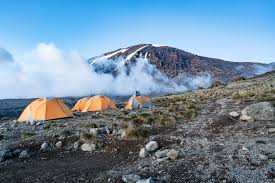
The Lemosho Route is a camping-only route — there are no huts or permanent shelters along the way, which is one of the features that keeps the experience wild and immersive. Accommodation is provided in high-quality 3-season mountain tents supplied by your tour operator. African Majestic Adventure uses spacious, waterproof, and wind-resistant tents designed for high-altitude conditions. Each climber typically has their own tent or shares with one other person. Sleeping mats (foam or self-inflating) are provided, and you bring your own sleeping bag (rated to at least -15°C / 5°F). Mess tents are erected at each camp for communal dining, giving the group a place to gather for meals, play cards, and review the next day's route. Private toilet tents are included on most premium packages, offering privacy and hygiene. Luxury camping options are available through premium outfitters and include larger walk-in tents with cots, thicker sleeping pads, camp furniture, and even hot-water bucket showers. Regardless of the tier chosen, Lemosho accommodation is genuine wilderness camping, and the nightly routine of arriving at a new camp, watching the sunset over the African plains, and sleeping under the stars is an integral part of the experience.
Lemosho Route Climbing Cost & Fees
| Category | Price Per Person | Includes |
|---|---|---|
| Budget | $1,800 – $2,500 | Camping, park fees, meals, guide, porters, standard tents |
| Mid-Range | $2,500 – $3,500 | Better tents, sleeping mats, mess tent, private toilet, experienced guides |
| Luxury | $3,500 – $5,000 | Large walk-in tents, cots, thicker pads, hot showers, premium meals, dedicated guide |
| Ultra-Luxury | $5,000 – $8,000 | Full-service expedition, private chef, VIP treatment, all gear provided, personal porter |
Park Entry Fee: $70/person/day (non-resident adult). Camping Fee: $50/night per person. Rescue Fees: $20/person (mandatory). VAT (18%): applies to all park fees and services. Guide & Porter Wages: included in package. Crew Tips: budget $20-25/day per climber for the full crew (guides, porters, cook). Additional costs include international flights, travel insurance (mandatory for high-altitude trekking above 4,000m), personal gear hire, and Tanzanian visa ($50-100). Book at least 3-6 months in advance for best rates, especially during peak seasons. Contact us for custom packages tailored to your group size and preferences.
Frequently Asked Questions about the Lemosho Route
Nearby Attractions
The Lemosho Route is located on the western side of Mount Kilimanjaro, with several outstanding destinations nearby or combinable with your climb.
- Machame Route — The most popular camping route on Kilimanjaro, known as the "Whiskey Route." A challenging but scenic southern approach with dramatic views of the Barranco Wall and glaciers.
- Marangu Route — The only route with hut accommodation, known as the "Coca-Cola Route." The easiest and most well-established path, ideal for novice trekkers.
- Mount Meru — Tanzania's second-highest peak at 4,566m, located in Arusha National Park. A superb acclimatisation climb before tackling Kilimanjaro, with excellent wildlife viewing.
- Arusha National Park — A compact gem at the base of Mount Meru, featuring crater lakes, montane forest, giraffes, buffalo, and flamingos on Momella Lakes.
- Lake Manyara — Famous for its tree-climbing lions, vast soda lake, and huge flocks of flamingos. Located on the way to the Ngorongoro Crater and Serengeti.
- Tarangire — Known for its massive baobab trees, large elephant herds, and exceptional dry-season game viewing along the Tarangire River.
- Serengeti — The world's most famous wildlife reserve and UNESCO World Heritage Site, home to the Great Migration, Big Five, and endless savannah plains.
Combine your Lemosho climb with a wildlife safari for the ultimate Tanzanian adventure. Our Tanzania Safari Packages pair perfectly with Kilimanjaro climbs.
Related Lemosho Route Climbing Packages
8 Days Lemosho Route Trek
Our most popular itinerary — the full 8-day Lemosho experience including the Shira Plateau traverse, Lava Tower acclimatisation, Barranco Wall scramble, and summit sunrise at Uhuru Peak.
View Tour7 Days Lemosho Route Express
A slightly condensed version for experienced trekkers with good fitness. Covers the same route but skips the Shira Plateau acclimatisation day. Higher physical demand but shorter duration.
View Tour10 Days Lemosho + Safari Combo
Climb Kilimanjaro via Lemosho, then recover on a 3-day luxury safari to Tarangire, Lake Manyara, and Ngorongoro Crater. The ultimate Tanzanian adventure combining summit glory with Big Five wildlife.
View TourHow to Book Your Lemosho Route Climb
Booking your Lemosho Route climb with African Majestic Adventure is simple. Here's how it works:
- Step 1: Choose your preferred Lemosho itinerary or contact us for a custom plan tailored to your schedule and fitness level.
- Step 2: Receive a detailed quote including all park fees, camping fees, guide services, meals, and equipment — no hidden costs.
- Step 3: Confirm your booking with a 30% deposit. We handle all park permits, camping reservations, and crew assignments.
- Step 4: Receive your pre-travel briefing, detailed packing list, fitness preparation guide, and gear rental options 2 weeks before departure.
- Step 5: Arrive in Moshi or Arusha — we meet you at the airport, provide pre-climb accommodation, and begin your Kilimanjaro adventure.
All our climbs include park entry fees, camping fees, rescue fees, professional English-speaking mountain guides, porters, cooks, meals on the mountain, and pre- and post-climb transfers. International flights, travel insurance, visas, sleeping bags, and personal trekking gear are not included. Contact us for a personalised quote and availability.
Lemosho Route Map & Location
The Lemosho Route begins at Londorosi Gate on the western side of Mount Kilimanjaro and traverses the Shira Plateau before joining the southern circuit. The route covers approximately 70km from gate to gate, with the summit at Uhuru Peak (5,895m) being the highest point in Africa. The trailhead is about a 2-hour drive from Moshi town.