.png)
Your Complete Marangu Route Planner
What is the Marangu Route?
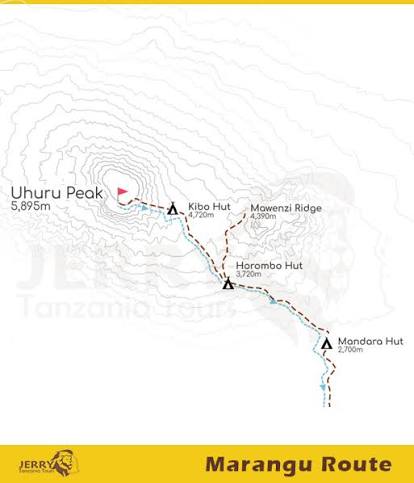
The Marangu Route is the oldest and most established route on Mount Kilimanjaro, approaching the mountain from the southeast starting at Marangu Gate (1,870m). It is the only route on Kilimanjaro that offers hut accommodation — climbers sleep in dormitory-style huts at Mandara Hut (2,720m), Horombo Hut (3,720m), and Kibo Hut (4,700m) instead of tents. This has earned it the nickname the "Coca-Cola Route", implying it is the easiest, most comfortable, and most commercialised path up the mountain. The route follows the same trail for both ascent and descent (out-and-back), which makes it the shortest in terms of distance covered — approximately 60 km round trip. While its gentle gradient makes it technically the easiest route, the 5-day version's rapid ascent profile results in a surprisingly lower summit success rate (65-70%) compared to longer routes. For those taking the recommended 6-day itinerary with an acclimatisation day at Horombo, the success rate improves significantly.
Why the Marangu Route is Famous
The Marangu Route holds the distinction of being the only route on Kilimanjaro with hut accommodation, eliminating the need for camping equipment and making it the most accessible option for climbers who prefer solid walls and a bed at night. Its gentle gradient and shorter distance make it the easiest trekking route on the mountain, ideal for first-time trekkers and those with limited camping experience. Paradoxically, it has the lowest summit success rate among the major routes (65-70% on the 5-day version) because climbers ascend too quickly without sufficient acclimatisation. The route is also the most affordable option on Kilimanjaro, as hut fees are lower than camping fees on other routes. Its rich history dates back to the earliest climbs of Kilimanjaro — Hans Meyer and Ludwig Purtscheller, the first recorded summiteers in 1889, approached from this side of the mountain. The route is particularly family-friendly, welcoming children as young as 8 years old, and is the best choice for those nervous about sleeping in a tent in sub-zero conditions.
Marangu Route Profile & Itinerary
The Marangu Route is typically climbed over 5 or 6 days, with the 6-day version strongly recommended for better acclimatisation. Here is the classic 6-day itinerary:
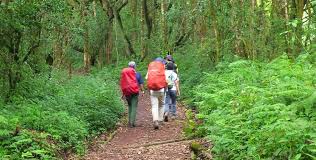
Day 1: Marangu Gate (1,870m) to Mandara Hut (2,720m) — 3-5 hours hiking through lush montane rainforest. The trail passes through dense vegetation filled with colobus monkeys, butterflies, and birdlife. Mandara Hut offers bunk beds, solar lighting, and a dining hall with mountain views.
Day 2: Mandara Hut to Horombo Hut (3,720m) — 4-6 hours. The vegetation transitions from rainforest to heath and moorland. The trail opens up to spectacular views of Kibo and Mawenzi peaks. Horombo Hut is the largest on the mountain with 120 bunks, flush toilets, and solar-heated showers.
Day 3: Acclimatisation day at Horombo Hut — an optional hike to Zebra Rocks (4,100m) or the Mawenzi Ridge. This extra day is critical for adjusting to the altitude and dramatically improves summit success rates. The walk to Zebra Rocks takes 2-3 hours and offers stunning views of the plains below.
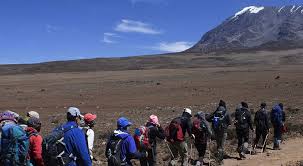
Day 4: Horombo Hut to Kibo Hut (4,700m) — 5-7 hours across the alpine desert of the Saddle between Mawenzi and Kibo. The landscape becomes stark, rocky, and lunar-like. Kibo Hut is the last stop before summit night — basic but functional with 60 bunks.
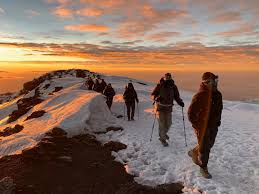
Day 5: Summit Day — Kibo Hut to Uhuru Peak (5,895m) via Gillman's Point (5,681m), then descend to Horombo Hut — 12-14 hours total. The climb begins at midnight under headlamp, ascending the steep scree slope to the crater rim. After reaching the summit, you descend all the way back to Horombo.
Day 6: Horombo Hut to Marangu Gate (1,870m) — 5-7 hours. A final descent through the moorland and rainforest to the park gate, where you receive your summit certificates. A celebratory lunch and transfer back to Moshi or Arusha complete your journey.
Marangu Route Gallery
Unique Features of the Marangu Route
The Marangu Route stands apart from every other Kilimanjaro route thanks to its hut accommodation system. Instead of sleeping in tents, you rest in dormitory-style wooden huts with proper beds, mattresses, and pillows — a significant comfort advantage that sets it apart from all camping routes. Each hut complex features a shared dining hall where meals are served at communal tables, creating a social atmosphere among climbers. No camping gear is required on this route — you do not need to bring a tent, sleeping mat, or cooking equipment (sleeping bags can be rented at the huts). The route follows an out-and-back path, meaning you sleep at Horombo Hut twice — once on the way up and again on the descent — the only route where you return to the same accommodation. The Marangu Route is also the most affordable option on Kilimanjaro, with lower park fees and hut costs compared to camping routes. It is the best choice for families with children (minimum age 8) and anyone who wants a solid roof over their head at night.
Best Time to Climb the Marangu Route
| Month | Season | Climbing Conditions | Rating |
|---|---|---|---|
| Jan | Warm / Dry | Best weather window. Clear skies, warm days. Excellent summit conditions. | ★★★★★ |
| Feb | Warm / Dry | Similar to January. Peak dry season conditions. High success rates. | ★★★★★ |
| Mar | Warm / Transition | Still good early month. Late March sees increasing clouds and showers. | ★★★☆☆ |
| Apr | Long Rains | Wettest month. Trails muddy and slippery. Summit views often obscured. | ★☆☆☆☆ |
| May | Long Rains | Heavy precipitation continues. Lowest tourist numbers. Muddy conditions. | ★☆☆☆☆ |
| Jun | Dry / Cool | Rains ending. Trails improving. Cool but clear conditions on summit. | ★★★★☆ |
| Jul | Dry / Peak | Peak climbing season. Excellent visibility. Cool nights, clear skies. | ★★★★★ |
| Aug | Dry / Peak | Prime climbing conditions. Warm days, cold but clear summit nights. | ★★★★★ |
| Sep | Dry / Peak | Outstanding conditions. Clear skies and stable weather continue. | ★★★★★ |
| Oct | End of Dry | Still excellent early month. Short rains may begin late October. | ★★★★☆ |
| Nov | Short Rains | Unpredictable precipitation. Greener landscapes. Fewer climbers. | ★★☆☆☆ |
| Dec | Short Rains | Improving conditions late month. Festive season climbs popular. | ★★★☆☆ |
★ = Rating based on trail conditions, visibility, precipitation, temperature comfort, and summit success probability. Best months: January-March and June-October.
Activities & Highlights on the Marangu Route
Summit trekking is the primary activity — the ultimate goal of reaching Uhuru Peak at 5,895m via the Marangu Route is a life-changing achievement. Photography opportunities abound throughout the trek, from the lush rainforest of the lower slopes to the arctic summit glaciers. A side hike to Maundi Crater near Mandara Hut offers a stunning viewpoint across the crater and out to the plains of Kenya and Tanzania. The Zebra Rocks walk from Horombo Hut is a must-do acclimatisation hike featuring distinctive black-and-white banded rock formations with panoramic views of Mawenzi Peak. Birdwatching around Mandara Hut is excellent — look for white-necked ravens, sunbirds, and the colourful silvery-cheeked hornbill. A cultural visit to Marangu village at the base of the mountain offers insight into the Chagga people's traditions, banana beer brewing, and coffee cultivation. The entire Marangu experience is enriched by the camaraderie of the shared huts and dining halls, where climbers from around the world exchange stories over hot meals.
Hut Accommodation on the Marangu Route
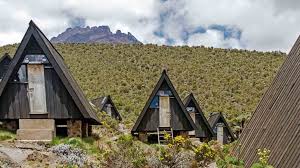
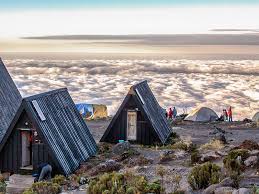
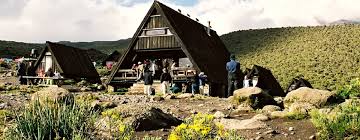
The Marangu Route is the only route on Kilimanjaro with hut accommodation, providing solid-walled shelter at three strategically located camps. Mandara Hut (2,720m) is the first stop, with 60 bunks in A-frame wooden cabins, solar lighting, flush toilets, and a dining hall. It sits nestled in the rainforest with colobus monkeys often seen in the surrounding trees. Horombo Hut (3,720m) is the largest and most developed hut complex on the mountain, with 120 bunks spread across multiple buildings, solar-heated showers, flush toilets, a large dining hall, and even a small shop selling snacks and drinks. This is where the acclimatisation day is spent and where you return after the summit. Kibo Hut (4,700m) is the final stop before summit night — a basic stone building with 60 bunks, a dining area, and minimal facilities (no showers, pit toilets). Sleeping bags can be rented at each hut for approximately $20-30 per trek. All huts provide mattresses and pillows — you only need to bring a sleeping bag and liner. The huts make the Marangu Route significantly more comfortable than camping routes, especially in cold or wet weather.
Marangu Route Cost & Pricing
| Category | Price Per Person | Includes |
|---|---|---|
| Budget | $1,400 – $1,900 | Basic 5-day package, group climb, huts, meals, park fees, guide |
| Mid-Range | $1,900 – $2,500 | 6-day itinerary, experienced guides, better food, all park fees |
| Luxury | $2,500 – $3,800 | Private climb, premium guides, gourmet meals, extra porter support |
| Ultra-Luxury | $3,800 – $6,000 | Exclusive private team, VIP treatment, oxygen monitoring, luxury transfers |
Park Entry Fee: $70/person/day (non-resident adult). Hut Fees: $60/night per person at Mandara and Horombo, $70/night at Kibo. Guide Fee: $20-30/day per group (tipping recommended). Porter Fee: $15-20/day per porter (maximum 20kg per porter). Crew Tipping Pool: $250-350 per climber (recommended). The Marangu Route is the most affordable option on Kilimanjaro because hut accommodation is included in the park fee structure, whereas camping routes require separate camping equipment logistics. Contact us for all-inclusive package rates.
Frequently Asked Questions about the Marangu Route
Nearby Attractions
The Marangu Route is located on the southeastern side of Kilimanjaro, with several outstanding destinations within reach before or after your climb.
- Machame Route — The most popular camping route on Kilimanjaro, known as the "Whiskey Route." More scenic than Marangu but more challenging. 6-7 days recommended.
- Lemosho Route — Considered the most scenic route on Kilimanjaro, approaching from the west. Longer (7-8 days) with excellent acclimatisation and high success rates.
- Rongai Route — The only route approaching from the north, near the Kenyan border. Quieter than Marangu, tent camping only. Good for the rainy season.
- Mount Meru — Tanzania's second-highest peak (4,566m), located in Arusha National Park. An excellent acclimatisation trek before Kilimanjaro or a standalone adventure.
- Arusha National Park — A small but beautiful park at the base of Mount Meru, known for its montane forest, crater lakes, and diverse birdlife. A great half-day trip from Moshi or Arusha.
- Lake Manyara National Park — Famous for its tree-climbing lions, vast soda lake, and flamingos. A scenic 3-hour drive from Moshi on the way to the northern safari circuit.
- Tarangire National Park — Known for its massive baobab trees and large elephant herds. A 3-hour drive from Moshi, ideal for a post-climb safari day trip.
- Serengeti National Park — Tanzania's most famous park, home to the Great Migration and the Big Five. A 5-6 hour drive or short flight from Kilimanjaro region.
Many climbers combine their Marangu Route trek with a safari in Tanzania's northern parks. See our Destination Hub for full packages and combination itineraries.
Related Marangu Route Tour Packages
6 Days Marangu Route
Our recommended itinerary with an acclimatisation day at Horombo Hut. Includes full board in huts, professional guides, all park fees, and transfers from Moshi or Arusha.
View Tour5 Days Marangu Route
A shorter, more budget-friendly option for experienced trekkers. No acclimatisation day — higher altitude risk but faster overall. Best for those with previous high-altitude experience.
View Tour7 Days Marangu + Safari
Climb Kilimanjaro via the Marangu Route (6 days), then unwind with a 1-day safari to Arusha National Park or Lake Manyara. The perfect combination of adventure and wildlife.
View TourHow to Book Your Marangu Route Climb
Booking your Marangu Route trek with African Majestic Adventure is simple. Here's how it works:
- Step 1: Choose your preferred itinerary (5-day, 6-day, or combination with safari) or contact us for a custom plan.
- Step 2: Receive a detailed quote including park fees, hut accommodation, meals, guide services, and transfers — no hidden costs.
- Step 3: Confirm your booking with a 30% deposit. We handle all Kilimanjaro National Park reservations and hut bookings.
- Step 4: Receive your pre-trek briefing, packing list, and guide assignment 2 weeks before departure, plus altitude preparation advice.
- Step 5: Arrive in Moshi or Arusha — we meet you at the airport or your hotel, conduct a final gear check, and begin your adventure the next morning.
All our treks include airport transfers, park entry fees, hut accommodation, all meals on the mountain, experienced English-speaking guides, porters, and cook. International flights, travel insurance, and personal gear are not included. Custom itineraries are welcome — contact us for a personalized quote.
Marangu Route Map & Location
The Marangu Route begins at Marangu Gate (1,870m) on the southeastern side of Mount Kilimanjaro and follows the same trail for both ascent and descent. The route covers approximately 60km round trip, with the summit at Uhuru Peak (5,895m). The trailhead is about a 45-minute drive from Moshi town.