.png)
Your Complete Machame Route Planner
What is the Machame Route?
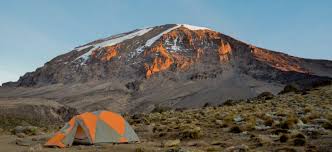
The Machame Route, famously known as the "Whiskey Route", is the most popular climbing route on Mount Kilimanjaro, attracting more than 50% of all climbers each year. It approaches the mountain from the southeast, starting at Machame Gate at an altitude of 1,640 metres. The route is named after the village of Machame, located on the lower slopes of Kilimanjaro, and was established in the 1980s as an alternative to the gentler Marangu Route. The nickname "Whiskey Route" was coined in contrast to Marangu's "Coca-Cola Route" — implying that Machame is the more challenging, more adventurous option. And it lives up to that reputation. The Machame Route offers an extraordinary diversity of landscapes, traversing five distinct climate zones: lush tropical rainforest, heath and moorland, the surreal alpine desert, and the arctic summit zone. Unlike the Marangu Route, which provides hut accommodation, Machame is a camping-only route, adding a true wilderness dimension to the experience. Climbers sleep in tents at designated campsites, surrounded by the sounds of the mountain at night. The route's combination of scenic beauty, a proven acclimatisation profile, and the iconic Barranco Wall scramble makes it the preferred choice for adventurous trekkers seeking the complete Kilimanjaro experience.
Why the Machame Route is Famous
The Machame Route's fame rests on several compelling factors that make it the number one choice on Kilimanjaro. First and foremost, it is the most popular route — over 50% of all Kilimanjaro climbers choose Machame, a testament to its reputation for balancing challenge, scenery, and success. The route is celebrated for its incredible scenic variety: you trek through five distinct climate zones, from the dense, misty rainforest of the lower slopes to the hauntingly beautiful alpine desert and the arctic summit zone. The iconic Barranco Wall is one of the most memorable sections — a steep but non-technical scramble up a dramatic cliff face that offers exhilarating exposure and stunning views. The route also features a visit to Lava Tower (4,600m), a striking volcanic rock formation that serves as an essential acclimatisation point — you climb high and sleep low, significantly improving your chances of reaching the summit. The Machame Route has one of the highest success rates among Kilimanjaro routes, thanks to its "climb high, sleep low" profile, which provides better acclimatisation. For adventurous trekkers who want a true camping experience, dramatic landscapes, and a higher probability of standing atop Africa, Machame is the definitive choice.
Route Profile & Day-by-Day Itinerary
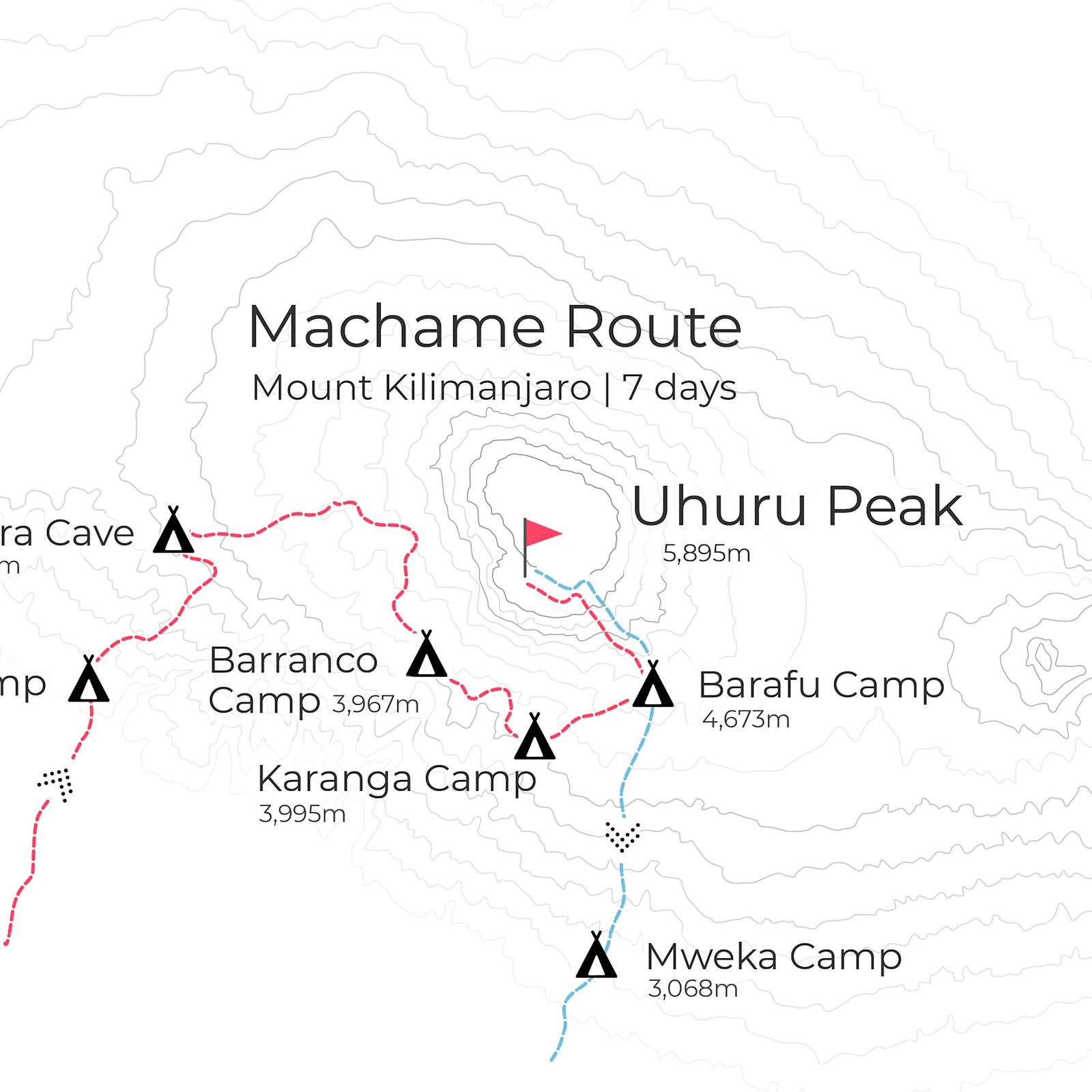
The Machame Route is typically completed in 6 or 7 days. The 7-day version includes an extra acclimatisation day at Karanga Camp, significantly improving summit success rates. Here is the standard 7-day itinerary:
Day 1: Machame Gate (1,640m) to Machame Camp (3,010m)
Duration: 5-7 hours. Your trek begins at Machame Gate after park registration. The trail winds through lush tropical rainforest, with towering trees draped in moss and lichen. The air is humid and alive with birdsong. Keep an eye out for colobus monkeys and blue monkeys in the canopy. The trail is well-defined but can be muddy after rain. You arrive at Machame Camp, nestled in the forest, where your crew has already set up tents.
Day 2: Machame Camp (3,010m) to Shira Camp (3,845m)
Duration: 4-6 hours. Leaving the rainforest behind, you ascend into heath and moorland zone. The trail steepens as vegetation gives way to giant heather and groundsels. Views of the summit begin to appear. Shira Camp sits on the Shira Plateau, a high-altitude volcanic plain with spectacular sunset views over the plains below.
Day 3: Shira Camp (3,845m) to Barranco Camp (3,960m) via Lava Tower (4,600m)
Duration: 6-8 hours. This is a critical acclimatisation day following the "climb high, sleep low" principle. You ascend to Lava Tower (4,600m) for lunch and stunning views before descending to Barranco Camp (3,960m). The altitude at Lava Tower is a true test, and many climbers feel the effects here. The descent provides relief and prepares your body for higher altitudes.
Day 4: Barranco Camp (3,960m) to Karanga Camp (4,035m) via Barranco Wall
Duration: 4-5 hours. The famous Barranco Wall awaits — a steep but non-technical scramble up a 250-metre cliff. Your guide will help you find hand and footholds. It is exhilarating but safe. After the wall, the trail undulates across the Karanga Valley to Karanga Camp, an optional acclimatisation stop on the 7-day itinerary.
Day 5: Karanga Camp (4,035m) to Barafu Camp (4,673m)
Duration: 3-4 hours. A relatively short but steady climb to Barafu Camp, the base camp before summit night. Barafu means "ice" in Swahili — the camp is perched on a rocky ridge exposed to the wind. Rest early; your summit attempt begins just after midnight.
Day 6: Barafu Camp (4,673m) to Uhuru Peak (5,895m) to Mweka Camp (3,100m)
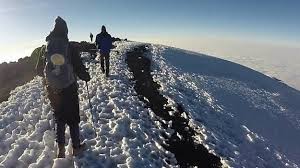
Duration: 12-15 hours. Summit night! You start around midnight, climbing by headlamp through scree and snow to Stella Point (5,756m) on the crater rim. From Stella Point, it is a 45-60 minute traverse along the edge of the crater to Uhuru Peak (5,895m) — the highest point in Africa. After celebrations, you descend all the way to Mweka Camp in the forest zone.
Day 7: Mweka Camp (3,100m) to Mweka Gate (1,640m)
Duration: 3-4 hours. A gentle descent through the rainforest to Mweka Gate, where you sign out and receive your summit certificates. A vehicle transfers you back to your hotel in Moshi or Arusha for a well-deserved celebration.
Unique Features of the Machame Route
The Machame Route is packed with unique features that set it apart from every other route on Kilimanjaro. The Barranco Wall is the route's signature challenge — a dramatic, near-vertical scramble that looks intimidating from below but is thoroughly achievable with steady hands and a good guide. It is the most photographed section of any Kilimanjaro route. The Lava Tower is a towering volcanic plug reaching 4,600m, and the route's "climb high, sleep low" strategy here is crucial for acclimatisation. Machame is the only route that traverses all five climate zones in a single trek: rainforest, heath, moorland, alpine desert, and arctic. The Western Breach option offers an alternative summit route for experienced climbers. The sunrise views from Stella Point are among the best on the mountain, with the sun casting golden light across the glaciers. Despite being the busiest route, the trail is well-maintained with good infrastructure, including clearly marked paths, campsites with basic facilities, and an extensive network of experienced guides and porters who know the route intimately.
- Colobus Monkey
- Blue Monkey
- Duiker
- Bushbuck
- Rock Hyrax
- White-necked Raven
- Augur Buzzard
- Malachite Sunbird
- Mountain Chameleon
- Giant Groundsel
- Lobelia
- Everlasting Flowers
Machame Route Gallery
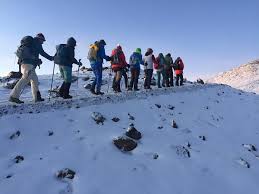
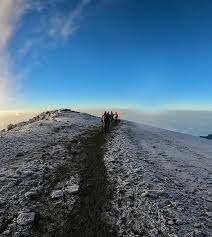
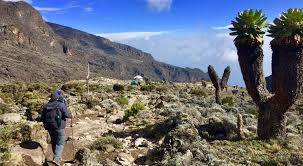
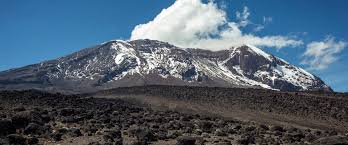
Best Time to Climb the Machame Route
| Month | Season | Climbing Highlights | Rating |
|---|---|---|---|
| Jan | Warm | Clear skies, warm days. Excellent summit conditions. Fewer crowds than peak. | ★★★★☆ |
| Feb | Warm | Best warm-season month. Stable weather, good visibility. High success rates. | ★★★★☆ |
| Mar | Warm / Rains | Good early month. Late March sees increasing rain. Lush green landscapes. | ★★★☆☆ |
| Apr | Long Rains | Heavy rain. Trails very muddy. Low visibility. Not recommended. | ★☆☆☆☆ |
| May | Long Rains | Wettest month. Very few climbers. Lowest rates but challenging conditions. | ★☆☆☆☆ |
| Jun | Dry | Start of dry season. Trails drying. Good visibility. Increasing crowds. | ★★★☆☆ |
| Jul | Dry / Peak | Peak season. Best summit conditions. Clear skies, cold nights. Very busy. | ★★★★★ |
| Aug | Dry / Peak | Peak climbing. Perfect weather window. Warm days, stable atmosphere. | ★★★★★ |
| Sep | Dry / Peak | Outstanding conditions. Clear views. Good for photography. Crowded but rewarding. | ★★★★★ |
| Oct | End of dry | Still excellent. Fewer crowds. Trails in good condition. Warm days. | ★★★★☆ |
| Nov | Short Rains | Increasing rain. Quieter trails. Green landscapes. Lower success rates. | ★★☆☆☆ |
| Dec | Short Rains | Mixed weather. Festive season. Lush scenery. Moderate climbing conditions. | ★★★☆☆ |
★ = Rating based on weather conditions, trail accessibility, visibility, summit success probability, and crowd levels. July-September scores highest for summit success.
Activities on the Machame Route
Summit trekking is the ultimate goal, culminating in a midnight ascent to Uhuru Peak at 5,895m — the highest point in Africa. The sense of achievement as you watch the sunrise from the roof of Africa is indescribable. Barranco Wall scrambling is a highlight of day 4 — a thrilling, non-technical climb up a steep cliff face with breathtaking drops and views. Photography opportunities abound, from the lush rainforest to the surreal alpine desert and the vast glaciers near the summit. Birdwatching on the lower slopes reveals species like the white-necked raven, augur buzzard, malachite sunbird, and various sunbirds and starlings. Glacier viewing from Stella Point and Uhuru Peak offers a close-up look at Kilimanjaro's rapidly receding ice fields — a sobering reminder of climate change. A visit to Lava Tower provides a chance to explore a dramatic volcanic rock formation and practice the "climb high, sleep low" acclimatisation principle. Cultural interactions with your crew — guides, porters, and cooks — enrich the experience, offering insights into Tanzanian life, Swahili language, and the mountain's deep cultural significance.
Accommodation on the Machame Route
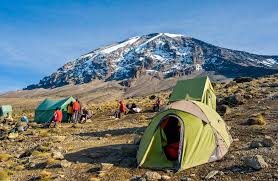
The Machame Route is a camping-only experience — there are no huts as on the Marangu Route. This adds to the sense of adventure and wilderness. Campsites along the route include Machame Camp (3,010m), nestled in the rainforest; Shira Camp (3,845m), on the exposed Shira Plateau; Barranco Camp (3,960m), in the valley below the Barranco Wall; Karanga Camp (4,035m), an optional acclimatisation stop; and Barafu Camp (4,673m), the最后的 base camp perched on a rocky ridge. All campsites are equipped with basic pit latrines. Your operator provides 3-season mountain tents (4-season recommended for Barafu Camp), sleeping mats, and mess tents where meals are served. Eating together in the mess tent is a social highlight of each day. A private toilet tent can be arranged at extra cost for those who prefer more comfort and privacy. Your camping crew handles all setup, cooking, and breakdown, so you simply arrive and rest.
Machame Route Cost & Pricing
| Package Tier | Price Per Person | Includes |
|---|---|---|
| Budget | $1,600 – $2,200 | Standard camping, group equipment, meals, guide, porters, park fees |
| Mid-Range | $2,200 – $3,000 | Premium tents, better meals, more experienced guides, transfer included |
| Luxury | $3,000 – $4,500 | Oversized tents, private toilet, gourmet meals, summit oxygen, sleeping pads |
| Ultra-Luxury | $4,500 – $7,000 | Exclusive crew, private chef, VIP transfers, full gear, WiFi, premium service |
Park Entry Fee: $70/person/day (non-resident adult). Camping Fee: $50/person/night. Rescue Fee: $20/person (mandatory). Guide & Porter Tips: $250-350 total per climber (recommended). Prices are per person for the full trek package. The 6-day express version is typically $100-200 less. All packages include airport transfers, pre-trek briefing, and return transport to your Moshi or Arusha hotel. Contact us for group discounts and custom itineraries.
Frequently Asked Questions about the Machame Route
Nearby Routes & Attractions
The Machame Route is part of Kilimanjaro's extensive trail network, and the surrounding region offers many other incredible destinations.
- Lemosho Route — A longer, more remote route starting from the west. Known for its pristine wilderness, low traffic, and high success rates. Combines with Machame's Barranco Wall descent.
- Marangu Route — The "Coca-Cola Route", the only route with hut accommodation. Easier but lower success rate. Descend via the same path.
- Rongai Route — The only route approaching from the north, near the Kenyan border. Quieter, drier, and offers a unique perspective of the mountain.
- Mount Meru — Tanzania's second-highest peak (4,566m), often used as an acclimatisation trek before Kilimanjaro. Stunning wildlife encounters in Arusha National Park.
- Arusha National Park — A compact park with diverse habitats, home to giraffes, zebras, flamingos on Momella Lakes, and the dramatic Ngurdoto Crater.
- Lake Manyara National Park — Famous for tree-climbing lions, vast elephant herds, and flamingo-covered soda lake. A classic Northern Circuit stop.
- Tarangire National Park — Known for its massive baobab trees and large elephant populations. Excellent dry-season game viewing along the Tarangire River.
- Serengeti National Park — The world-famous wildlife destination, home to the Great Migration, Big Five, and endless savannah plains. A perfect post-trek safari extension.
The Machame Route is the centrepiece of Kilimanjaro trekking. Combine your climb with a northern Tanzania safari for the ultimate Tanzanian adventure. See our Destination Hub for full packages.
Related Machame Route Tour Packages
7 Days Machame Route Trek
The ultimate Machame experience with a full acclimatisation day at Karanga Camp. Includes all camping gear, meals, expert guides, park fees, and transfers. Best success rate.
View Tour6 Days Machame Express
A faster-paced version for experienced trekkers with less time. Same route, same campsites, but one fewer acclimatisation day. Ideal for fit climbers on a tight schedule.
View Tour8 Days Machame Route + Safari
Climb Kilimanjaro via Machame then unwind with a 2-day safari in Tarangire National Park and Ngorongoro Crater. The perfect combination of trekking and wildlife.
View TourHow to Book Your Machame Route Trek
Booking your Machame Route adventure with African Majestic Adventure is simple. Here's how it works:
- Step 1: Choose your preferred itinerary (6 or 7 days) or contact us for a custom plan tailored to your schedule.
- Step 2: Get a detailed quote including park fees, camping, meals, guide services, and transfers — no hidden costs.
- Step 3: Confirm your booking with a 30% deposit. We handle all park reservations, camping permits, and crew arrangements.
- Step 4: Receive your pre-trek briefing, packing list, and guide assignment 2 weeks before departure.
- Step 5: Arrive in Moshi or Arusha — we meet you at the airport and begin your Kilimanjaro adventure.
All our treks include airport transfers, park entry fees, camping fees, rescue fees, meals on the mountain, camping equipment, and an English-speaking guide. International flights and travel insurance are not included. Custom itineraries are welcome — contact us for a personalized quote.