

.png)
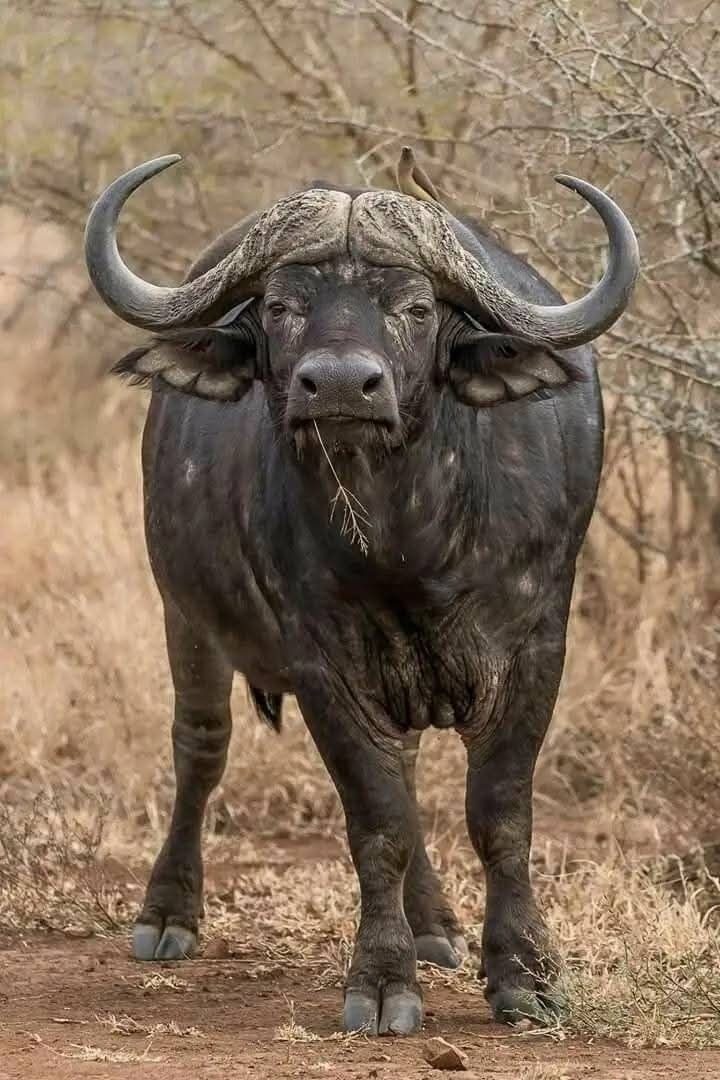
African Buffalo
Syncerus cafferThe “Black Death of the savannah” - a powerful, herds-living grazer.
Sightings are never guaranteed and depend on local conditions. Follow your guide and respect park rules.
The African buffalo (Syncerus caffer) is the largest of Africa's wild cattle and one of the famed Big Five. It is a bulky, dark-coated grazer that lives in herds, drinks daily, and is feared across the continent for its aggression when wounded. In Tanzania it roams the woodlands and floodplains of the Serengeti, Ngorongoro, Tarangire, Ruaha and the Selous (Nyerere).
African Buffalo Quick Facts
What Is the African Buffalo?
The African buffalo (Syncerus caffer) is the largest of Africa's wild cattle and one of the continent's famed Big Five. It belongs to the tribe Bovini - the same group as bison and yak - and is a bulky, dark-coated grazer built for life in herds. Two main forms exist: the savanna (Cape) buffalo of open country and the smaller forest buffalo of central Africa's rainforests; the familiar safari animal is the Cape buffalo, which forms some of the biggest herds on the continent.
Why “Buffalo”?
"Buffalo" is the common English name for these wild cattle; the scientific name Syncerus caffer marks the genus Syncerus (the African buffalo) and the species caffer, referring to Africa. The Cape buffalo's reputation earned it the nickname the "Black Death of the savannah" for the hunters it has killed.
Signature Features
The African buffalo's signature is its uniform dark chocolate-brown to black coat, its heavy build, and - above all - its horns. Unusually among African antelopes, both sexes carry horns: they sweep down and out from the skull, then curve upward and meet in a thick, fused shield (the "boss") across the forehead of mature bulls. The boss can be 40 cm across, and the hornspan reaches up to 100 cm.
Adult bulls develop a massive boss and a more pendulous dewlap, making sexing straightforward once the horns are seen. The whole animal radiates power and wariness in equal measure.
How Big Is an African Buffalo?
African buffalo stand 130-150 cm at the shoulder and weigh 500-900 kg. Adult males are markedly larger, commonly 700-900 kg, while females run 400-600 kg. The body is deep-chested and heavily muscled, with relatively slender legs for such a mass. Males also develop a heavier, broader boss and a more pendulous dewlap than females.
Horns & Defence
Both sexes carry horns. They grow from the sides of the skull, sweep down and out, then curve upward, meeting in the thick, fused boss on a mature bull's forehead. Horn length reaches 50-100 cm. The boss is solid horn and a formidable weapon; along with collective defence, it is why buffalo rarely fall to predators except the lion.
Habitat & Range
The African buffalo inhabits savanna, open woodland, floodplains and grasslands, almost always within reach of water - it drinks daily and wallows to cool off. It avoids dense forest and true desert, ranging across the woodland-and-plain mosaic of sub-Saharan Africa. In Tanzania it is a feature of nearly every major ecosystem, from the Serengeti short-grass plains to the woodlands of Ruaha and the floodplains of the Selous (Nyerere).
African Buffalo in Tanzania
The buffalo is one of the easiest of the Big Five to find on a Tanzania safari, present in most major parks.
Serengeti National Park
Huge herds roam the woodland and plains of the northern circuit.
Serengeti safariBehavior & Social Life
Buffalo are diurnal but shift to nocturnal movement where hunted or disturbed by people. They form herds that range from a few dozen to over a thousand animals, with strong social bonds and a collective defence: adults form a protective ring around calves when lions attack. The "Black Death of the savannah" nickname comes from their aggression when wounded or cornered - they are responsible for more hunter fatalities than any other African animal and will charge to defend a fallen herd member.
Diet & Feeding
A herbivore and a grazer, the buffalo feeds mainly on grasses and supplements with sedges and herbs near water. It needs to drink daily, which ties herds to permanent water in the dry season and drives the classic dawn-and-dusk movement between pasture and river.
Predators & Defense
The lion is the buffalo's chief predator, often tackling adults in coordinated prides. Calves and weak animals may also fall to leopard, spotted hyena, crocodile (at water) and wild dog. The herd's defence and the bull's boss make adults a formidable target, and a wounded buffalo is dangerously unpredictable.
Young & Lifespan
After a gestation of about 11 months a female gives birth to a single calf, which she hides briefly before it joins the nursery. Calves are vulnerable in their first months and the herd's protective ring is their main defence. Females breed year-round in good habitat, and buffalo can live 15-20 years in the wild.
Conservation Status
The African buffalo is listed as Least Concern globally, with large populations in protected areas. Regionally, though, it is declining through habitat loss, disease (notably bovine tuberculosis and foot-and-mouth) and hunting, and it has been erased from much of its former West and North African range. Tanzania's parks hold some of the healthiest buffalo populations left.
Safari Experience
Buffalo are present in almost every Tanzania safari destination, so a sighting is near-guaranteed. For drama, watch a herd bunch against a lion pride, or track a old solitary "dagha boy" (a retired male that leaves the herd) in the bush. African Majestic Adventure can place buffalo on any northern- or southern-circuit itinerary alongside the rest of the Big Five.
Comparisons
The Cape (savanna) buffalo is the giant of the pair - up to 900 kg, with the big fused horn boss - while the forest buffalo is smaller, redder and more solitary, living in central Africa's rainforests. Tanzania's animals are Cape buffalo.
| Feature | Cape Buffalo | Forest Buffalo |
|---|---|---|
| Weight | 500-900 kg | 150-320 kg |
| Coat | Dark brown to black | Reddish-brown |
| Horns | Large fused boss | Smaller, less fused |
| Habitat | Savanna, woodland, floodplain | Rainforest |
| Herds | Hundreds to 1000+ | Small, solitary groups |
Did You Know?
Black Death
The buffalo has killed more hunters than any other African animal, earning its "Black Death of the savannah" name.
Both sexes horned
Unlike most antelopes, female buffalo also carry horns - though smaller than the bull's bossed pair.
Giant herds
Savanna buffalo form herds of hundreds to over a thousand - among the largest of any antelope.
Daily drinker
It must drink every day, so herds stay near permanent water in the dry season.
Protective
Adults ring calves when lions attack, and will charge to defend a fallen herd member.
Least Concern
Globally abundant in parks, though declining regionally from disease and habitat loss.
There is awe in a buffalo herd - the low rumble, the smell of dust and the silent challenge of an old bull's eyes. They are the Big Five animal that reminds you the savanna is not a zoo but a wild, negotiated space. Standing with a Tanzanian herd at dusk, you feel the whole weight of the ecosystem behind those dark shoulders - exactly the encounter African Majestic Adventure is built to deliver.
Gallery
Frequently Asked Questions
Syncerus caffer. It is a wild cattle of the tribe Bovini - the same group as bison and yak - and one of Africa's Big Five.
Buffalo are in most major parks - Serengeti, Ngorongoro, Tarangire, Ruaha, Katavi and Nyerere - favouring woodland and floodplain near water.
Yes. Wounded or cornered buffalo are extremely dangerous and will charge; they are called the "Black Death of the savannah" for the hunters they have killed.
They are herbivores and grazers, feeding mainly on grasses and drinking daily, which keeps herds near permanent water.
Yes - both sexes carry horns, though the bull's fused boss is far larger and heavier.
Least Concern globally, with strong populations in Tanzania's protected areas, though it declines regionally from disease and habitat loss.
References & Further Reading
- IUCN Red List of Threatened Species - Syncerus caffer (African Buffalo), Least Concern.
- Wikipedia - African buffalo: range across sub-Saharan Africa; both sexes horned; grazer.
- Animalia.bio - African buffalo: herds, fused horn boss, Least Concern status.
- Smithsonian's National Zoo - African buffalo: grazer, diurnal, strong herd bonds.
- Animal Diversity Web (University of Michigan) - Syncerus caffer: distribution, diet and social structure.
- African Wildlife Foundation - African buffalo: Big Five grazer of savanna and woodland.