

.png)
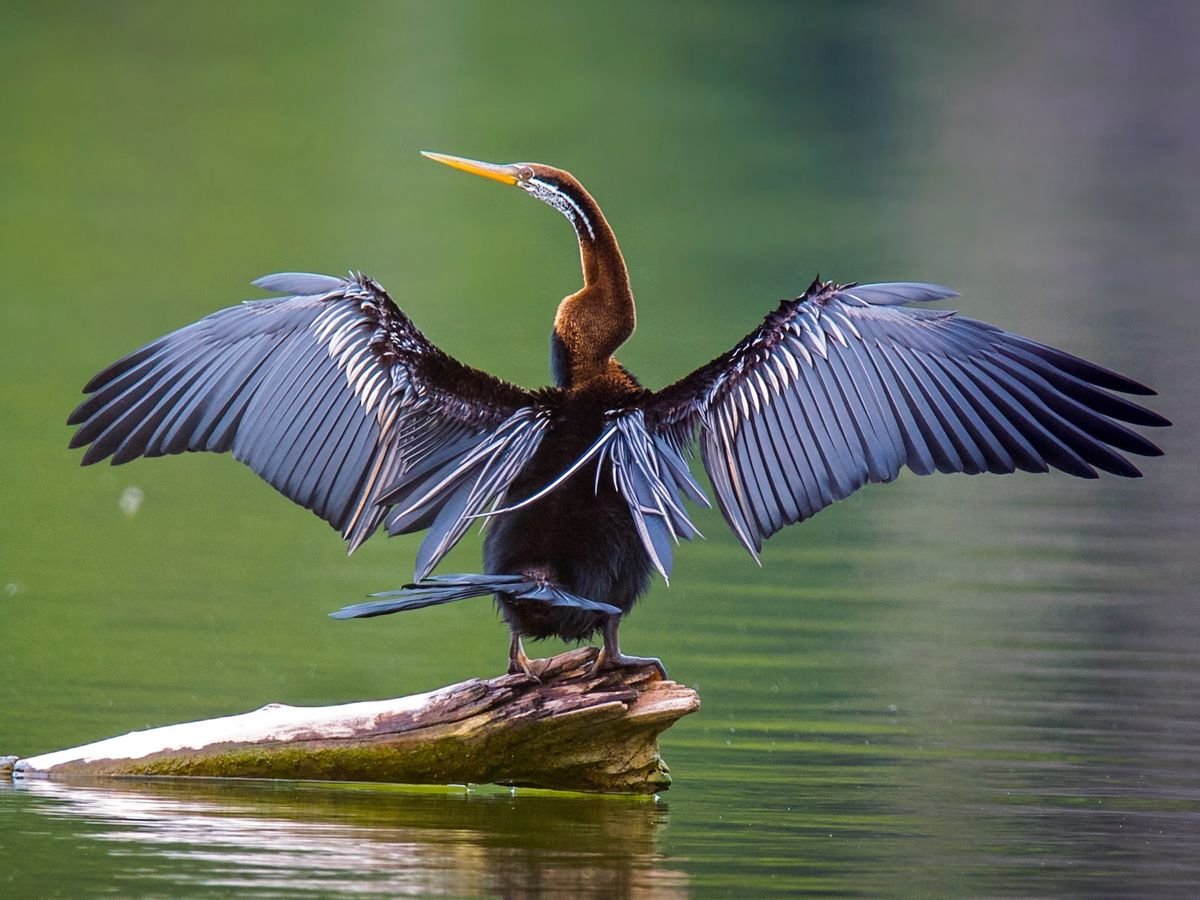
African Darter
Anhinga rufaA sleek underwater hunter that swims almost like a snake and rises from the water to dry in the sun.
The African Darter (Anhinga rufa) is a specialized waterbird in the family Anhingidae. Its long neck, pointed bill and streamlined body make it an efficient underwater hunter of fish and other aquatic prey. It often swims with only the head and neck exposed, then perches with its wings spread to dry its waterlogged feathers.
African Darter Quick Facts
What Is the African Darter?
The African Darter (<em>Anhinga rufa</em>) is a highly specialized diving waterbird of the family Anhingidae. It is closely related to other darters and shares their characteristic long neck, spear-like bill and underwater hunting style.
Its body is adapted to swimming underwater. The feathers are less water-repellent than those of many other waterbirds, which reduces buoyancy and helps the bird submerge while it chases fish. After feeding, it frequently leaves the water and spreads its wings to dry and restore effective flight insulation.
In Tanzania, African Darter is associated with freshwater and wetland systems, including lakes, rivers, dams and marshes. A modern Macaulay Library record documents an adult with a chick at Selous Game Reserve, providing direct evidence of breeding in Tanzania.
How to Identify an African Darter
The African Darter's extremely long neck is its strongest field character. In the water, the neck projects above the surface like a snake, while the body remains largely submerged.
- Neck: exceptionally long and narrow, often held vertically while swimming.
- Bill: long, straight and sharply pointed, specialized for spearing fish.
- Body: elongated and streamlined for underwater movement.
- Plumage: males are mainly dark with pale streaking; females and immature birds are browner and more muted.
- Tail: long and broad, useful for steering and braking underwater and in flight.
- Drying posture: commonly perches with both wings spread wide after swimming or diving.
Distinguishing from Cormorants
African Darter and cormorants often share the same waters and may both dry their wings. The darter's much longer, thinner neck and more pointed bill are the best clues. A darter also tends to ride lower in the water, with only its head and long neck exposed, creating the famous snakebird appearance.
Behavior & Social Life
African Darters are active aquatic predators but often appear surprisingly still between dives. They can be solitary feeders yet become social at breeding colonies, roosts and rich feeding sites.
Daily Activity
- Swimming: moves low in the water with much of the body submerged and only the neck visible.
- Diving: pursues fish underwater using its feet for propulsion and the pointed bill for rapid strikes.
- Wing drying: regularly spreads the wings at exposed perches so wet feathers can dry.
Social Life
Outside breeding, birds may feed independently or in loose groups. During nesting they can form mixed colonies with cormorants, herons, egrets and other waterbirds. Colony living places nests close to feeding water and can offer some protection through group vigilance.
Habitat & Distribution
African Darters occupy freshwater and some saline or brackish waters, but in Tanzania the most relevant habitats are inland lakes, rivers, dams, swamps and slow-moving streams.
- Lakes and dams with fish-rich open water and safe emergent perches.
- Slow rivers and backwaters where fish are accessible close to shore.
- Swamps and marshes with pools, reeds and trees for nesting and drying.
- Wetland woodland and mangrove edges in parts of the wider African range.
Anhinga rufa is widespread across sub-Saharan Africa, with an additional population in Madagascar. A northern population historically associated with the lower Tigris-Euphrates region is treated within Anhinga rufa by some taxonomic systems; modern BirdLife taxonomy keeps the species concept under review through its current checklist updates.
Tanzania Distribution
African Darter is well established in Tanzania's wetland avifauna. Lake Manyara National Park bird checklists include the species, and a modern Macaulay Library record documents an adult with a chick at Selous Game Reserve.
African Darter in Tanzania
African Darter is a strong species to target on Tanzania's freshwater birding routes. Look for it around lakes, slow rivers and quiet pools, especially where bare branches or dead trees provide drying and resting perches.
Safari Methods
The Lake Manyara bird checklist includes African Darter among the area's wetland birds, making the lake and its margins a practical northern Tanzania location.
Lake Manyara safariBest Time to See Them
African Darters can be encountered year-round where water and fish remain available. Early morning and late afternoon often give good opportunities to see wing-drying behavior, while calm water makes swimming birds easier to detect.
Explore southern TanzaniaNorthern Tanzania Lakes
Large and seasonal lakes across northern Tanzania provide suitable fishing and roosting habitat where conditions remain productive.
Plan northern birdingRivers, Dams & Wetlands
Because the species uses many forms of open water, slower rivers, reservoirs and marshes can be as valuable as famous national-park lakes.
Plan a custom birding safariSafari Methods
- Scan exposed perches: dead branches, poles and low trees over water are classic drying stations.
- Watch the surface: the long neck often appears before the submerged body, revealing a darter's presence.
- Observe after dives: successful birds often climb onto a perch and spread their wings to dry.
Best Time to See Them
African Darters are present year-round in suitable habitat. They are most active during the cooler morning and evening hours .
Diet & Feeding
African Darter is a carnivorous aquatic predator, taking mainly fish and supplementing them with other small animals found underwater or around wetland margins.
Food Sources
- Fish: the principal prey, caught by underwater pursuit and a rapid bill strike.
- Frogs and amphibians: taken where shallow wetland prey is abundant.
- Crustaceans: small aquatic crustaceans can supplement the fish-based diet.
- Snakes and other aquatic animals: opportunistically captured when encountered.
Underwater Hunting
The darter dives with its body streamlined and uses its feet to maneuver beneath the surface. The bill acts like a spear, stabbing or grasping fish at close range. After a dive the bird surfaces, often swims a short distance and may immediately resume hunting. The submerged body can be difficult to see from shore.
Breeding & Life Cycle
African Darters are usually monogamous and commonly breed in colonies. They often share nesting areas with cormorants, herons, egrets and other waterbirds.
Nesting
- Nest: a platform of sticks and dead reeds, usually in a tree fork over water or in dense reed vegetation.
- Eggs: typically 2-7 greenish-white eggs, with clutch size varying among populations.
- Incubation: commonly about 21-28 days, shared by both adults.
Chicks
Both parents feed the young. Chicks hatch helpless and develop down rapidly; they leave the nest after roughly five to six weeks and are generally capable of sustained flight by about seven weeks. A Selous Game Reserve record of an adult with a chick demonstrates breeding in Tanzania.
Conservation Status
African Darter is currently assessed globally as <strong>Least Concern (LC)</strong> in the IUCN/BirdLife global framework.
Regional monitoring shows why global Least Concern should not be read as universal security: BirdLife South Africa's 2025 regional assessment lists African Darter as <strong>Near Threatened</strong> because coordinated waterbird counts indicate a significant decline in that region.
Important conservation considerations include:
- Wetland degradation: drainage, vegetation clearance and loss of aquatic habitat can reduce feeding and nesting sites.
- Declining fish availability: overfishing and changes to fish communities can reduce prey.
Comparisons
African Darter most often shares its habitat with cormorants and other diving waterbirds. Its long snake-like neck, sharp bill and low swimming profile provide the best clues.
| Feature | African Darter | Reed Cormorant | Great Cormorant |
|---|---|---|---|
| Neck | Very long, thin, snake-like | Shorter and thicker | Shorter and thicker |
| Swimming | Body sits low; head and neck often visible | More of body visible | More of body visible |
| Bill | Straight, sharply pointed | Hooked at tip | Heavy hooked bill |
| Plumage | Dark with pale neck/body streaking | Dark brown to black | Mostly dark, often glossy |
| Drying | Frequently spreads wings after diving | Also commonly wing-dries | Also commonly wing-dries |
| Main prey | Fish and other aquatic animals | Fish and aquatic prey | Fish and aquatic prey |
Did You Know?
Snakebird Name
When it swims with only its long neck above water, an African Darter looks remarkably like a snake moving through a lake.
Diving Specialist
Its reduced buoyancy helps it submerge efficiently, turning its long neck and sharp bill into an underwater fishing tool.
Wing Dryer
After diving, it often sits with both wings spread wide to dry its feathers in the sun and wind.
Colonial Breeder
It commonly nests beside cormorants, herons and egrets in mixed waterbird colonies.
Tanzania Breeding Evidence
A photographed adult with a chick at Selous Game Reserve provides direct evidence of breeding in Tanzania.
Two Levels of Status
The species is globally Least Concern, but regional assessments such as South Africa's 2025 Near Threatened listing show that local declines matter.
At first glance, the lake is empty. Then a head and impossibly long neck rise from the water like a snake. A few seconds later the darter disappears again, only to surface farther away. When the hunt ends, it climbs onto a branch and opens both wings to the sun. In that sequence—dive, vanish, surface, dry—the African Darter reveals an entire world of adaptation built around the water.
Gallery
Frequently Asked Questions
The scientific name is Anhinga rufa, a member of the family Anhingidae.
When swimming it often holds only its long neck and head above water, creating a striking snake-like appearance.
It feeds mainly on fish, while also taking frogs, crustaceans, snakes and other aquatic animals.
Lake Manyara has it on the park bird checklist, and a modern Macaulay Library record documents an adult with a chick at Selous Game Reserve.
It dives beneath the surface and uses its pointed bill to spear or grasp fish and other aquatic prey.
Its feathers become waterlogged during diving, so the bird commonly perches with its wings spread to dry them and restore flight insulation.
Yes. Modern photographic evidence from Selous Game Reserve shows an adult with a chick, and the species is known to breed colonially in suitable wetlands.
Globally it is currently assessed as Least Concern, although some regional populations are declining and receive higher regional concern.
References & Further Reading
- BirdLife South Africa – African Darter: current 2025 regional assessment, taxonomy, population context and conservation concerns.
- Birds of the World – African Darter: species account, distribution, taxonomy and IUCN-linked global status.
- Oiseaux.net – African Darter: habitat, aquatic diving niche, diet and breeding measurements.
- Biodiversity Explorer – African Darter: recorded diet, nesting, clutch, incubation and chick development.
- Macaulay Library: modern Tanzania record from Selous Game Reserve showing an adult with a chick.
- Lake Manyara National Park bird checklist: confirmed listing for African Darter in northern Tanzania.
- iNaturalist – African Darter observation records from Tanzania .