

.png)
Black Crake
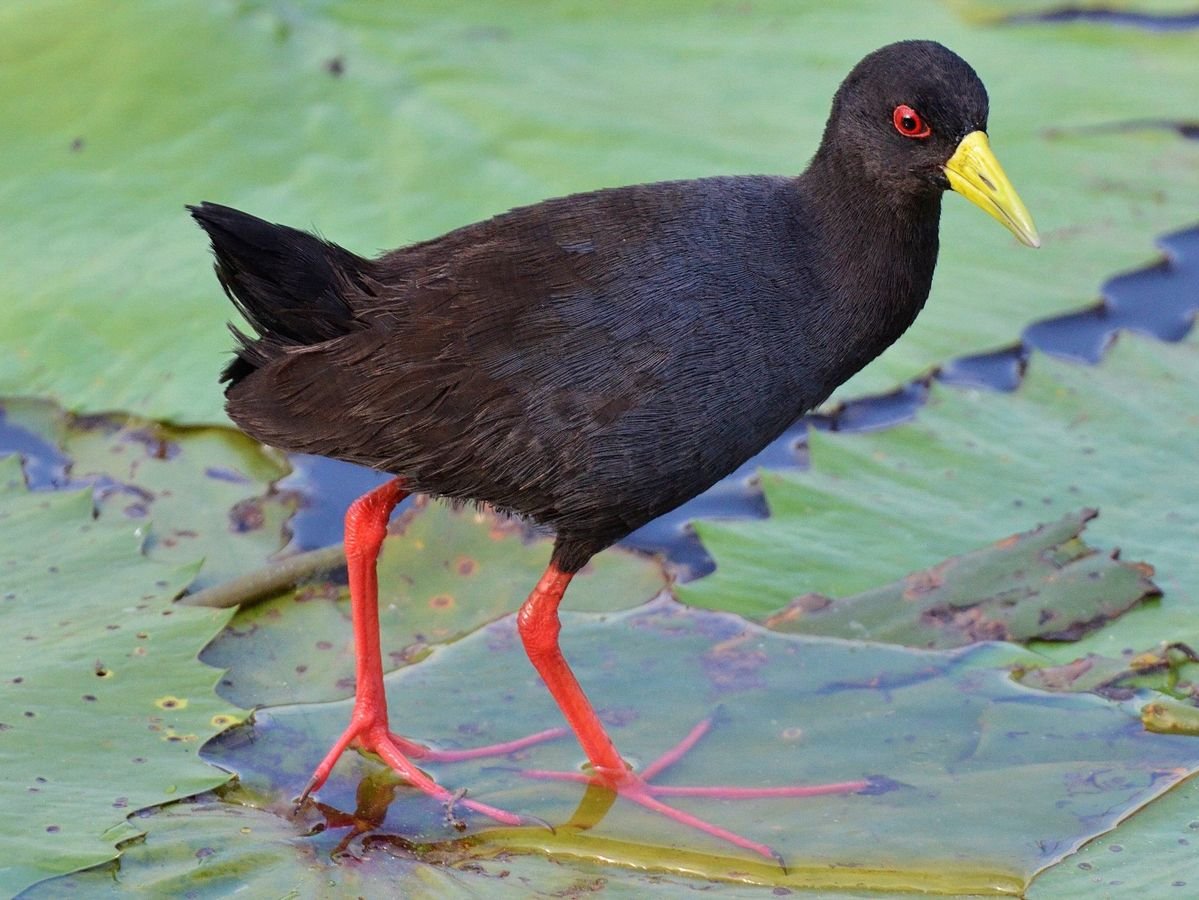
Zapornia flavirostraA bold wetland crake of Africa, recognized by its black plumage, vivid red eyes and brilliant yellow-green bill and legs.
The Black Crake (Zapornia flavirostra) is a small but conspicuous member of the rail family Rallidae. It lives around freshwater marshes, ponds, reedbeds and other vegetated wetlands, where its long toes and strong legs help it walk across mud and soft ground while searching for food.
Black Crake Quick Facts
What Is the Black Crake?
The Black Crake (Zapornia flavirostra) is a small African waterbird in the rail family Rallidae. It is mostly black, but its bright red eyes, yellow-green bill, and similarly vivid legs make it one of the easiest crakes to recognize once it steps into the open.
Although it can look compact and secretive, the Black Crake is a confident wetland walker. Its powerful legs and long toes help it move through mud, shallow water and dense aquatic vegetation without sinking deeply into soft substrates.
The species is widespread across sub-Saharan Africa and is closely tied to freshwater environments with enough emergent vegetation for feeding, shelter and nesting. In Tanzania it can be encountered around marshes, lakeshores, ponds and vegetated wetland margins.
How to Identify a Black Crake
The Black Crake is a compact, dark wetland bird with a memorable combination of facial color and bright legs. When it is walking along a marsh edge or feeding beside open water, these field marks are especially useful.
- Plumage: The adult is predominantly dark slate-black, giving the bird a solid, glossy appearance in good light.
- Eyes: The iris is vivid red, a striking contrast against the dark head.
- Bill: The bill is bright greenish-yellow and usually obvious even at a distance.
- Legs: The legs and toes are bright reddish to red, adapted for walking through soft wet ground.
- Shape: It has a compact body, rounded wings and long toes typical of a rail adapted to marsh edges.
- Juveniles: Young birds are duller and browner than adults, so eye-catching adult coloration should not be expected on every sighting.
Distinguishing from Other Rails
Black Crakes can be confused with other dark rails and moorhens where reeds are thick and light is poor. The combination of red eyes, yellow-green bill, red legs and otherwise dark plumage is the strongest visual shortcut for an adult Black Crake. The body is also smaller and less bulky-looking than a typical coot.
Behavior & Social Life
The Black Crake is active, alert and often surprisingly bold for a rail. It may forage alone, in pairs or in small family groups, frequently moving along the edge of water rather than remaining hidden deep inside reeds.
Daily Activity
- Foraging: It probes mud and shallow water for worms, insects, mollusks, crustaceans, tadpoles and other small prey, while also taking plant material.
- Walking: Long toes spread the bird's weight across mud and floating or emergent vegetation, making the species an accomplished marsh walker.
- Swimming: It can swim when necessary, but it commonly prefers to walk along the margins of ponds and marshes.
- Weather response: After rain, newly active invertebrates can make wetland edges especially productive feeding areas.
Movement & Vocal Behavior
Black Crakes are not usually long-distance migrants. In drought-prone parts of their African range, local or seasonal movements can occur as birds follow suitable water and vegetation. Their calls can carry across quiet wetlands, particularly when birds are defending a territory or maintaining contact.
Habitat & Distribution
The Black Crake is strongly associated with freshwater wetlands that provide a mixture of shallow water, soft mud and moderate vegetation. It can occupy both permanent and seasonal wetlands when suitable cover and feeding opportunities are available.
- Marshes: Especially reedbeds, sedges and papyrus with open feeding edges.
- Ponds and small lakes: Particularly where aquatic plants and muddy margins are present.
- Swampy thickets: Dense vegetation near still or slow-moving water provides concealment and nesting sites.
- Wet grassland: Seasonally flooded areas can become important feeding habitat when prey is accessible.
Distribution: The species occurs widely across sub-Saharan Africa, avoiding the driest regions where dependable wetland habitat is scarce.
Tanzania Distribution
In Tanzania, documented photographs and records include Lake Manyara, Olasiti and the Serengeti, with other suitable wetlands across the country providing potential habitat. Tanzanian birding resources specifically show the species from Lake Manyara and Serengeti and note its distinctive red eyes, red legs and bright green-yellow bill.
Black Crake in Tanzania
For birdwatchers, the best opportunities come from shallow freshwater and marsh habitats rather than dry plains alone. In northern Tanzania, several well-known wildlife areas contain the wetland margins the Black Crake favors.
Lake Manyara National Park
Lake Manyara's wetland mosaic, marshes and aquatic vegetation provide excellent habitat, and Tanzanian bird records include photographed Black Crakes from the area.
Lake Manyara safariSerengeti National Park
Black Crakes have been photographed in the Serengeti, especially around suitable wetland and marsh-edge habitat where water and vegetation persist.
Serengeti safariNgorongoro Conservation Area
Wet areas around the crater and broader conservation landscape can support Black Crakes where shallow water and dense vegetation create feeding cover.
Ngorongoro safariArusha & Moshi Wetlands
Marshes, ponds and irrigated or seasonally wet landscapes around northern Tanzania can reward dedicated birders looking beyond the main safari mammals.
Arusha safariSafari Methods
- Birdwatching walks – move slowly along marsh edges and scan exposed mud, reeds and floating vegetation.
- Game drives – check wetland margins, lake shores and seasonal pools where tracks and channels concentrate water.
- Wildlife photography – early morning light can reveal the red eye, yellow-green bill and red legs against the dark plumage.
Best Time to See Them
Black Crakes can occur year-round where wetlands remain suitable. The most rewarding conditions are often during or soon after rains, when shallow wetlands hold water and invertebrate prey becomes easier to find. Early morning is especially good for quiet observation before heat and disturbance increase.
Diet & Feeding
The Black Crake is an omnivorous wetland feeder. It combines animal prey with seeds and other plant material, taking advantage of whatever food is abundant along shallow water and muddy margins.
Food Sources
- Invertebrates: Worms, insects, mollusks and crustaceans.
- Aquatic prey: Small fish, tadpoles and small frogs when available.
- Plant foods: Seeds and parts of aquatic or wetland plants.
- Opportunistic foods: Eggs or nestlings of other birds and carrion may occasionally be taken.
Feeding Behavior
The Black Crake forages by walking deliberately across mud and vegetation, pecking and probing for prey. Its long toes are particularly useful where the ground is soft, helping it spread its weight while it searches among reeds, sedges and shallow water. Feeding often intensifies after rain when worms and other invertebrates become more accessible.
Breeding & Life Cycle
Black Crakes breed in wetlands where dense vegetation gives a nesting pair both cover and access to feeding grounds. Both adults contribute to nest construction and parental care, and older young may sometimes assist with later broods.
Nesting
- Nest: A deep bowl made from reeds, rushes, sedges and other aquatic vegetation, placed in vegetation over water and sometimes floating.
- Eggs: Commonly about 3 eggs are laid in a clutch.
- Incubation: Both parents incubate for roughly 13–19 days.
- Nest location: Dense emergent vegetation gives eggs and chicks concealment from predators and sudden disturbance.
Chicks
Chicks leave the nest very soon after hatching and remain under close parental care while learning to forage. In family groups, young from previous broods can sometimes remain nearby and help with care of newer chicks. Young birds become capable of flight at around five to six weeks.
Conservation Status
The Black Crake is assessed as Least Concern globally. Its wide distribution across sub-Saharan Africa and continued presence in many suitable wetlands mean it is not currently considered globally threatened.
However, a secure global category does not mean every wetland population is free from pressure. Because the species depends on functioning freshwater habitats, local declines can occur when wetlands are drained, polluted, heavily altered or cut off from natural water cycles.
Local conservation pressures:
- Wetland loss: Drainage and conversion of marshes reduce feeding and breeding habitat.
- Water pollution: Contaminated water can reduce prey availability and degrade wetland quality.
- Hydrological change: Excessive abstraction and altered seasonal flooding can remove shallow feeding habitat.
- Disturbance: Repeated disturbance near nesting areas can reduce opportunities for successful breeding.
Comparisons
The Black Crake can be confused with other dark rails and moorhens. These field marks help separate it from two common wetland relatives.
| Feature | Black Crake | Common Moorhen | Red-knobbed Coot |
|---|---|---|---|
| Size | 19–23 cm | 30–38 cm | 39–42 cm |
| Wingspan | about 25 cm | 50–55 cm | 75–85 cm |
| Plumage | Mostly black with bright facial and leg colors | Dark with paler flanks and undertail | Dark body with contrasting white frontal shield |
| Bill / face | Yellow-green bill, red eye | Red-and-yellow bill, red eye | Pale bill with red frontal shield |
| Habitat | Marshes, reeds, ponds and wet vegetation | Freshwater wetlands with cover | Lakes, ponds and open wetland edges |
| Diet | Omnivorous: invertebrates, small vertebrates and plant matter | Omnivorous aquatic and terrestrial foods | Aquatic vegetation, invertebrates and small prey |
Did You Know?
Red Eyes
The adult's brilliant red iris is one of the Black Crake's most memorable field marks.
Yellow-green Bill
Its vivid bill contrasts sharply with the dark head and helps birders identify it quickly.
Built for Mud
Strong legs and long toes help the bird walk across soft mud and wet vegetation without sinking easily.
Wetland Specialist
It thrives where shallow freshwater, vegetation and muddy feeding edges occur together.
After Rain
Freshly wetted ground can bring worms and other invertebrates closer to the surface, creating productive feeding conditions.
Family Helpers
Older young can sometimes remain with the family group and assist with care of later chicks.
There is something wonderfully vivid about a Black Crake stepping from reeds into open water: a compact black body, red eye, yellow-green bill and red legs suddenly catching the light. It is a reminder that Tanzania’s wetlands hold their own cast of specialist wildlife, not only the large mammals of the savanna. For a birder, the reward is often a few quiet minutes beside a marsh edge, watching a confident little rail probe mud, cross floating vegetation and disappear back into the reeds.
Gallery
Frequently Asked Questions
The Black Crake (Zapornia flavirostra) is a small wetland bird in the rail family Rallidae, recognizable by its black plumage, red eyes, yellow-green bill and red legs.
Tanzania records include Lake Manyara, Olasiti and the Serengeti, with suitable freshwater marshes and vegetated wetland edges offering further opportunities.
It is omnivorous, eating worms, insects, mollusks, crustaceans, small fish, tadpoles, small frogs, seeds and other plant material.
No. The Black Crake is globally assessed as Least Concern, although local wetland loss and degradation can still affect populations.
Look for a compact dark bird with a vivid red eye, yellow-green bill, red legs and long toes. Juveniles are duller and browner.
It favors freshwater marshes, reedbeds, papyrus, ponds, wet grassland, swampy thickets and vegetated margins of flowing or still water.
It builds a deep bowl nest from aquatic vegetation, usually lays about 3 eggs, and both parents incubate them for roughly 13–19 days.
They can be seen year-round where wetlands remain suitable; early mornings and periods after rain are especially productive for birdwatching.
References & Further Reading
- Tanzania Birds – Black Crake page with Tanzanian photo records from Olasiti, Lake Manyara and the Serengeti, plus identification notes.
- National Aviary – Black Crake field guide covering habitat, diet, breeding and Least Concern status.
- Mpala Live – Field-guide measurements, diet, social structure and wetland adaptations for Black Crake.
- African Bird Club – Species records and identification resources for Black Crake across Africa.
- Oiseaux.net – Black Crake species information and documented Tanzania photographic record from Serengeti National Park.
- BirdLife International – Current bird conservation and taxonomy context used to frame global status and wetland conservation.
- African Majestic Adventure Wildlife Team – Tanzania safari and birdwatching context for observing Black Crake in natural wetland habitats.