

.png)
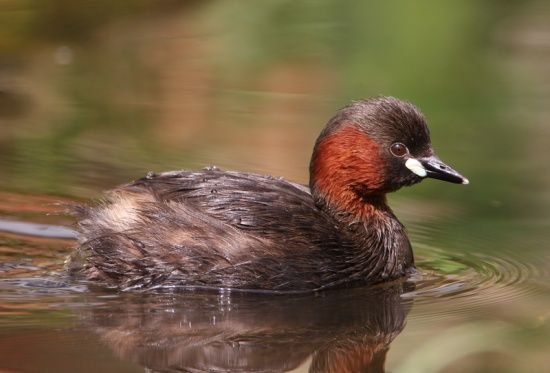
Little Grebe
Tachybaptus ruficollisA tiny, compact diving bird that vanishes beneath the surface of Tanzania's shallow, vegetated wetlands.
The Little Grebe (Tachybaptus ruficollis), also called the Dabchick, is a small freshwater diving bird in the grebe family Podicipedidae. Its rounded body, short bill, puffy rear, and chestnut breeding plumage make it distinctive, yet its habit of diving into cover can make it surprisingly easy to miss.
Little Grebe Quick Facts
What Is the Little Grebe?
The Little Grebe (Tachybaptus ruficollis) is a small, compact diving waterbird in the grebe family Podicipedidae. It is built for life on the water, with a rounded body, almost no visible tail, short neck, and legs positioned well back on the body for efficient swimming and diving.
The species is widely distributed across Europe, Africa and much of Asia, with additional populations in the Mediterranean and other parts of the Old World. In Africa it occupies many freshwater and seasonal wetlands, especially places where dense emergent or marginal vegetation offers cover and feeding opportunities.
The Little Grebe is famous for disappearing rather than flying when disturbed. A bird can slip below the surface with little warning, swim underwater, and reappear among reeds or water plants some distance away. This quiet, secretive behaviour is one reason it is a rewarding species for patient birdwatchers.
How to Identify a Little Grebe
The Little Grebe is small, rounded and compact. In breeding plumage it looks especially rich in colour, with a dark cap and warm chestnut on the cheeks, throat and sides of the neck, while non-breeding birds are much paler and browner.
- Size: about 23–29 cm long, with a compact, almost tailless profile.
- Breeding plumage: Dark cap with rich chestnut-red cheeks, throat and foreneck.
- Bill: Short, stout and dark, with a conspicuous pale or yellowish gape spot at the base.
- Eyes: Pale yellow to yellowish eyes that can stand out at close range.
- Non-breeding plumage: Duller grey-brown overall, with less obvious chestnut on the face and neck.
- Juveniles: Brown and noticeably patterned, with striped markings around the head and neck.
Distinguishing from Other Grebes
The species may be overlooked because it sits low in the water and often keeps close to reeds. Larger grebes such as the Great Crested Grebe are noticeably bigger and more elongated, while Black-necked Grebes are also larger with a different head-and-neck pattern.
Behavior & Social Life
Little Grebes are usually encountered singly, in pairs, or in small loose groups. They spend much of their time swimming, diving and quietly foraging among aquatic vegetation rather than sitting conspicuously in open water.
Daily Activity
- Diving: Dives readily when alarmed and also uses underwater pursuit to catch prey.
- Foraging: Moves through shallow water and vegetation while searching for aquatic invertebrates and small vertebrates.
- Vocalization: A distinctive trilling or whinnying call can reveal birds that remain hidden in reeds.
Movement & Seasonal Dispersal
The species is generally sedentary to locally dispersive, but movements can increase when seasonal wetlands appear or disappear. In Africa, rainfall and changing water availability can influence local movements between suitable wetlands.
Habitat & Distribution
Little Grebes favour shallow, sheltered wetlands where vegetation provides cover and food. They can occur on ponds, small lakes, marshes, reservoir edges, slow-flowing waters, floodplain wetlands and vegetated shores. Rich aquatic vegetation is especially valuable because it offers concealment and supports invertebrate prey.
- Shallow freshwater Small lakes, ponds, pools and marshes are especially suitable.
- Vegetated margins Reeds, sedges and other aquatic plants provide shelter and nesting cover.
- Slow or sheltered water Calm water is easier to exploit for diving and underwater feeding.
- Seasonal wetlands Temporary or changing wetlands can be used where food and water conditions remain favourable.
Distribution: The Little Grebe has a very broad Old World range spanning Europe, Africa and Asia. In Tanzania it is associated with freshwater and alkaline wetlands where suitable shallow, vegetated habitat occurs.
Tanzania Distribution
Tanzania records include Arusha National Park and the Ndutu area, and the species is listed on the Lake Manyara National Park bird checklist. These records make shallow lake and marsh habitats in northern Tanzania particularly relevant for birdwatchers.
Little Grebe in Tanzania
The Little Grebe is a common raptor of Tanzania's woodlands. Here are the best locations to see it:
Lake Manyara National Park
Little Grebe is included on the park bird checklist, where shallow lakes, marsh and vegetated shoreline create suitable habitat.
Lake Manyara National Park birdingArusha National Park
Tanzania Birds documents Little Grebe records from Arusha National Park, including adults and juveniles around suitable water bodies.
Arusha National Park birdingNdutu Area
Tanzania Birds also documents Little Grebe photographs from Ndutu, a useful area for wetland-focused birding in the wider Serengeti ecosystem.
Ndutu Area birdingMbuyuni Farm, Morogoro
A documented family group at Mbuyuni Farm shows the species can also use suitable freshwater habitats outside major national parks.
Mbuyuni Farm, Morogoro birdingSafari Methods
- Birdwatching Scan shallow, vegetated water slowly and listen for the distinctive trill before searching the reeds.
- Walking birding Short, quiet walks around ponds and marsh margins can reveal birds that stay hidden from vehicles.
- Wildlife photography Use patient observation and a long lens; the species often surfaces briefly before diving again.
Best Time to See Them
Little Grebes can be present year-round where water persists, but viewing opportunities can change with rainfall, water levels and vegetation. Early morning is often productive for birding, especially when birds are active and vocal before the day becomes hot.
Diet & Feeding
The Little Grebe is a small aquatic hunter that feeds mainly on invertebrates and also takes small fish and other suitable aquatic prey. Its short, stout bill and diving ability allow it to exploit prey beneath the surface as well as among plants near the water margin.
Food Sources
- Aquatic insects: Larvae and adult aquatic insects form an important part of the diet.
- Crustaceans: Small crustaceans and other aquatic invertebrates are taken while diving and probing.
- Small fish: Tiny fish can be captured when available.
- Other small prey: The diet may also include tadpoles and other small aquatic animals.
Foraging Behavior
Little Grebes often forage by repeated short dives, searching through submerged plants and open patches of shallow water. They can also take prey close to the surface and may pause between dives before slipping underwater again. Their low buoyancy and streamlined body make these underwater movements efficient.
Breeding & Life Cycle
Little Grebes build floating nests among aquatic vegetation, often anchoring the nest to plants so it remains close to the water surface. Breeding timing varies across the broad range and is strongly influenced by local water conditions and rainfall in Africa.
Nesting
- Nest: A floating platform of wet plant material, usually concealed among reeds or other aquatic vegetation.
- Eggs: Usually several pale eggs, commonly around 3–5 in a clutch.
- Incubation: About three weeks, with adults sharing incubation and nest attendance.
Chicks
Young Little Grebes are able to swim soon after hatching and are cared for by the adults. Chicks can dive early, and parents may carry small prey or help guide young birds while they learn to forage independently. The floating nest and dense vegetation provide protection during this vulnerable stage.
Conservation Status
The Little Grebe is currently assessed as Least Concern globally. BirdLife South Africa also lists the species as Least Concern in its 2025 regional assessment, while noting a decreasing regional population trend in southern Africa.
The species remains widespread and adaptable, using many different wetland types. Its strongest needs are access to suitable shallow water, enough aquatic vegetation for cover and nesting, and adequate prey. Local wetland degradation can therefore matter even when the species as a whole remains common and widespread.
Important local pressures can include:
- Wetland degradation Drainage, infilling and intensive alteration of shallow wetlands can remove feeding and nesting habitat.
- Water quality Pollution and changes in aquatic vegetation can affect prey availability and breeding habitat.
Comparisons
Little Grebes are most likely to be confused with other small grebes when seen briefly on open water. Size, neck pattern, bill shape and breeding plumage are useful clues.
| Feature | Little Grebe | Great Crested Grebe | Black-necked Grebe |
|---|---|---|---|
| Size | 23–29 cm | 46–51 cm | 28–34 cm |
| Build | Very compact and rounded | Much larger, longer-necked | Larger, more elongated |
| Breeding plumage | Chestnut face and neck; dark cap | Black crest with orange cheek ruffs | Black neck with contrasting golden ear tufts |
| Bill | Short and dark with pale gape spot | Longer, dagger-like | Thin, upturned-looking bill |
| Typical habitat | Shallow, vegetated wetlands | Larger lakes and open water | Lakes and wetlands, often in open water |
| Tanzania relevance | Recorded at Lake Manyara, Arusha and Ndutu | Recorded at Lake Manyara | Recorded at Lake Manyara and other Tanzanian wetlands |
Did You Know?
Tiny Diver
The Little Grebe is a small diving bird with a compact, almost tail-less silhouette.
Dabchick
It is widely known by the common name Dabchick, especially in older field guides and African birding literature.
Chestnut Breeding Plumage
Adults develop rich chestnut colour on the cheeks, throat and sides of the neck when breeding.
Pale Gape Spot
A small pale or yellowish patch at the base of the dark bill is a useful identification clue.
Vanishing Act
When alarmed, it often dives rather than flying, then resurfaces quietly nearby.
Floating Nest
Its nest is a floating platform anchored among aquatic vegetation close to the water surface.
There is something wonderfully elusive about the Little Grebe. One moment a rounded little bird is resting among reeds; the next, the water closes over its back and it has disappeared. On a quiet Tanzania wetland, learning to wait, listen and watch the vegetation can turn a fleeting dive into one of the most memorable bird sightings of the morning.
Gallery
Frequently Asked Questions
The Little Grebe (Tachybaptus ruficollis) is a small diving waterbird in the grebe family Podicipedidae. It is compact, rounded and closely associated with shallow, vegetated wetlands.
Documented Tanzanian records include Arusha National Park and Ndutu, and the species is listed for Lake Manyara National Park. Look for shallow freshwater or alkaline wetlands with good vegetation.
It feeds mainly on aquatic invertebrates and also takes small fish and other small aquatic prey.
No. The Little Grebe is currently assessed as Least Concern globally, although wetland degradation can affect local populations.
Look for its compact rounded body, short dark bill with a pale gape spot, dark cap, and chestnut cheeks and throat in breeding plumage.
It builds a floating nest among aquatic vegetation. Several pale eggs are laid, and incubation lasts about three weeks.
Movements vary by region. The species can be sedentary, locally dispersive or migratory in different parts of its broad range; in Africa, rainfall and wetland availability can drive local movements.
It sits low in the water, keeps close to vegetation and often dives immediately when disturbed, so patient scanning and listening are important.
References & Further Reading
- BirdLife South Africa – Little Grebe species account: taxonomy, identification, distribution, ecology and 2025 regional conservation assessment.
- BirdLife International / IUCN Red List – Little Grebe (Tachybaptus ruficollis) global conservation assessment and range information.
- eBird – Little Grebe identification, habitat, behaviour and vocalization resources.
- Tanzania Birds – Little Grebe records and photographs from Arusha National Park, Ndutu and other Tanzanian localities.
- Exotic Birding – Lake Manyara National Park bird checklist listing Little Grebe (Tachybaptus ruficollis).
- Birds of Singapore / regional field references – identification and behaviour notes useful for comparison with Asian populations.
- Birds of the World – species account for life history, ecology and breeding behaviour.