

.png)
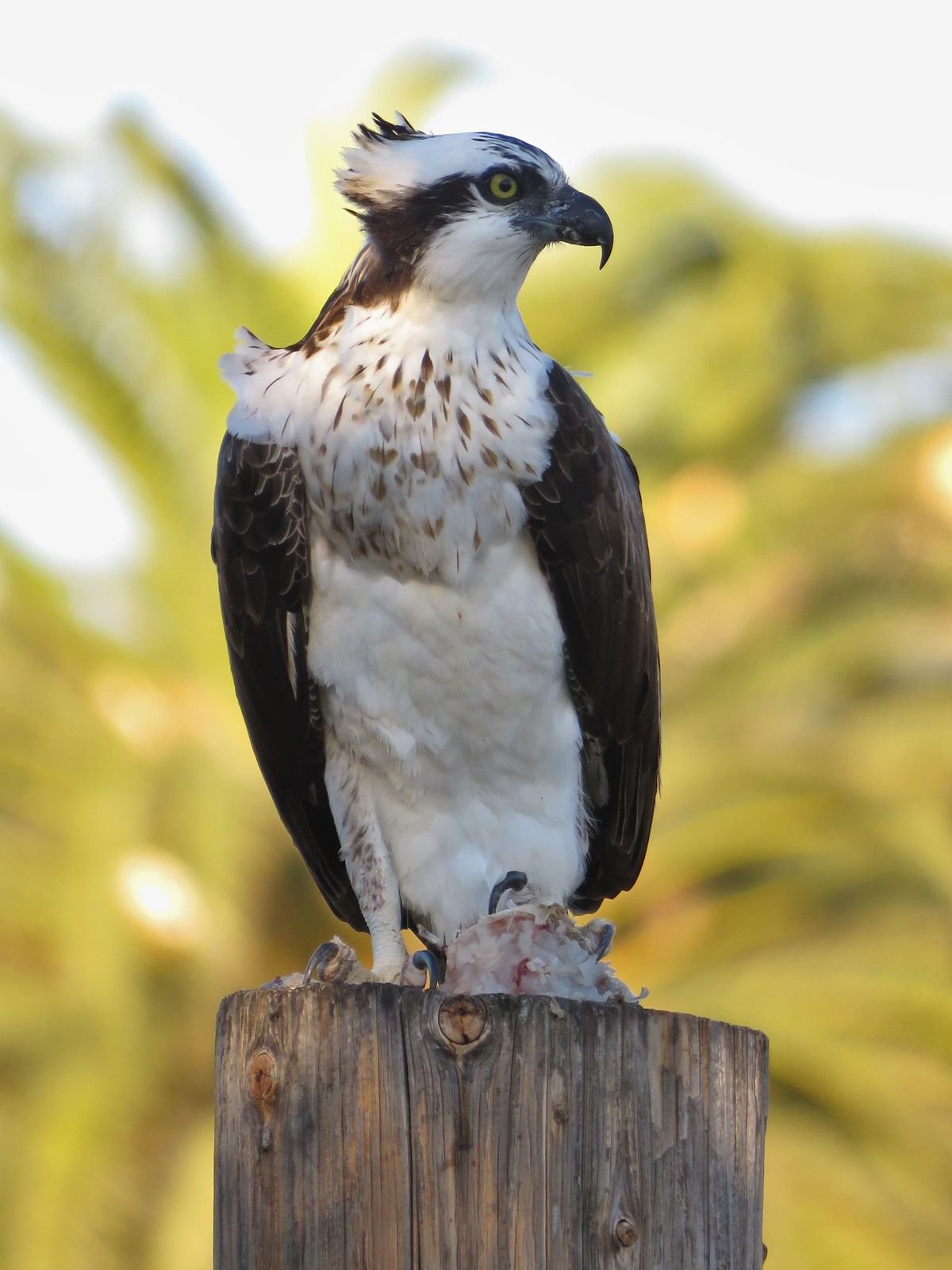
Osprey
Pandion haliaetusThe ultimate fish-hunting specialist – a raptor that plunges feet-first into the water with breathtaking precision.
The Osprey (Pandion haliaetus), also known as the sea hawk, river hawk, or fish hawk, is a large, cosmopolitan bird of prey that feeds almost exclusively on fish. It is the only living member of the family Pandionidae and is found on every continent except Antarctica[reference:0].
Osprey Quick Facts
What Is the Osprey?
The Osprey (Pandion haliaetus) is a large, cosmopolitan bird of prey that feeds almost exclusively on fish. First described by Carl Linnaeus in 1758[reference:10], it is the only living member of the family Pandionidae[reference:11] and the genus Pandion[reference:12]. The species is sometimes considered to belong to the subfamily Pandioninae within the Accipitridae family[reference:13].
The name "haliaetus" comes from the Greek words "halos," meaning "sea," and "aetos" for "eagle"[reference:14]. The Osprey is known by several common names, including sea hawk, river hawk, and fish hawk[reference:15]. It is found on every continent except Antarctica, making it one of the most widespread raptors in the world[reference:16][reference:17].
Four subspecies are recognised[reference:18], varying primarily in size and plumage characteristics across their global range. The nominate subspecies, P. h. haliaetus, is found in Europe and northern Asia[reference:19].
How to Identify an Osprey
The Osprey is a large and distinctive raptor, easily recognised by its size, colouration, and unique flight profile. Here are its key identifying features:
- Size: A large raptor measuring 53-61 cm (21-24 in) in length with a wingspan of 140-180 cm (55-70 in)[reference:20].
- Flight Profile: Long, narrow wings with a distinct bend at the wrist, forming an M-shape against the sky[reference:21][reference:22].
- Upperparts: Dark chocolate-brown back and upper wing coverts[reference:23][reference:24].
- Underparts: Largely white[reference:25].
- Head: White head with a distinctive dark eye mask or cheek patch[reference:26][reference:27].
- Wrist Marks: Characteristic dark patches at the bend of the wing when viewed from below[reference:28][reference:29].
- Tail: Gray with dark bars[reference:30].
- Legs: Bluish-gray[reference:31].
- Bill: Black[reference:32].
Juvenile vs Adult
Juvenile birds are similar in appearance to adults but have buff tips to their feathers, giving them a scaly appearance[reference:33]. The upperparts of juveniles appear scaly due to light-buff feather edges on the back and upper wing-coverts[reference:34]. The adult plumage is usually complete when the bird is 18 months old[reference:35].
Distinguishing from Other Raptors
The Osprey is sometimes mistaken for a seagull or bald eagle[reference:36]. However, unlike a bald eagle, the Osprey has darkly barred wings and tail, a black bill, and bluish-gray lower legs[reference:37]. The M-shaped flight profile and dark wrist marks are also distinctive features not seen in other raptors.
Behavior & Social Life
The Osprey is a solitary bird except during the breeding season, when pairs form strong bonds. It is most often seen soaring over water bodies or perched on prominent branches, posts, or nest platforms[reference:38].
Flight & Hunting
- Soaring: Ospreys fly over water at 50 to 100 feet (15-30 metres)[reference:39], scanning the surface for fish[reference:40].
- Hovering: When a fish is spotted, the bird hovers briefly with rapidly beating wings[reference:41][reference:42].
- Diving: The Osprey plunges feet-first into the water[reference:43][reference:44], sometimes submerging entirely[reference:45]. It may dive from heights of 20-30 metres[reference:46].
- Adaptations: Closable nostrils keep out water during dives[reference:47]; dense, oily plumage prevents feathers from getting waterlogged[reference:48]; a semitransparent nictitating membrane protects the eyes underwater[reference:49].
- Packing a Lunch: When flying with prey, the Osprey lines up its catch head-first for less wind resistance[reference:50][reference:51].
Vocalization
The Osprey has a loud, shrill whistle or chirp that serves a variety of purposes, including courtship, alarm, and female breeding solicitation[reference:52].
Habitat & Distribution
The Osprey is entirely dependent on an ample supply of fish in clean and unpolluted fresh, brackish or salt water[reference:53][reference:54]. It is found at lakes, rivers, estuaries, and coastlines around the world wherever shallow water brings fish within striking distance[reference:55].
Key habitat types include:
- Lakes and rivers – with cliffs or forests along the shore[reference:56].
- Coastal areas – including estuaries, salt marshes, and seacoasts[reference:57].
- Reservoirs and man-made water bodies – often adapting to artificial structures[reference:58].
Distribution: The Osprey has an extremely large range, with an Extent of Occurrence of 298,000,000 km² for breeding populations and 331,000,000 km² for non-breeding populations[reference:59][reference:60]. It is found on every continent except Antarctica[reference:61]. Northern populations are migratory, spending winters in Mexico, Central and South America, and sub-Saharan Africa[reference:62][reference:63].
Tanzania Distribution
In Tanzania, Ospreys are primarily non-breeding migrants, arriving from October to December and leaving from March to May[reference:64]. They are found near water bodies across the country, including in Serengeti National Park, Ngorongoro Conservation Area, Tarangire National Park, and Ruaha National Park. Some individuals may stay throughout the year[reference:65]. There are even records of Ospreys hitching rides on ships travelling to Dar es Salaam[reference:66].
Osprey in Tanzania
The Osprey is a magnificent and specialised raptor that can be seen near water bodies across Tanzania, especially during the migration season. Here are the best locations to see it:
Serengeti National Park
Ospreys are recorded in the Serengeti, particularly near rivers and water bodies within the park. They can be seen soaring over the waterways or perched in trees along the riverbanks.
Serengeti safariNgorongoro Crater
Observed in the Ngorongoro Conservation Area, often seen around Lake Magadi and other water sources within the crater.
Ngorongoro safariTarangire National Park
Found near the Tarangire River and other water bodies within the park. The dry season concentrates wildlife around water, increasing the chances of seeing Ospreys.
Tarangire safariRuaha National Park
A non-breeding migrant recorded in Ruaha, especially along the Great Ruaha River.
Ruaha safariSafari Methods
- Game drives near rivers, lakes, and other water bodies.
- Birdwatching – watch for the distinctive M-shaped flight profile and plunging dives.
- Wildlife photography – the Osprey's spectacular hunting dives make it a rewarding photographic subject.
- Boat safaris – where available, boat-based viewing offers excellent opportunities to observe Ospreys hunting.
Best Time to See Them
Ospreys are most commonly seen in Tanzania during the migration season, from October to December and March to May[reference:67]. Some individuals may be present year-round[reference:68]. The dry season (June to October) can also be productive as wildlife concentrates around water sources.
Diet & Feeding
The Osprey is a specialised piscivore, with fish making up approximately 99% of its diet[reference:69][reference:70]. This makes it one of the most specialised fish-eating raptors in the world[reference:71].
Food Sources
- Fish: Over 80 different prey species have been documented in North America alone[reference:72]. They take almost any size and type of fish[reference:73], typically those 10-40 cm long and weighing under 1 kg[reference:74].
- Occasional prey: On rare occasions, Ospreys have been observed eating birds, snakes, voles, squirrels, muskrats, salamanders, conchs, and even a small alligator[reference:75]. Reports of feeding on carrion are rare[reference:76].
Hunting Behavior
- Hunting method: Ospreys hunt on the wing, flapping and gliding 10 to 40 metres above the water[reference:77]. They often hover before diving[reference:78].
- Diving: The bird plunges feet-first into the water, sometimes submerging entirely[reference:79]. They can only dive to about 1 metre (3 feet) below the surface[reference:80][reference:81].
- Success rate: Ospreys catch fish on 24 to 74% of their dives[reference:82]. Success is affected by individual ability, weather, and tide[reference:83].
- Grip: Sharp spines (spicules) on the feet and a reversible outer toe help grip slippery fish[reference:84][reference:85].
- Feeding: Fish are carried head-first to reduce wind resistance[reference:86] and eaten at a perch, often starting with the head[reference:87].
Breeding & Life Cycle
Ospreys are monogamous and often mate for life[reference:88][reference:89]. They typically return to the same nest area each year[reference:90][reference:91].
Nesting
- Nest site: Large, bulky stick nests built in trees, on rocky cliffs, or increasingly on artificial structures such as nest platforms, cell towers, and utility poles[reference:92][reference:93].
- Nest size: Nests are about 1-2 metres in diameter and are added to each year[reference:94].
- Nest lining: The nest bowl is lined with soft grasses, moss, algae, and similar material[reference:95].
- Clutch: 1 to 4 creamy pinkish-white eggs with heavy red-brown spotting[reference:96].
- Incubation: Approximately 35-42 days[reference:97][reference:98], mainly by the female while the male provides fish[reference:99].
Chicks
Newly hatched chicks are covered with gray down and are helpless[reference:100]. Nestlings fledge at 7 to 9 weeks old[reference:101] (50-55 days)[reference:102] and may continue to rely on parental care for another 6 weeks[reference:103]. Ospreys reach sexual maturity at 3 years of age[reference:104] and can live for up to 25 years[reference:105].
Conservation Status
The Osprey is assessed as Least Concern on the IUCN Red List[reference:106][reference:107].
Population: The global population is estimated at between 100,000 and 1,200,000 mature individuals[reference:108]. The population trend is increasing[reference:109][reference:110].
Conservation History: Osprey populations were seriously depleted in the mid-20th century by organochlorine pesticides, particularly DDT, which thinned their eggshells and wreaked havoc on nesting success[reference:111][reference:112]. Following the ban on DDT in 1972, Ospreys have made a remarkable comeback in many areas[reference:113][reference:114].
Current threats:
- Overfishing: Competition with commercial fishing for the same fish species reduces food supply[reference:115].
- Environmental pollution: Mercury and lead contamination accumulate in fish and then in Osprey tissues[reference:116].
- Persecution: At fish farms[reference:117].
- Nesting hazards: In developed areas[reference:118].
The Osprey is listed on CITES Appendix II[reference:119] and is protected in many countries under national legislation[reference:120].
Comparisons
The Osprey is sometimes confused with other raptors. Here are the key differences:
| Feature | Osprey | Bald Eagle | White-bellied Sea Eagle |
|---|---|---|---|
| Size | 53-61 cm | 70-100 cm | 70-90 cm |
| Wingspan | 140-180 cm | 180-230 cm | 180-220 cm |
| Head | White with dark eye mask | White head (adult) | White head and neck |
| Wrist Marks | Dark patches at wrist | No wrist marks | No wrist marks |
| Flight Profile | M-shaped | Flat, broad wings | Broad, flat wings |
| Diet | 99% fish | Fish, birds, mammals | Fish, birds, reptiles |
Did You Know?
99% Fish Diet
The Osprey's diet consists almost exclusively of fish – about 99% – making it one of the most specialised fish-eating raptors in the world[reference:121].
Plunging Feet-First
Unlike most raptors that snatch prey with their talons, Ospreys plunge feet-first into the water, sometimes submerging entirely[reference:122].
Reversible Toe
The Osprey has a reversible outer toe that acts like a second thumb, giving it a pincer-like grip on slippery fish[reference:123][reference:124].
Packing a Lunch
Ospreys carry fish head-first to reduce wind resistance – a behaviour birders call "packing a lunch"[reference:125].
Global Distribution
Ospreys are found on every continent except Antarctica, making them one of the most widespread birds of prey in the world[reference:126].
Conservation Success
The Osprey made a remarkable recovery after DDT was banned in 1972, one of the great conservation success stories[reference:127].
There is a breathtaking moment when an Osprey folds its wings and plummets towards the water. It is a study in precision – a creature perfectly adapted for a single purpose: catching fish. The reversible toe, the spicules on its feet, the closable nostrils, the dense plumage – every detail speaks of millions of years of evolution honing this bird into the ultimate piscivore. To watch an Osprey rise from the water, a silvery fish clutched in its talons, shaking off the droplets like a wet dog, is to witness nature at its most elegant and efficient.
Gallery
Frequently Asked Questions
The Osprey (Pandion haliaetus), also known as the sea hawk, river hawk, or fish hawk, is a large, cosmopolitan bird of prey that feeds almost exclusively on fish. It is the only living member of the family Pandionidae[reference:128].
Ospreys are found near water bodies across Tanzania, especially during the migration season. Key locations include Serengeti National Park, Ngorongoro Conservation Area, Tarangire National Park, and Ruaha National Park[reference:129].
The Osprey's diet consists almost exclusively (about 99%) of live fish[reference:130]. It has been documented eating over 80 different prey species[reference:131]. On rare occasions, it may take small mammals, birds, reptiles, or amphibians[reference:132].
No. The Osprey is listed as Least Concern on the IUCN Red List[reference:133]. Its global population is estimated at between 100,000 and 1,200,000 mature individuals and is currently increasing[reference:134].
The Osprey is unique for its almost exclusively fish-based diet (99% fish)[reference:135]. It has several remarkable adaptations for this lifestyle including a reversible outer toe, spicules on its feet, closable nostrils, and dense, oily plumage[reference:136].
The Osprey is a large raptor measuring 53-61 cm (21-24 in) in length with a wingspan of 140-180 cm (55-70 in)[reference:137]. Females are larger than males, weighing 1.4-2.0 kg compared to 1.1-1.7 kg for males[reference:138].
Ospreys are monogamous and often mate for life[reference:139]. They build large stick nests near water, reusing and adding to them each year[reference:140]. The female lays 1-4 eggs which are incubated for about 35-42 days, mainly by the female while the male provides fish[reference:141][reference:142].
The Osprey is called a 'fish hawk' because its diet consists almost exclusively of fish, making it one of the most specialised fish-eating raptors in the world[reference:143].
References & Further Reading
- American Bird Conservancy – Osprey: Description, diet, adaptations, conservation history[reference:144].
- IUCN Red List – Pandion haliaetus: Conservation status, population size, range[reference:145][reference:146].
- Animal Diversity Web – Pandion haliaetus: Diet, hunting behaviour, predation[reference:147].
- South Carolina DNR – Osprey: Description, habitat, biology, breeding[reference:148].
- Alaska Department of Fish and Game – Osprey: Life history, breeding, feeding ecology[reference:149].
- National Park Service – Osprey: General description, habitat, migration, behaviour, breeding[reference:150].
- Biodiversity Explorer – Pandion haliaetus: Movements and migrations in southern Africa[reference:151].