

.png)
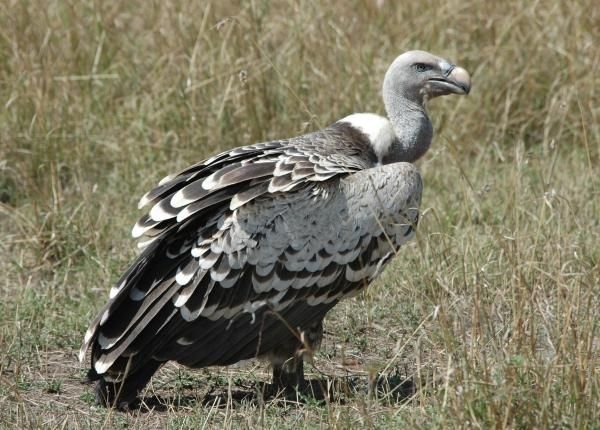
Rüppell's Griffon Vulture
Gyps rueppelliThe undisputed altitude champion of the avian world – a master of the skies and nature's most efficient clean-up crew.
The Rüppell's Griffon Vulture (Gyps rueppelli), also known as Rüppell's Vulture, is a large African vulture named after the 19th-century German explorer Eduard Rüppell. It holds the remarkable record as the world's highest-flying bird, with confirmed evidence of flight at 11,300 metres (37,000 feet) – a height that surpasses the cruising altitude of most commercial aircraft.
Rüppell's Griffon Vulture Quick Facts
What Is the Rüppell's Griffon Vulture?
The Rüppell's Griffon Vulture (Gyps rueppelli), also called Rüppell's Vulture, is a large species of Old World vulture belonging to the family Accipitridae, which also includes eagles, kites, buzzards and hawks. It was first described by the German naturalist Alfred Brehm in 1852. The species is named after Eduard Rüppell, a 19th-century German explorer, collector and zoologist who extensively studied the wildlife of Africa and the Middle East.[reference:0][reference:1]
This species is renowned for holding the record as the world's highest-flying bird, with confirmed evidence of flight at an altitude of 11,300 metres (37,000 feet) – a height at which the average temperature is about -56°C (-69°F).[reference:2][reference:3] This remarkable feat was documented when one collided with an aircraft at 37,000 feet.[reference:4]
The Rüppell's Griffon Vulture is a resident bird of prey, mainly native to the Sahel region and East Africa.[reference:5][reference:6] It is a strict carrion feeder, playing a vital ecological role by cleaning the African countryside of decaying material and preventing the spread of disease-causing bacteria from carcasses to living animals.[reference:7][reference:8]
There are two recognised subspecies: G. r. rueppelli (Brehm, 1852) and G. r. erlangeri (Salvadori, 1908).[reference:9][reference:10] The subspecies G. r. erlangeri is distinguished from other members by its gray coloration.[reference:11]
How to Identify a Rüppell's Griffon Vulture
The Rüppell's Griffon Vulture is a large and distinctive bird, easily recognised by its size, coloration, and mottled plumage. Here are its key identifying features:
- Size: Large African vulture, measuring 85-107 cm (33-42 in) in length with a wingspan of 2.2-2.6 m (7 ft 5 in to 8 ft 6 in).[reference:12][reference:13]
- Plumage: Males and females feature similar coloration – brown or black overall, with a white underbelly.[reference:14][reference:15] The body coloration is dark brown with white stripes on the underside of the wings and some solid-white or white-tipped feathers on the belly and backs of wings.[reference:16]
- Head and Neck: Thin white fluff covers the head and neck, with a distinctive white collar of feathers around the base of the neck.[reference:17][reference:18][reference:19]
- Eyes: Normally amber to yellow in colour.[reference:20]
- Beak: Exceptionally powerful, pale beak – white in colour, distinguishing it from the closely related white-backed vulture which has a black bill.[reference:21][reference:22]
- Underwing: Characterised by a scaly or spotted appearance of the underside of the body, formed by dark brown feathers with whitish-buff tips, and a series of narrow white lines.[reference:23]
- Undertail coverts: Bicolored, ranging from V-shaped fringes in juveniles to large white spots in adults.[reference:24]
Juvenile vs Adult
Juveniles are usually darker than adults with a less-defined stripe on the underside of the wing and a more pink-coloured neck.[reference:25][reference:26] Adults have dark skin on their head and neck that is sparsely covered with down feathers.[reference:27] Immatures are more chocolate brown than juveniles.[reference:28]
Distinguishing from Other Vultures
The Rüppell's Griffon Vulture is most closely related to the white-backed vulture (Gyps africanus).[reference:29][reference:30] The easiest way to distinguish between the two is by the white bill of the Rüppell's Griffon and the black bill of the white-backed vulture.[reference:31] It is smaller than the Griffon Vulture (Gyps fulvus), roughly 30% lighter in weight, and has a flat head profile with a rather even transition between the bill and front slope.[reference:32]
Behavior & Social Life
The Rüppell's Griffon Vulture is a highly social bird, known for nesting and gathering in large flocks numbering in the thousands.[reference:33] These vultures are often seen soaring in large groups, riding thermal currents high above the African landscape.
Flight & Soaring
- World's Highest Flyer: Rüppell's Griffon Vultures hold the record for the greatest flying height recorded for any bird, reaching altitudes of 11,300 metres (37,000 feet).[reference:34][reference:35]
- Soaring: They will spend much of their time soaring through the skies at great altitudes searching for food, sometimes staying in the air for six to seven hours each day.[reference:36]
- Flight style: They use slow, powerful wing beats or rely on strong winds to conserve energy and soar.[reference:37]
Feeding Behavior
- Scavenging: A notorious scavenger, Rüppell's Griffon Vultures dine exclusively on carrion. They rely on vision alone to detect prey.[reference:38]
- Carcass approach: When a vulture spots a carcass from the air, it will swoop down nearby and run with its wings spread and neck extended towards its meal.[reference:39]
- Feeding method: They insert their heads under the skin of the carcass, sometimes climbing inside the ribcage to consume it. The head and neck are devoid of most feathers, evolved to keep the mess of blood and meat to a minimum.[reference:40]
- Adaptations: They can consume rotten meat, even if it contains anthrax, botulism and cholera. Bacteria are then destroyed in the vulture's stomach. A large meal can last at least four days.[reference:41]
Social Dynamics & Communication
- Aggression: Sharing a carcass can often result in fights between vultures, with grunting, hissing, stomping and a coloration change of the neck to a deep red used to show dominance and ward off fellow scavengers.[reference:42]
- Migrations: They follow game herds on their seasonal migrations and feed in large numbers at carcasses, usually with other Old World vulture species.[reference:43]
Habitat & Distribution
The Rüppell's Griffon Vulture inhabits a variety of landscapes across Africa. It resides on mountainsides and cliffs for the purpose of breeding and nesting, but also travels through woodlands, grasslands and savannas in order to find food.[reference:44][reference:45]
Key habitat types include:
- Mountainsides and cliffs – for breeding and nesting[reference:46]
- Savanna and desert regions – when searching for food[reference:47]
- Woodlands and grasslands – for foraging[reference:48]
- Steppes and high plateaus – preferred habitats[reference:49]
Distribution: The Rüppell's Griffon Vulture ranges across much of central Africa, including Ethiopia, the Sudan, Tanzania and Guinea.[reference:50] It occupies the region from Senegambia to Eritrea, with some native range spreading farther southeast.[reference:51][reference:52] Their native range extends from Northwest to Northeast Africa approximately between latitudes 5°S and 20°N.[reference:53][reference:54]
They can be found in Senegal, Gambia, Mali, Sudan, South Sudan, Ethiopia, Kenya, Tanzania and Mozambique.[reference:55] The species is also capable of long-distance movements, and since 1992, Rüppell's Vulture has been occurring as a vagrant in Spain and Portugal, with annual records since 1997.[reference:56]
Tanzania Distribution
In Tanzania, the Rüppell's Griffon Vulture is found in the northern safari circuit. It has been recorded in Serengeti National Park, Ngorongoro Conservation Area, Tarangire National Park, and Ruaha National Park.[reference:57][reference:58]
Rüppell's Griffon Vulture in Tanzania
The Rüppell's Griffon Vulture is a magnificent and remarkable raptor of Tanzania's savannas and mountains. Here are the best locations to see it:
Serengeti National Park
Recorded in the Serengeti, often seen soaring over the plains or perched in acacia trees. Frequently photographed in the park's vast savanna landscapes.[reference:59]
Serengeti safariNgorongoro Crater
Observed in the Ngorongoro Conservation Area, often perched on gnarled trees known locally as the "Devil Tree" after rain storms.[reference:60][reference:61]
Ngorongoro safariTarangire National Park
Found in the park's acacia woodlands and open savanna habitats, where it can be seen soaring or perched in tall trees.
Tarangire safariRuaha National Park
A resident species in Ruaha's miombo woodland and dry savanna habitats.
Ruaha safariSafari Methods
- Game drives through open woodland and savanna habitats, especially during the dry season.
- Birdwatching – watch for soaring vultures with their distinctive broad wings and mottled plumage.
- Wildlife photography – the Rüppell's Griffon Vulture's striking appearance makes it a spectacular subject.
- Look for carcasses – as scavengers, they are often found at large kills alongside other vulture species.
Best Time to See Them
Rüppell's Griffon Vultures are present year-round in suitable habitat. They are most active during the cooler morning hours when thermal currents allow them to soar. The dry season (June to October) is generally best for wildlife viewing as animals congregate around water sources, increasing the chances of observing these magnificent vultures.
Diet & Feeding
The Rüppell's Griffon Vulture is a strict carnivore and an exclusive scavenger, feeding entirely on carrion.[reference:62]
Food Sources
- Carrion: Feeds exclusively on animal carcasses, including those of large ungulates such as blue wildebeest, plains zebra and Thomson's gazelle.[reference:63]
- Varied diet: Occasionally feeds on livestock when near human settlements.[reference:64]
Ecological Importance
As scavengers, Rüppell's Griffon Vultures play a vital role in the ecosystem. They help keep the African countryside clean of decaying material and stop the spread of disease-causing bacteria from carcasses to living animals.[reference:65][reference:66] Without these vultures, the spread of diseases such as anthrax, botulism and cholera would be far more prevalent.[reference:67]
Feeding Adaptations
They have remarkable adaptations for their scavenging lifestyle. They can consume rotten meat containing dangerous pathogens, which are then destroyed in the vulture's highly acidic stomach. Their featherless head and neck evolved to minimise the mess of blood and meat when they insert their heads into carcasses.[reference:68][reference:69]
Breeding & Life Cycle
Rüppell's Griffon Vultures are highly social breeders, nesting and gathering in large colonies numbering in the thousands.[reference:70]
Nesting
- Nest site: Historically, pairs nest on cliffs in colonies numbering in the thousands. They breed on cliff faces, creating a platform of sticks and grass on an open ledge.[reference:71]
- Timing: They lay a single egg, traditionally after the rainy season.[reference:72]
- Incubation: Approximately 50 days.
Chicks
The nestling period is about 150 days. Like other large vultures, the chick remains dependent upon its parents for some time after fledging. The species is long-lived, with a lifespan thought to be up to 40 to 50 years in captivity.[reference:73]
Conservation Status
The Rüppell's Griffon Vulture is assessed as Critically Endangered on the IUCN Red List.[reference:74][reference:75]
Population: The former population of 22,000 individuals has been decreasing due to loss of habitat, incidental poisoning, and other factors.[reference:76] The species has been listed with an IUCN Red List status of "near threatened" since 2007. From 2012 to 2014 it was listed as Endangered, and was subsequently uplisted to Critically Endangered.[reference:77][reference:78] Paradoxically, as the species begins to colonise a new biogeographic realm in the Palearctic (with recent records in Spain and Portugal), its rapid decline caused it to be reappraised to the Critically Endangered category.[reference:79]
Main threats:
- Habitat loss: Loss of suitable habitat due to human activities.[reference:80]
- Poisoning: Incidental poisoning from pesticides and veterinary drugs such as Diclofenac, which has devastated vulture populations across Africa and Asia.[reference:81]
- Hunting for trade: Illegal hunting and trade.[reference:82]
- Persecution: Direct persecution in some areas.[reference:83]
- Decreased food availability: Declines in wild ungulate populations reduce carrion availability.
The species is listed on CITES Appendix I (since 2017) and Appendix II (since 1979), providing international protection.[reference:84][reference:85] The managed population has been increasing historically and has retained 88.26% of its founding gene diversity.[reference:86]
In a concerning development, Rüppell's Vultures have recently begun to establish themselves in Europe, specifically in the Iberian Peninsula, and have been observed integrating with Griffon Vultures (Gyps fulvus), including hybrid breeding attempts, which raises conservation concerns regarding potential genetic amalgamation.[reference:87][reference:88]
Comparisons
The Rüppell's Griffon Vulture is sometimes confused with other vultures. Here are the key differences:
| Feature | Rüppell's Griffon Vulture | White-backed Vulture | Griffon Vulture |
|---|---|---|---|
| Size | 85-107 cm | 78-98 cm | 93-110 cm |
| Wingspan | 2.2-2.6 m | 2.0-2.3 m | 2.3-2.8 m |
| Weight | 5.5-9 kg | 4-7 kg | 7-11 kg |
| Bill Colour | White | Black | Horn-coloured |
| Head Profile | Flat | Rounded | Rounded |
| Flight Height | Up to 11,300 m | Up to 4,000 m | Up to 4,500 m |
Did You Know?
World's Highest-Flying Bird
Rüppell's Griffon Vultures hold the record for the greatest flying height recorded for any bird – 11,300 metres (37,000 feet), where the temperature is about -56°C (-69°F).[reference:89][reference:90]
Outsoared Planes
One collided with an aircraft at 37,000 feet – a height that surpasses the cruising altitude of most commercial aeroplanes.[reference:91]
Survives Extreme Cold
They have remarkable adaptations that allow them to survive at altitudes where the temperature drops to -56°C (-69°F).[reference:92]
Eats Rotten Meat
They can consume meat containing anthrax, botulism and cholera – bacteria that are destroyed in their highly acidic stomachs.[reference:93]
Rapid Decline
The species went from "Least Concern" in 2004 to "Critically Endangered" in 2015 – a devastating decline in just over a decade.[reference:94]
Crossing Continents
Since the 1990s, Rüppell's Vultures have been appearing in Spain and Portugal, with annual records since 1997.[reference:95]
There is something awe-inspiring about watching a Rüppell's Griffon Vulture soar. It rides thermals with effortless grace, reaching heights that would freeze a human in seconds and leave most aircraft behind. It is the undisputed champion of the skies – a bird that has evolved to thrive where the air is thin and the temperature is lethal. And yet, for all its majesty, this species is slipping away. From 22,000 individuals to Critically Endangered in just over a decade – the story of the Rüppell's Griffon Vulture is a stark reminder that even the mightiest of Africa's creatures are not immune to the pressures of a changing world.
Gallery
Frequently Asked Questions
The Rüppell's Griffon Vulture (Gyps rueppelli), also known as Rüppell's Vulture, is a large African vulture named after the 19th-century German explorer Eduard Rüppell. It is famous for being the world's highest-flying bird, with confirmed records of flight at 11,300 metres (37,000 feet).
Rüppell's Griffon Vultures are found across the Sahel region and East Africa. In Tanzania, key locations include Serengeti National Park, Ngorongoro Conservation Area, Tarangire National Park, and Ruaha National Park.
Rüppell's Griffon Vultures are strict carrion feeders, feeding exclusively on animal carcasses. They play a vital ecological role by cleaning the African countryside of decaying material and preventing the spread of disease.
Yes. The Rüppell's Griffon Vulture is listed as Critically Endangered on the IUCN Red List. The former population of 22,000 individuals has been decreasing rapidly due to habitat loss, incidental poisoning, hunting, persecution, and other factors.
The Rüppell's Griffon Vulture is the world's highest-flying bird, with confirmed evidence of flight at an altitude of 11,300 metres (37,000 feet), where the average temperature is about -56°C (-69°F).
Rüppell's Griffon Vultures are large African vultures. They measure 85-107 cm (33-42 in) in length with a wingspan of 2.2-2.6 m (7 ft 5 in to 8 ft 6 in), and weigh between 5.5-9 kg (12-20 lb).
Rüppell's Griffon Vultures breed on cliff faces, creating a platform of sticks and grass on an open ledge. They lay a single egg, traditionally after the rainy season. They are highly social, nesting and gathering in large flocks numbering in the thousands.
In Swahili, the Rüppell's Griffon Vulture is known as Tumbusi wa Rüppell.
References & Further Reading
- Wikipedia – Rüppell's vulture: Scientific name, description, taxonomy, distribution, habitat, flight record, conservation status.[reference:96][reference:97]
- Animal Diversity Web – Gyps rueppellii: Geographic range, habitat, physical description, reproduction, behaviour, conservation.[reference:98][reference:99]
- Smithsonian's National Zoo – Rüppell's griffon vulture: Physical description, size, native habitat, lifespan, communication, food/eating habits, social structure, reproduction.[reference:100]
- London Zoo – Ruppell's griffon vulture: IUCN status, habitat, diet, threats, flight record.[reference:101]
- BirdLife International – Rüppell's Vulture species factsheet: Critically Endangered status, population decline, range.
- IUCN Red List – Gyps rueppelli: Conservation status, population trends, threats.[reference:102]
- eBird – Rüppell's Griffon Vulture: Identification, distribution, sightings from Tanzania.[reference:103][reference:104]