

.png)
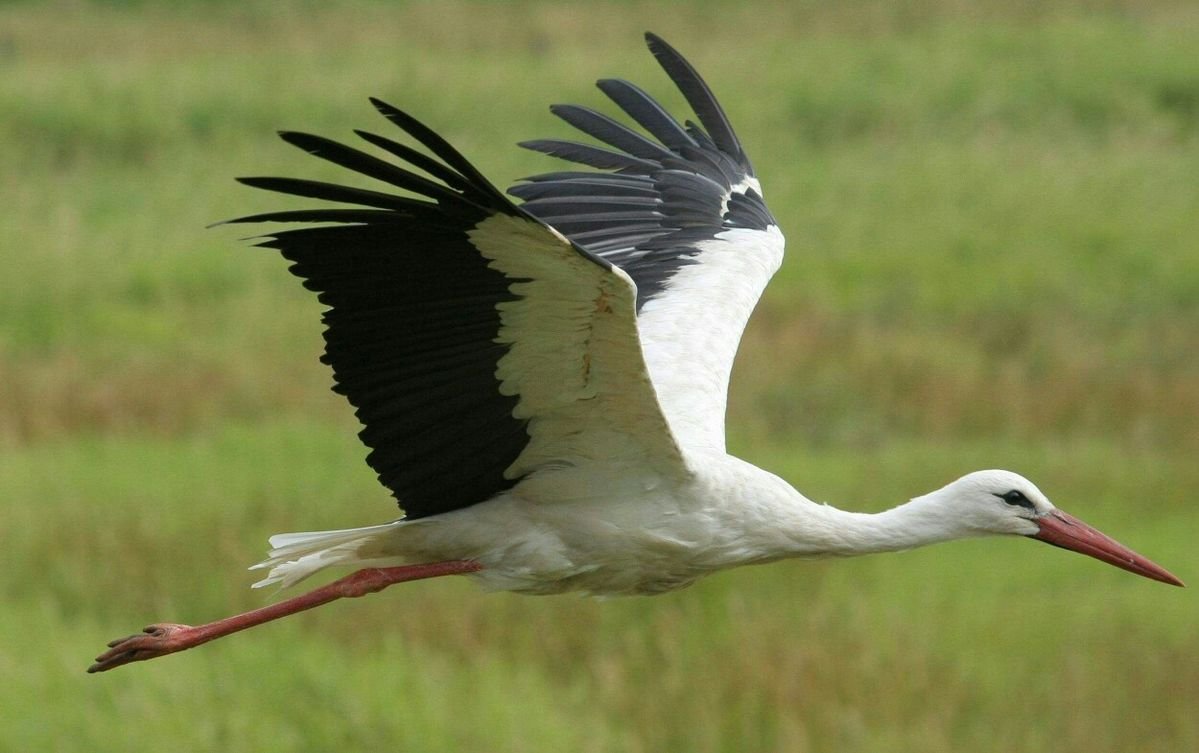
White Stork
Ciconia ciconiaA graceful long-distance migrant linking European breeding grounds with Tanzania’s open savannas and wetlands.
The White Stork (Ciconia ciconia) is a large stork of the family Ciconiidae. It breeds mainly in Europe and parts of western and central Asia and migrates to Africa outside the breeding season. In Tanzania it is a non-breeding Palearctic migrant, often encountered on open grasslands, floodplains, cultivated areas and wetland margins.
White Stork Quick Facts
What Is the White Stork?
The White Stork (Ciconia ciconia) is one of the world’s best-known migratory storks. It is a large, long-legged bird with mainly white plumage, black flight feathers, a long red bill and red legs. The species belongs to the family Ciconiidae and is closely associated with open country rather than dense forest.
Its annual life cycle links two very different parts of the world. Large numbers breed across Europe and parts of western and central Asia, then move south into Africa after the breeding season. Tanzania forms part of the African non-breeding range for these migrants. The species may therefore appear on a Tanzanian safari as part of a much larger seasonal movement that connects African landscapes with breeding areas thousands of kilometres away.
White Storks are opportunistic predators. They walk steadily through short vegetation and wet ground, picking up insects and other small prey. They also take amphibians, reptiles, small mammals, fish and carrion when these are available. Their ability to switch among prey types helps them exploit changing conditions across their migration route.
For safari visitors, the species is especially memorable because large groups can be conspicuous on open plains. A flock circling high on thermal currents or feeding shoulder-to-shoulder after rain can make an otherwise ordinary patch of grassland feel suddenly alive with migration.
How to Identify a White Stork
White Storks are among the easier large African migrants to identify once their proportions and black-and-white pattern are familiar. The adult has a mostly white body and neck, sharply contrasting black wing and some tail feathers, a long pointed red bill, and long red legs. The skin around the eyes is dark, and the head can look slightly rounded at a distance.
- Overall shape: very tall, long-legged and long-necked, with a large straight bill.
- Body plumage: mostly clean white on the head, neck, breast and belly.
- Wings: black flight feathers form the strongest dark contrast, particularly obvious in flight.
- Bill: long, straight and reddish in adults.
- Legs: long and red, an excellent field mark when the bird is standing or walking.
- Flight: broad wings and an elegant soaring style; the black flight feathers are highly conspicuous from below.
Adults, Juveniles & Seasonal Appearance
Young White Storks do not simply look like miniature adults. Juveniles have duller, less intensely colored bills and legs, and their plumage can appear browner or less crisply contrasted. The bare parts become brighter as birds mature. When a large flock contains mixed ages, these subtle differences are useful for close observation.
Distinguishing White Stork from Similar Storks
In Tanzania, the species can be confused with the much larger Marabou Stork or with other black-and-white storks. White Stork is more balanced and elegant in build than Marabou, lacks the Marabou’s huge bill and bare neck, and has a cleaner white head and body. Its black wing panels and bright red legs also combine into a distinctive field pattern.
Behavior & Social Life
White Storks are highly social outside the nesting season. In Africa they can gather in groups ranging from a few birds to very large flocks, particularly where food is concentrated. Their social behavior is closely linked to the seasonal pulse of grassland insects and other prey.
Foraging Behavior
- Walking hunter: most feeding happens on the ground, where birds walk through short grass or wet areas while scanning for prey.
- Visual searching: the bird frequently pauses, watches a small area, then makes a quick bill strike when prey is detected.
- Opportunism: it may exploit insects, frogs, lizards, small mammals, fish or carrion depending on what is available.
- Group feeding: several birds may feed close together in productive habitat, especially after rain or disturbance.
Resting, Roosting & Social Displays
White Storks rest on the ground, in shallow water, or on elevated structures and trees. At nesting colonies they use a range of visual and bill-related displays. Adults may throw the head back and clap or snap the bill in social interactions around the nest. Outside the breeding season, large groups may spend long periods standing quietly before suddenly taking flight together.
Migration
Unlike a resident Tanzanian stork, White Stork is a true long-distance migrant. Its annual movements are linked to the African–Eurasian Flyway and to the availability of favorable feeding conditions during the non-breeding season.
Habitat & Distribution
White Storks favor open landscapes. Across their wider range these include grasslands, agricultural fields, wet meadows, floodplains, marsh margins, river valleys and other areas where vegetation is open enough for walking and where prey can be found.
- Grasslands: short or recently grazed vegetation provides clear sightlines and accessible insects.
- Wetlands and floodplains: shallow water and soft ground can provide frogs, fish, insects and other prey.
- Agricultural landscapes: fields can become important feeding areas, especially where farming practices leave accessible prey.
- Burned or disturbed ground: fresh disturbance may concentrate prey and create temporary feeding opportunities.
Global Distribution
The species has a very large geographic range, with breeding populations concentrated in Europe and parts of western and central Asia and wintering populations extending through much of sub-Saharan Africa. Migration routes are shaped by geography because soaring storks depend heavily on thermal updrafts and therefore avoid long stretches of open water where possible.
Tanzania Distribution
In Tanzania, White Stork is a non-breeding Palearctic migrant. It has been documented in northern safari country, including the Serengeti, Ngorongoro landscape, Ndutu and Lake Manyara, and historical records also extend to the Moshi and Arusha area. These records show that the species uses a broad mix of open terrestrial and wetland habitats rather than a single park or habitat type.
White Stork in Tanzania
Tanzania is an important part of the White Stork's African non-breeding landscape, especially for birds moving through or wintering in East Africa. The species is best searched for on open plains, wet grasslands, floodplains, farm edges and other broad feeding areas where large flocks can be visible from a considerable distance.
Serengeti National Park
White Storks are recorded in the Serengeti, where open grasslands provide excellent walking and soaring habitat. The wide plains can make distant groups relatively easy to locate.
Serengeti safariNgorongoro Conservation Area
Modern photographic and birding records document White Storks in the Ngorongoro landscape, including the crater and surrounding open country.
Ngorongoro safariNdutu & Southern Serengeti
Ndutu is particularly interesting for migrant birders. Tanzania bird sources include White Stork records from this area, where open plains and seasonal wetlands can concentrate feeding birds.
Ndutu & SerengetiLake Manyara Landscape
White Storks are also documented around the Lake Manyara area, adding a wetland-edge setting to the species' Tanzanian habitat picture.
Lake Manyara safariSafari Methods
- Game drives: scan open plains, recently grazed grassland and wet patches.
- Birding stops: use a long lens or binoculars to inspect mixed feeding flocks.
- Wetland margins: shallow water and flooded grass can be productive when prey is concentrated.
- Look up: large migrating groups may first be detected high overhead using thermals.
Best Time to See Them
White Storks are seasonal in Tanzania. Exact timing varies with the movement of individual populations and weather, but the species is generally encountered during the African non-breeding period, with records particularly associated with the first part of the year. Tanzania-focused bird sources and trip reports show sightings in January–April, while other local records indicate broader seasonal occurrence. Rainfall and prey availability can strongly influence how many birds are visible at a given location.
Diet & Feeding
White Storks are opportunistic carnivores rather than specialists. They usually forage on land or in very shallow water and take whatever suitable animal prey is abundant and accessible.
Major Food Sources
- Insects: grasshoppers, locusts, beetles and other large insects can be especially important in open country.
- Amphibians: frogs and similar prey are taken around wet grassland and shallow water.
- Reptiles: small lizards and snakes are captured when encountered.
- Small mammals: rodents and other small mammals can supplement the diet.
- Fish and aquatic prey: small fish and other aquatic animals may be taken in suitable shallow water.
- Carrion: White Storks are willing to exploit dead animals when the opportunity arises.
How Feeding Changes with Conditions
The species is closely tied to food pulses. After rain, insect numbers can rise and feeding birds may gather across short grasslands. In drier periods, White Storks can shift toward other prey or exploit disturbed sites where animals are easier to detect. This flexibility is one reason the species can occupy a very large migration range.
Breeding & Life Cycle
White Storks are generally monogamous and often show strong attachment to breeding sites. Their reproductive cycle is concentrated in the northern breeding season, before the birds migrate south to Africa. Nesting usually occurs in open landscapes with tall trees, rooftops, pylons, chimneys or other elevated structures.
Nest Building
Both sexes contribute to the nest. The nest is a large platform of sticks, grass and other materials and may be reused and enlarged over many years. Old nests can become remarkably heavy and large. Nest placement is usually high enough to give the adults a broad view of the surrounding landscape.
Eggs, Incubation & Hatching
A clutch commonly contains around three to five eggs, although larger or smaller clutches occur. Both parents participate in incubation, which normally lasts roughly one month. Because incubation begins as the first egg is laid, hatching can be asynchronous, meaning chicks in the same brood may differ noticeably in age and size.
Chicks & Fledging
Both parents feed the young and protect them during the nestling period. Young White Storks usually leave the nest at about two months of age, with published studies reporting substantial variation around the 58–67 day range depending on conditions. After fledging, juveniles may remain dependent on parents for a further period before beginning their independent migration.
Conservation Status
The White Stork is currently assessed globally as Least Concern (LC). BirdLife's current global information gives a world population estimate of roughly 700,000–704,000 individuals. The species is widespread, conspicuous and closely monitored along its migration routes, although regional trends are not identical everywhere.
Its Least Concern status should not be interpreted as meaning that every population faces no pressures. The White Stork is dependent on a chain of breeding, stopover and non-breeding habitats that span multiple countries. Conservation therefore needs to operate across the whole African–Eurasian Flyway.
Why Monitoring Matters
Long-term counts, ringing, migration studies and modern tracking help reveal changes in migration timing, survival and population distribution. The White Stork is particularly valuable for this kind of work because it is large, visible, and often returns to familiar breeding areas and migration corridors.
White Stork vs Similar Tanzanian Storks
When several stork species occur in the same broad landscape, body size, bill shape, bare-part colors and habitat usually provide the quickest clues.
| Feature | White Stork | Abdim's Stork | Marabou Stork | Yellow-billed Stork |
|---|---|---|---|---|
| Scientific name | Ciconia ciconia | Ciconia abdimii | Leptoptilos crumenifer | Mycteria ibis |
| Build | Large, tall, elegant | Smaller and more compact | Huge, heavy, very long-bodied | Medium-large water-associated stork |
| Head/neck | Feathered white head and neck | Dark head; smaller white belly | Bare head and neck | Mostly white head and neck |
| Bill | Long, straight, red | Long, greyish | Very large, pale and massive | Long, yellow bill |
| Legs | Red | Grey with red knees/feet | Dark to blackish | Red |
| Main habitat | Open plains, wetlands and farmland | Open grassland and seasonal feeding areas | Open country, wetlands, towns and carrion-rich sites | Wetlands, floodplains and shallow water |
| Tanzania status | Non-breeding Palearctic migrant | Non-breeding migrant | Widespread resident | Widespread resident |
Did You Know?
Ancient Traveler
White Storks connect Africa and Eurasia through the African–Eurasian Flyway, making their annual movement one of the great recurring wildlife journeys on Earth.
Master of Thermals
They use rising columns of warm air to gain height and glide efficiently, reducing the need for continuous wingbeats during migration.
Black-and-White Wings
The contrast between white body feathers and black flight feathers is one of the easiest ways to recognize the species in flight.
Huge Old Nests
Breeding nests are repeatedly reused and enlarged. Mature nest structures can become exceptionally large and heavy over the years.
Opportunity Feeder
Although insects are important, the species can switch to frogs, reptiles, small mammals, fish and carrion when those resources are easier to obtain.
Tanzania Visitor
White Storks are recorded in Tanzania's northern safari landscapes, including Serengeti, Ngorongoro and Ndutu.
The sight of a White Stork in Tanzania is more than a beautiful bird encounter. A bird standing quietly in the grass may have crossed deserts, mountains and several national borders to reach the plain beneath your safari vehicle. Then, with the weather changing again, it will rise into the same invisible highways of warm air that have carried generations of storks between continents. Tanzania is not the end of the journey — it is one chapter in a remarkable annual cycle.
Gallery
Frequently Asked Questions
The scientific name is Ciconia ciconia. It belongs to the stork family Ciconiidae.
Yes. It occurs in Tanzania as a non-breeding Palearctic migrant, with records from places including Serengeti, Ngorongoro, Ndutu and Lake Manyara.
They are generally present during the African non-breeding season. Tanzanian records and trip reports show sightings particularly from the beginning of the year into April, with exact timing varying by weather and migration conditions.
Its diet is opportunistic and includes insects, amphibians, reptiles, small mammals, fish and carrion. Grasshoppers and other large insects can be important in open grassland.
It migrates between Eurasian breeding grounds and African non-breeding areas, relying heavily on thermal updrafts to soar. This dependence on thermals influences the routes used during migration.
Strong thermals form mainly over land rather than large bodies of water. White Storks therefore tend to use western and eastern land routes around the Mediterranean where soaring conditions are more favorable.
Tanzania is part of its non-breeding range rather than its principal breeding range. Most breeding occurs in Europe and parts of western and central Asia.
Young generally leave the nest after roughly two months, with published studies commonly placing fledging around 58–67 days, followed by a period of parental dependence.
The species is currently assessed globally as Least Concern. Its broad range and large global population support that category, although conservation of migration routes and habitats remains important.
References & Further Reading
- BirdLife International — White Stork: global conservation status, population estimate, migration, habitat and threats.
- BirdLife South Africa — White Stork: 2025 regional assessment and detailed regional status information.
- Coordinated Avifaunal Roadcounts / BirdMap Africa — White Stork: regional records and IUCN-linked species information.
- Tanzania Birds — White Stork: Tanzania occurrence information and photographs from Ndutu, Ngorongoro, Serengeti, Lake Manyara and Olasiti.
- eBird Tanzania: occurrence records documenting White Stork sightings in Tanzania, including Serengeti and Moshi-area records.
- BirdNET / Cornell species information: identification, diet and breeding biology.
- Muséum national d'Histoire naturelle: nest building, breeding behavior, migration and life-cycle information.
- Recent White Stork research: peer-reviewed studies of incubation, hatching, fledging and migration behavior.
Research note: Where measurements or breeding timings vary among populations and studies, the page uses broad, defensible ranges rather than presenting a single value as universal.