

.png)
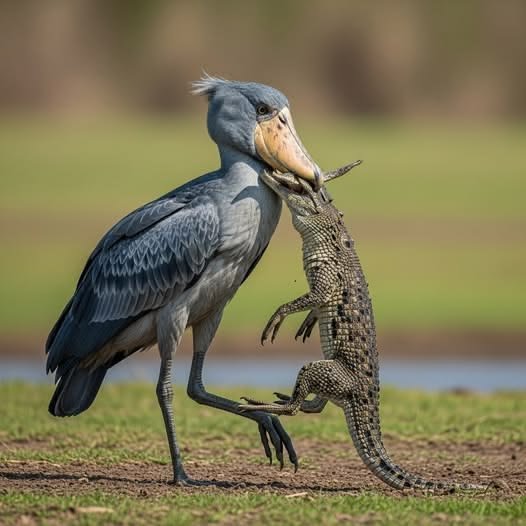
Shoebill in Tanzania
Balaeniceps rex — Balaenicipitidae · not a true storkWhat Is the Shoebill?
The Shoebill (Balaeniceps rex) is one of Africa's most extraordinary freshwater birds, famous for its enormous shoe-shaped bill and prehistoric appearance.
Although historically called the Whale-headed Stork, it is not a true stork. Modern classifications place it in its own family Balaenicipitidae within Pelecaniformes, with phylogenetic evidence linking it closer to pelicans. In Tanzania it is a specialist of western and northwestern wetlands — Malagarasi River, Moyowosi swamp, Lake Victoria wetlands and Ugalla National Park.
Is the Shoebill Really a Stork?
Although historically called the Whale-headed Stork, the Shoebill is not a true stork. Modern classifications place it in its own family Balaenicipitidae within Pelecaniformes, and phylogenetic evidence places it closer to pelicans than to true storks (Ciconiidae).
Scientific Classification
How to Identify a Shoebill
- Enormous blue-grey shoe-shaped bill with a broad hooked tip and massive gape — the primary identifier.
- Slate/blue-grey body, broad wings and long legs with large feet.
- Yellowish eyes and shaggy head/crest feathers with a powerful neck.
- Unmistakable prehistoric silhouette among papyrus.
Why Does the Shoebill Have Such a Huge Bill?
The bill is a specialised tool for large aquatic prey:
- Broad bill with a hooked tip and sharp edges.
- Huge gape designed for gripping and slashing large, slippery fish — especially catfish, lungfish and bichirs.
It is not claimed here as the largest bill of every living bird.
Pair Bonding and Territory
See Daily Behaviour for territorial pair details.
Habitat: Freshwater Swamps & Papyrus
The Shoebill is a freshwater swamp specialist — not a savanna species:
- Freshwater swamps, papyrus swamps, marshes and reedbeds.
- Floodplain wetlands, shallow channels and floating vegetation.
- Wet grasslands around swamps and slow-moving waterways.
Why Are Papyrus Swamps Important?
Papyrus provides hunting cover, nesting material, secluded nest sites, fish habitat, protection from disturbance and shallow-water feeding areas.
Global Distribution
The Shoebill has a restricted distribution in freshwater wetlands of tropical East and Central Africa, extending from South Sudan through Uganda and neighboring regions to western Tanzania and northern Zambia. Uganda has some relatively accessible viewing sites such as Mabamba, while Tanzania holds important remote wetland habitat. The range is not presented as "found primarily in Uganda" with Uganda as the best place.
Shoebill in Tanzania
In Tanzania, the Shoebill is a western and northwestern Tanzania specialist:
- Malagarasi River wetlands and Moyowosi swamp — core remote systems.
- Lake Victoria wetlands and the Kagera landscape.
- Ugalla National Park — among its listed waterbirds.
These are specialist birding habitats and are not presented as equal in accessibility or sighting frequency.
How Does a Shoebill Hunt?
- Stands nearly motionless and scans shallow water.
- Tracks prey, then leans/lunges forward using wings for balance.
- Strikes with the massive bill, subdues/cuts prey and swallows smaller prey.
What Is the Shoebill's Collapsing Fishing Technique?
The Shoebill can remain almost motionless before suddenly leaning and collapsing forward toward a fish. The technique works best in shallow water and wet vegetation.
Why Do Shoebills Hunt in Low-Oxygen Water?
They are often associated with slow-moving, poorly oxygenated water where large fish may surface more frequently. Cautious wording is used — not all Shoebills only hunt in low-oxygen water.
Where to See Shoebills in Tanzania
Ugalla National Park
Country: Tanzania | Region: Western Tanzania
Floodplain wetlands — Shoebill among listed waterbirds.
Specialist and unpredictable
Malagarasi River Wetlands
Country: Tanzania | Region: Western Tanzania
Riverine swamps and papyrus — core habitat.
Specialist and unpredictable
Moyowosi Swamp
Country: Tanzania | Region: Western Tanzania
Vast papyrus swamp — remote specialist birding.
Specialist and unpredictable
Lake Victoria Wetlands
Country: Tanzania | Region: Northwestern Tanzania
Lake-margin wetlands and Kagera channels.
Specialist and unpredictable
Burigi-Chato National Park is a cautious specialist possibility: potential habitat / bonus sighting; confirmed observations are scarce and survey coverage is limited. Never guarantee a Shoebill.
East Africa Context
- Uganda: Mabamba and other established viewing sites.
- Tanzania: western/northwestern wetland systems above.
- Zambia: Bangweulu Wetlands.
- South Sudan / DRC / Rwanda: additional range.
Uganda does not overwhelm the Tanzania section.
Birding Methods
- Specialist birdwatching, boat safari, canoe/wetland excursion where permitted, guided wetland observation and wildlife photography.
- Game drive only where genuinely appropriate.
Best Time to See Them
Shoebills can be encountered year-round where resident birds and suitable habitat are present. Local visibility depends on water level, vegetation, wetland accessibility, weather and bird movements. No June–October universal season is imposed.
Shoebill in Pictures
A closer look at the Shoebill in its natural East African habitat — its striking appearance, habitat and behaviour are best appreciated up close.
Where to Spot the Shoebill on Safari
Plan your trip around the destinations and safaris where the Shoebill is easiest to see. Explore the parks, itineraries and tour packages by destination below.
What Does a Shoebill Eat?
Primarily piscivorous but opportunistic:
Primary Fish
- Catfish
- Lungfish
- Bichirs
- Tilapia and other freshwater fish
Additional Prey
- Frogs and water snakes
- Monitor lizards and baby crocodiles
- Small turtles, rodents, small waterbirds, snails and carrion
Shoebill Breeding and Nesting
No gestation, birth or parental feeding:
- Monogamous, territorial pair with a large wetland nest.
- Nest on floating vegetation or a small island — papyrus/reeds, swamp islands, exposed elevated areas or termite-mound-like islands in secluded wetlands; pairs may add material throughout breeding.
- 1–3 eggs, usually 2; both parents incubate with egg turning.
- Incubation about 30 days — eggs are cooled with water carried in the bill.
- Parents feed chicks; fledging around 95 days and independence around 125 days.
How Many Eggs Does a Shoebill Lay?
1–3 eggs, usually 2. Clutch size is not confused with chick survival.
How Do Shoebills Cool Their Eggs?
Adults carry water in their bills to cool eggs and chicks in hot conditions and turn eggs regularly.
Why Does Only One Shoebill Chick Usually Survive?
Due to asynchronous hatching, size difference, competition for food and limited food availability, the strongest chick generally has greatest survival probability. It is not described as parents intentionally killing the younger chick. This is distinct from "only one egg is laid."
Chick Development
- Helpless hatchlings with thick grey/silvery down.
- Parents provide processed food early, whole prey later.
- Fledging around 95 days, independence around 125 days.
Natural Threats
Adults are large and formidable, facing few natural predators. For eggs and chicks, threats include nest predators, predatory birds, reptiles/crocodilians where appropriate and mammals capable of reaching nests.
Conservation Status: Vulnerable
IUCN Red List Status: Vulnerable (VU) — BirdLife estimates approximately 3,300–5,300 mature individuals.
Not Least Concern, Near Threatened or Endangered.
Why Is the Shoebill Vulnerable?
- Habitat loss, wetland drainage, agricultural conversion, cattle disturbance/trampling, pollution, drought, altered hydrology, hunting, nest disturbance and illegal live-bird trade.
How Does Wetland Loss Threaten Shoebills?
Shoebills depend on large intact freshwater wetlands. Degradation reduces fish abundance, shallow-water hunting areas, nesting sites and secluded breeding habitat.
Why Is Illegal Trade Dangerous?
Wild adult capture, transport mortality, stress, poor captive breeding success and removal of breeding adults from small wild populations make trade particularly harmful. Prices and instructions are not included.
Regional example: Bangweulu Wetlands, Zambia — breeding support, hand-rearing, release and GPS tracking — clearly labelled Zambia, not presented as Tanzanian. For Tanzania, focus is on wetland protection, protected-area management, breeding habitat protection, responsible bird tourism and monitoring where documented.
Shoebill Facts
Shoebill vs Saddle-billed Stork
| Feature | Shoebill | Saddle-billed Stork |
|---|---|---|
| Family | Balaenicipitidae | Ciconiidae |
| Bill | Giant shoe-shaped | Red-and-black with yellow saddle |
| Habitat | Papyrus swamps | Floodplains/wetlands |
Shoebill vs Marabou Stork
| Feature | Shoebill | Marabou Stork |
|---|---|---|
| Bill | Massive shoe bill | Large dagger bill with gular sac |
| Social | Solitary/territorial | Colonial scavenger flocks |
Shoebill vs African Sacred Ibis
| Feature | Shoebill | African Sacred Ibis |
|---|---|---|
| Order | Pelecaniformes (Balaenicipitidae) | Pelecaniformes (Threskiornithidae) |
| Feeding | Collapsing ambush on fish | Tactile mud probing for invertebrates |
Shoebill vs Goliath Heron
| Feature | Shoebill | Goliath Heron |
|---|---|---|
| Size | 150–152 cm, 526×526 image | ~140 cm, heron — long neck |
| Bill | Shoe-shaped, hooked tip | Large dagger heron bill |
Why the Shoebill Is an Iconic African Wetland Bird
- Evolutionary uniqueness — only living species in Balaenicipitidae.
- Prehistoric appearance and giant bill.
- Wetland specialization and dependence on intact papyrus systems.
- Birdwatching importance and conservation value as a Vulnerable flagship.
Photographing the Shoebill
- Giant bill profile and motionless hunting posture.
- Fish strike and collapsing attack.
- Flight, bill clattering, gular fluttering, pair, nest and chick feeding — with papyrus silhouette and water reflection.
Never disturb nesting sites; use long lenses and keep to boat channels.
Frequently Asked Questions
The Shoebill (Balaeniceps rex) is Africa's extraordinary freshwater bird of the family Balaenicipitidae, famous for its enormous shoe-shaped bill, blue-grey plumage and papyrus-swamp lifestyle.
No. Although nicknamed the Whale-headed Stork, modern classifications place it in Balaenicipitidae within Pelecaniformes, closer to pelicans than to true storks (Ciconiidae).
Balaeniceps rex.
Its broad, shoe-shaped bill with a hooked tip and huge gape is adapted for gripping and slashing large, slippery prey, especially catfish, lungfish and bichirs.
Restricted freshwater wetlands of tropical East and Central Africa, from South Sudan through Uganda to western Tanzania and northern Zambia — centred on papyrus swamps and floodplains.
Freshwater swamps, papyrus swamps, marshes, reedbeds, floodplain wetlands, shallow channels and floating vegetation — not generic savanna.
They provide hunting cover, nesting material, secluded nest sites, fish habitat and shallow-water feeding areas with protection from disturbance.
Western and northwestern Tanzania — Malagarasi River wetlands, Moyowosi swamp, Lake Victoria wetlands and Ugalla National Park as a specialist, unpredictable wetland bird.
Yes. Ugalla lists Shoebill among its waterbirds, though sightings depend on water levels, vegetation and specialist wetland access.
Malagarasi River system, Moyowosi swamp and Ugalla National Park — core remote western wetlands.
Lake Victoria wetlands and the Kagera-associated swamp landscape.
Primarily fish — catfish, lungfish, bichirs, tilapia and other freshwater fish — plus frogs, water snakes, monitor lizards, baby crocodiles, small turtles, rodents, small waterbirds, snails and carrion.
It stands nearly motionless, scans shallow water, tracks prey, leans/lunges with wings for balance, strikes with its massive bill and subdues/cuts prey before swallowing.
After long stillness, the bird suddenly leans and collapses forward toward a fish — most effective in shallow water and wet vegetation.
Shallow channels and floating vegetation concentrate fish and allow the ambush and collapsing strike to work.
They are often associated with slow-moving, poorly oxygenated water where large fish may surface more frequently — stated cautiously, not as an exclusive rule.
Generally solitary and territorial; breeding pairs maintain territories and may feed on different parts of their territory — no flocking.
Bill clattering occurs during greeting, nesting and pair interaction.
By gular fluttering — rapid vibration of throat muscles to increase evaporative heat loss.
A large nest on floating vegetation, papyrus/reeds, swamp islands or termite-mound-like islands in secluded wetlands, added to throughout breeding.
1–3 eggs, usually 2 — not to be confused with the usual survival of one chick.
Approximately 30 days, with both parents sharing incubation, regular egg turning and cooling of eggs with water carried in the bill.
Adults carry water in their bills to cool eggs and chicks in hot conditions.
Asynchronous hatching creates a size difference; competition for limited food means the strongest chick generally survives, without parents intentionally killing the younger.
Fledging around 95 days and independence around 125 days; hatchlings are helpless with thick grey/silvery down.
Around 125 days after hatching.
Globally Vulnerable (VU) — BirdLife estimates about 3,300–5,300 mature individuals — not Least Concern, Near Threatened or Endangered.
Habitat loss, wetland drainage, agricultural conversion, cattle trampling, pollution, drought, altered hydrology, hunting, nest disturbance and illegal live-bird trade pressures.
Wetland loss and degradation, human disturbance, hunting and especially illegal capture for the live-bird trade — including capture stress and poor captive breeding.
Wild adult capture, transport mortality, stress, poor captive breeding success and removal of breeding adults from small wild populations make trade particularly damaging.
Year-round where resident birds occur, depending on water level, vegetation, wetland accessibility, weather and movements — no universal June–October season; specialist wetland birding with boat access where permitted is recommended and sightings are never guaranteed.
It is a cautious specialist possibility — potential habitat / bonus sighting, but confirmed observations are scarce and survey coverage is limited.
Related Safari Packages & Tours
Book a safari to see the Shoebill and the rest of Africa's incredible wildlife with our expert guides.
References & Further Reading
- BirdLife / IUCN: Balaeniceps rex — Balaenicipitidae, Pelecaniformes — Vulnerable; 3,300–5,300 mature individuals.
- Tanzania Birds / Tanzania Parks: Malagarasi, Moyowosi, Lake Victoria wetlands, Ugalla National Park records.
- Zoological literature: shoe-shaped bill, papyrus swamp ecology, 1–3 eggs (usually 2), ~30 d incubation with cooling, ~95 d fledging, ~125 d independence, one-chick survival.
- Regional conservation example: Bangweulu Wetlands, Zambia — clearly labelled Zambia.
- About these facts: measurements and timings are approximate ranges.
Sightings are never guaranteed and depend on local conditions.

Daily Behaviour and Social Life
Shoebills are primarily diurnal and may spend long periods standing motionless, scanning, hunting, feeding, resting, preening and moving between wetland feeding areas. No diurnal label or 6am–10am timetable is used.
Social Structure
Shoebills are generally solitary and breeding pairs maintain territories — even mates may feed on different parts of their territory. No flock behaviour, leadership or scent communication is described.
Communication
Why Do Shoebills Clatter Their Bills?
Bill clattering may occur during greeting, nesting and pair interaction.
How Does a Shoebill Keep Cool?
By gular fluttering — rapid throat-muscle vibration that increases evaporative heat loss.