








 Ngorongoro Conservation Area
 Volcanoes National Park










Kirk’s Dik-dik
Madoqua kirkii
Kirk’s Dik-dik — Quick Facts
Important notice
This profile describes a species associated with the Mount Kilimanjaro ecological landscape. Checklist or locality records do not confirm a sighting on every route, camp or altitude. Route records are listed only when verified; none are asserted here.
Introduction
Kirk’s dik-dik is a very small antelope of dry bushland and thorn scrub. On Kilimanjaro it is documented below the cultivated zone of the western mountain and in the North Kilimanjaro Migration Corridor — not on the upper climbing routes.
How to Identify the Animal
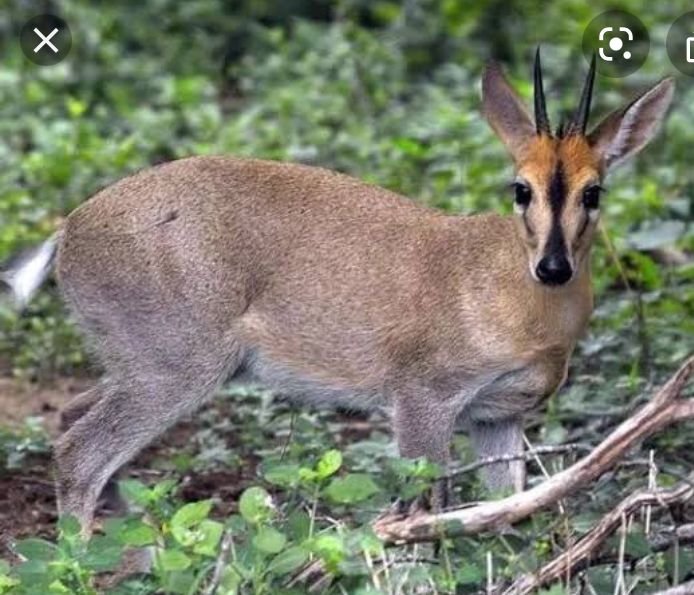
A tiny antelope with an elongated, flexible muzzle, large eyes with pale rings and a reddish-brown to grey-brown coat with pale underparts. Only males have horns. The specialised muzzle helps with heat regulation in dry habitats.
Habitat and Distribution on Mount Kilimanjaro
The 1995 Kilimanjaro mammal review reports Kirk’s dik-dik in dry bush below the cultivated zone of West Kilimanjaro and in the North Kilimanjaro Migration Corridor at approximately 1,700 metres. The same review explains that older claims of the species occurring as high as 4,270 metres on the mountain were based on a misidentified duiker. Those old high-altitude claims are not repeated here. This is a lowland dry-bush species, not an animal of the upper mountain.
Diet and Feeding Behaviour
A browser taking leaves, shoots, flowers and fruit from shrubs and small trees, with little grass. No Kilimanjaro-specific food-plant list is claimed.
Behaviour and Social Life
Shy and cautious, usually remaining within dense scrub. Pairs are commonly long-term and hold small territories marked with scent glands.
Communication and Calls
The name reflects the alarm call: a sharp, repeated 'dik-dik' given when startled, often followed by zig-zag running into cover. Detailed Kilimanjaro vocal observations are not claimed.
Reproduction and Breeding
Generally monogamous, with a single young after a gestation of approximately five to six months in the wider species. These are general biological data, not measurements made on Kilimanjaro.
Ecological Importance
As a small browser in dry bush it influences shrub structure and forms prey for a range of predators. On Kilimanjaro its ecological role is tied to the lower, drier slopes.
Conservation Status
Current IUCN and Mammal Diversity Database listings give Kirk’s dik-dik a global status of Least Concern. The 2025 antelope photo-identification guide does not include a species account for it. No local population trend is asserted.
Wildlife Watching on Kilimanjaro
This species belongs to low dry bushland and the migration corridor, not the forest or high moorland. Watch quietly from a distance in suitable habitat and never attempt to approach or feed it.
Route and Habitat Occurrence
This species is recorded at mountain or habitat level. No route-specific occurrence is claimed without a verified locality record.
Honest Expectations
Encounters depend on habitat, timing, weather and animal behaviour. No wildlife sighting can be guaranteed on a Kilimanjaro trek.
Frequently Asked Questions
About Kirk’s Dik-dik on Kilimanjaro
What is the scientific name of Kirk’s dik-dik?
Madoqua kirkii.
Which family is it in?
Bovidae.
How small is it?
Around 40 cm at the shoulder, making it one of the world’s smallest antelopes.
What are its identification features?
An elongated muzzle, large eyes with pale rings, reddish-brown to grey-brown coat and pale underparts; only males have horns.
Where is it recorded on Kilimanjaro?
In dry bush below the cultivated zone of West Kilimanjaro.
Was it recorded in a migration corridor?
Yes, in the North Kilimanjaro Migration Corridor at about 1,700 metres.
Did older records place it high on the mountain?
Yes, but the 1995 review attributes those to a misidentified duiker.
Does it live at 4,270 metres?
No. That old high-altitude claim is not accepted here.
What habitat does it prefer?
Dry bushland, thickets, scrub and open woodland.
What does it eat?
Leaves, shoots, flowers and fruit, with little grass.
Why is it called dik-dik?
The name reflects its sharp repeated alarm call.
Does it form pairs?
Yes, generally long-term monogamous pairs.
How long is the gestation period?
Approximately five to six months in the wider species; not measured on Kilimanjaro here.
Is it active by day?
It can be active at dawn, dusk and at night, resting in shade during the hottest hours.
Is it found on the climbing routes?
No route-specific occurrence is claimed for the tourist routes.
Could it be seen on the upper mountain?
No. It is a low, dry-bush species.
What is its conservation status?
Least Concern globally in current IUCN and MDD listings.
Is that a Kilimanjaro population estimate?
No. No local trend is asserted.
How does it differ from a duiker?
It is a dik-dik with an elongated heat-regulating muzzle and paired territorial behaviour.
Where can I read more?
See the Bovidae family page and Grimshaw, Cordeiro & Foley (1995).



Sources and Further Reading
Research foundations
Grimshaw, J.M., Cordeiro, N.J. & Foley, C.A.H. (1995). The Mammals of Kilimanjaro. African Journal of Ecology.
Elevational Distribution and Ecology of Small Mammals on Africa's Highest Mountain (2014 field study).
Tanzania National Parks — Kilimanjaro National Park official information.
UNEP-WCMC — Kilimanjaro World Heritage Datasheet.
Discover Kilimanjaro’s Wildlife
Explore the mountain responsibly with African Majestic Adventure and learn about its animals with local guides.