








 Ngorongoro Conservation Area
 Volcanoes National Park










Lesser Kudu
Tragelaphus imberbis
Lesser Kudu — Quick Facts
Important notice
This profile describes a species associated with the Mount Kilimanjaro ecological landscape. Checklist or locality records do not confirm a sighting on every route, camp or altitude. Route records are listed only when verified; none are asserted here.
Introduction
The lesser kudu is a slender, elegant spiral-horned antelope of dry bush and thorn scrub. On Kilimanjaro it belongs to the lower western dry-bushland and migration-corridor story, not to the high climbing routes.
How to Identify the Animal
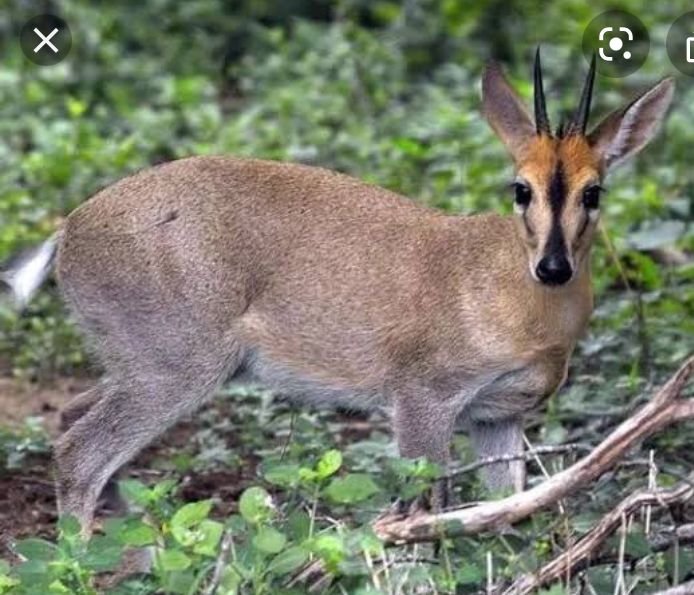
A slender antelope with a grey-brown to reddish-brown coat, several narrow white vertical body stripes, large ears and white throat and facial markings. Males are larger, heavier and carry long spiral horns; females are hornless and generally reddish-brown. It is much smaller than the greater kudu, which has a taller body, larger ears and different striping.
Habitat and Distribution on Mount Kilimanjaro
The 1995 Kilimanjaro review records the lesser kudu in dry bush below West Kilimanjaro, particularly around Tinga-Tinga, and in the North Kilimanjaro Migration Corridor. It also describes a 1993 observation on farmland near Ol Molog at about 1,740 metres. The same paper reviews an old report of kudu at roughly 4,270 metres and concludes the animal was almost certainly an eland. That correction is essential: lesser kudu are not a confirmed high-altitude species of the upper mountain.
Diet and Feeding Behaviour
A browser taking leaves, shoots, herbs and fruit from shrubs and low trees. No Kilimanjaro-specific food plants or dietary percentages are claimed.
Behaviour and Social Life
Cautious and closely tied to cover, usually active at low light. Males may live alone or in small groups, while females and young are more often in small parties. No local Kilimanjaro behavioural study is asserted.
Communication and Calls
Alarm signals and quiet contact cues are reported for antelopes in this group, but no distinctive lesser kudu vocal description is claimed for Kilimanjaro.
Reproduction and Breeding
General species information indicates a single calf after a gestation of roughly seven to eight months. No Kilimanjaro breeding season is claimed.
Ecological Importance
As a browser in dry bushland it influences shrub structure and forms prey for predators in the lower landscape around the mountain.
Conservation Status
The IUCN Red List assesses the lesser kudu as Near Threatened globally, with a decreasing population trend across its range. That global category is not a Kilimanjaro population estimate, and no local trend is asserted here.
Wildlife Watching on Kilimanjaro
This species belongs to low dry bushland, the Tinga-Tinga area and the migration corridor rather than the forest or upper trails. Watch quietly from a distance; sightings are never guaranteed.
Route and Habitat Occurrence
This species is recorded at mountain or habitat level. No route-specific occurrence is claimed without a verified locality record.
Honest Expectations
Encounters depend on habitat, timing, weather and animal behaviour. No wildlife sighting can be guaranteed on a Kilimanjaro trek.
Frequently Asked Questions
About Lesser Kudu on Kilimanjaro
What is the scientific name of the lesser kudu?
Tragelaphus imberbis.
Which family is it in?
Bovidae.
How is it identified?
A slender body, narrow white vertical stripes, large ears and white facial marks; males have long spiral horns.
Do females have horns?
No. Only males carry horns.
How does it differ from the greater kudu?
The lesser kudu is much smaller, with narrower stripes and a different overall proportions; greater kudu is not part of these Kilimanjaro records.
Where on Kilimanjaro is it recorded?
In dry bush below West Kilimanjaro and in the North Kilimanjaro Migration Corridor.
What is the Tinga-Tinga record?
The 1995 review notes lesser kudu particularly around the Tinga-Tinga area.
Was there an observation near Ol Molog?
Yes, on farmland at approximately 1,740 metres, observed in 1993.
Did older sources place kudu at 4,270 metres?
Yes, but the 1995 review considers that animal almost certainly an eland.
Is it a high-altitude climbing-route species?
No. It is a low dry-bushland species.
What does it eat?
Leaves, shoots, herbs and fruit from shrubs and low trees.
When is it most active?
Chiefly at low light, often remaining in cover by day.
Does it live in groups?
Males may be solitary; females and young are often in small parties.
Does it have a distinctive call?
No specific Kilimanjaro vocal description is claimed here.
How long is gestation?
Roughly seven to eight months in the wider species; no local data are asserted.
Is it confirmed on the popular climbing routes?
No. No route-specific occurrence is claimed.
What is its global conservation status?
Near Threatened on the IUCN Red List.
Is that a Kilimanjaro population status?
No. No local population estimate or trend is given.
Where can a visitor hope to see it?
Only in suitable low dry bushland or corridor habitat, and never with a guarantee.
Where can I read more?
See the Bovidae family page and Grimshaw, Cordeiro & Foley (1995).



Sources and Further Reading
Research foundations
Grimshaw, J.M., Cordeiro, N.J. & Foley, C.A.H. (1995). The Mammals of Kilimanjaro. African Journal of Ecology.
Elevational Distribution and Ecology of Small Mammals on Africa's Highest Mountain (2014 field study).
Tanzania National Parks — Kilimanjaro National Park official information.
UNEP-WCMC — Kilimanjaro World Heritage Datasheet.
Discover Kilimanjaro’s Wildlife
Explore the mountain responsibly with African Majestic Adventure and learn about its animals with local guides.