

.png)
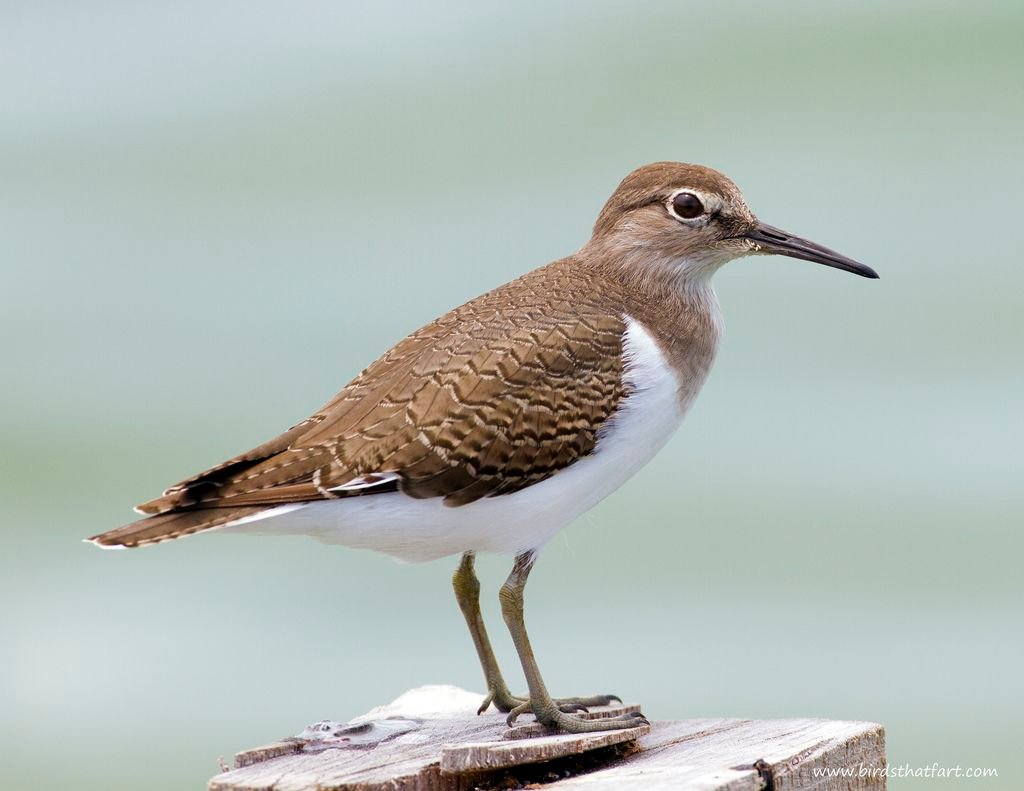
Common Sandpiper
Actitis hypoleucosA lively Eurasian migrant that follows Tanzania’s rivers, lakeshores and wetlands each year.
The Common Sandpiper (Actitis hypoleucos) is a small wader of the sandpiper family Scolopacidae. It breeds across northern Eurasia and migrates south for the non-breeding season, becoming a familiar visitor to water margins across Tanzania. Its quick, jerky run, constant tail-bobbing and contrasting wing pattern make it one of the easier small shorebirds to recognize.
Common Sandpiper Quick Facts
What Is the Common Sandpiper?
The Common Sandpiper (Actitis hypoleucos) is a small, long-bodied wader in the family Scolopacidae. It is strongly associated with the edges of water, where it runs, pauses, probes and picks small prey from mud, stones and shallow water.
Unlike many resident African wetland birds, the Common Sandpiper is primarily a long-distance migrant in Tanzania. Birds seen here generally belong to populations that breed across northern Europe and Asia and spend the non-breeding season farther south in Africa.
Its distinctive habit is to keep moving along the shoreline, often giving a characteristic forward-and-back bob of the rear body while standing or walking. That restless rhythm, combined with its two-tone upperparts and pale wing stripe, is central to field identification.
How to Identify a Common Sandpiper
The Common Sandpiper is a distinctive bird, easily recognized by its crest and dark plumage .
- Crest: Long, full crest of feathers on the head, especially prominent when alert or excited .
- Plumage: Mostly dark brown to black .
- Belly: Brown and white streaked underparts .
- Eyes: Bright yellow eyes .
- Tail: Relatively short .
- Legs: Yellow legs .
The Common Sandpiper is compact but elegant, with a brown back, paler underside, white throat and a conspicuous pale wing-bar in flight. It also has a dark-tipped bill, relatively short dark legs and a tail that reaches beyond the folded wingtips.
Upperparts: Brown to olive-brown with darker feather centres and a subtly streaked appearance.
Behavior & Social Life
Common Sandpiper are active, alert foragers. They usually feed singly or in loose, widely spaced groups rather than forming dense feeding flocks. A bird may spend several minutes moving along one stretch of shoreline before taking a short flight to another patch.
Daily Activity
- Foraging: Runs, stops, pecks and probes along the wet edge of rivers, pools and mudflats.
- Tail-bobbing: The repeated upward movement of the rear body is a characteristic behavior when walking or feeding.
- Flight: Often flushes quickly when approached, flying low over the water before settling again a short distance away.
Migration
In Tanzania the Common Sandpiper is chiefly a non-breeding migrant. It arrives from breeding grounds farther north and returns northward when conditions favor breeding, making seasonal timing an important part of its ecology.
Habitat & Distribution
The Common Sandpiper favors shallow-water margins where exposed mud, stones or short vegetation provide feeding surfaces. It is versatile and may use both natural and human-modified wetlands when food and safe shoreline habitat are available.
- Rivers and streams: Rocky or muddy banks with shallow water and quiet edges.
- Lakes and ponds: Sheltered margins, muddy shallows and small inlets.
- Wetlands and floodplains: Seasonal pools, marsh edges and open wet ground.
- Coastal habitats: Estuaries, beaches, rocky shores and tidal margins, especially during migration and the non-breeding season.
Distribution: The species breeds across broad areas of Eurasia and migrates to Africa and South Asia outside the breeding season.
Tanzania Distribution
In Tanzania, the Common Sandpiper is a regular migrant associated with inland and coastal wetlands. Tanzanian bird records include birds at Tarangire and Ngorongoro Crater as well as coastal observations such as Ushongo and Pembe Abwe.
Common Sandpiper in Tanzania
The Common Sandpiper is best sought around quiet water margins during the Tanzanian non-breeding season. The most productive observations often come from scanning shorelines rather than open grasslands.
Tarangire National Park
River edges, seasonal pools and other wet margins in Tarangire can attract migrant sandpipers during the wet and non-breeding periods.
Serengeti safariNgorongoro Crater
The crater’s lakes, wetlands and damp shorelines provide suitable feeding habitat for migrant waders, including Common Sandpipers.
Ngorongoro safariUshongo Coast
Coastal shoreline and intertidal habitats at Ushongo provide another setting in which Common Sandpipers have been documented in Tanzania.
Tarangire safariPembe Abwe Wetlands
Pembe Abwe is among the Tanzanian localities documented for Common Sandpiper observations, illustrating the species’ use of varied freshwater and wetland edges.
Ruaha safariSafari Methods
- Wetland birding: Scan muddy margins, rocks and shallow water slowly rather than only watching open water.
- Walking safaris: Shoreline walks can reveal feeding birds that are easy to miss from a moving vehicle.
- Wildlife photography: Early or late light can emphasize the subtle brown plumage and pale wing-bar.
Best Time to See Them
Look for Common Sandpipers during the Tanzanian non-breeding season, particularly when migrant waders are concentrated around productive wetlands and shorelines. Exact numbers and timing vary with rainfall and water conditions.
Diet & Feeding
The Common Sandpiper is an opportunistic shorebird whose diet is dominated by small invertebrates collected from wet mud, shallow water, stones and vegetation.
Food Sources
- Aquatic insects: Larvae and adult insects taken from wet surfaces and shallow water.
- Worms: Small earthworms and other soft-bodied invertebrates exposed in damp substrate.
- Crustaceans and molluscs: Tiny crustaceans and molluscs where available in freshwater or coastal habitats.
- Other small prey: Occasionally takes other small aquatic organisms when encountered.
Hunting Behavior
It usually forages visually, moving quickly and pecking at prey from the shoreline. The bird’s restless walk, sudden stops and repeated tail-bobbing are closely linked to this active feeding style.
Breeding & Life Cycle
Common Sandpipers generally breed in northern Eurasia rather than Tanzania. During the breeding season they occupy river valleys, lakeshores, forest openings, tundra-edge habitats and other northern landscapes close to water.
Nesting
- Nest: A shallow scrape or simple nest placed on the ground, often well concealed in vegetation close to water.
- Eggs: Typically 4 eggs, cryptically marked to blend with the nest surroundings.
- Incubation: About 21 days, with both parents involved in incubation in varying proportions.
Chicks
The chicks are precocial, leaving the nest soon after hatching and following the adults while learning to feed themselves. They develop quickly, an adaptation suited to the short northern breeding season.
Conservation Status
The Common Sandpiper is currently assessed globally as Least Concern. Its broad distribution and large population mean it is not presently considered at a high risk of global extinction.
Even so, wetland quality matters greatly. Pollution, wetland alteration, shoreline disturbance and loss of feeding habitat can reduce the quality of stopover and non-breeding sites used by migratory birds.
Conservation priorities:
- Protect wetlands: Maintain clean rivers, lakes, estuaries and seasonal floodplains.
- Reduce disturbance: Important roosting and feeding shorelines benefit from responsible recreation and wildlife viewing.
Comparisons
The Common Sandpiper is often compared with other small migrant waders. The table below highlights field differences useful in Tanzania.
| Feature | Common Sandpiper | Green Sandpiper | Wood Sandpiper |
|---|---|---|---|
| Size | 18–24 cm | 19–24 cm | 19–24 cm |
| Legs | Short, grey-green/olive | Greenish, longer-looking | Longer, often greenish |
| Wing pattern | Strong pale wing-bar | Pale wing-bar less bold | Pale wing-bar / strong contrast |
| Habitat | Rivers, lakes, mudflats, coasts | Wetlands, muddy shallows | Freshwater margins & marshes |
| Feeding style | Runs and pecks with tail-bobbing | More deliberate wading/pecking | Long-legged probing |
| Diet | Rodent specialist | Reptiles, small mammals | Large gamebirds, mammals |
Did You Know?
Tail Bobber
Its repeated tail-bobbing while walking is one of the most distinctive clues to its identity.
Long-Distance Migrant
Birds seen in Tanzania are generally part of a seasonal migration linking Eurasian breeding grounds with African non-breeding areas.
Shoreline Specialist
It is often found right at the edge where water meets mud, stones, sand or short vegetation.
Confident Runner
Rather than constantly wading, it often runs quickly across exposed shoreline before stopping to pick prey.
Wide Range
The species occupies a very broad geographic range spanning much of Eurasia and wintering areas in Africa and South Asia.
Small but Adaptable
It can use rivers, lakes, marshes, estuaries and coastal shorelines when suitable feeding habitat is available.
There is something wonderfully energetic about a Common Sandpiper on a Tanzanian shoreline. It rarely stands still for long: a few quick steps, a pause, a peck, another burst of movement, and then the gentle bob of the tail as it works the water’s edge. For birders, that restless rhythm turns a small brown wader into a memorable migrant linking Tanzania to the great flyways of Eurasia.
Gallery
Frequently Asked Questions
The Common Sandpiper (Actitis hypoleucos) is a small wader of the family Scolopacidae. It breeds mainly across northern Eurasia and migrates south, including to Tanzania, outside the breeding season.
Documented Tanzanian records include Tarangire, Ngorongoro Crater, Pembe Abwe and Ushongo, with suitable freshwater and coastal wetlands offering further opportunities.
It mainly eats small invertebrates such as aquatic insects, worms, tiny crustaceans and molluscs gathered along wet edges.
No. It is currently assessed globally as Least Concern, although protecting wetlands remains important for migratory populations.
The species characteristically bobs its rear body while walking and feeding. The behavior is a useful identification clue in the field.
It breeds mainly across northern Europe and Asia, usually close to rivers, lakes and other water bodies.
Look for its small size, brown upperparts, white underparts, pale wing-bar, relatively short legs, quick shoreline running and constant tail-bobbing.
It is primarily a non-breeding migrant in Tanzania. It is most likely to be encountered when Eurasian migrants are present outside the northern breeding season.
References & Further Reading
- BirdLife International – current taxonomy and global conservation framework for birds.
- Tanzanian Birds & Butterflies – Common Sandpiper records, migration to Tanzanian shores and wetlands, and documented localities including Pembe Abwe, Tarangire, Ngorongoro Crater and Ushongo.
- eBird / Cornell Lab of Ornithology – identification, range and seasonal occurrence of Common Sandpiper.
- Birds of the World – detailed account of Common Sandpiper ecology, migration, diet and breeding biology.
- Oiseaux.net – species identification, distribution and natural-history information for Common Sandpiper.
- Wetlands International / BirdLife flyway resources – migratory context for Eurasian waterbirds using African wetlands.
- iNaturalist – observation records and photographic evidence from the species’ broad range.