

.png)
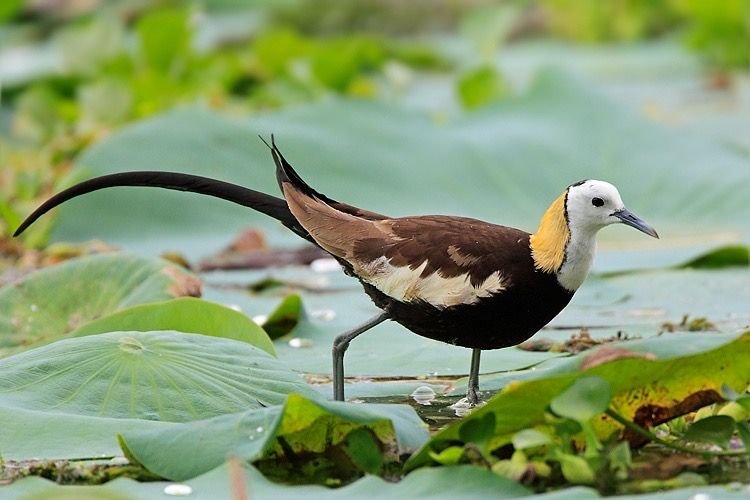
Lesser Jacana
Microparra capensisA tiny, elegant wader with extraordinarily long toes – a delicate dancer on Africa's floating vegetation.
The Lesser Jacana (Microparra capensis) is a small wader in the family Jacanidae, known for its extremely long toes and claws that enable it to walk on floating vegetation. It is the smallest of all jacanas, a delicate and graceful bird found in freshwater wetlands across sub-Saharan Africa, where it picks insects and seeds from the surface of lily pads and other floating plants.
Lesser Jacana Quick Facts
What Is the Lesser Jacana?
The Lesser Jacana (Microparra capensis) is a small wader belonging to the family Jacanidae, which includes the jacanas, also known as "lily-trotters". It was first described by the German naturalist Johann Friedrich Gmelin in 1789. The species name capensis refers to the Cape of Good Hope, where the species was first documented.
The Lesser Jacana is the smallest of all jacanas, a group of birds renowned for their extraordinarily long toes and claws, which allow them to walk on floating vegetation such as lily pads. Despite its tiny size, it is a fascinating and beautiful bird, with a delicate build and graceful movements.
The species is found across sub-Saharan Africa, from Senegal in the west to Ethiopia in the east, and southwards to South Africa. It is a resident bird in most of its range, though some populations may make local movements in response to rainfall and water availability.
How to Identify a Lesser Jacana
The Lesser Jacana is a distinctive and easily recognisable bird, especially when seen walking on floating vegetation. Here are its key identifying features:
- Size: A very small wader, measuring 15-18 cm (6-7 in) in length. It is the smallest of all jacanas.
- Plumage: The upperparts are brown, with a distinctive black stripe running through the eye. The underparts are white.
- Forehead: White forehead.
- Eye stripe: A bold black stripe extends from the bill through the eye to the side of the neck.
- Underwing: White, visible in flight.
- Tail: Short.
- Legs and toes: Extremely long toes and claws, adapted for walking on floating vegetation. The toes are greyish.
- Bill: Short and yellow-green with a darker tip.
- Breeding plumage: The male may show a deeper brown colouration on the upperparts during the breeding season.
- Non-breeding and juvenile: Similar to adults but may be paler and have less distinct markings.
Distinguishing from Similar Species
The Lesser Jacana can be confused with the African Jacana (Actophilornis africanus). The African Jacana is much larger (23-25 cm), has a more colourful plumage with a blue-grey body and chestnut wings, and is more brightly patterned. The Lesser Jacana is smaller, more delicate, and has a simpler brown-and-white colour scheme. The long toes are a shared characteristic of both species.
Behavior & Social Life
Lesser Jacanas are usually seen singly, in pairs, or in small groups. They are active and agile birds, often seen walking delicately on floating vegetation.
Locomotion
- Walking on vegetation: The Lesser Jacana's extraordinarily long toes and claws distribute its weight, allowing it to walk on floating plants such as lily pads, water lilies, and other aquatic vegetation.
- Flight: It has a short, rapid flight when disturbed, flying low over the water before dropping back into the vegetation.
Feeding Behavior
- Foraging: The Lesser Jacana picks insects, small invertebrates, and seeds from the surface of floating vegetation.
- Feeding technique: It walks delicately on lily pads, using its long toes to balance while picking prey from the water surface or vegetation.
Social Behaviour
- Pair bonding: Lesser Jacanas form pairs during the breeding season.
- Polyandry: Like other jacanas, the Lesser Jacana exhibits polyandry, where females mate with multiple males and the males take on the primary role of incubating eggs and caring for chicks.
Vocalization
Lesser Jacanas have a soft, high-pitched call, described as a "peep" or "weet" sound, often given in flight.
Habitat & Distribution
The Lesser Jacana is found in a variety of freshwater habitats with floating vegetation across sub-Saharan Africa.
Key habitat types include:
- Freshwater lakes and ponds – with abundant floating vegetation such as water lilies.
- Marshes and swamps – particularly those with floating plants and lily pads.
- Slow-moving rivers – with extensive floating vegetation.
- Seasonal floodplains – important feeding areas during the wet season.
Distribution: The Lesser Jacana has an extremely large range, with an Extent of Occurrence of approximately 26,000,000 km². It is found across much of sub-Saharan Africa, from Senegambia in the west to Ethiopia and Kenya in the east, and southwards to South Africa. The species is largely resident, though local movements may occur in response to rainfall.
Tanzania Distribution
In Tanzania, the Lesser Jacana is found in freshwater wetlands with floating vegetation. It has been recorded in Serengeti National Park (particularly in Lake Ndutu and other wetland areas), Ngorongoro Conservation Area (in Lake Magadi and other wetlands), Tarangire National Park, and Ruaha National Park.
Lesser Jacana in Tanzania
The Lesser Jacana is a delicate and fascinating wader of Tanzania's wetlands. Here are the best locations to see it:
Serengeti National Park
Found in the Serengeti's lake and wetland areas, particularly around Lake Ndutu and other seasonal water bodies with abundant floating vegetation.
Serengeti safariNgorongoro Crater
Recorded in the Ngorongoro Conservation Area, especially in the Lake Magadi and other wetland areas of the crater floor with floating vegetation.
Ngorongoro safariTarangire National Park
Found in the permanent and seasonal water bodies within the park, particularly where floating vegetation is present.
Tarangire safariRuaha National Park
A resident species in Ruaha's wetland areas along the Great Ruaha River and in seasonal pools with floating vegetation.
Ruaha safariSafari Methods
- Game drives near lakes, ponds, and wetlands with floating vegetation.
- Birdwatching – look for the small, delicate wader walking on lily pads, with brown upperparts, white underparts, and a black eye-stripe.
- Wildlife photography – the Lesser Jacana's delicate appearance and unique behaviour make it an excellent photographic subject.
- Boat safaris – where available, boat-based viewing offers excellent opportunities to observe jacanas foraging.
Best Time to See Them
Lesser Jacanas are resident year-round in suitable habitat. The dry season (June to October) is generally best for wildlife viewing as birds congregate around remaining water sources. The breeding season typically occurs during the rainy season (November to May).
Diet & Feeding
The Lesser Jacana is primarily an insectivore, feeding on a variety of small invertebrates and seeds.
Food Sources
- Insects: Water beetles, flies, mosquitoes, and other aquatic insects.
- Small invertebrates: Spiders, small crustaceans, and worms.
- Seeds: Seeds of aquatic plants.
Feeding Behavior
The Lesser Jacana feeds by walking delicately on floating vegetation, picking insects and seeds from the water surface or from the leaves of aquatic plants. It uses its long toes to balance while foraging, often moving with surprising speed and agility.
Breeding & Life Cycle
The Lesser Jacana is polyandrous, with females mating with multiple males and males taking on the primary role of parenting.
Nesting
- Breeding season: Typically occurs during the rainy season, from November to May in East Africa.
- Nest site: A flimsy platform of aquatic vegetation, placed on floating plants such as lily pads.
- Nest construction: The male builds the nest, a small platform of aquatic vegetation.
- Clutch: 3 to 4 eggs.
- Incubation: 18 to 22 days, done primarily by the male.
Chicks
Chicks are precocial (born covered in down and able to move around soon after hatching). The male takes primary care of the chicks, feeding them and protecting them. Young fledge at 25 to 30 days old.
Conservation Status
The Lesser Jacana is assessed as Least Concern on the IUCN Red List.
Population: The global population is estimated at between 25,000 and 100,000 individuals. The population trend is stable.
Justification: This species has an extremely large range (26,000,000 km²) and hence does not approach the thresholds for Vulnerable. The population size is large, and the population trend is stable, so the species does not approach the thresholds for Vulnerable.
Threats: While the species is not currently threatened globally, it faces local threats including:
- Habitat loss: Drainage and degradation of wetlands.
- Pollution: Pesticides and other chemicals in water bodies.
- Human disturbance: Disturbance at breeding sites.
The Lesser Jacana is listed on CITES Appendix II and is protected by various international agreements, including the African-Eurasian Waterbird Agreement (AEWA).
Comparisons
The Lesser Jacana is sometimes confused with other jacanas. Here are the key differences:
| Feature | Lesser Jacana | African Jacana | Bronze-winged Jacana |
|---|---|---|---|
| Size | 15-18 cm | 23-25 cm | 28-30 cm |
| Weight | 30-50 g | 100-200 g | 200-300 g |
| Plumage | Brown upperparts, white underparts | Blue-grey body, chestnut wings | Bronze-green body |
| Eye-stripe | Bold black stripe through eye | Less distinct | Black stripe |
| Leg Colour | Greyish | Grey | Grey |
| Range | Sub-Saharan Africa | Sub-Saharan Africa | West & Central Africa |
Did You Know?
Smallest Jacana
The Lesser Jacana is the smallest of all jacanas, measuring just 15-18 cm (6-7 in) in length.
Lily Walker
Its extraordinarily long toes distribute its weight, allowing it to walk on floating vegetation such as lily pads.
Polyandrous Breeder
Lesser Jacanas are polyandrous – females mate with multiple males, who then take on the primary role of incubating eggs and caring for chicks.
Delicate Dancer
Despite its tiny size, it moves with surprising speed and agility on floating vegetation, picking insects and seeds from the water surface.
Widespread Resident
With a range of over 26 million square kilometres, the Lesser Jacana is found across much of sub-Saharan Africa.
Hard to Spot
Due to its small size and the fact that it often blends in with floating vegetation, the Lesser Jacana can be difficult to spot without careful observation.
There is a quiet magic in the Lesser Jacana as it walks across the surface of an African lake. Its impossibly long toes spread its weight across the lily pads, allowing it to move with a grace that seems to defy physics. It is a tiny bird, easily overlooked among the larger waterbirds that share its habitat, but its delicate beauty and unique adaptations make it one of the most fascinating creatures of the wetlands. To watch a Lesser Jacana pick its way across floating vegetation, pausing to pluck an insect from the water, is to witness a perfect example of nature's ingenuity – a bird that has evolved to live where others cannot.
Gallery
Frequently Asked Questions
The Lesser Jacana (Microparra capensis) is a small wader in the family Jacanidae. It is the smallest of the jacanas and is known for its extremely long toes and claws, which allow it to walk on floating vegetation. It is found in sub-Saharan Africa.
Lesser Jacanas are found in freshwater wetlands with floating vegetation across Tanzania. Key locations include Serengeti National Park (particularly in the lake and wetland areas), Ngorongoro Conservation Area, Tarangire National Park, and Ruaha National Park.
The Lesser Jacana feeds on insects, small invertebrates, and seeds found on or near the water surface. It picks prey from floating vegetation, often while walking delicately on lily pads.
No. The Lesser Jacana is listed as Least Concern on the IUCN Red List. It has a large range of approximately 26,000,000 km² and a stable population, though it is locally threatened by habitat loss in some areas.
The Lesser Jacana is a small, elegant wader with brown upperparts, white underparts, and a distinctive black stripe running through the eye. It has extremely long toes and claws that enable it to walk on floating vegetation. The underwing is white, and the tail is short.
The Lesser Jacana is the smallest of all jacanas, measuring 15-18 cm (6-7 in) in length. It weighs between 30-50 grams (1.1-1.8 oz).
Lesser Jacanas are polyandrous, with females mating with multiple males. The female lays eggs in nests built by the male, who then incubates them and cares for the chicks. The nest is a flimsy platform of aquatic vegetation placed on floating plants. The clutch is usually 3-4 eggs.
In Swahili, the Lesser Jacana is known as Mwanamonzi or Jikoni-maji.
References & Further Reading
- BirdLife International – Lesser Jacana: IUCN Red List assessment, Least Concern status, range 26,000,000 km², population estimate.
- Wikipedia – Lesser jacana: Description, distribution, habitat, diet, breeding, conservation.
- eBird – Lesser Jacana: Identification, distribution, sightings.
- Avibase – Lesser Jacana: Taxonomy, subspecies, distribution.
- Biodiversity Explorer – Lesser Jacana: Biology, ecology, distribution.
- Oiseaux.net – Lesser Jacana: Photo records from Tanzania.
- Jacana Research Group – Lesser Jacana: Breeding behaviour, polyandry, conservation.