

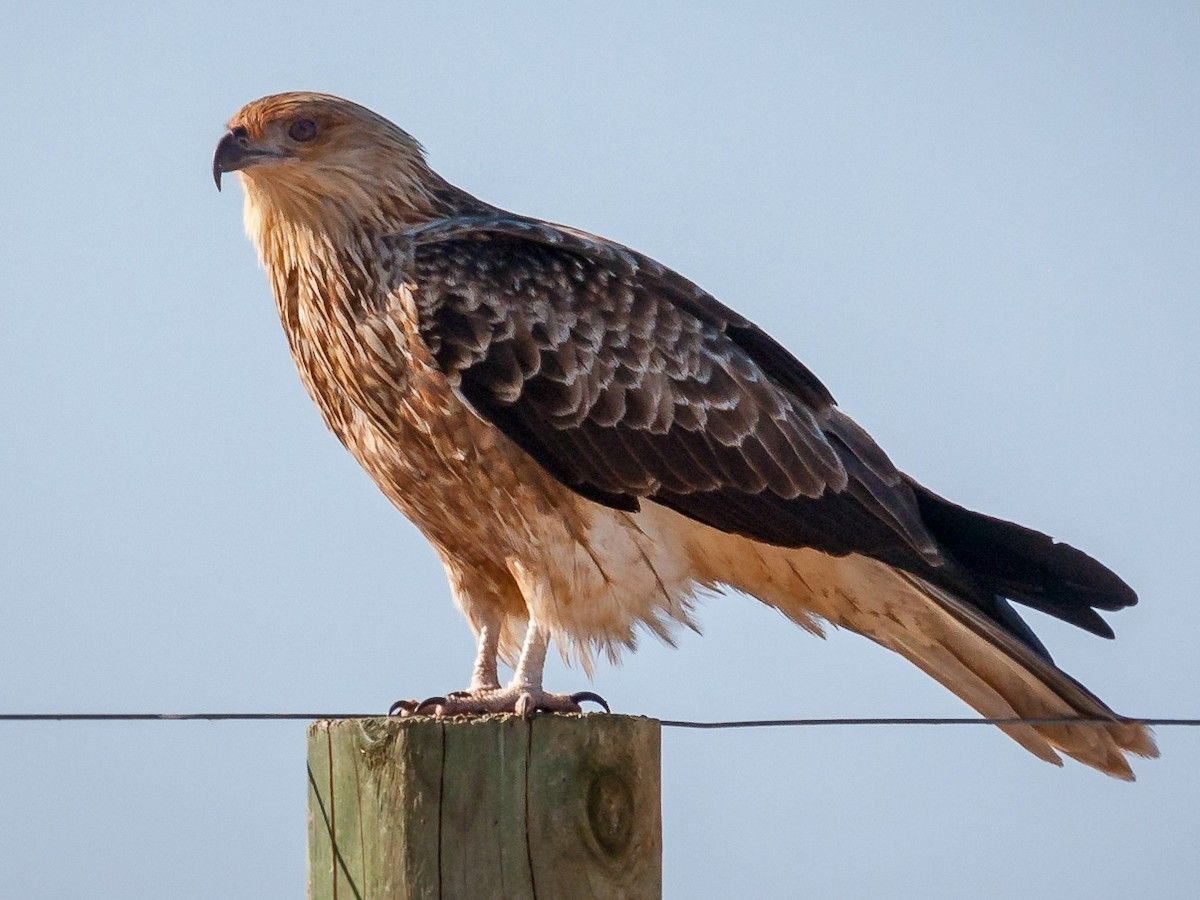
Yellow-billed Kite (Milvus aegyptius) perched in Tanzania
Africa's Golden-billed Kite

Yellow-billed Kite

Milvus aegyptius

A graceful African raptor built for wind, opportunity and movement.

The Yellow-billed Kite is a highly adaptable bird of prey associated with woodland, savanna, wetlands and human-modified landscapes. Its bright yellow bill, long wings and deeply forked tail make adults especially rewarding to identify on a Tanzania birding safari.

Scientific NameMilvus aegyptius
FamilyAccipitridae
DietOpportunistic carnivore
StatusLeast Concern
HabitatSavanna, wetlands & woodland
MovementResident & intra-African migrant

Yellow-billed Kite Quick Facts

Milvus aegyptius · Accipitridae · Accipitriformes
Scientific nameMilvus aegyptius
Authority(Gmelin, 1788)
FamilyAccipitridae
OrderAccipitriformes
Typical lengthAbout 48–60 cm, with regional variation
Typical wingspanRoughly 1.4–1.8 m depending on source and population
PlumageBrown to rufous-brown, darker wings and a long forked tail
Key adult featureBright yellow bill and yellow legs
DietInsects, small vertebrates, fish and carrion
HabitatOpen woodland, savanna, wetlands and modified landscapes
BreedingStick nest placed in a tree
ClutchUsually 2–3 eggs in many African populations
MovementHighly mobile; many populations migrate within Africa
ConservationLeast Concern

What Is the Yellow-billed Kite?

The Yellow-billed Kite (Milvus aegyptius) is a medium-sized bird of prey in the family Accipitridae. It is one of Africa's most adaptable kites and can use an unusually broad range of feeding opportunities, from flying insects and small vertebrates to carrion and discarded food.

Its scientific history is closely tied to older classifications of the Black Kite group. The species was formally described in the eighteenth century, and modern taxonomic treatments recognize Milvus aegyptius as a distinct African species. The taxonomic history matters because older field guides, websites and bird lists may still place African yellow-billed populations under Milvus migrans.

In the field, the bird is especially memorable for its combination of a yellow bill, long wings and deeply forked tail. It often looks effortless in flight, using rising air to circle while continually scanning the ground for the next feeding opportunity.

Field identity: Think of the Yellow-billed Kite as an aerial opportunist. Its success comes less from one specialized prey type than from its ability to exploit whatever the landscape makes available.

Taxonomy & Scientific Name

The accepted scientific name used on this page is Milvus aegyptius. The taxonomic species concept has changed over time, and African populations were historically treated as part of the broader Black Kite complex.

Modern bird taxonomies recognize two commonly discussed subspecies within the species: M. a. aegyptius, associated with Egypt, the Horn of Africa and adjacent regions, and M. a. parasitus, distributed widely through much of sub-Saharan Africa. Local movements and migration patterns differ between populations.

This distinction is particularly important when reading older Tanzania birding material, because some local websites still use the older combination Milvus migrans aegyptius. For this page, the species-level name Milvus aegyptius is used consistently.

How to Identify a Yellow-billed Kite

An adult Yellow-billed Kite is a beautiful study in subtle contrasts. The body is generally brown, the wings are long and broad, and the tail is deeply forked. The bill is the feature that gives the bird its common name and can stand out strongly against the darker head.

  • Bill: Adults show a conspicuously yellow bill, one of the quickest field clues when the light is good.
  • Tail: The long tail is strongly forked and acts as an aerial rudder during tight turns and slow searching flight.
  • Wings: Long wings allow efficient soaring and extended gliding with relatively little effort.
  • Body: Adults range through warm brown and rufous-brown tones, with darker flight feathers.
  • Legs: Yellow legs complement the bright bill.
  • Flight: The kite often circles, glides and makes frequent small adjustments with the tail.

Immatures can be more difficult to identify because the plumage and bill are less distinctive. A good identification should therefore use several characters together instead of relying on one feature alone.

Yellow-billed Kite vs Black Kite

The most important identification comparison is with the Black Kite (Milvus migrans). The two are closely related-looking and can overlap in Africa, which means inexperienced observers may confuse them.

FeatureYellow-billed KiteBlack Kite
Adult billBright yellowGenerally dark
TailDeeply forkedForked, but appearance varies with posture
Adult plumageWarm brown to rufous tones are commonOften darker overall, especially above
DistributionPrimarily African, with two recognized subspeciesMuch broader Old World distribution
MovementMany populations move within AfricaHighly migratory in parts of its range

The yellow bill is the classic clue, but it is safest to confirm the entire bird. Young kites can blur the simple adult distinction.

Behavior & Social Life

Yellow-billed Kites are intelligent, alert and remarkably flexible feeders. Their behavior changes with the local food supply, so a bird over open savanna may behave differently from one working around a wetland, rubbish area or fishing landing site.

Master of Soaring

It uses thermals and other rising air currents to search broad areas with minimal energy expenditure.

Opportunistic Hunter

It can switch between live prey and scavenged food depending on what is easiest and safest to obtain.

Flexible Sociality

Single birds can hunt alone, while several may gather where food becomes temporarily abundant.

Sharp Observer

From a perch or while circling overhead, it watches the ground for movement, feeding opportunities and other birds.

Daily Activity

Activity often increases as the air warms and thermals strengthen. This creates ideal conditions for long, low-cost searching flights. Around concentrated food sources, however, a kite may remain active at lower levels and make repeated passes or short flights between perches.

The species can also exploit seasonal events. Insect emergences, amphibian activity, fish remains, livestock births, fires and human refuse can all create brief feeding opportunities. That behavioral flexibility is one reason the Yellow-billed Kite persists across such a broad range of African landscapes.

Flight, Hunting & Aerial Skills

Few parts of the Yellow-billed Kite are more impressive than its flight. The deeply forked tail functions like a steering system, allowing the bird to make constant fine corrections while circling or gliding.

When the bird is hunting, it can shift quickly from high soaring to a low glide and then drop toward the ground. Insects may be taken in the air, while small vertebrates or scraps can be collected from the ground, water edge or other surfaces.

The kite is also capable of bold aerial opportunism. It may follow larger predators or other birds to take advantage of leftovers, and it can exploit human-associated food where natural resources are scattered or seasonal.

Birding tip: When you spot a brown raptor circling over Tanzania, check the tail and bill before moving on. The combination of a forked tail and yellow bill is the signature to look for in an adult Yellow-billed Kite.

Habitat & Distribution

The Yellow-billed Kite is an adaptable species that uses open and semi-open landscapes across much of Africa. It can occupy savanna, woodland, wetland margins, river corridors, agricultural landscapes and even some urban environments.

  • Open woodland and savanna: Excellent hunting country because perches, thermals and open ground occur together.
  • Wetlands and lakes: Water can provide fish, amphibians, insects and feeding activity concentrated along edges.
  • Riverine areas: Tall trees offer nest and perch sites while nearby open habitat supplies hunting space.
  • Agricultural landscapes: Fields and pasture can attract rodents, insects and carrion.
  • Human-modified areas: The species may exploit food waste or disturbed habitats where suitable nesting trees remain.

It generally avoids the most densely closed forest and the most extreme desert environments, but its ecological flexibility is considerable.

Yellow-billed Kite in Tanzania: Where to See It

Tanzania is an excellent country for watching kites because the combination of expansive savannas, woodland, wetlands, lakes and productive protected areas creates many suitable habitats.

Serengeti National Park

The Serengeti's open grasslands, woodland patches and seasonal food concentrations provide ideal raptor-watching conditions.

Explore Serengeti safari

Ngorongoro Conservation Area

Woodland, crater grasslands and varied elevations create a rich setting for observing soaring and perched birds of prey.

Explore Ngorongoro safari

Tarangire National Park

Acacia woodland, open plains and seasonal water sources make Tarangire particularly productive for raptor watching.

Explore Tarangire safari

Ruaha National Park

Ruaha's broad woodland and savanna landscape offers extensive open skies for observing kites in flight.

Explore Ruaha safari

Lake Manyara Area

Wetland edges, woodland and surrounding farmland can produce excellent opportunities for watching opportunistic raptors.

Explore Lake Manyara

Lake Victoria Region

Large water bodies, fishing activity and mixed woodland provide diverse feeding opportunities for adaptable kites.

Plan a Tanzania safari

How to Watch on Safari

Do not only search the tree line. Scan the sky above open plains, especially once the sun has warmed the landscape and thermals have developed. Then check dead branches and tall trees along roads and watercourses for perched birds.

Binoculars are useful because a kite can spend long periods high overhead. For photography, a fast shutter speed helps freeze wing and tail movement, while a longer lens makes it easier to capture the bill and tail shape without approaching too closely.

Yellow-billed Kite Habitat in Tanzania

In Tanzania, look for the species wherever open hunting space is combined with scattered trees, water or a reliable food supply. This includes savanna mosaics, woodland edges, river corridors, park boundaries and some agricultural landscapes.

The bird's presence may also change with season. Where populations are migratory, numbers can rise and fall as birds move between breeding and non-breeding areas. This makes the same safari route feel completely different at different times of year.

Important context: seeing a Yellow-billed Kite in one Tanzanian location does not automatically mean every individual there is resident. Local movement and broader intra-African migration both occur within the species.

Best Time to See Yellow-billed Kites

There is no single best month for the entire species in Tanzania because migration, rainfall and local food supply vary across regions. For general birding, the best approach is to combine good weather visibility with periods when insect and small-vertebrate activity is high.

  • Dry-season wildlife viewing: Open ground and fewer leaves can make perched birds easier to spot.
  • Wet-season birding: Rain can trigger insect abundance and increase feeding opportunities.
  • Migration periods: Some regions can experience seasonal changes in numbers as African populations move.
  • Morning and late afternoon: These can be productive for photography because the light is softer and bird activity can be easier to observe.

For a dedicated birding itinerary, local conditions matter more than a one-size-fits-all calendar. A Tanzania specialist can match your route to the parks and habitats you most want to explore.

Diet & Feeding Ecology

The Yellow-billed Kite is best understood as an opportunistic feeder. Instead of being tied to one narrow prey category, it uses a wide menu that changes with season, landscape and availability.

  • Insects: Large flying insects, including termites and other insects, can be important when seasonal emergences occur.
  • Small mammals: Rodents and other small mammals may be taken when accessible.
  • Amphibians: Frogs can become valuable prey around wetlands and seasonal water.
  • Reptiles and birds: Small vertebrates may be caught opportunistically.
  • Fish: Near rivers, lakes and fishing areas, fish or fish remains can supplement the diet.
  • Carrion: Dead animals and discarded animal remains are readily exploited when available.
  • Human-associated food: The species can take advantage of food scraps and waste, showing its remarkable ecological flexibility.

Why the Diet Changes So Much

Food availability is rarely constant on the African landscape. Termite flights may create huge quantities of temporary prey, while dry-season water holes concentrate fish and amphibians. A clever generalist does not need one food to be present all year; it needs the ability to switch.

Ecological Role

The Yellow-billed Kite performs several useful ecological functions. By taking insects and small vertebrates, it participates directly in food webs. By consuming carrion and waste, it can also act as part predator and part scavenger.

Its ability to respond to sudden food pulses makes it a useful example of ecological adaptability. A landscape can change from quiet to crowded with airborne predators when termites emerge, fish become concentrated, or carrion appears.

For safari visitors, this means the species is not just a background bird. Watching how it reacts to the landscape can reveal what is happening below the surface: prey abundance, thermals, water availability and the presence of other animals.

Breeding & Life Cycle

Yellow-billed Kites build nests in trees using sticks and other available material. In many parts of Africa the breeding season is linked to local rainfall and food conditions, so dates vary across the continent.

Nest Building

Both adults can contribute to construction. The nest is generally a stick platform placed in a tree, often at a height that gives the pair a good view over surrounding habitat. Some populations reuse old nests, adding material and repairing the structure in subsequent seasons.

Eggs & Incubation

Clutch size is commonly around two to three eggs, although larger clutches can occur in some populations. Incubation is mainly carried out by the female in many populations, while the male can contribute by supplying food.

Chicks & Fledging

Young develop gradually in the nest and eventually begin practicing wing movements, branching and short flights before becoming fully independent. The exact timing varies with conditions, but the young continue to benefit from parental food and protection after leaving the nest.

Migration & Seasonal Movement

One of the most interesting aspects of Yellow-billed Kite biology is that movement is not identical across its range. Some populations are resident or move locally, while others undertake striking intra-African migrations.

In southern Africa, many Yellow-billed Kites are strongly seasonal visitors, arriving during the warmer months and moving northward again as conditions change. These movements are tied to rainfall, food availability and breeding cycles rather than to one universal migration schedule for every population.

That complexity matters for Tanzania. A bird encountered here may belong to a population with a relatively stable local presence, while elsewhere numbers can change substantially over the year. Birding records therefore become more meaningful when interpreted with season and region in mind.

Conservation Status

The Yellow-billed Kite is currently treated as a Least Concern species at the global level and remains widespread across much of Africa. Its broad distribution and flexible feeding behavior give it a strong ecological foothold.

A secure global category does not mean every local population is free from pressure. Like many birds of prey, Yellow-billed Kites can be affected by habitat alteration, poisoning, direct persecution, collisions and other human-related risks in particular landscapes.

Protecting large natural areas, maintaining healthy food webs and reducing avoidable poisoning and infrastructure hazards all contribute to a safer future for African raptors.

Conservation perspective: Least Concern describes the species globally; it should not be interpreted as proof that every local population or every habitat is equally secure.

Local Pressures & Why Raptors Matter

Raptors are exposed to changes high in the food chain. Their hunting ranges can overlap with farms, roads, power infrastructure and expanding settlements, creating new risks even when the species remains widespread.

  • Habitat change: Loss of mature nesting trees or conversion of open habitat can reduce suitable sites.
  • Poisoning: Toxic substances intended for other animals can kill non-target raptors and scavengers.
  • Infrastructure: Power lines and other structures can present collision or electrocution risks.
  • Persecution: Misunderstandings about birds of prey can lead to unnecessary killing in some areas.
  • Food changes: Heavy disturbance or drastic alteration of wetlands and grasslands can reshape natural feeding opportunities.

Healthy raptor populations are useful indicators of functioning landscapes. Their presence connects the health of prey populations, habitats and human land-use decisions.

Yellow-billed Kite Comparison With Similar Raptors

Birders in Tanzania may encounter several brown, medium-sized raptors in the same sky. Comparing shape and bill color helps separate them.

FeatureYellow-billed KiteBlack KiteWahlberg's Eagle
BillAdult bill conspicuously yellowGenerally darkDark hooked bill
TailDeeply forkedForkedLonger, less kite-like tail
BuildSlender kite with long wingsSlender kiteMore eagle-like proportion
Typical feeding styleOpportunist, hunter and scavengerBroad opportunistic feederMore active pursuit of live prey
Key clueYellow bill + forked tailDark bill + forked tailEagle shape, different head and tail profile

Did You Know?

Golden Bill

The bright yellow bill is the feature that gives this kite its common English name and can be striking against its brown head.

Built for the Air

The long wings and deeply forked tail make it exceptionally well suited to soaring, gliding and rapid course correction.

Termite Specialist When Opportunity Arrives

Although not a specialist in the strict sense, it can take advantage of huge seasonal insect emergences when they occur.

Fish Can Be on the Menu

Near lakes, rivers and fishing activity, Yellow-billed Kites may take fish or exploit fish remains.

African Traveller

Different populations show different movement strategies, including long intra-African migrations.

Nature's Recycler

Its scavenging behavior can help remove carrion and animal remains from the environment.

Tree Nester

Stick nests are typically built in trees, often using existing material and returning to suitable sites.

Look Up

Many safari visitors miss this bird because they focus on mammals. The open sky can be just as rewarding.

The Story of a Yellow-billed Kite Over the Savanna

The morning begins quietly. The grass is still cool, the road carries only a few vehicles, and a lone bird rises above the woodland edge. At first it looks like a dark speck. Then the tail opens, the wings catch the warm air, and the yellow bill becomes visible when the bird turns.

Below it, the landscape is changing by the minute. Insects lift from the grass. Small mammals move through cover. Somewhere beyond the trees, a carcass has attracted other birds. The kite does not need to commit to one source. It circles, watches and waits.

That is the lesson of the Yellow-billed Kite. Its strength is not brute force. It is timing, mobility and intelligence—the ability to read an African landscape from above and turn opportunity into survival.

Wildlife Photography & Birding Tips

  • Expose for the sky carefully: Brown plumage can become too dark when a bright sky is behind the bird.
  • Watch the tail: The forked tail often gives you the first strong clue while the bird is circling.
  • Use burst mode: Raptors change angle quickly, so several frames improve your chance of capturing the bill and tail clearly.
  • Observe before shooting: Follow the bird's flight path for a few seconds; it may reveal a repeated circling route.
  • Keep respectful distance: Use a long lens rather than approaching nesting birds or forcing a perched bird to fly.

For serious birders, record the habitat, date, time and behavior as well as the species name. Those details make a sighting more valuable than a photograph alone.

References & Further Reading

  • Integrated Taxonomic Information System (ITIS) — taxonomy and nomenclature for Milvus aegyptius.
  • African Bird Club — species records, field photographs and African birding observations.
  • The Peregrine Fund — ecology, habitat and feeding information for Yellow-billed Kites.
  • Tanzania Birds / Tanzaniabirds.net — Tanzania-focused observations and photographic records, including Ngorongoro and Lake Victoria material.
  • BirdLife International — bird taxonomy framework and continental conservation context.
  • IUCN Red List — global conservation assessment framework and status definitions.
  • Peer-reviewed nesting research — studies of Yellow-billed Kite nesting biology in Madagascar.

Explore Tanzania's Birding Destinations

Yellow-billed Kites are part of a much larger raptor community. Combining several habitats on one trip increases the number of species you can observe and gives you a better understanding of how Tanzania's landscapes connect.

Frequently Asked Questions

What is the Yellow-billed Kite?

The Yellow-billed Kite (Milvus aegyptius) is a medium-sized African raptor in the family Accipitridae. Adults are especially distinctive for their yellow bill and strongly forked tail.

Where can I see Yellow-billed Kites in Tanzania?

They occur widely in suitable habitats and are recorded from major birding and safari destinations including Serengeti, Ngorongoro, Tarangire, Ruaha and wetland areas such as Lake Manyara.

What does the Yellow-billed Kite eat?

It is an opportunistic feeder taking insects, amphibians, small mammals, birds, reptiles, fish and carrion. The exact diet changes with local food availability.

Is the Yellow-billed Kite migratory?

Movement varies by population. Some are resident or locally mobile, while others make substantial intra-African seasonal movements connected to rainfall and food.

How do I tell a Yellow-billed Kite from a Black Kite?

An adult Yellow-billed Kite has a conspicuously yellow bill, while a Black Kite generally has a dark bill. Because young birds can be less obvious, shape and several plumage features should also be considered.

Where does the Yellow-billed Kite nest?

It builds a platform nest of sticks in a tree. Nests may be repaired or reused, and both adults can contribute to nest construction.

Is the Yellow-billed Kite useful to the ecosystem?

Yes. Its broad feeding strategy means it can help regulate insect and small-vertebrate populations while also consuming carrion and other organic remains.

What is the conservation status of the Yellow-billed Kite?

The species is widely treated as Least Concern globally because it is widespread and adaptable, although local threats can still affect individual populations and habitats.

When is the best time to photograph one?

Soft morning or late-afternoon light is usually easier for photography, while warm parts of the day can be excellent for observing soaring birds using thermals.

Why does its tail look like a V?

The deeply forked tail helps the kite steer. It can make quick adjustments in flight and is one of the most useful field marks when the bird is overhead.

See the Yellow-billed Kite in Tanzania

From the open skies of the Serengeti to the woodlands of Tarangire and Ruaha, Tanzania offers extraordinary opportunities to discover African raptors in their natural habitats.

Hello!
Welcome to African Majestic Adventure.
Ready to plan your Tanzania birding safari?
African Majestic Adventure
Tanzania
WeChat QR Code
Scan the QR code to connect
Chat with Us
Hi! How can we help you today?