

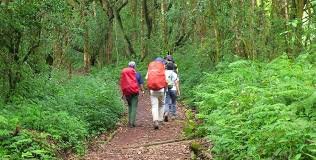

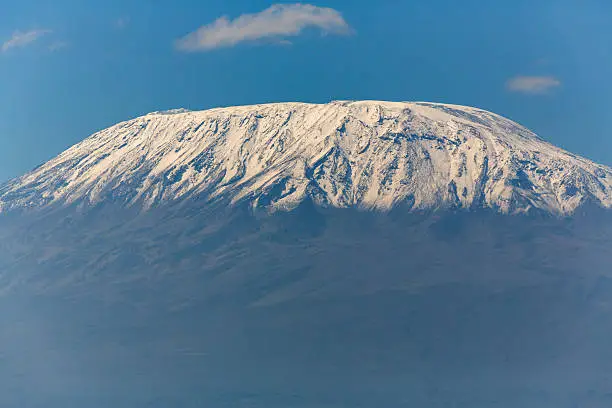
 Ngorongoro Conservation Area
 Volcanoes National Park
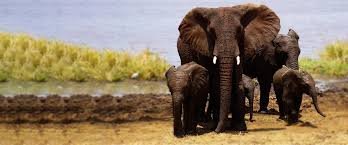
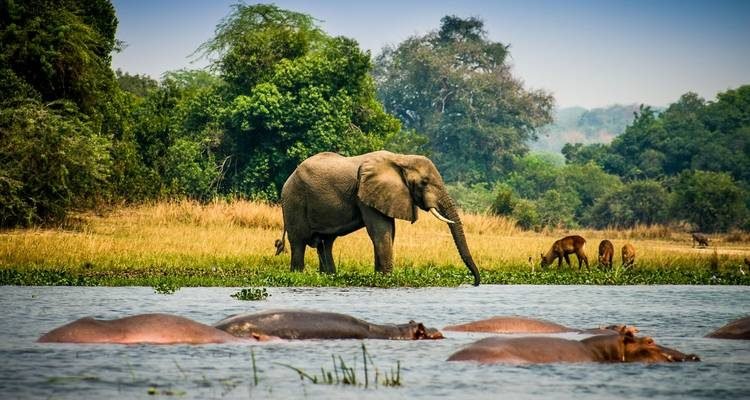


African Bush Elephant
Loxodonta africana
African Bush Elephant — Quick Facts
Important notice
This profile describes a species associated with the Mount Kilimanjaro ecological landscape. Checklist or locality records do not confirm a sighting on every route, camp or altitude. Route records are listed only when verified; none are asserted here.
Introduction
The African bush elephant is the largest living land animal, recognised by its massive body, enormous ears, long muscular trunk and impressive tusks. These highly intelligent herbivores move across extensive landscapes in search of food and water, living in close family groups led by experienced females. On Mount Kilimanjaro, elephants have a long history and are particularly associated with the western and northern forest slopes, where historical research documented their distribution and movement.
How to Identify the Animal
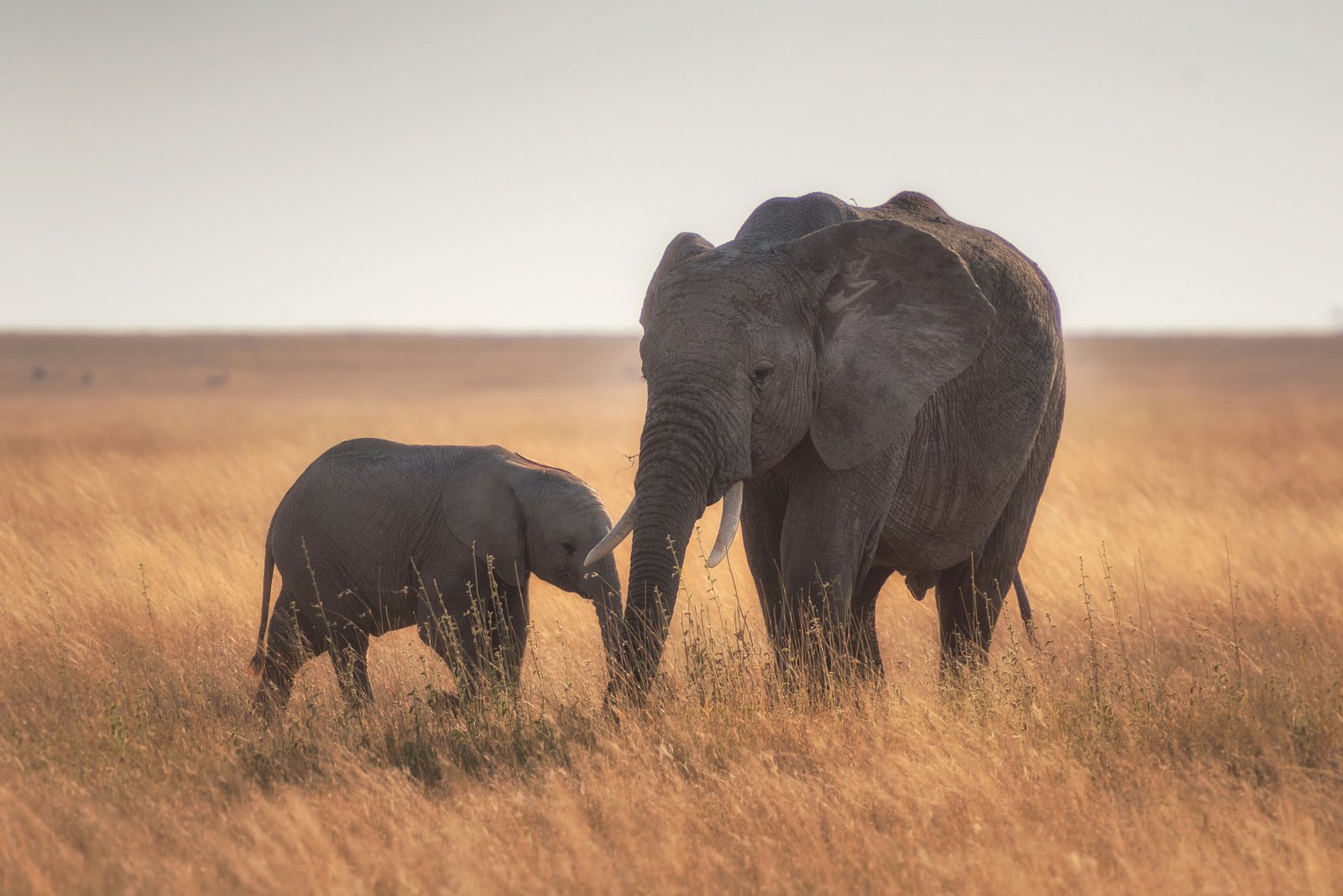
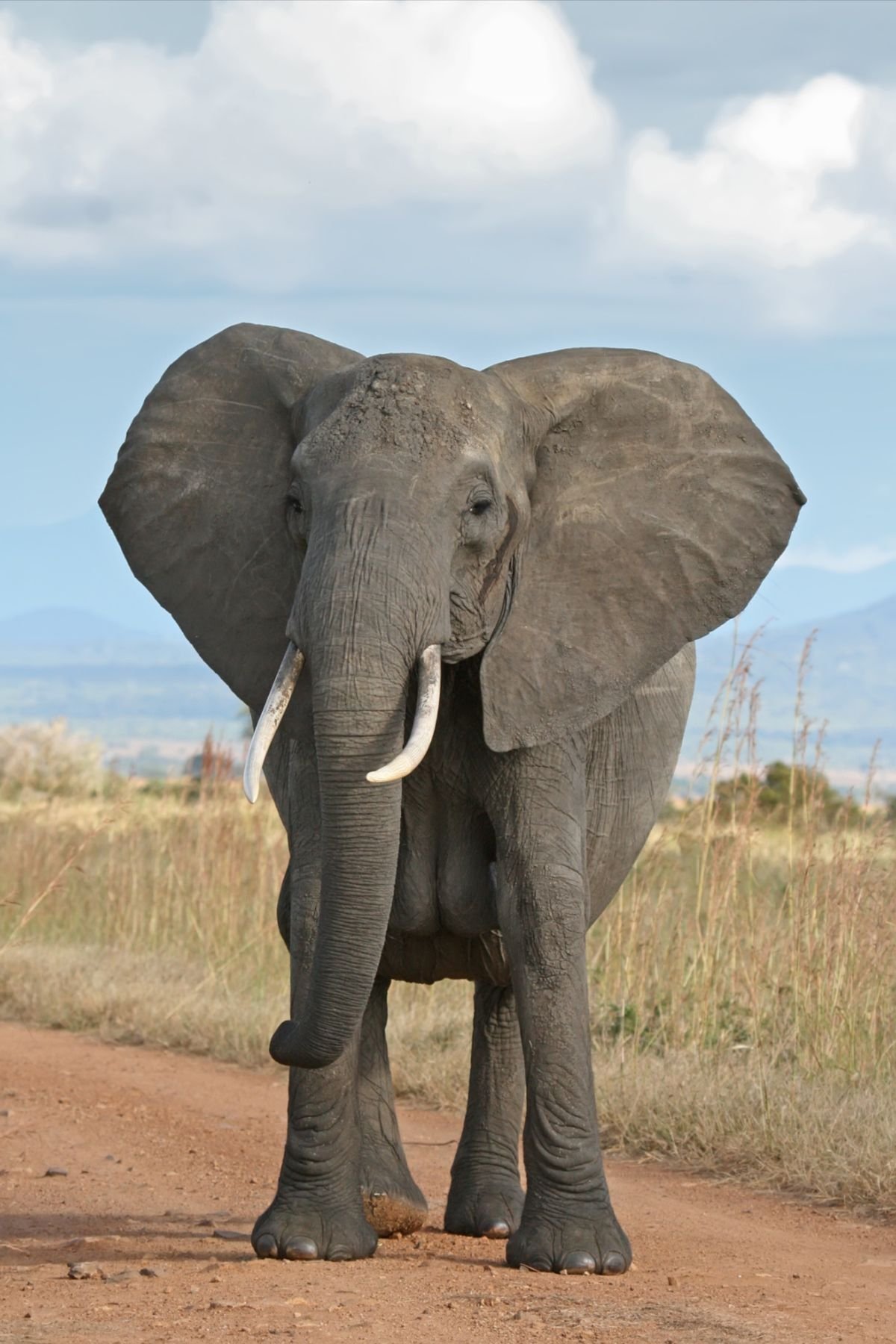
A very large, heavy elephant with a tall shoulder profile, huge ears that help regulate heat, and a long flexible trunk with two finger-like projections at the tip. Tusks occur in both sexes, though size and development vary. The skin is thick, wrinkled and grey, the legs are pillar-like, the feet are broad and padded, and the tail ends in a tuft of coarse hair. African bush elephant versus African forest elephant: the bush or savanna elephant is larger, has larger ears, is more strongly associated with open landscapes and savanna, and its tusks generally curve outward. The African forest elephant is smaller, has more rounded ears, lives mainly in the tropical forests of Central and West Africa, and has straighter tusks directed downward. The Kilimanjaro animal discussed here is Loxodonta africana, the African bush or savanna elephant. Forest elephant photographs are not used on this page.
Habitat and Distribution on Mount Kilimanjaro
The 1995 paper The Mammals of Kilimanjaro by Grimshaw, Cordeiro and Foley describes elephants as formerly occurring throughout the forest and bushland of the Kilimanjaro area, and explains that by the 1960s they had become confined mainly to forest on the western and northern slopes. The paper discusses a 1971–72 estimate of approximately 1,200 elephants and a 1990 dung-counting estimate of approximately 220. The authors considered the earlier 1,200 figure erroneous because a density estimate from one area had been applied across the whole mountain, including habitat where elephants were no longer present. The 1990 study described about 450 square kilometres as regularly used by elephants, between the Namwi River in the southwest and the Nesikiria River in the northeast. All of these figures are historical research findings; the 220 estimate is not a current Kilimanjaro population count. A UNESCO/UNEP-WCMC Kilimanjaro profile also reports elephants distributed between river systems and notes that they sometimes occur on higher slopes. No current population estimate, precise present-day boundary or recent sighting date is asserted here. The Kilimanjaro ecosystem includes mountain forests, foothills and surrounding landscapes, so a record from the wider ecosystem is not proof of occurrence on a particular tourist climbing route.
Diet and Feeding Behaviour
Herbivorous, consuming grasses, leaves, tree bark, roots, twigs, shoots, fruits, flowers and other available plant material. The trunk grasps vegetation and carries food to the mouth; tusks help strip bark, dig and manipulate branches; the feet expose roots and underground food; and strong molars grind fibrous plant matter. Elephants graze on grasses and browse on leaves, shoots and woody vegetation, with feeding patterns shifting with habitat, rainfall and seasonal food availability. No listed food is claimed as individually documented in the Kilimanjaro elephant population.
Behaviour and Social Life
Female elephants and their young generally live in family groups led by a matriarch, usually an older, experienced female whose knowledge helps the group locate food and water and respond to environmental challenges. Mature males often leave their natal family groups and may live alone or form temporary bachelor groups, approaching female groups during reproductive periods. Family bonds are strong, with cooperative calf care, allomothering, greeting behaviour, touching, social learning, protection of the young and recognition of family members. Family groups may also associate with other groups.
Communication and Calls
Elephants communicate through trumpeting, rumbles, roars, grunts and snorts, as well as ear and trunk movements, touching, physical contact and scent or chemical signals. Some calls contain very low-frequency sounds that can travel considerable distances, helping individuals maintain contact, coordinate group movement and convey social or reproductive information. No specific call is claimed as recorded on Kilimanjaro.
Reproduction and Breeding
General species biology includes sexual maturity, mating, musth in adult males, a gestation period of approximately 22 months and usually a single calf. Calves depend heavily on their mothers and family group for protection and learning, with allomothering by other females and long intervals between births. No Kilimanjaro-specific birth records or breeding statistics are asserted.
Ecological Importance
African bush elephants act as ecosystem engineers. They disperse seeds through fruit consumption and dung, create pathways through vegetation, modify woodland and bushland structure, open vegetation through browsing, dig for water during dry periods and create water access points used by other wildlife. Dung redistributes nutrients and feeding shapes vegetation patterns. These effects can benefit some species while changing habitat conditions for others; no effect is claimed as measured specifically on Kilimanjaro.
Conservation Status
Global conservation status: Endangered. Following the 2021 IUCN assessment update, the African savanna elephant Loxodonta africana was assessed separately from the African forest elephant. Major threats include illegal killing for ivory, habitat loss and fragmentation, human-elephant conflict, agricultural and settlement expansion, and barriers to movement between habitats. Elephants need extensive connected landscapes with access to food and water. The global Endangered category is not a current population estimate for Kilimanjaro, and older sources that label the entire African elephant population as Vulnerable are not used as the current species assessment.
Wildlife Watching on Kilimanjaro
Elephants are part of the wider Kilimanjaro wildlife heritage and are particularly associated with forest and surrounding landscapes. They may use forested habitat, move over large distances and sometimes occur on higher slopes, but sightings are never guaranteed. A standard summit climb is not an elephant-watching safari. Visitors must not leave trekking routes, enter forests or search for elephants independently; all encounters must follow professional guide or ranger direction.
Route and Habitat Occurrence
Historical records establish elephants in the wider Kilimanjaro ecosystem, especially on the western and northern slopes. No confirmed elephant sighting is assigned here to Machame, Marangu, Lemosho, Shira, Rongai, Northern Circuit, Umbwe, Mweka or Kilema. Elephant distribution across the wider mountain ecosystem is not equivalent to regular sightings along tourist climbing trails.
Honest Expectations
African bush elephants are documented in the wider Kilimanjaro landscape. Historical research describes former distribution across forest and bushland, and by the 1960s the remaining mountain population was described as concentrated mainly in western and northern slope forests. The 1990 dung-count estimate of approximately 220 elephants is a historical figure, not a current population count. Elephants sometimes occur on higher slopes, but this does not make sightings on summit routes predictable. Visitors must never approach or attempt to attract elephants.
Frequently Asked Questions
About African Bush Elephant on Kilimanjaro
What is an African bush elephant?
The largest living land animal, a highly intelligent herbivore that lives in female-led family groups.
What is its scientific name?
Loxodonta africana.
Is it the same as the African savanna elephant?
Yes. African savanna elephant is an alternative common name for Loxodonta africana.
How large can an African bush elephant grow?
It is the largest living terrestrial animal; size varies with age, sex and conditions.
What is the largest land animal in the world?
The African bush elephant.
How can I identify one?
By its enormous ears, long trunk with two finger-like tips, tusks, huge body, pillar-like legs and wrinkled grey skin.
What is the difference from the forest elephant?
The bush elephant is larger, has larger ears, favours more open landscapes and has outward-curving tusks; the forest elephant is smaller with straighter downward tusks.
Do both sexes have tusks?
Yes, though tusk size and development differ between males and females.
What do African bush elephants eat?
Grasses, leaves, bark, roots, twigs, shoots, fruits, flowers and other plant material.
How much vegetation does an elephant consume?
Elephants eat large quantities because of their size; no specific Kilimanjaro consumption figure is claimed here.
Do elephants live in family groups?
Females and young live in matriarch-led family groups; mature males often live alone or in bachelor groups.
What is a matriarch?
An experienced older female who leads a family group and helps guide it to food and water.
How do elephants communicate?
With trumpets, rumbles, roars, grunts, snorts, low-frequency calls, body language, touch and scent.
How long is an elephant pregnancy?
Approximately 22 months in the general species biology.
How do elephants care for calves?
Mothers and other family members protect, guide and care for young calves, a behaviour known as allomothering.
Have African bush elephants been recorded on Kilimanjaro?
Yes. Historical records document elephants in the wider Kilimanjaro ecosystem.
Where were elephants historically found on Kilimanjaro?
The 1995 review describes former use of forest and bushland, with the population later concentrated mainly on western and northern slope forests.
How many elephants were recorded in the historical study?
A 1990 dung-counting study estimated approximately 220; a 1971–72 estimate of about 1,200 was considered erroneous by the authors.
Can climbers expect to see elephants on Kilimanjaro?
No. Sightings are not guaranteed and a summit climb is not an elephant safari.
What should visitors do if they encounter an elephant?
Keep a safe distance, never approach or feed it, do not block its movement, and follow guide or ranger instructions.


Sources and Further Reading
Research foundations
Grimshaw, J.M., Cordeiro, N.J. & Foley, C.A.H. (1995). The Mammals of Kilimanjaro. African Journal of Ecology.
Elevational Distribution and Ecology of Small Mammals on Africa's Highest Mountain (2014 field study).
Tanzania National Parks — Kilimanjaro National Park official information.
UNEP-WCMC — Kilimanjaro World Heritage Datasheet.
Discover Kilimanjaro’s Wildlife
Explore the mountain responsibly with African Majestic Adventure and learn about its animals with local guides.