








 Ngorongoro Conservation Area
 Volcanoes National Park










African Wild Dog
Lycaon pictus
African Wild Dog — Quick Facts
Important notice
This profile describes a species associated with the Mount Kilimanjaro ecological landscape. Checklist or locality records do not confirm a sighting on every route, camp or altitude. Route records are listed only when verified; none are asserted here.
Introduction
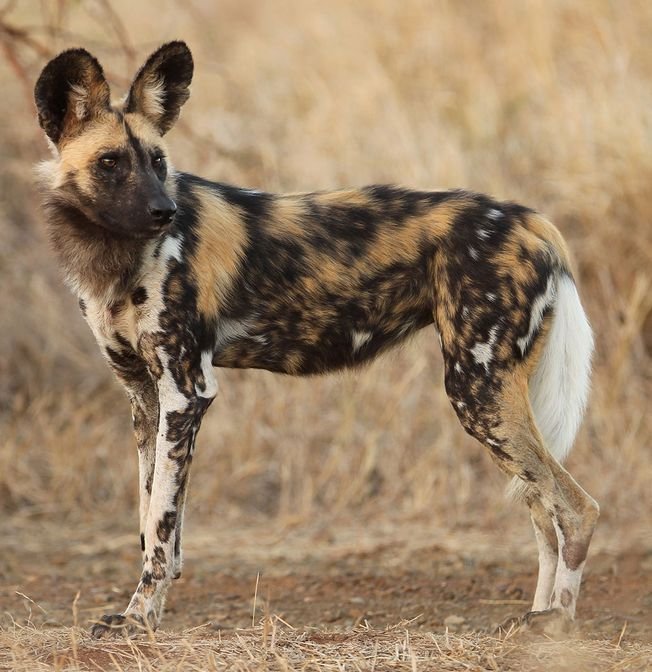
The African wild dog, also known as the painted wolf, is a highly social African carnivore recognised by its large rounded ears and patchwork coat of black, white and ochre markings. It is an exceptional cooperative hunter living in organised packs. Historical accounts report this species on Kilimanjaro at extraordinary elevations, including records associated with the summit, but its long-term residency on the mountain has not been established.
How to Identify the Animal
A lean, long-legged canid with large rounded ears, an irregular patchwork coat of black, white and ochre, a dark muzzle and a bushy tail usually tipped with white. Individual coat patterns vary greatly and can help researchers identify particular animals. It should not be confused with domestic dogs or jackals.
Habitat and Distribution on Mount Kilimanjaro
The historical Kilimanjaro mammal account discusses evidence of African wild dogs reaching extremely high elevations, including reports associated with the summit at 5,895 metres and high-altitude remains. The authors questioned whether wild dogs were resident on Kilimanjaro, suggesting that animals from surrounding populations might occasionally move into the mountain area. This is a remarkable historical record, not evidence of a permanent high-altitude pack or a current population at the summit. Wild dogs are not described here as normal inhabitants of the alpine desert or as likely encounters for climbers.
Diet and Feeding Behaviour
Obligate carnivores and cooperative hunters. General prey can include impala, gazelles and other medium-sized antelopes, along with younger or smaller ungulates where available. Pack members cooperate during pursuit and capture. These prey examples describe the species' general ecology and are not confirmed Kilimanjaro prey records.
Behaviour and Social Life
Pack living defines this species: cooperative hunting, strong social bonds, greeting rituals and cooperative pup care. Packs vary in size and structure, and use large ranges with coordinated movement. No single pack arrangement is presented as universal.
Communication and Calls
Vocal communication includes high-pitched contact calls, whines, squeaks, growls and alarm or greeting sounds. Body posture, facial expressions and social contact help maintain pack relationships.
Reproduction and Breeding
Breeding occurs within the pack, with denning, pup development and cooperative care by adults. Breeding has not been recorded on Kilimanjaro in the sources used here.
Ecological Importance
As a specialised predator, the African wild dog contributes to predator-prey relationships and depends on large, connected landscapes. No current ecological role on Kilimanjaro is established by the historical records.
Conservation Status
The global IUCN status is Endangered. Major threats include habitat loss and fragmentation, conflict with people and livestock, road mortality, disease from domestic dogs and the loss of connected landscapes. This global category is distinct from the uncertain status of the historical Kilimanjaro occurrence.
Wildlife Watching on Kilimanjaro
African wild dogs are not a species climbers should expect to see on Kilimanjaro. Historical high-altitude accounts are important wildlife history, but they do not demonstrate a resident population or regular sightings. Never attempt to track, approach or attract a pack.
Route and Habitat Occurrence
The historical literature records exceptional high-altitude evidence but does not establish a resident population or regular route occurrence. The species is not listed as a confirmed regular animal on Machame, Marangu, Lemosho, Shira, Rongai, Northern Circuit, Umbwe, Mweka or Kilema.
Honest Expectations
African wild dogs have historical records associated with Kilimanjaro, including exceptional high-altitude evidence. The original mammal account questioned residency, and the records do not establish a current population. Visitors should not expect to see them during a climb.
Frequently Asked Questions
About African Wild Dog on Kilimanjaro
What is an African wild dog?
A highly social African canid also known as the painted wolf.
What is its scientific name?
Lycaon pictus.
Why is it called a painted wolf?
Its coat is an irregular patchwork of black, white and ochre markings.
How can it be identified?
By its lean build, large rounded ears, patchwork coat, dark muzzle and usually white-tipped tail.
Is it related to domestic dogs?
It is a canid, but a distinct species and not a domestic dog.
What does it eat?
Medium-sized ungulates such as impala and gazelles, depending on region and availability.
How does cooperative hunting work?
Pack members work together during pursuit and capture, improving success.
Does it live in packs?
Yes, packs are the core of its social organisation.
How do pack members communicate?
Through contact calls, whines, squeaks, growls, body posture and greeting rituals.
How does it reproduce?
Breeding occurs within the pack, with denning and cooperative care of pups.
Do pack members help raise pups?
Yes, cooperative pup care is a defining feature of the species.
What habitats does it use?
Savanna, grassland, woodland and other suitable landscapes with prey and connectivity.
Has it been recorded on Kilimanjaro?
Yes, in historical accounts from the mountain.
Were wild dogs recorded near the summit?
Historical accounts include summit-associated records and high-altitude remains.
Does that mean they live permanently on Kilimanjaro?
No. The original account questioned residency and suggested possible visitors from surrounding populations.
Can climbers expect to see one?
No. They are not a regular or guaranteed sighting.
What is its global conservation status?
Endangered on the IUCN Red List.
What threatens African wild dogs?
Habitat loss, conflict, roads, disease and fragmented landscapes.
Why is habitat connectivity important?
Wide-ranging packs need connected landscapes to find prey and maintain populations.
What should visitors do if they encounter a pack?
Keep a safe distance, never follow or surround them, and follow ranger and guide instructions.
Sources and Further Reading
Research foundations
Grimshaw, J.M., Cordeiro, N.J. & Foley, C.A.H. (1995). The Mammals of Kilimanjaro. African Journal of Ecology.
Elevational Distribution and Ecology of Small Mammals on Africa's Highest Mountain (2014 field study).
Tanzania National Parks — Kilimanjaro National Park official information.
UNEP-WCMC — Kilimanjaro World Heritage Datasheet.
Discover Kilimanjaro’s Wildlife
Explore the mountain responsibly with African Majestic Adventure and learn about its animals with local guides.