




 Ngorongoro Conservation Area
 Volcanoes National Park


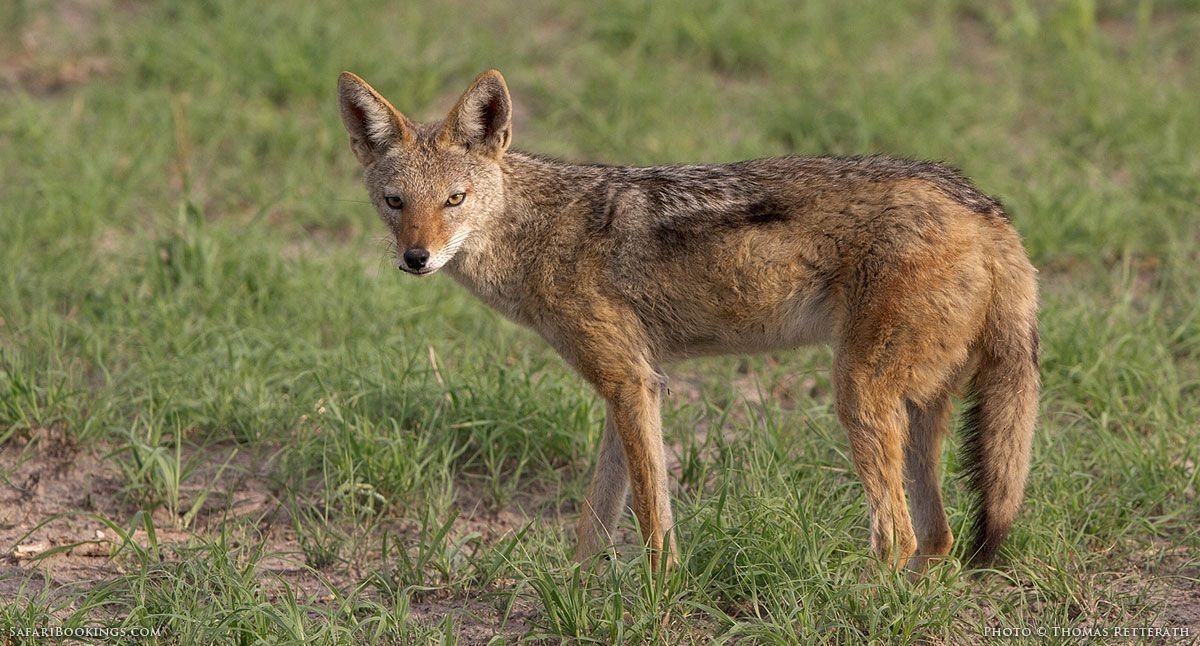
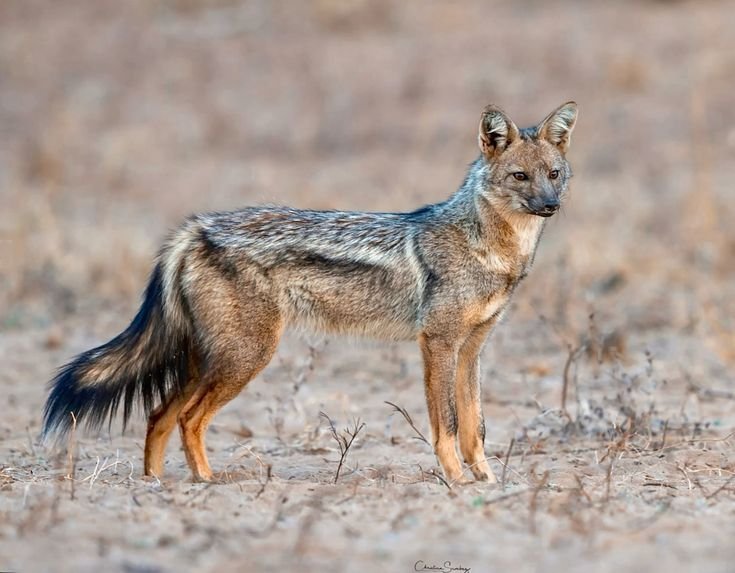
Side-striped Jackal
Canis adustus
Side-striped Jackal — Quick Facts
Important notice
This profile describes a species associated with the Mount Kilimanjaro ecological landscape. Checklist or locality records do not confirm a sighting on every route, camp or altitude. Route records are listed only when verified; none are asserted here.
Introduction
The side-striped jackal is a medium-sized African canid recognised by the pale stripe running along each flank. It is generally associated with wooded and bushland habitats and is often more active at night. Historical records document this species in the wider Kilimanjaro ecosystem, including dry forest on the northern slopes. It is not a guaranteed wildlife sighting on Kilimanjaro.
How to Identify the Animal
A medium-sized, dog-like canid with a greyish or grizzled coat, a pale stripe along each side of the body and darker markings along the back. The tail is bushy and often has a darker tip, and the muzzle is pointed with relatively large ears. The flank stripe distinguishes it from the black-backed jackal, whose dark saddle-like back marking is far more conspicuous. Some modern classifications place this species in the genus Lupulella as Lupulella adusta, while older and still widely used references retain Canis adustus; both names refer to the same animal.
Habitat and Distribution on Mount Kilimanjaro
The historical Kilimanjaro mammal account records the side-striped jackal in dry forest on the northern slope. It also mentions historical records from coffee-growing landscapes between Kibongo and Moshi, and an observation in dry bushland near Ol Molog. These records represent the wider mountain ecosystem and surrounding landscapes. They are not proof of occurrence on every climbing route or in every vegetation zone.
Diet and Feeding Behaviour
An opportunistic omnivore. The general diet can include small mammals, insects and other invertebrates, fruits and other plant material, carrion and other available food resources. No individual food item is claimed as specifically documented on Kilimanjaro.
Behaviour and Social Life
Mainly nocturnal and crepuscular, though activity can vary with local conditions. Territorial behaviour, scent marking and the use of pairs or family groups are reported in the species literature, but no single social arrangement applies everywhere.
Communication and Calls
Vocal communication can include yelps, barks, whines and howling calls. Scent marking and body posture also carry information about identity, territory and mood. No Kilimanjaro-specific vocal study is claimed here.
Reproduction and Breeding
General species biology includes den use, parental care and pup development. These are species-level details, not observations of breeding on Kilimanjaro.
Ecological Importance
As an opportunistic predator and scavenger, the side-striped jackal contributes to food-web processes and consumes insects and other available food. No quantified local ecological role is asserted.
Conservation Status
The global IUCN assessment lists the side-striped jackal as Least Concern. A global category does not establish the current population size or local conservation condition on Kilimanjaro.
Wildlife Watching on Kilimanjaro
Jackals are elusive and most active after dark, so sightings should not be expected during an ordinary climb. Visitors should rely on guides, keep a respectful distance and never use food to attract wildlife.
Route and Habitat Occurrence
Published historical records concern the northern slope and surrounding landscapes, including Kibongo–Moshi farmland and dry bush near Ol Molog. No side-striped jackal occurrence is confirmed on Machame, Marangu, Lemosho, Shira, Rongai, Northern Circuit, Umbwe, Mweka or Kilema by the sources used here.
Honest Expectations
The species has historical records in the wider Kilimanjaro ecosystem, but it is not a guaranteed sighting. Much of its activity is nocturnal, and a lack of sightings during a climb does not mean it is absent from the wider ecosystem.
Frequently Asked Questions
About Side-striped Jackal on Kilimanjaro
What is a side-striped jackal?
A medium-sized African canid named for the pale stripe along each flank.
What is its scientific name?
Canis adustus; some modern classifications use Lupulella adusta.
Why is it called a side-striped jackal?
Because of the pale stripe running along each side of its body.
How is it different from a black-backed jackal?
It has pale flank stripes; the black-backed jackal has a conspicuous dark saddle across its back.
Is it nocturnal?
Generally yes, though crepuscular and occasional daytime activity can occur.
What does it eat?
An opportunistic diet of small mammals, insects, fruit, carrion and other available food.
Where does it live in Africa?
It uses woodland, bushland, savanna and other suitable habitats across parts of Africa.
Has it been recorded on Kilimanjaro?
Yes, in historical accounts from the wider mountain ecosystem.
Where were the historical Kilimanjaro records?
Dry forest on the northern slope, farmland between Kibongo and Moshi, and dry bush near Ol Molog.
Does it live in mountain forests?
The northern-slope record mentions dry forest; it is not a dense rainforest specialist.
Can climbers expect to see one?
No. It is elusive, largely nocturnal and not a guaranteed sighting.
Does it live in groups?
It may forage alone, in pairs or in family groups depending on circumstances.
How does it communicate?
Through yelps, barks, whines, howls, scent marking and body posture.
How does it reproduce?
General species biology includes den use, parental care and pup development; no Kilimanjaro breeding record is claimed.
Does it eat fruit?
Yes, fruit and other plant material can form part of its opportunistic diet.
Is it dangerous to people?
It is a wild animal and should be observed from a distance; it is not normally a threat but must not be approached.
What is its conservation status?
Least Concern globally according to IUCN.
What threats affect jackals?
Habitat change, hunting pressure and conflict can affect local populations.
Does it compete with other carnivores?
As an opportunistic feeder it may overlap with other small and medium carnivores where food is limited.
What should visitors do if they encounter one?
Keep a safe distance, do not feed or approach it, and follow guide instructions.
Sources and Further Reading
Research foundations
Grimshaw, J.M., Cordeiro, N.J. & Foley, C.A.H. (1995). The Mammals of Kilimanjaro. African Journal of Ecology.
Elevational Distribution and Ecology of Small Mammals on Africa's Highest Mountain (2014 field study).
Tanzania National Parks — Kilimanjaro National Park official information.
UNEP-WCMC — Kilimanjaro World Heritage Datasheet.
Discover Kilimanjaro’s Wildlife
Explore the mountain responsibly with African Majestic Adventure and learn about its animals with local guides.