






 Ngorongoro Conservation Area
 Volcanoes National Park






Bat-eared Fox
Otocyon megalotis
Bat-eared Fox — Quick Facts
Important notice
This profile describes a species associated with the Mount Kilimanjaro ecological landscape. Checklist or locality records do not confirm a sighting on every route, camp or altitude. Route records are listed only when verified; none are asserted here.
Introduction
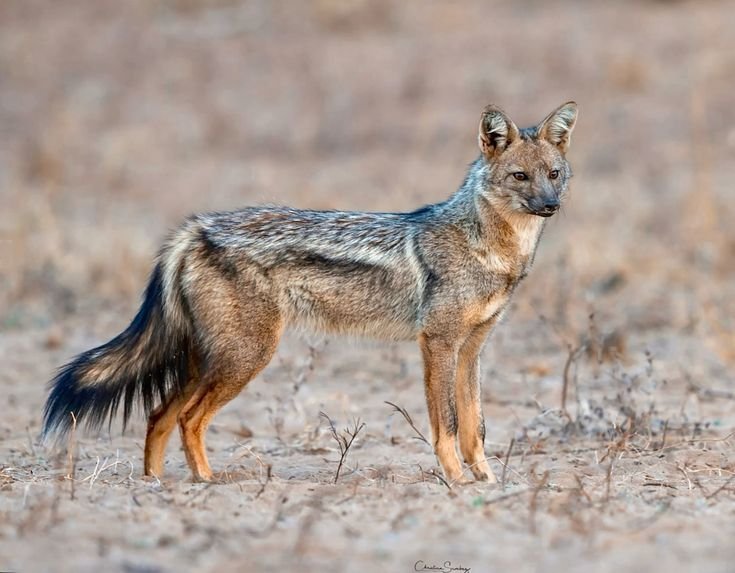
The bat-eared fox is a small African canid instantly recognised by its enormous ears, delicate muzzle and insect-focused diet. Termites make up a major part of its food in many parts of its range. A historical Kilimanjaro-area record documents a dead individual at Gararagua at approximately 1,350 metres in 1993. That single record does not establish a current resident population.
How to Identify the Animal
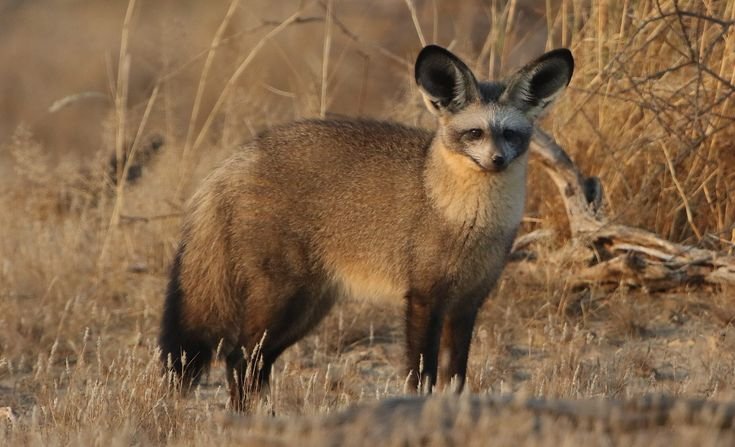
A small, lightly built canid with a sandy, greyish or buff coat, very large broad ears, dark facial markings, a pointed muzzle, relatively short legs and a bushy tail often tipped with dark hair. The oversized ears are the most distinctive identification feature and help detect insects moving in soil or vegetation.
Habitat and Distribution on Mount Kilimanjaro
The 1995 Kilimanjaro mammal paper reports a dead bat-eared fox at Gararagua, approximately 1,350 metres, in 1993, treating it as a new record for the defined Kilimanjaro area. This is a historical locality record. It is not proof of a current resident population, regular sightings or widespread occurrence across the mountain. It is not assigned here to rainforest, moorland, alpine desert or summit zones without evidence.
Diet and Feeding Behaviour
Highly specialised for insect feeding. Termites, especially harvester termites, form a major part of the diet in many areas. Other foods can include beetles, grasshoppers, ants and other small invertebrates, with occasional other small food items. Its excellent hearing helps locate insects moving beneath the soil or within vegetation. Termite feeding at Gararagua specifically is not claimed.
Behaviour and Social Life
Pairs and family groups are commonly reported, with cooperative activities and shared foraging. Activity patterns vary with temperature, food availability and local conditions, and may be nocturnal in some areas.
Communication and Calls
The species has relatively varied vocal communication, including soft contact calls and alarm calls, supported by body posture, ear position and scent communication. No Kilimanjaro-specific vocal observations are claimed.
Reproduction and Breeding
General species behaviour includes den use, pup development and parental care, with male involvement in protecting and caring for young reported in species accounts. These are not documented Kilimanjaro breeding observations.
Ecological Importance
By consuming termites and other insects, the bat-eared fox participates in insect food-web relationships. No unsupported claim about pest control at Gararagua is made.
Conservation Status
The global IUCN status is Least Concern. This is a global assessment, not a local population assessment for Kilimanjaro.
Wildlife Watching on Kilimanjaro
The historical Gararagua record does not make this species a normal expectation for mountain climbers. Visitors should not expect to encounter it on standard high-altitude trekking routes, and must never feed, chase or disturb a den.
Route and Habitat Occurrence
The available evidence is a historical locality record near Gararagua at approximately 1,350 metres. No association with any named climbing route is claimed, and a single record cannot be used to infer current distribution.
Honest Expectations
The species has a historical Kilimanjaro-area record of a dead individual found in 1993. This does not establish a current resident population and is not a species visitors should expect to see during a normal climb.
Frequently Asked Questions
About Bat-eared Fox on Kilimanjaro
What is a bat-eared fox?
A small African canid specialised for feeding on insects, with exceptionally large ears.
What is its scientific name?
Otocyon megalotis.
Why does it have such large ears?
They help detect insects moving in soil or vegetation and also assist with heat regulation.
Is it really a fox?
It is a canid, though its specialised diet and dentition make it distinct from typical foxes.
What does it eat?
Mainly termites, plus other insects and small invertebrates.
Does it mainly eat termites?
Yes, harvester termites form a major part of the diet in many areas.
How does it find insects underground?
Its acute hearing detects movement in soil or dense vegetation.
Is it nocturnal?
Often, though activity varies with region, temperature and food availability.
Where does it live in Africa?
Open grassland, savanna and suitable open scrub in parts of eastern and southern Africa.
Has it been recorded on Kilimanjaro?
A historical record exists from the Kilimanjaro area.
Where was the historical Kilimanjaro record?
Gararagua, at approximately 1,350 metres.
When was it recorded near Gararagua?
In 1993, as a dead individual.
Does the record prove it still lives there?
No. It is a historical locality record, not proof of a current population.
Can visitors see it on climbing routes?
No. It is not expected on the standard high-altitude routes.
Does it live in family groups?
Pairs and family groups are commonly reported.
How does it communicate?
Soft contact calls, alarm calls, ear and body postures, and scent cues.
How does it reproduce?
General species behaviour includes den use, pup care and male involvement; no Kilimanjaro breeding is claimed.
What is its conservation status?
Least Concern globally according to IUCN.
What role does it play in the ecosystem?
It consumes termites and other insects as part of the insect food web.
Should visitors approach or feed one?
No. Do not feed, chase or disturb this or any other wild animal.
Sources and Further Reading
Research foundations
Grimshaw, J.M., Cordeiro, N.J. & Foley, C.A.H. (1995). The Mammals of Kilimanjaro. African Journal of Ecology.
Elevational Distribution and Ecology of Small Mammals on Africa's Highest Mountain (2014 field study).
Tanzania National Parks — Kilimanjaro National Park official information.
UNEP-WCMC — Kilimanjaro World Heritage Datasheet.
Discover Kilimanjaro’s Wildlife
Explore the mountain responsibly with African Majestic Adventure and learn about its animals with local guides.