



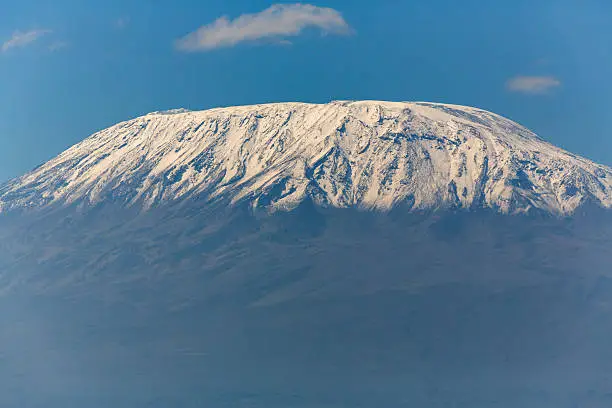
 Ngorongoro Conservation Area
 Volcanoes National Park
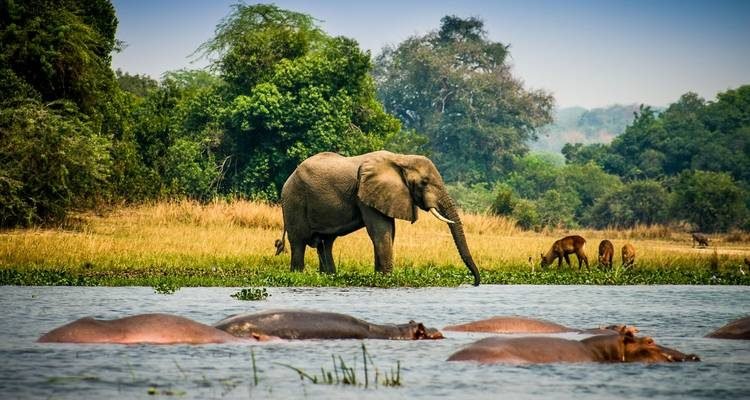



Eastern Tree Hyrax
Dendrohyrax validus
Eastern Tree Hyrax — Quick Facts
Important notice
This profile describes a species associated with the Mount Kilimanjaro ecological landscape. Checklist or locality records do not confirm a sighting on every route, camp or altitude. Route records are listed only when verified; none are asserted here.
Introduction
The eastern tree hyrax is a memorable forest mammal on Kilimanjaro, more often heard than seen.
How to Identify the Animal
A compact rounded body, short legs and coarse fur; calls are loud and far-carrying.
Habitat and Distribution on Mount Kilimanjaro
It occupies forest trees and dense vegetation in montane forest and forest-edge habitat.
Diet and Feeding Behaviour
Leaves, shoots, fruit and other plant material.
Behaviour and Social Life
Mostly nocturnal and secretive, often calling from dense cover.
Communication and Calls
Species-specific communication is not sufficiently documented for a confident description here.
Reproduction and Breeding
Young are born after a relatively long gestation for its size.
Ecological Importance
As a browser, it contributes to forest vegetation dynamics and prey relationships.
Conservation Status
Globally assessed as Least Concern; local status is not separately assessed.
Wildlife Watching on Kilimanjaro
Listen after dark from forest camps; sightings require patience and minimal disturbance.
Route and Habitat Occurrence
This species is recorded at mountain or habitat level. No route-specific occurrence is claimed without a verified locality record.
Honest Expectations
Encounters depend on habitat, timing, weather and animal behaviour. No wildlife sighting can be guaranteed on a Kilimanjaro trek.
Frequently Asked Questions
About Eastern Tree Hyrax on Kilimanjaro
What is its scientific name?
Dendrohyrax validus.
Which family does it belong to?
Procaviidae.
Is it a rodent?
No. Hyraxes are in their own order, closely related to elephants.
Is it easy to see?
It is secretive and mainly nocturnal, so calls are more often heard.
Where does the Eastern Tree Hyrax live on Kilimanjaro?
It is associated with montane forest, forest edge in the wider Kilimanjaro ecological landscape.
Is the Eastern Tree Hyrax found on every Kilimanjaro route?
No. Route-level occurrence requires specific evidence and is not claimed here.
Is the Eastern Tree Hyrax active during the day?
Activity varies by species and local conditions; no universal daily pattern is asserted.
What does the Eastern Tree Hyrax eat?
Leaves, shoots, fruit and other plant material.
How does the Eastern Tree Hyrax behave in the wild?
Mostly nocturnal and secretive, often calling from dense cover.
Can visitors see the Eastern Tree Hyrax on a trek?
Possibly in suitable habitat, but encounters cannot be guaranteed.
Which family does the Eastern Tree Hyrax belong to?
It belongs to Procaviidae.
Is the Eastern Tree Hyrax a mammal?
Yes. It belongs to the group Mammals.
What is its verification status?
This profile uses a verified record for the Kilimanjaro ecological landscape.
Are there confirmed route sightings for this animal?
No route-specific sightings are claimed in this profile.
Is this animal found only on Kilimanjaro?
No. The profile describes its association with the wider Kilimanjaro ecosystem, not global endemism.
Does it live in the summit zone?
No. The summit environment has very limited animal life, and this species is not described as a summit resident.
How should visitors observe it?
Listen after dark from forest camps; sightings require patience and minimal disturbance.
What is its ecological role?
As a browser, it contributes to forest vegetation dynamics and prey relationships.
What is its conservation status?
Globally assessed as Least Concern; local status is not separately assessed.
Where can I read more about Kilimanjaro animals?
Explore the full Kilimanjaro Animals Hub and its family directory.


Sources and Further Reading
Research foundations
Grimshaw, J.M., Cordeiro, N.J. & Foley, C.A.H. (1995). The Mammals of Kilimanjaro. African Journal of Ecology.
Elevational Distribution and Ecology of Small Mammals on Africa's Highest Mountain (2014 field study).
Tanzania National Parks — Kilimanjaro National Park official information.
UNEP-WCMC — Kilimanjaro World Heritage Datasheet.
Discover Kilimanjaro’s Wildlife
Explore the mountain responsibly with African Majestic Adventure and learn about its animals with local guides.