



 Ngorongoro Conservation Area
 Volcanoes National Park


Four-toed Hedgehog
Atelerix albiventris
Four-toed Hedgehog — Quick Facts
Important notice
This profile describes a species associated with the Mount Kilimanjaro ecological landscape. Checklist or locality records do not confirm a sighting on every route, camp or altitude. Route records are listed only when verified; none are asserted here.
Introduction
The four-toed hedgehog is a small African hedgehog with a spiny coat and a pale underside. Historical research around Kilimanjaro identifies the local hedgehog as Atelerix albiventris and records it in cultivated areas and Moshi town. It is a nocturnal animal of settled and cultivated landscapes, not a high-altitude mountain specialist.
How to Identify the Animal
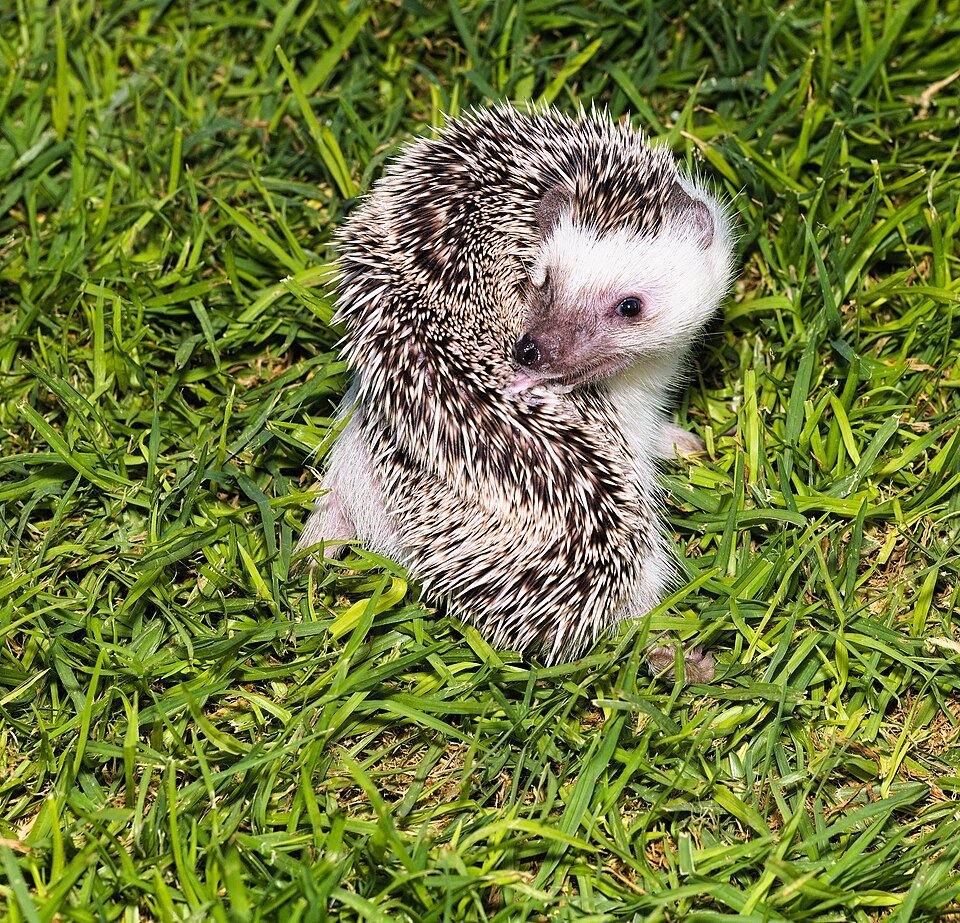
A compact hedgehog with short, dense spines over the back, a paler underside, a pointed snout, short legs and small ears. Its typical defensive response is to raise the spines and curl into a tight ball. The name refers to the usual four toes on each hind foot. It is not a shrew or a rodent.
Habitat and Distribution on Mount Kilimanjaro
Grimshaw, Cordeiro and Foley (1995) identify the Kilimanjaro hedgehog as Atelerix albiventris and explain that earlier records had sometimes incorrectly used the southern African species Atelerix frontalis. The authors state that four-toed hedgehogs are common in the cultivated zone on the southern and eastern slopes and may often be seen in Moshi town. These records concern cultivated landscapes and settlements. They do not establish the species as a regular montane forest animal, and no high-altitude or upper-route occurrence is claimed.
Diet and Feeding Behaviour
Primarily insectivorous, feeding on insects and other small invertebrates, with earthworms and other small animal food taken where available. No Kilimanjaro-specific prey list is asserted.
Behaviour and Social Life
Solitary and nocturnal, relying on scent and touch while foraging and on its spines and curling response for defence. All behavioural statements here describe the wider species rather than documented Kilimanjaro observations.
Nocturnal Behaviour
Mainly active after dark, when it searches gardens, agricultural land and other suitable areas for insects and other small prey. During the day it rests in sheltered places such as dense vegetation, holes or gaps around structures. Nocturnal activity explains why it may be encountered around settlements after dark but is rarely seen on daytime walks.
Defensive Behaviour
When threatened, the hedgehog raises its spines and curls into a protective ball, presenting spines rather than soft underside to a potential predator. This is a defensive response, not a reason to handle or provoke the animal.
Habitat Around Human Settlements
The species can use gardens, agricultural land and other modified habitats where shelter and insect food are available. This matches the historical Kilimanjaro observations from the cultivated zone and Moshi town. No specific modern sighting, named garden or current abundance is claimed.
Communication and Calls
Hedgehogs use quiet squeaks, snuffles and scent cues. No distinctive Kilimanjaro vocal record is claimed.
Reproduction and Breeding
General species biology includes a short gestation and a litter of several young, with maternal care in a sheltered nest. No precise Kilimanjaro breeding season or local breeding site is asserted.
Ecological Importance
As an insect-eating mammal, the four-toed hedgehog contributes to food webs in cultivated and open habitats and forms prey for some predators. No quantified local ecological role is claimed.
Conservation Status
The global IUCN assessment for Atelerix albiventris is Least Concern. This global category does not establish the condition of populations around Moshi or Kilimanjaro.
Wildlife Watching on Kilimanjaro
A nocturnal species more likely to be encountered around cultivated areas and settlements than on daytime mountain treks. Observe quietly from a distance, do not pick it up, keep it as a souvenir or disturb it while resting.
Route and Habitat Occurrence
Documented Kilimanjaro-area habitats: the cultivated zone on the southern and eastern slopes and Moshi town. The historical review does not establish regular occurrence on high-altitude climbing routes, and no species assignment is made to Machame, Marangu, Lemosho, Shira, Rongai, Northern Circuit, Umbwe, Mweka or Kilema.
Honest Expectations
This is a small nocturnal mammal that is easily overlooked. It is not a guaranteed wildlife sighting, and its cultivated-zone and Moshi records must not be exaggerated into a claim of regular occurrence on the mountain.
Frequently Asked Questions
About Four-toed Hedgehog on Kilimanjaro
What is a four-toed hedgehog?
A small nocturnal, spined, insect-eating mammal.
What is its scientific name?
Atelerix albiventris.
Which family does it belong to?
Erinaceidae, the hedgehog family.
Why is it called a four-toed hedgehog?
The name refers to the usual four toes on each hind foot.
Has it been recorded around Mount Kilimanjaro?
Yes, in the historical Kilimanjaro mammal review.
Where is it found around Kilimanjaro?
In the cultivated zone on the southern and eastern slopes.
Can it be found in Moshi town?
Yes, the 1995 review says it may often be seen there.
Does it live in cultivated areas?
Yes. Cultivated landscapes are its documented local habitat.
Does it live in the montane forest?
It is not established as a regular montane forest species by these records.
Is it active during the day or at night?
Mainly at night.
What does a four-toed hedgehog eat?
Insects and other small invertebrates, with occasional other small foods.
How does it defend itself?
By raising its spines and curling into a ball.
Can it roll into a ball?
Yes, that is its characteristic defensive response.
How does it reproduce?
General biology includes a short gestation and a litter of young; no local breeding season is claimed.
Is it dangerous to people?
It is not aggressive, but it should not be handled.
Should visitors touch or handle it?
No. Leave it undisturbed.
What role does it play in the ecosystem?
It consumes insects and forms part of the food web in cultivated and open habitats.
What is its conservation status?
Least Concern globally according to IUCN.
Can climbers expect to see it on Kilimanjaro routes?
No. It is nocturnal and associated with cultivated areas and settlements.
Why is it important to protect small nocturnal mammals?
They contribute to insect regulation and local food webs, even when rarely seen.


Sources and Further Reading
Research foundations
Grimshaw, J.M., Cordeiro, N.J. & Foley, C.A.H. (1995). The Mammals of Kilimanjaro. African Journal of Ecology.
Elevational Distribution and Ecology of Small Mammals on Africa's Highest Mountain (2014 field study).
Tanzania National Parks — Kilimanjaro National Park official information.
UNEP-WCMC — Kilimanjaro World Heritage Datasheet.
Discover Kilimanjaro’s Wildlife
Explore the mountain responsibly with African Majestic Adventure and learn about its animals with local guides.